.svg)

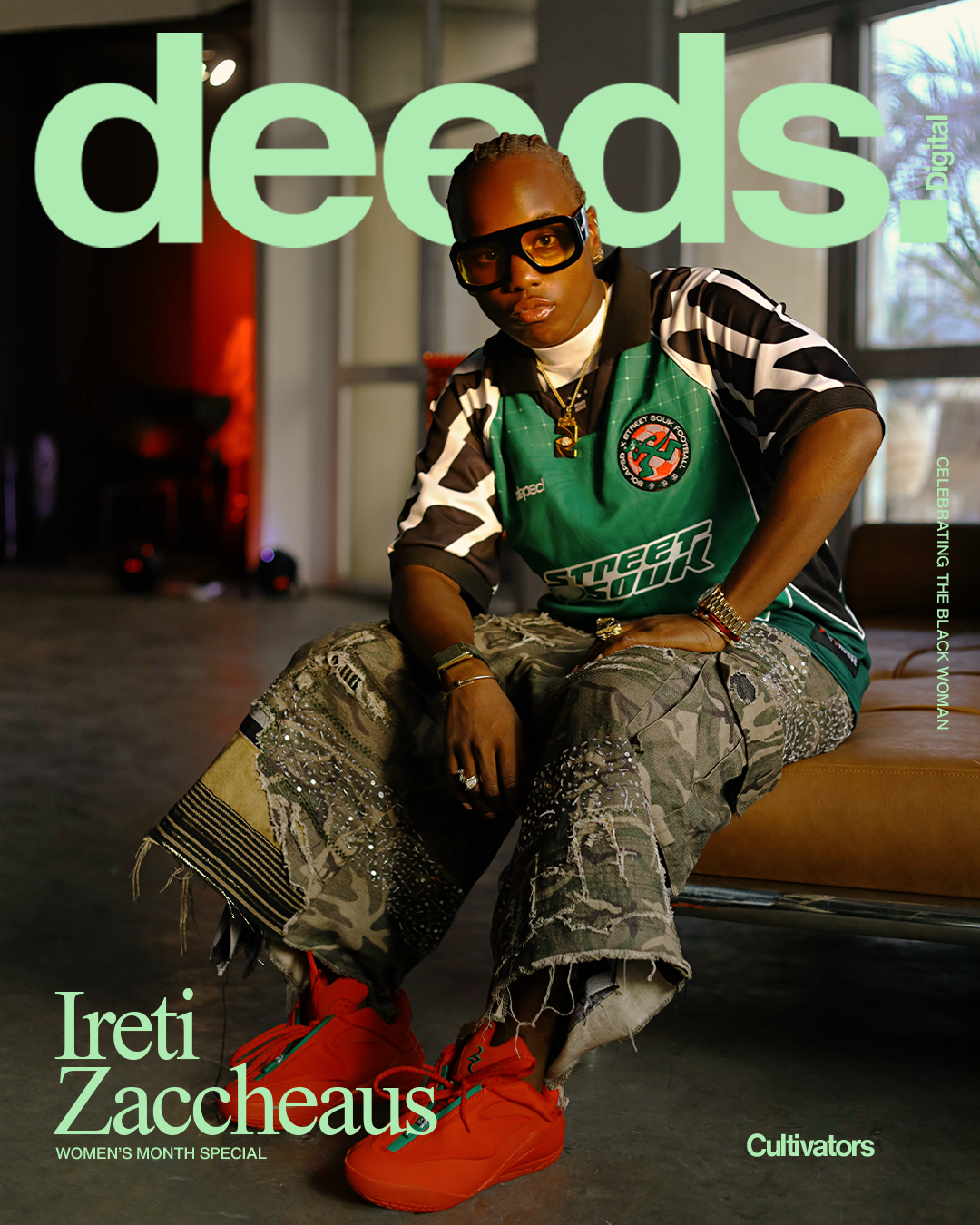
In 2018, Nigerian streetwear had no address. Brands existed, but scattered, selling to friends, praying for virality, competing for the same small audience. There was no connective tissue. No gathering point. No legitimacy.
Iretidayo Zaccheaus was 18 when she decided to fix that.

Eight years later, Street Souk receives over a thousand brand applications annually, has hosted everyone from Mowalola to Naomi Campbell to the late Virgil Abloh, and has staged pop-ups across Lagos, Dubai, Cape Town, London, Los Angeles, Abuja, and Accra. Ireti, as she's known, created the infrastructure an entire industry was missing. Street Souk gave Nigerian streetwear something it never had. An epicentre. A scene.
We sat with the woman who built it, to talk about what it took, and what comes next.
Your mother Yewande built Eventful and its souk series for her generation. When you walked into one of her Fashion Souks in 2018, what made you think you could do this for yours?
The specific moment was just walking around and seeing how everything was set up, how neat it looked. The fundamentals were there, it was an extremely well-organised event, but it just wasn't appealing to me. The clothes were Ankara bubus and stuff I wasn't necessarily interested in. So as a creative person, the first thing I'm thinking is: Wow, imagine if it was a bunch of brands that look like the kind of stuff I wear. Streetwear brands.
You were 18 when you launched Street Souk. What did you tell those first brands to convince them to take a chance on something that had never existed in West Africa?
I was blessed and fortunate enough that I was already on the scene. Whether people knew me as Teezee's sister, or part of the DRB team organising events, or from the Traplanta t-shirts I was selling, or the work I did for Homecoming, I was a trusted face. My opinion mattered in the fashion space already without having done anything. That's the easiest thing to say.
You receive applications from over 1,000 brands now. Walk us through your curation process.
It's very rigorous because I still go through every single application myself. The brands represented at Street Souk are also representing the streetwear scene in Africa as a whole. I have to make sure they're up to a standard that every youth from Africa will be proud of. The key thing I look at is intentionality. If you're just slapping graphics from the internet on t-shirts, nine years ago that might have been cool, now it's not. It's not about followers. It's about showing you're serious. From seeing someone's thing, you can tell if they're going to be a no-show or if they're going to come through and make their booth the sickest booth possible.
Nigerian streetwear pulls from traditional textiles, hip-hop, skate culture, "bend down select" upcycling. Which of these excites you most right now?
I'm into all of them, but I'm definitely keen on playing around with traditional Nigerian textiles, aso oke, adire. We've seen what Dye Lab have done with adire. With Street Souk, we created this piece for Lagos Fashion Week: camo aso oke jorts, camouflage jorts with aso oke patches. Infusing traditional textiles with modern-day culture is where my head is at right now.
You've said Nigerian streetwear is "very raw and fast-paced." What does "raw" mean in terms of actual design?
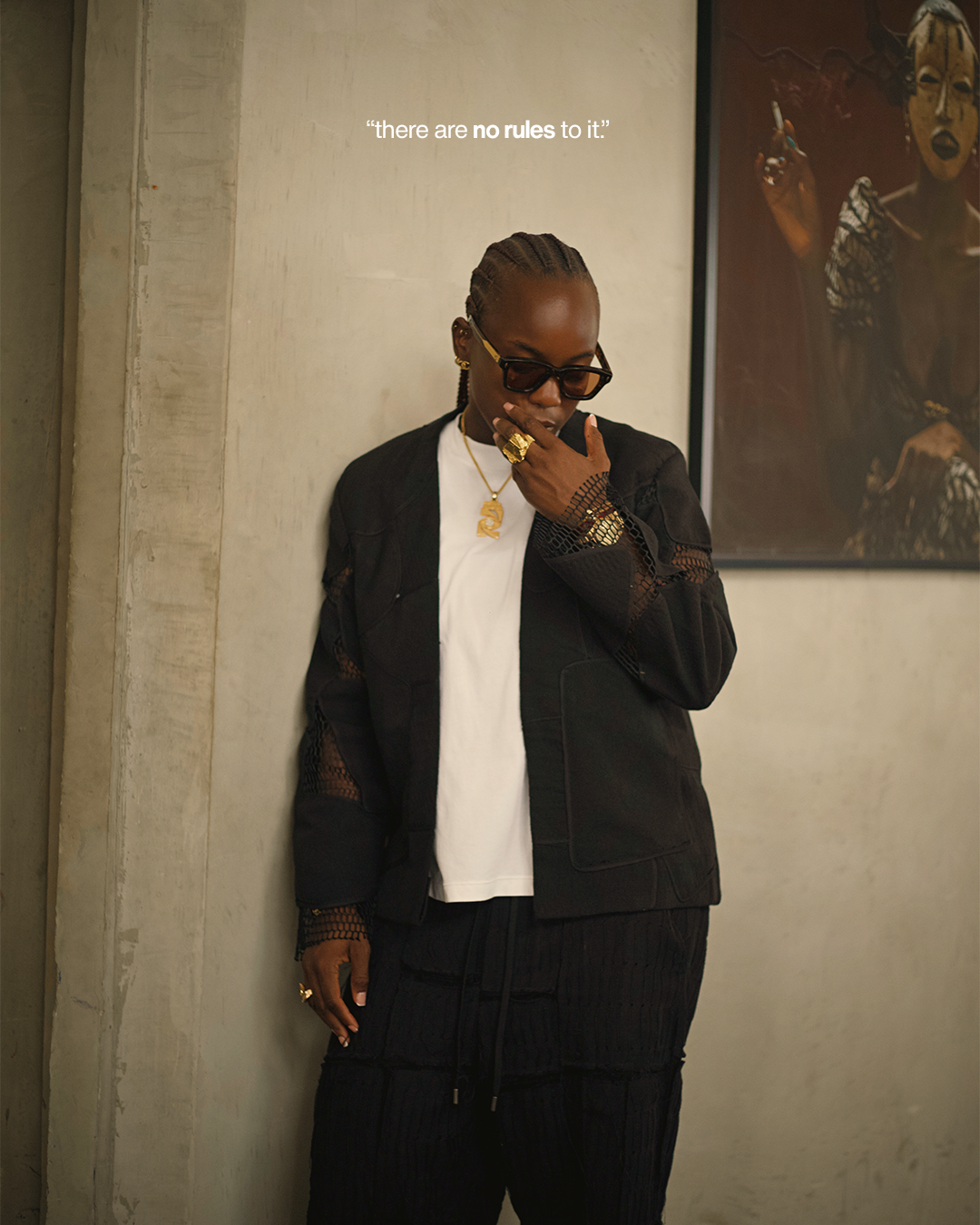
Raw means it's still very fresh, still very new, and there are no rules to it. People are just doing what they want to do, taking inspiration from a bunch of different places. No one thing is exactly the same. We have influences from the West, from pop culture, from hip-hop, but it's still very raw and very fresh.
.png)
International brands have been "dubbing off" African culture for years. What distinguishes authentic African streetwear from imitation?
The technique in which items are woven, how they look, how they fit, how loud they are. There are certain things as an African you're willing and daring to do that someone from the other side of the world might not be willing or able to do.
.jpg)
How do you balance showcasing established names against taking risks on emerging designers?
Honestly, it's very much a gut feeling. Some of the biggest brands might not give you as much impact as emerging brands with a cult following. It depends on how I feel, what I feel is the best situation, and what that partnership means. “I'm a very deep person when it comes to people I work with.” It has to have some level of importance or meaning to me for it to happen, for it to feel authentic, for it to go well.
Virgil called Street Souk a key part of Africa's "youth-driven fashion renaissance." Now that he's gone, who do you look to globally as a reference point?
Globally, for the infrastructure of what streetwear has become, I look up to people like Clint from Corteiz and Ronnie Fieg from Kith. What these brands have built individually has been incredible, Kith with the infrastructure of popping up stores all over the world. I also look to Daily Paper in terms of their storytelling, their strong core and essence.
Streetwear is heavily male-dominated. How has navigating that shaped your approach to amplifying women-led brands?
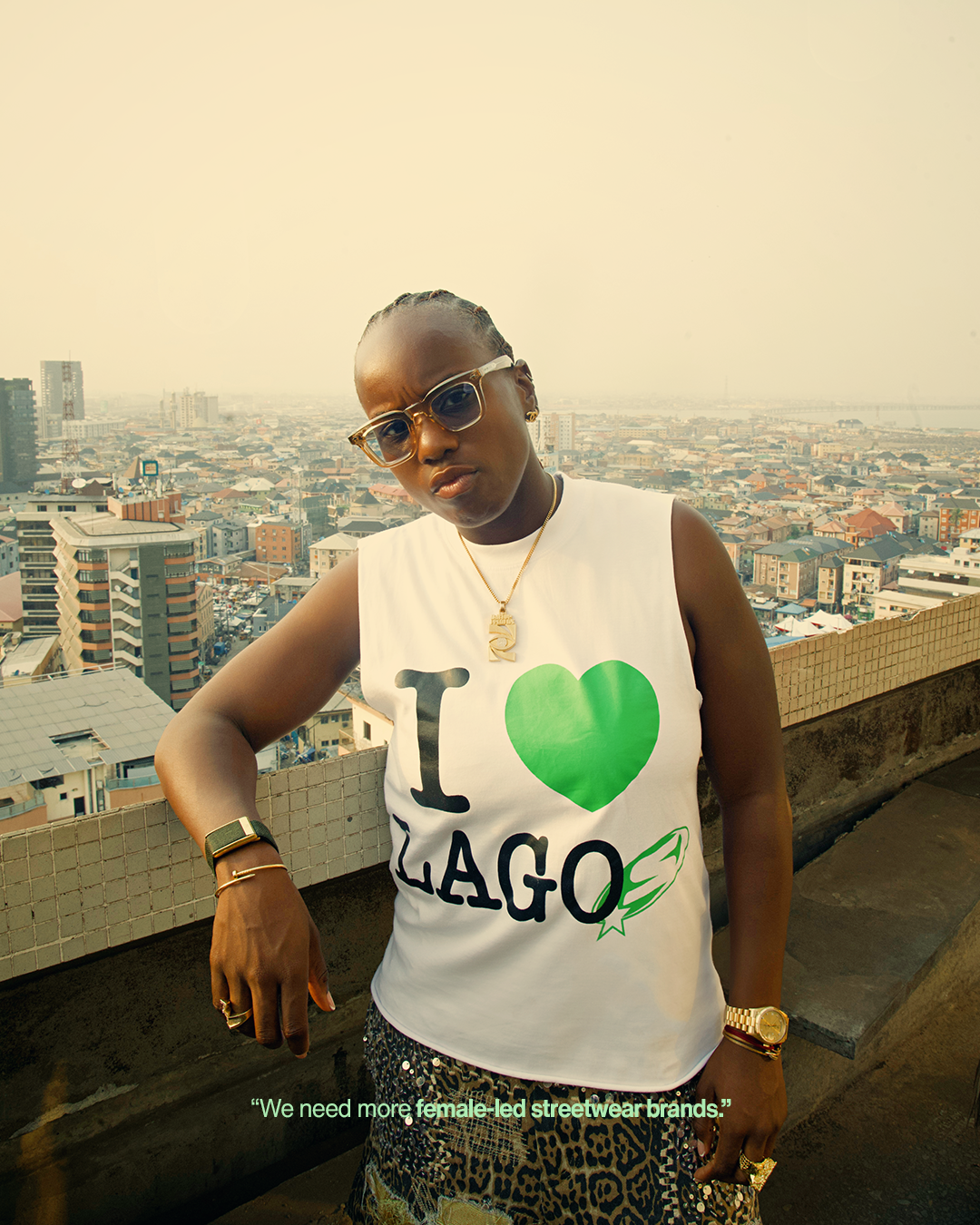
I always try to amplify woman-led brands, whether we're curating the marketplace at FEM Fest and only highlighting female-led brands, or doing events where we give women advantage. I'm probably not supposed to say this, but if I ever have to choose between a male and female brand and it comes down to the line, if they're both equally deserving, I would always go with the woman. I know how much harder it is for a female brand to get into certain situations. We need more female-led streetwear brands. Shout out to Ayanfe from WWYD, Tolu from Meji Meji.
The world tour hit Lagos, Dubai, Cape Town, London, LA, Abuja, and Accra. How did you adapt Street Souk's identity across different cities?
The most important thing about Street Souk, and I guess about our core ethos and me as an individual as well as being Nigerian, is whatever room you go into, you shake it up. Instead of adapting to fit them, you make them adapt to fit you. That's the mindset I go with when I go into any of these cities. I'm going in there to give you the Lagos experience. You don't want me in your city to give you something that you've had before, or to dumb it down so it's easily digestible or palatable.
So we always make sure that wherever we're standing up, we're really showing up for our city, that people can feel like, "Oh, it feels like I'm in Nigeria," or "It feels like I'm at Street Souk Lagos." That's definitely the mindset we go into all our pop-ups with. We're not trying to adapt to where we are. We're trying to get them to adapt to who we are.
Street Souk now hosts 100+ vendors and 5,000+ attendees, it has become a marketplace as much as a cultural moment. How do you ensure brands are actually making sales, not just getting exposure?
The one thing we keep at the centre: it's an event where you come to shop. Shopping is the core. Buying and selling, trade is the core. Everything else is a bonus. It would never be a situation where you're going for a concert and shopping is added value. Streetwear is at the core. Music, vibes, food, that's a nice add-on. People already know they're coming to shop. Our percentage of brands that sell out, that make record amounts of money, and our retention of brands that always want to come back is extremely high. So I think we're doing a pretty good job in that department.
You've said the goal is to be bigger than ComplexCon. What would an African streetwear convention need to offer, in terms of experiences, brand access, exclusives, to reach that level?
The problem with this question is a lot of it is infrastructural. A lot of it at this point is out of my control. Things like the ability to get goods in and out of the country easily. So for example, let's say we have a brand deal with a Nike or so and they want to come and show up at Street Souk in a real way like they do at ComplexCon, them getting their goods in has to be easy. The purchasing power of the nation, the economic situation, people being able to afford these goods. The venues, ComplexCon has maybe three, four hundred brands and still has space for a festival. There's nowhere like that in Nigeria or West Africa indoors yet.
And also the appetite of sponsors. Sponsors are the ones that make events like this happen. We're still in a situation where we have to explain to sponsors why this is important. Some are just starting to see the youth is the future, let's invest in them, let's tap in with them.
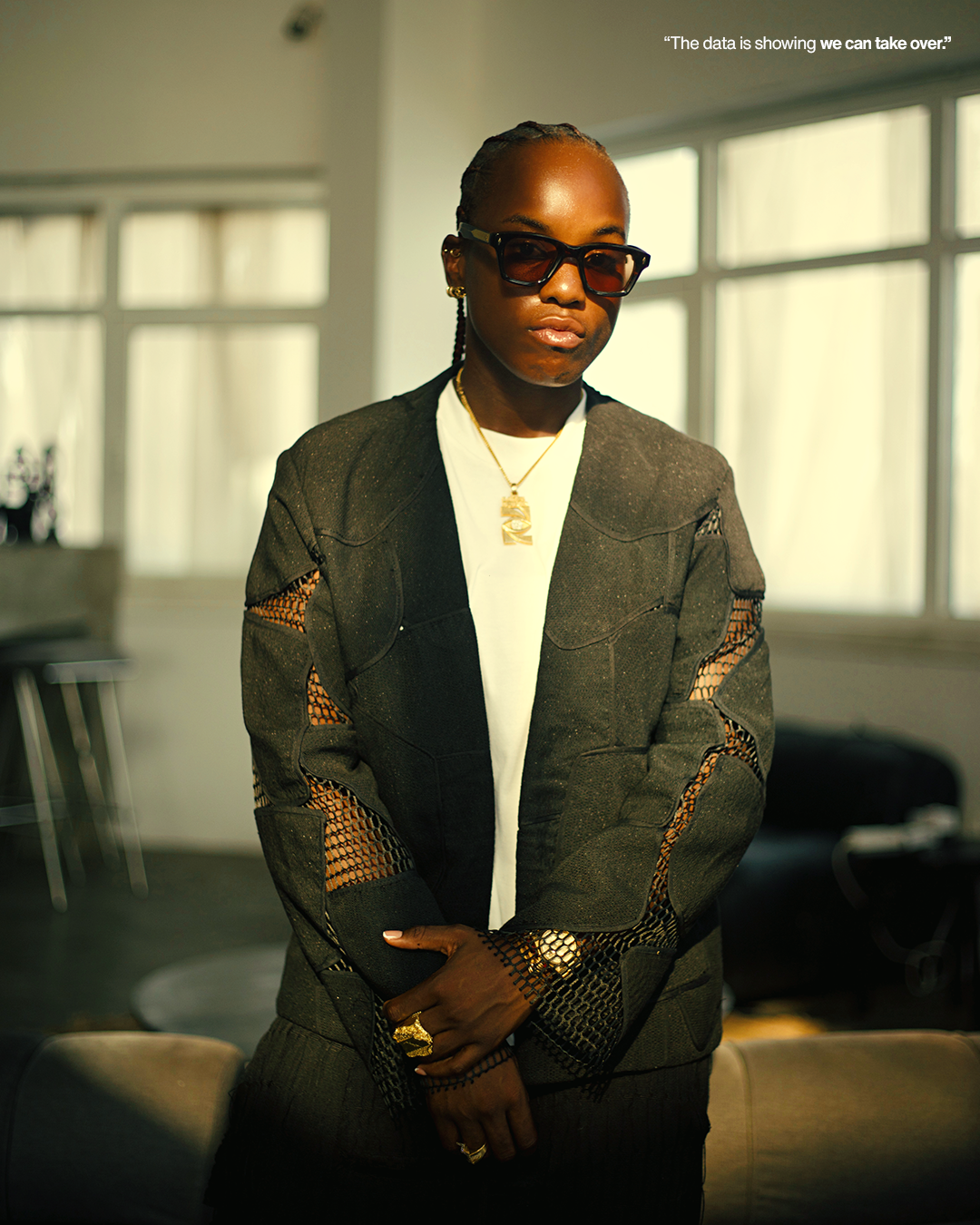
But Africa has the numbers. Nigeria alone has the numbers. Seventy-five percent of our population is under twenty-five. A third of the world's online users in the next ten years will be based in Africa. The data is showing we can take over. Infrastructurally, we just need the help of people who can make a difference.
What advice would you give designers starting out in 2026?
The first thing about starting your own brand is create your hero product. Find out what that one product is going to be for your brand that you can sell thousands and thousands of units of in different colours, in different shapes and sizes of the same product in order to gain brand equity. Let people see that product and know it's your brand.
Kai Collective has her vest top that generated over a million pounds in revenue for her brand. Corteiz had the tracksuits that they started off with. Most brands that have really gone on to be super successful, they have that hero product that they're known for, and then they use that product to enter the markets and then they can flex their creativity and do everything else they always wanted to do. But don't try and go in too quick doing everything.
Become a master of something, and then when you have the capital, you can play into all the different things you want to do. That's definitely one of the most important things I've learned over the years.
And make sure you reference, make sure you look at brands that are already existing, but do not copy them. There's a big difference between referencing, getting inspiration, and straight up dubbing. Do not be a dub. Just get your inspiration, do your research, do your referencing, have a strong story to tell. Most brands that are doing really well now have a story to tell. People want to buy to be part of the brand. It's more than just selling t-shirts these days. You're buying into something. So that's really important.
Eight years in, what was the Nigerian streetwear ecosystem missing that Street Souk provided?
An infrastructure. A place where you could find all these brands in one place, almost like a directory. An epicentre. One place where you could go and find everything. It was missing a community. There were brands, but no synergy. No scene. Just a bunch of different people doing different things. Being able to bring everything together and define it is what Street Souk provided.
And that global push, the platform that got Davido to wear these Nigerian brands, that got your favourite artists from here and abroad paying attention. Street Souk legitimised streetwear in Nigeria and Africa as you know it. People were like: Okay, this is something that exists. This is something we can look at.
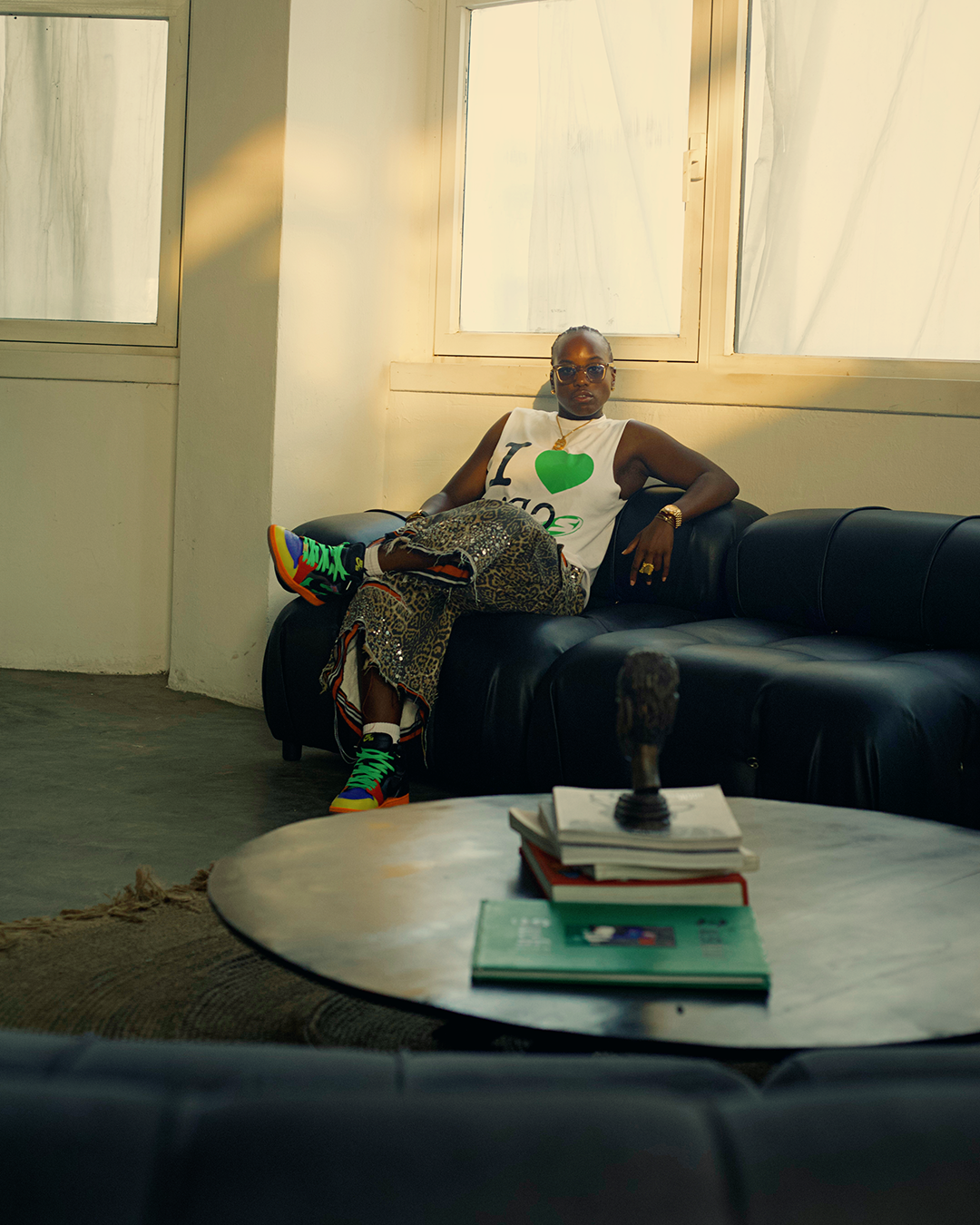
What's next?
This year is about to be our most exciting year. We have a lot of sick collaborations coming out, local and global. I'm really excited about them. Nothing I can necessarily speak on now, I'm NDA'd out, but I'm really, really excited. It's going to be the most special year yet.
This is our year of expansion. I feel like we're really about to get to that next level and that next step. You should look out for our e-commerce store. We launched it officially last year. We're onboarding a lot of new brands from Nigeria, from across Africa, and from our friends in the diaspora as well. We're going to have a really incredible selection at Street Souk.
We also have a physical space within the Homecoming concept store where you'll be able to shop everything online in person, just for that in-person experience, you want to go try it on, see how it feels. We also have the Street Souk After Dark, which is our monthly activation where we'll be curating different brands on a monthly basis, different DJs, different artists, a chance to come and discover what's next in our community, what's next on the scene. I'm really excited about this. It has a lot of potential to be something really incredible.
We're just in that cycle where this is the next generation of what is going to be mainstream or what is going to be the next big thing, and we're lucky enough to be an incubator for a lot of these brands, a lot of these artists, a lot of these different forms of talent. We're also going on a university tour in Nigeria. Of course, we're going on a global tour as well, hitting up some new places, hitting up some of our stomping grounds already. I'm really excited for the university tour, just tapping in with the youths out here, seeing what people are doing, activating their brands in a lot of design competitions. We have a lot of really sick stuff coming up this year. I'm super excited. I can't wait for everything to start officially rolling out.
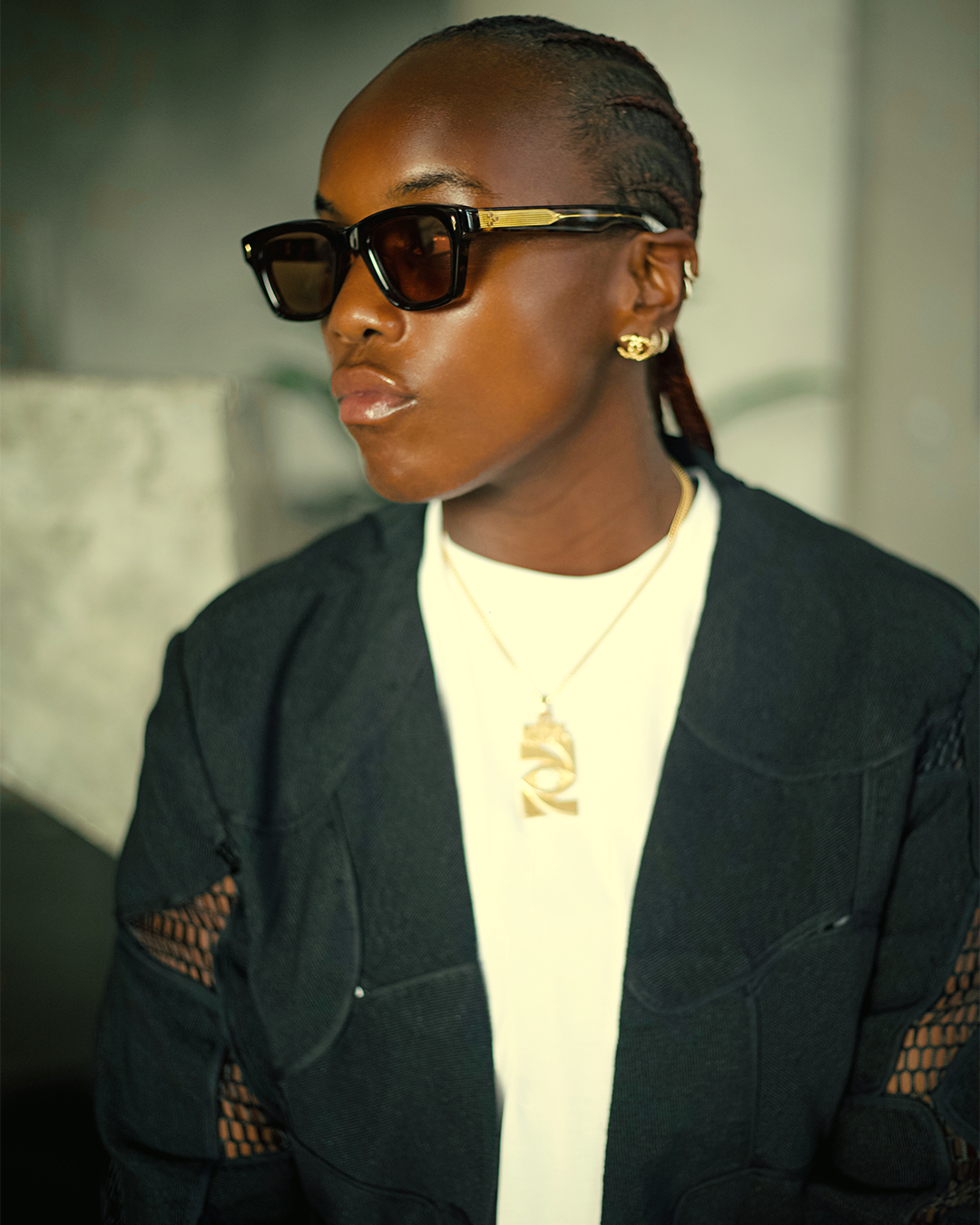
Midway through, Ireti says something that lands differently the second time you read it: "We're not trying to adapt to where we are. We're trying to get them to adapt to who we are." She says it like it's obvious.At this point, it is. Ireti knows exactly what Street Souk is; an epicentre, an infrastructure, a legitimiser, and she's known since she was 18, standing in her mother's event space, imagining a version for people who dress like her, her generation. Eight years later, the vision has only sharpened. The e-commerce store. The physical retail space. The After Dark monthly activations. The university tour. The global expansion. Every decision connects back to the same vision she had at 18.
And at the centre of it all, a woman who still personally reviews every single one of those thousand plus brand applications, because she understands that what shows up at Street Souk is not just representing another convention, it's representing an entire continent's creative output.
Ireti Zaccheaus didn't wait for the infrastructure to exist. She built it. And eight years later, she's still building. Tastemaker, Curator, Architech of StreetSouk.


.png)

