.svg)

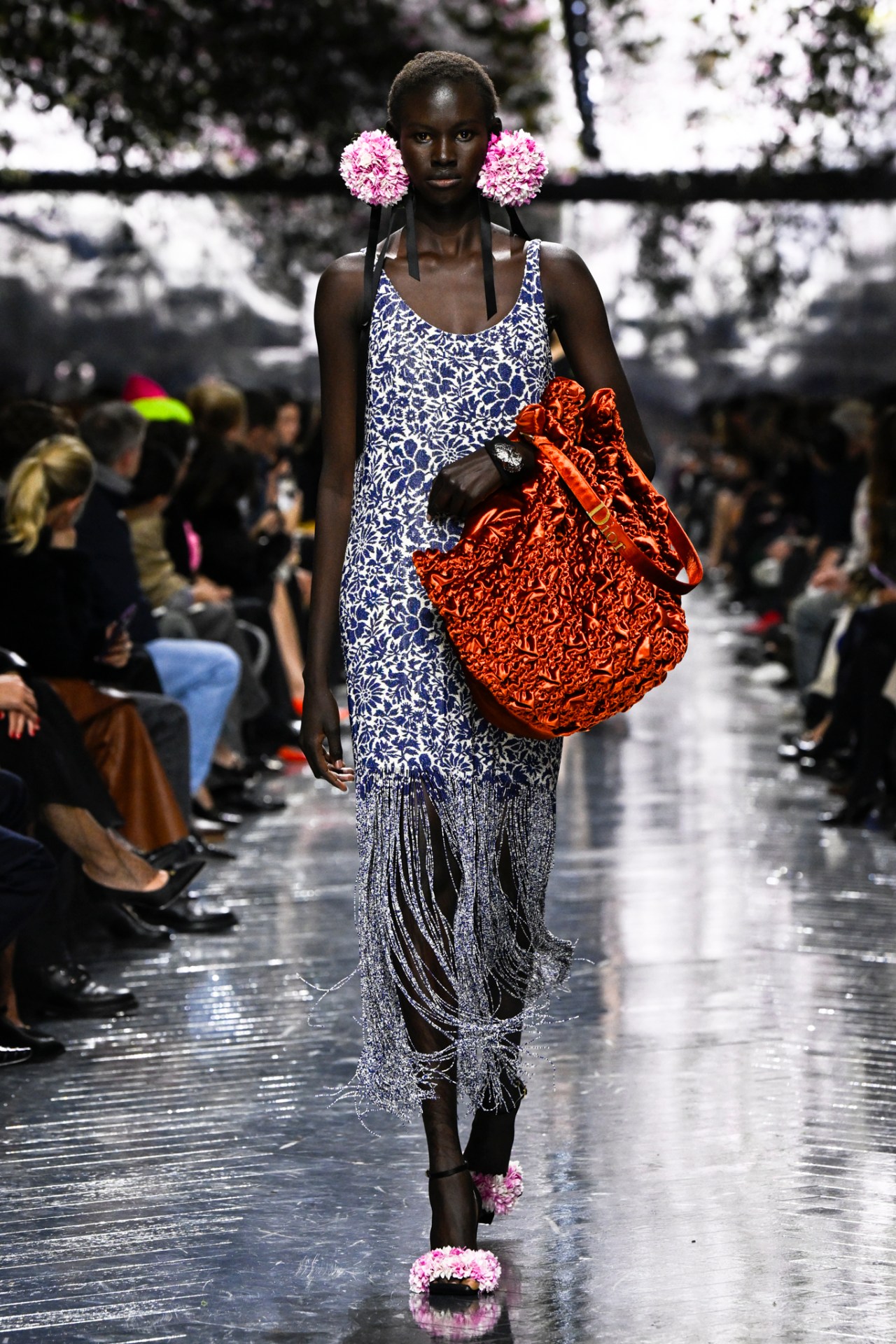
Pullquote: “From Dior’s flower earmuffs to sculpted blooms across the runway, these Spring 2026 makes florals feel deliberate again”
Florals for spring are supposed to be easy. Predictable, even. The kind of visual shorthand fashion reaches for when it wants to gesture toward renewal without having to say much at all. It’s a language so overused it’s almost invisible. You see a flower, and you understand the assignment. For years, the “spring florals” motif has operated on autopilot through printed dresses, soft palettes, and an easy return to femininity that rarely asks to be interrogated. Spring 2026, however, slows that instinct down.
Across the Spring 2026 runways, flowers are not quite performing the way they used to. Rather than dissolving into dresses or romanticising the body into soft and palatable silhouettes, it sits awkwardly. It feels estranged entirely from the idea of nature itself. Many designers approached spring florals much more grounded and made you actually look again.
At Christian Dior, Jonathan Anderson’s haute couture debut set the tone early in the season. He reoriented the house’s longstanding relationship with flowers away from surface-level romanticism and toward process.
Inspired in part by a bouquet of cyclamen, Anderson translated botanical forms into sculptural silhouettes. The collection did not rely on floral prints. Instead, flowers appeared as constructed elements through sculptural petals layered into skirts, stems translated into accessories, and most notably, flower-shaped earmuffs that framed the face in a way that felt both playful and slightly surreal. It’s the most obvious extract from nature to fixate on, but that’s exactly why it worked. It pulled florals away from the expected (dresses, embroidery, softness) and placed them somewhere colder, more deliberate. The intentional placements were almost architectural in how they framed the body.
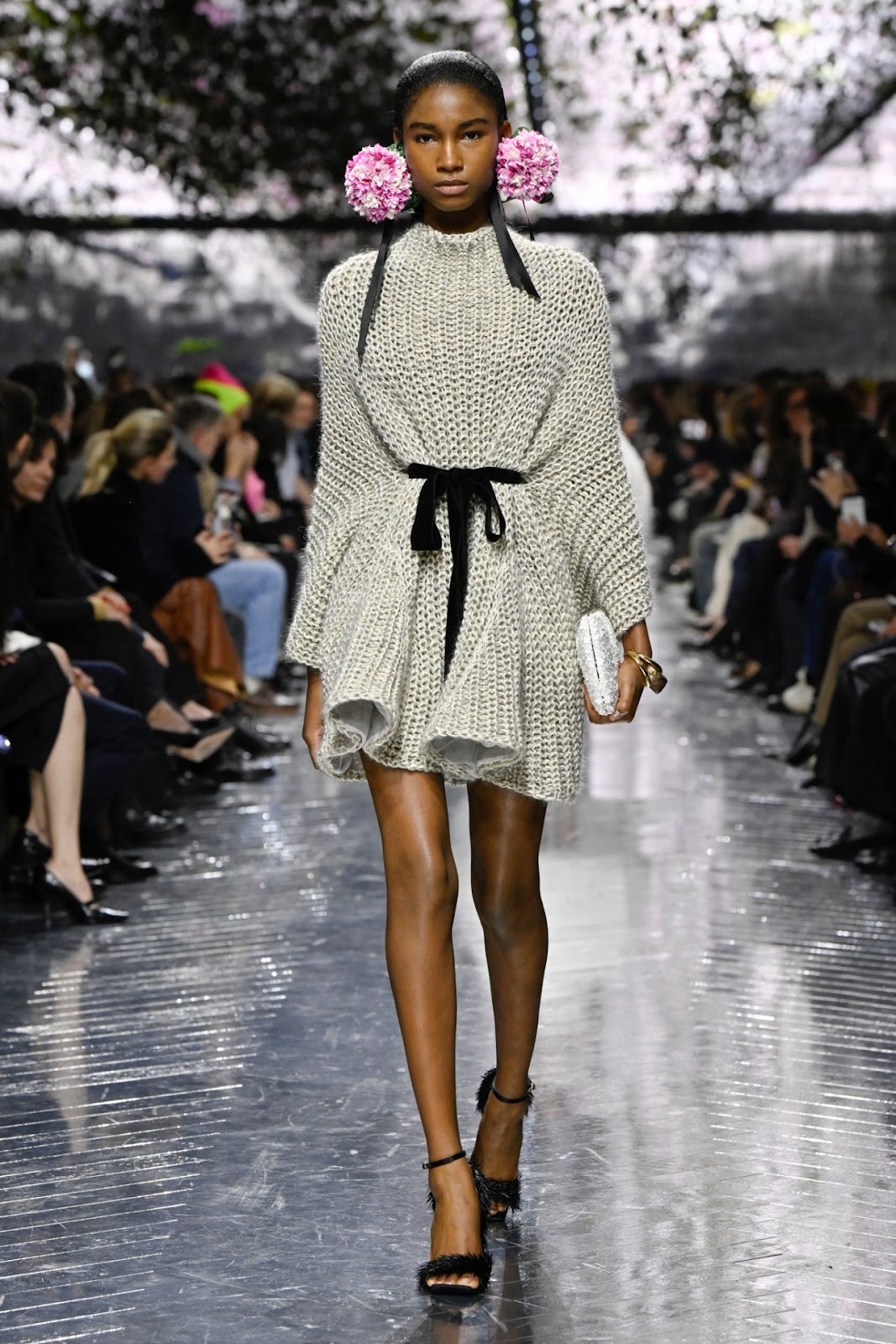
The Spring-Summer 2026 collection made it clear that Anderson was not interested in florals as background decoration. He treated them as standalone forms capable of being repositioned on the body. Even the silhouettes followed that logic and successfully created a controlled version of “blooming” that felt engineered.
What’s compelling here is not just the final look, but the insistence on process. Each element was meticulously assembled through couture techniques: silk petals cut individually, shaped using moulds, dyed to achieve tonal variation, embroidered and reconstructed into their individual pieces. You can visibly see the work in them. Dior’s florals do not attempt to replicate the spontaneity of nature; instead, they foreground the effort required to approximate it. Flowers in this context are a demonstration of craft, discipline, and control. In doing so, Anderson situates florals within the logic of couture itself, slow, deliberate, and resistant to the speed of contemporary fashion production.
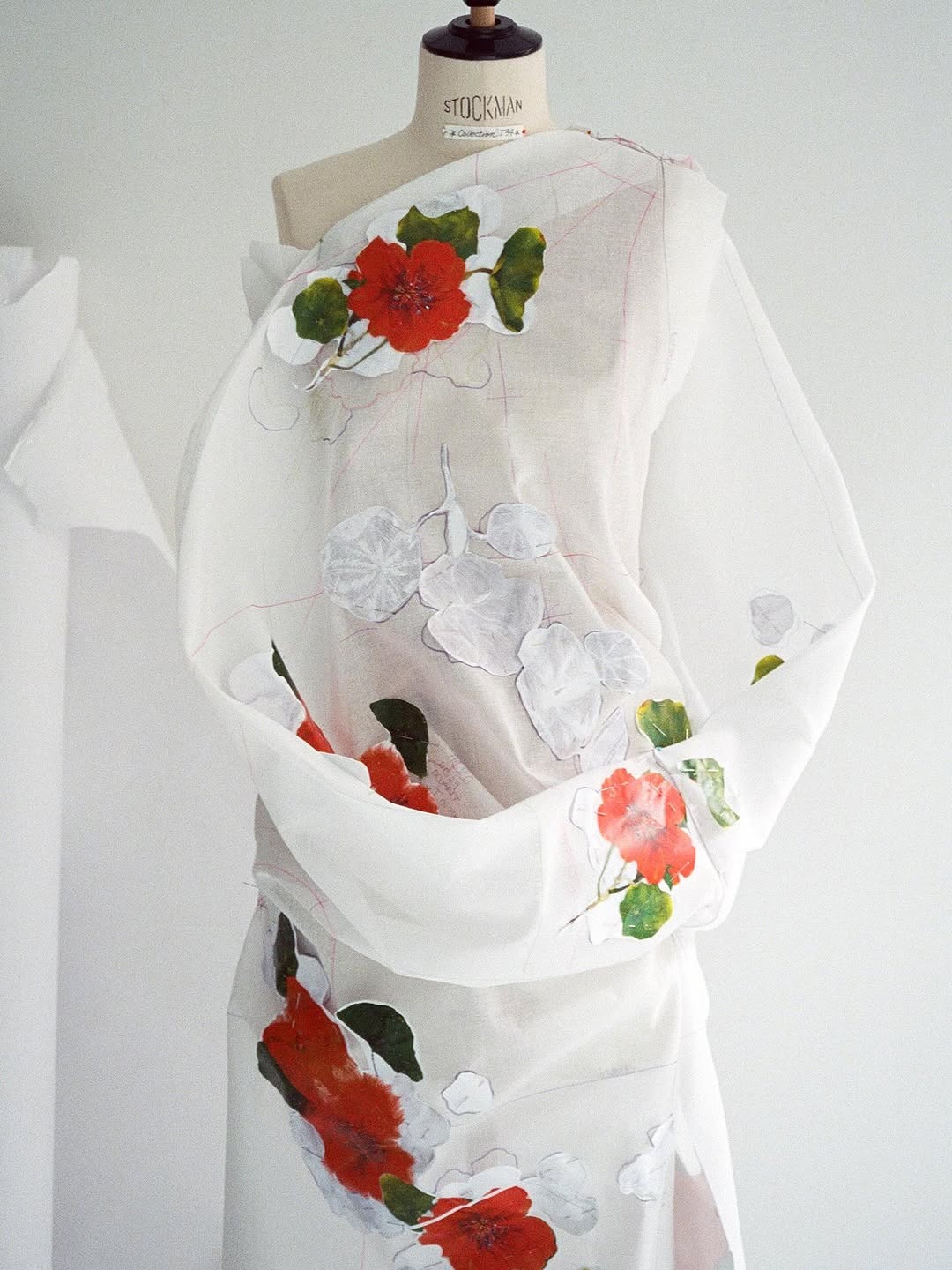
There’s a similar thread at Alexander McQueen, though it manifests differently. Here, the bloom is undone. Petals are distressed and intricately layered into garments. If florals once symbolised growth, McQueen leans into the opposite by focusing on decay, erosion, and the slow collapse of something that was once considered beautiful. It’s not exactly nihilistic, but it refuses the optimism traditionally embedded in spring dressing. With Simone Rocha, the florals feel preserved, pressed into sheer fabrics, suspended beneath tulle, as though trapped between states of being. There’s an archival quality to it, like these flowers are no longer part of the natural world but relics of it. Even Valentino, so often synonymous with overt romance, pulled back for S/S26. The florals are sparse, almost reluctant. A single bloom interrupts an otherwise restrained silhouette. The effect is less about indulgence and more about control, suggesting that the excess historically associated with femininity is being reconsidered, perhaps even rejected.
Taken together, these collections show a shift in florals through fashion. What connects these collections is a refusal to let florals fade into the background. Designers are thinking about placement, where a flower sits and why, and considering scale. Whether it overwhelms or barely interrupts. And most importantly, they’re thinking about texture. You see this clearly in recent ready-to-wear drops as well. Across brands, florals are moving off the surface and into three-dimensional space: rosettes that protrude from tops, sculpted appliqués that sit on skirts, fabric flowers that function as accessories rather than embellishments. Even when prints do appear, they’re often enlarged, abstracted, or distorted, less about prettiness and more about impact.
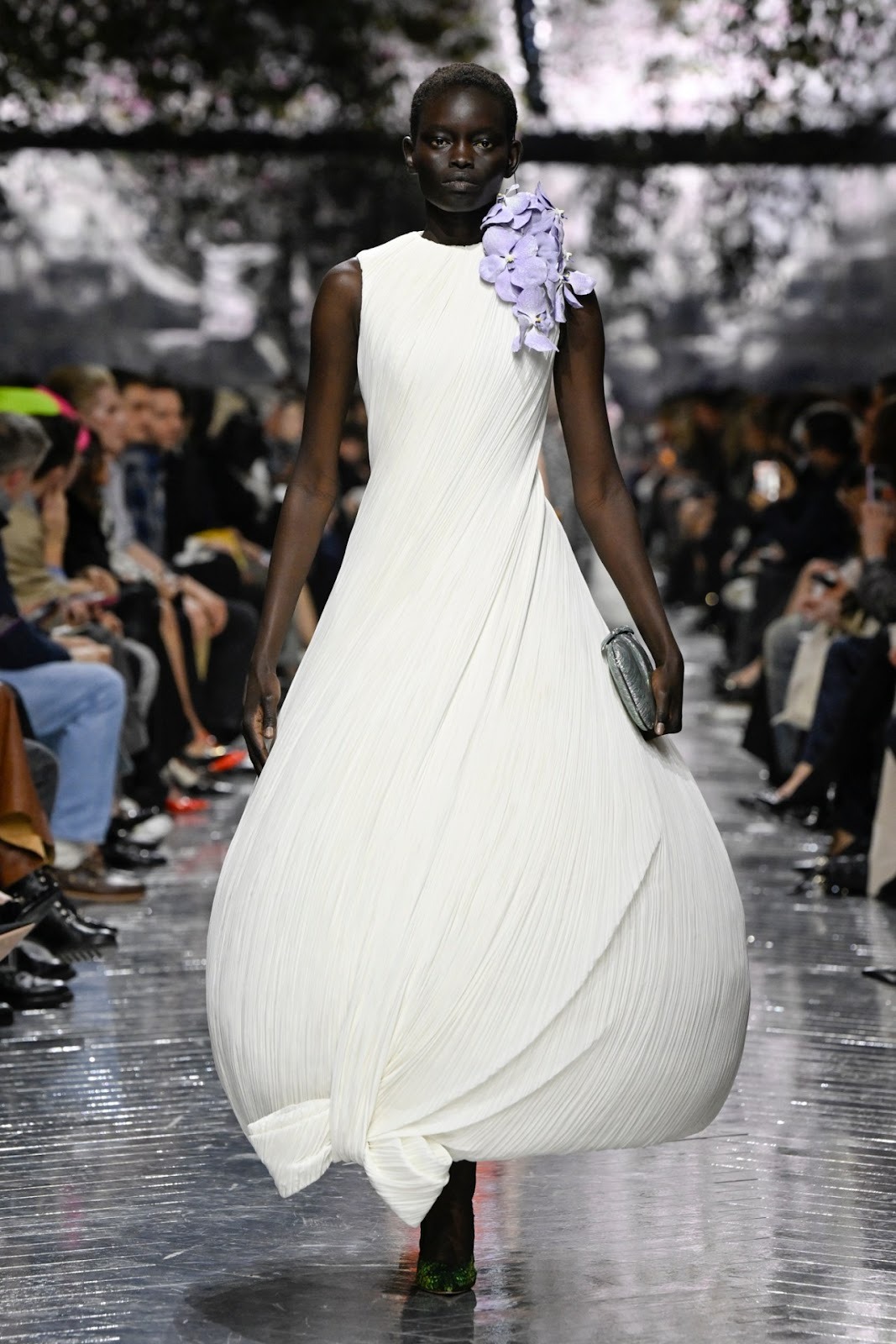
It’s a subtle shift, but necessary. For a long time, florals have been doing very little. They’ve been safe and an easy way to signal femininity without challenging it. But Spring 2026 asks more of them. By stripping back the excess and focusing on construction, designers force the spring floral motif to feel deliberate once again.
There’s also something slightly ironic in how “natural” all of this feels. These are not spontaneous, carefree flowers. They are highly controlled, cut, placed, and fixed in position. Nothing about them is accidental. And maybe that’s the point.
Fashion’s version of nature has never really been natural. It’s always been mediated through fabric, through print, through the designer’s hand. What feels different now is the refusal to hide that mediation. And in that sense, florals this spring feel less like a return to tradition and predictability, and more like a critique of it, which stirs us in a different direction almost entirely.


.png)

