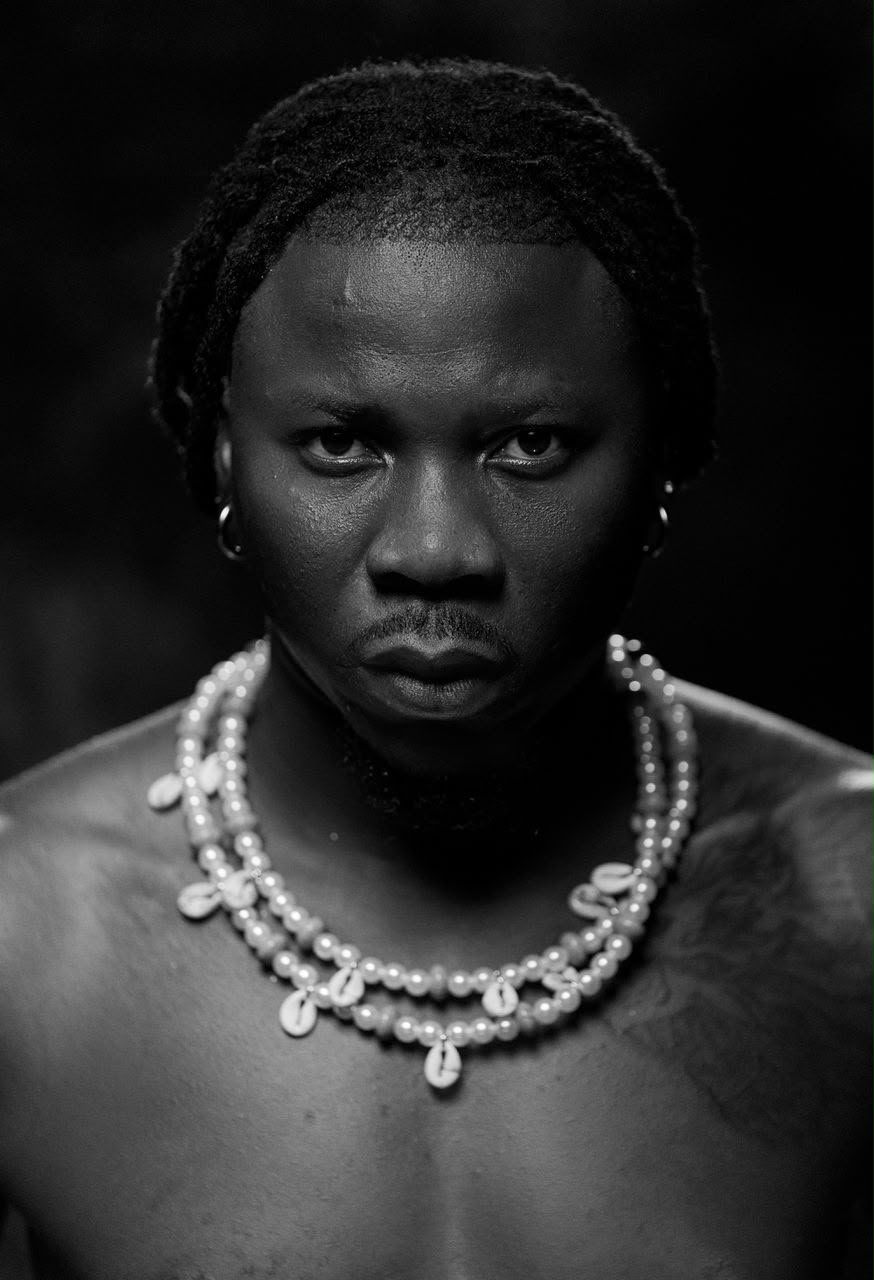
From Ashaiman To Wembley, Stonebwoy Is Breaking New Grounds With Afro Dancehall

Authored by

Stonebwoy calls his sound "Afro dancehall" - a blend of Afrobeat, reggae, dancehall, highlife and traditional African styles that he has been refining since he was a teenager in Ashaiman, Ghana. His 2012 debut, Grade 1, introduced an artist fluent in Ghanaian street rhythms and Jamaican dancehall grammar. Three years later, he had clinched honours at notable awards including the Ghana Music Awards and the Black Entertainment Television (BET) award, rising to the limelight of African Pop. Born Livingstone Etse Satekla, the 38-year-old bard has spent over a decade building a musical identity that moves between continents without losing its roots, and a festival - Bless His Imperial Majesty - that has grown from Ghana's biggest artist-led event into one of the country’s biggest cultural exchange arenas with immense global reach. Its eleventh edition arrived at OVO Arena Wembley this August, making Stonebwoy the first Ghanaian artist to headline the iconic venue. Catching up with Deeds Magazine, he spoke about cultural bridges, what collaboration actually requires, and why the music connecting Africa and the Caribbean has always been the same music.

Sophia For Deeds: For anyone reading this and discovering you for the first time, how would you introduce yourself and your music?

I will introduce myself as Livingstone Etse Satekla by birth and Stone boy S T O N E B W O Y as artist name. My music is a combination of music of black origin, you know, all from whether created from Africa or created from the diaspora. Specifically Afrobeats, high life music, reggae music, dancehall music, hip hop music, pop music, traditional musical style.  So that's the fusion of it all. That's how I describe my music.

I coined the term Afro dancehall, which would now become the representation of all these styles that I have since been propagating and been largely known for globally. So once you type ‘Afro dancehall’ out on a search engine, you find out that there's one Stonebwoy who is a pioneer behind that terminology..

You grew up in Ashaiman and built a career that now leads to OVO Arena Wembley. When you trace that journey - what was the moment that changed everything?

The moment when I decided to be very determined.  The moment when I could see in my mind's eye, in my vision platter, that I have a goal to achieve, I can feel it beat strongly inside of my heart.  I can feel the fire burn and know that I am destined to actually contribute to the musical ecosystem of Africa in my era.  That is when I took it all very, very seriously. This has been from inception. I am one of those kids who would realize their talents from a very young age and begin professing it and expressing it. So it just got more serious as the days went by and you know, here we are today and I'm not relenting.
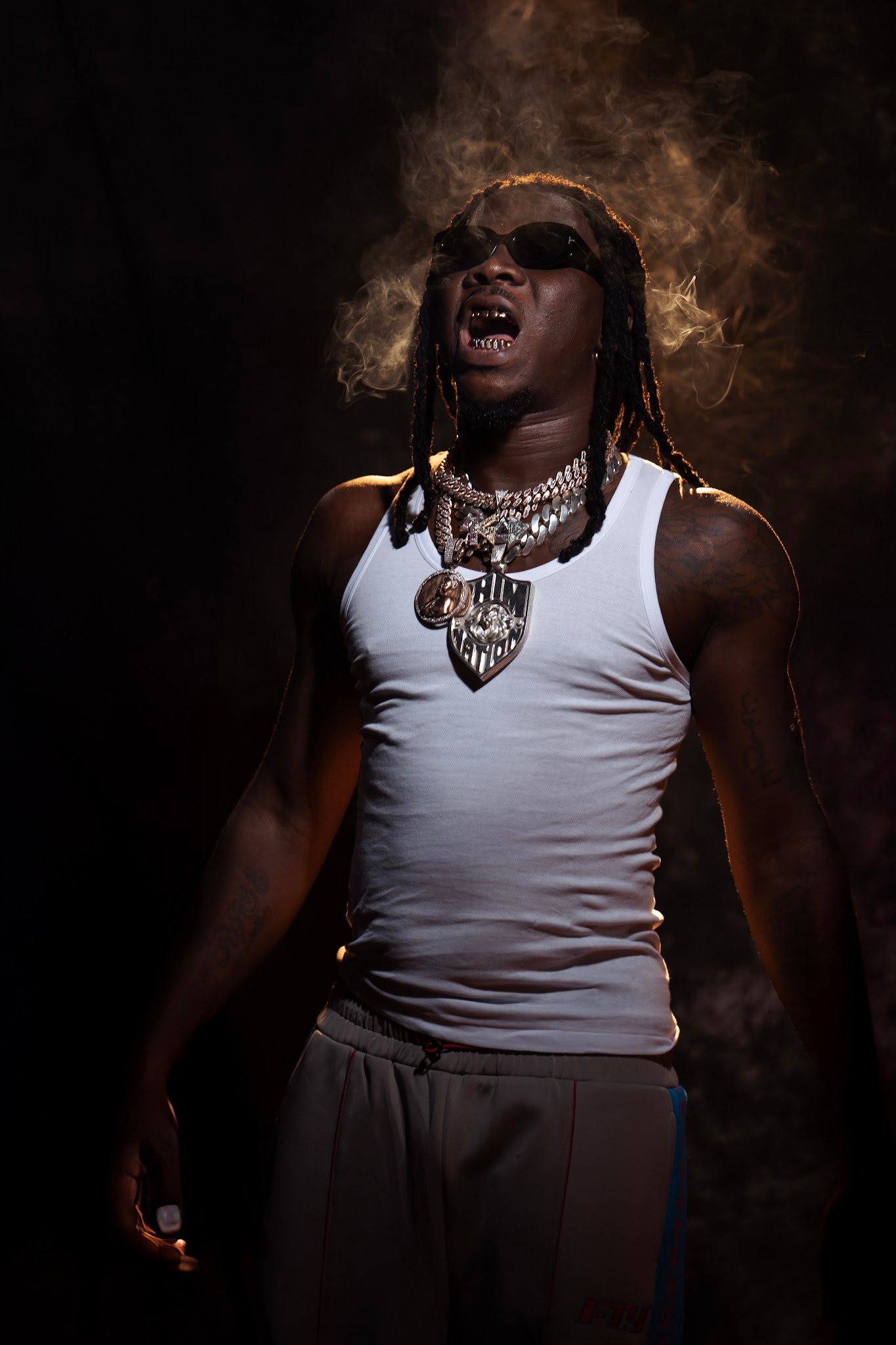
Credit: Stonebwoy

BHIM Festival turned ten in 2025 and now moves to London. When you started it, did you see it becoming what it has become or did it outgrow the original vision?

It is actually what it is because it was fundamentally created to give myself a platform that is befitting of hosting people from all walks of life at the end of every year, so that whatever it is, before the year started, those who would have traveled from the diaspora and returned home, those who would find some time to listen to some good music and some great performance, would all gather together and listen to my style.  The same that I have actually described to you.

Because most dominantly you find out that these are not the type of typical styles that any artist possesses easily, encompassing or putting together all these influences and trying to make them into one sound. So I needed a platform that would continuously give me the time, the freedom to express myself through the audience. 10 years running, and this year is the 11th year. From inception, it was hosted at one of the biggest capacities in the country.  From year one then we knew that was the standard that were supposed to maintain and God being so good, all efforts, etcetera, put together, we have been able to become the single artist led festival that has done the biggest capacities or continued to do the biggest capacity in Ghana, while also bridging the gaps between African music and Caribbean music, most especially music of black origin, because that is the true purpose of the music that we do or that I do. That is the whole vision and mission behind it. So bringing it here in the 11th year in the heart of London for the first time is amazing.  It's the biggest. At the capacity where it's like very.  Where it's like, what do you say?  Iconic, if I can say that or it's an iconic place.

You know, Wembley, OVO arena and still with the same purpose, same energy bridging African music, especially Ghanaian music, with Caribbean style and selling it to the world and creating such an atmosphere that people would be able to continuously identify themselves as who they are and enjoy their own creative in terms of music that comes out.

Headlining OVO Arena Wembley makes you the first Ghanaian artist to do so. What does that specific milestone mean to you personally?

Personally, it makes me feel like I'm dancing to a P-Square song. 

You should get the punchline (laughing)  

Anyway,on a more serious note, the brand Stonebwoy and its team are actually relentless when it comes to breaking the envelope and representing Ghana and Africa. This will not be the first ever milestone that has been broken by the brand Stonebwoy and its associates. The BHIM Fest itself is the only festival that has done two times across Port Stadium 40,000 seater capacity into 50,000 plus twice and done other stadiums across Ghana as well. That on its own is historic right there. So bringing it here in a capacity where it's a taste that is breaking the first time and Ghanaian artists coming in to do the OVO and at this capacity it is just in line. But it will interest you to know that was not part of our plans to be the first. We just realized that is what we have become again, you know.

The London edition brings together African and Caribbean music on one stage. You have spent your career arguing that Africa and the Caribbean share something musically and culturally. What is something you think others still ignore about that cross-cultural connection?

Yeah man, there are a few things that people ignore and those are people who do not seek to know anything about history, anything about roots. To a large extent and primarily they would be denying themselves of self identity and as such you find out that, there is some amount of something missing, when it comes to their self identity. So it is very important for some people, us who actually are born from the motherland, who actually would pay attention to history and read and learn to educate ourselves and also send that information across. We have various forms, we have various media that we can use in today's time to make that communication easy, bringing about the cross cultural connection to be stronger and stronger. 

Because the Caribbean at the last African Union meeting has been agreed to be the seventh region of the African states. So that tells you that we are all definitely also economically one.  Why would it be so? It would be so because the leaders and the political handlers of the Caribbean states, they would actually know better and understand.  When you go to Sudanam, you see the West African culture predominant inside of their living.  When you go to Guyana, when you go to some, I mean when you go to most of the Caribbean countries, you realize how very prominent the African culture is in them.  And all this is carried through DNA's practices that were left uncovered.

It is very important for us black people globally to understand that we have to continue to live in the vision of those who have come and spoken and sacrificed for us, which is the Kwame Nkrumah, the Marcus Garvey, the Martin Luther Kings. And you know, all of this, it doesn't take anything away from us. It doesn't hurt to self identify.  And all that can only be done through creative arts and culture and commerce. So for us who actually are practitioners of creative arts and culture, we want to use the music, the movies, we want to use all aspects, all mediums, you know, to continue to bring together and solidify the bridge of oneness amongst black people globally. And BHIM fest does nothing but that, you know, which is its core mandate.  So yeah, man.  For those who do not really want to recognize that, I wish that they do because without true self identity, there's no fulfillment in existence. Yeah, man.

You blend reggae, dancehall, Afrobeats and Ghanaian sounds in a way that feels natural rather than calculated. Take us inside the studio sessions; what does the process look like?

Yeah, man, the process is a beautiful one. When you, when you dig into a day in the life of Stonebwoy in a studio, it's very interesting that all these influences that are carefully calculated in the mathematical, you know, formula of my DNA, it comes out easily.  You know, I am one time, I'm giving some style that will represent the Caribbean vibe. I'm giving some style that is typically high life. I'm giving some style that is typically reggae. So I would say that to come this far, it's very fluid for me to do. And that is how we continue to enjoy Stone Bwoy style, Stone Bwoy brand. I think it is not entirely alien. It has only built on its style because these styles that I'm referring to, I've always been in the African system. We have legends who have traveled and have done so much in that same context. But what Stone Bwoy has done is to continue it in a light that is even much more, very authentic. To export into the Caribbean audience. Yeah, man.  So that's how I can tell you once when you catch me being creative, it just flows, you know, over the years that I have had experience at what I do.
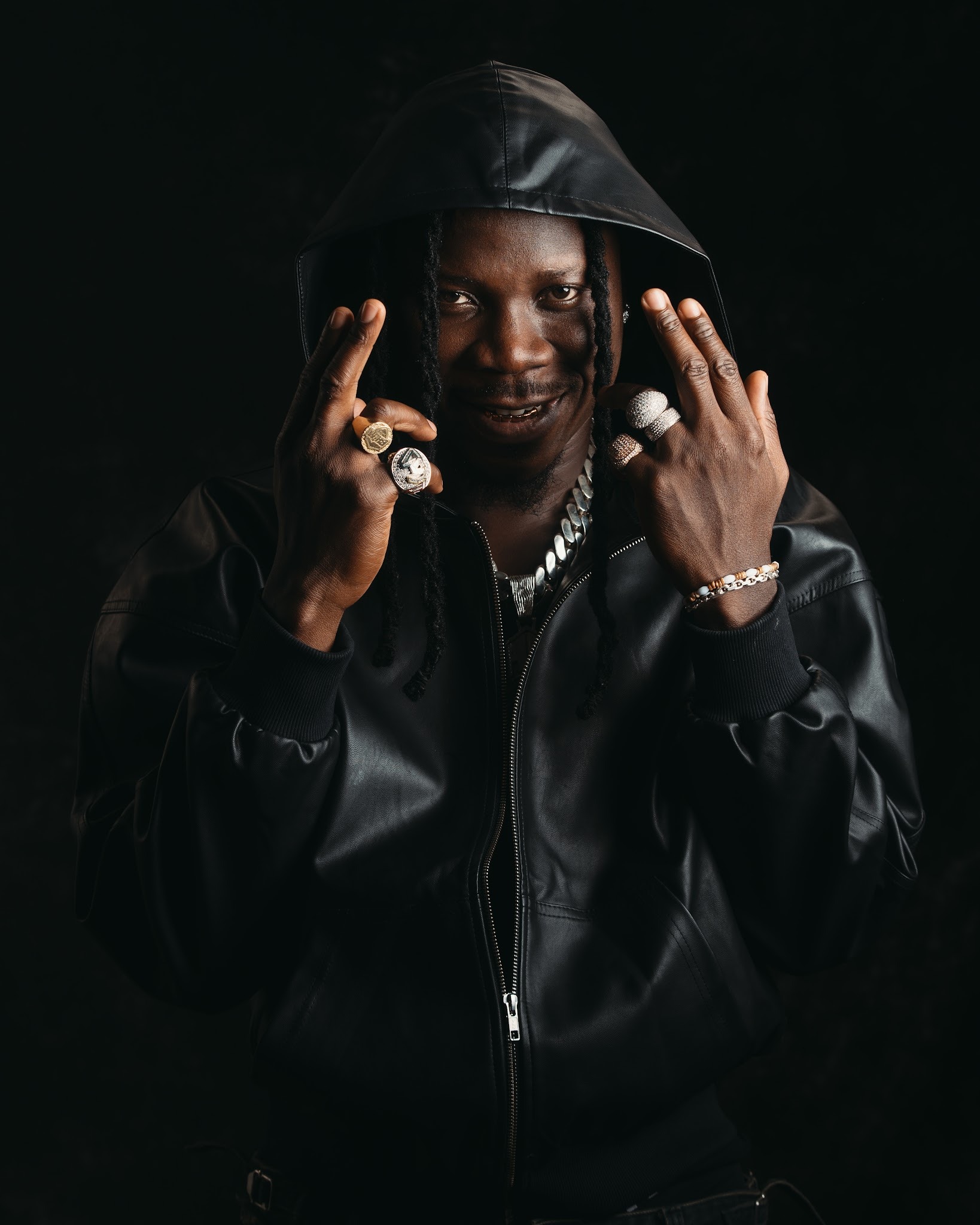
Credit: Stonebwoy

You've collaborated with Sean Paul, Beenie Man, Burna Boy, Stormzy, Davido, Angélique Kidjo. What does a collaboration actually need, for you to work just beyond two names on a record?

A collaboration definitely goes beyond the two people on a song. It brings the strengths of one artist together with those of another, creating something even more powerful. It also represents unity and brings people together, especially when you have the opportunity to work with one of our elders, like Angélique Kidjo, who has been in the industry for more than 40 years. I had the opportunity to collaborate with her again during her 40th-anniversary concert at the Royal Albert Hall, which was my first time there. It was beautiful to experience that crossover and connect with her audience. Collaboration is something we should always insist on and continue to push for. It reaches far beyond the music. It brings different fans and listeners together and merges different styles. That is what makes it so beautiful.

Afro-dancehall as a sound has been growing, you've been central to that conversation for over a decade. Where do you think the sound is going, and what role does Ghana specifically play in it?

Thank you very much.  The sound has definitely gone global. Not to say it's going global.  It's gone global because it is supposed to be freedom. Afro dancehall is supposed to be the vehicle, you know, that all African artists, which I can give names, who are influenced by music of black origin, especially reggae, dancehall to be able to measure that into their indigenous African styles and express them without apology, because I think 15 years ago, it was not actually cool. It was difficult for an African artist to have the freedom, to be able to expand their creativity, be it being influenced by some reggae, some dancehall, which would have been dominant or which is still dominant in Africa, you know what I'm saying? There was some level of fright, there's some level of segregation that, oh, you are not Jamaican. Why are you trying to?  You know what I'm saying? But then I came in to make them know you do not have to be Jamaican once you are African. You have what it takes equally as a Jamaican, because a large number of Jamaicans, historically, through DNA, whatever, are black people, which you also are. 

Much of the creativity we possess lives in our DNA. It does not exist only in the instruments we play or the drums we beat; it is in our blood. So I can, they can, and all of us can. I have been giving that Afro-dancehall energy and pushing the ideas and teachings behind the sound, and it has created a lot of freedom.

I see it becoming even more global. I recently released a project featuring 16 young, up-and-coming artists whose influences stretch across African music, reggae, dancehall and hip-hop. You should hear how beautifully they express themselves on the record, touching on all these influences at once. It was not always like this. A movement like this will continue to grow, become global and create more freedom.

That freedom is important because creativity thrives in freedom. Without freedom, you cannot create. That is what Afro-dancehall is here to provide: room for people to express themselves freely. That is why I exist and why I can speak my Yoruba, my Ga, my patois and my English. I can sing all of it. [Sings.] You know what I’m saying? Anytime, anyhow; freedom of expression. That is what Afro-dancehall represents.

You were recently at Rema's London listening party. There's a generation of African artists operating at a genuinely global scale right now. What do you think the generation that built the foundation - yourself included, is still owed in that conversation?

I think we deserve the respect, you know, and the honor and that's what is very important.  And the mention, you know what I'm saying? Because it's like honoring your father. It only creates room for you to be honored when you become one. Because as a child today, a father tomorrow, a grandfather, the next time, and a great grand the other time if God gives you life, you know what I'm saying? So if you honor your parents or you honor your elders, you are also going to be honored by the children who will come behind you. So I think what we deserve or what we require is honor because we have made it at least easier for the generation behind. Using Rema as a typical case study. I'm so excited about his new body of work. And all I see, all I hear in the new body of work is Afro Dancehall...(sings Rema’s Tea) It’s like this vibe. Yeah, I told you already, freedom. So when I met him at the other, at the event, it was just beautiful, you know, that would be the third or the second time we are meeting. He always expresses a lot of honor towards me in person and says, Yo OG! I say, I'm too young to be OG now, you see?  So that's it, where we deserve a lot of honor. I'm telling you, the key is that once they bring honor to us, they're going to be honored as well. You know what I'm saying? Because, yeah, that's just it. That's just it. I'm happy and excited to be a part of that school, as you would even mention, you know, that we are still contributing to that effect. 

As we wrap up - beyond the show, what do you want people to understand about this chapter of your career?

God bless you. Beyond the show, this chapter of my career is going to continue to be a global chapter. Most primarily, I want the world to know me for that African child that persistently sent some amount of education, was very proud to be black, not only at colour, but proud to invest in himself as an African child and inspire the next African child wherever they find themselves on the globe.
From Ashaiman To Wembley, Stonebwoy Is Breaking New Grounds With Afro Dancehall

Authored by
This is some text inside of a div block.

Stonebwoy calls his sound "Afro dancehall" - a blend of Afrobeat, reggae, dancehall, highlife and traditional African styles that he has been refining since he was a teenager in Ashaiman, Ghana. His 2012 debut, Grade 1, introduced an artist fluent in Ghanaian street rhythms and Jamaican dancehall grammar. Three years later, he had clinched honours at notable awards including the Ghana Music Awards and the Black Entertainment Television (BET) award, rising to the limelight of African Pop. Born Livingstone Etse Satekla, the 38-year-old bard has spent over a decade building a musical identity that moves between continents without losing its roots, and a festival - Bless His Imperial Majesty - that has grown from Ghana's biggest artist-led event into one of the country’s biggest cultural exchange arenas with immense global reach. Its eleventh edition arrived at OVO Arena Wembley this August, making Stonebwoy the first Ghanaian artist to headline the iconic venue. Catching up with Deeds Magazine, he spoke about cultural bridges, what collaboration actually requires, and why the music connecting Africa and the Caribbean has always been the same music.

Sophia For Deeds: For anyone reading this and discovering you for the first time, how would you introduce yourself and your music?

I will introduce myself as Livingstone Etse Satekla by birth and Stone boy S T O N E B W O Y as artist name. My music is a combination of music of black origin, you know, all from whether created from Africa or created from the diaspora. Specifically Afrobeats, high life music, reggae music, dancehall music, hip hop music, pop music, traditional musical style.  So that's the fusion of it all. That's how I describe my music.

I coined the term Afro dancehall, which would now become the representation of all these styles that I have since been propagating and been largely known for globally. So once you type ‘Afro dancehall’ out on a search engine, you find out that there's one Stonebwoy who is a pioneer behind that terminology..

You grew up in Ashaiman and built a career that now leads to OVO Arena Wembley. When you trace that journey - what was the moment that changed everything?

The moment when I decided to be very determined.  The moment when I could see in my mind's eye, in my vision platter, that I have a goal to achieve, I can feel it beat strongly inside of my heart.  I can feel the fire burn and know that I am destined to actually contribute to the musical ecosystem of Africa in my era.  That is when I took it all very, very seriously. This has been from inception. I am one of those kids who would realize their talents from a very young age and begin professing it and expressing it. So it just got more serious as the days went by and you know, here we are today and I'm not relenting.

Credit: Stonebwoy

BHIM Festival turned ten in 2025 and now moves to London. When you started it, did you see it becoming what it has become or did it outgrow the original vision?

It is actually what it is because it was fundamentally created to give myself a platform that is befitting of hosting people from all walks of life at the end of every year, so that whatever it is, before the year started, those who would have traveled from the diaspora and returned home, those who would find some time to listen to some good music and some great performance, would all gather together and listen to my style.  The same that I have actually described to you.

Because most dominantly you find out that these are not the type of typical styles that any artist possesses easily, encompassing or putting together all these influences and trying to make them into one sound. So I needed a platform that would continuously give me the time, the freedom to express myself through the audience. 10 years running, and this year is the 11th year. From inception, it was hosted at one of the biggest capacities in the country.  From year one then we knew that was the standard that were supposed to maintain and God being so good, all efforts, etcetera, put together, we have been able to become the single artist led festival that has done the biggest capacities or continued to do the biggest capacity in Ghana, while also bridging the gaps between African music and Caribbean music, most especially music of black origin, because that is the true purpose of the music that we do or that I do. That is the whole vision and mission behind it. So bringing it here in the 11th year in the heart of London for the first time is amazing.  It's the biggest. At the capacity where it's like very.  Where it's like, what do you say?  Iconic, if I can say that or it's an iconic place.

You know, Wembley, OVO arena and still with the same purpose, same energy bridging African music, especially Ghanaian music, with Caribbean style and selling it to the world and creating such an atmosphere that people would be able to continuously identify themselves as who they are and enjoy their own creative in terms of music that comes out.

Headlining OVO Arena Wembley makes you the first Ghanaian artist to do so. What does that specific milestone mean to you personally?

Personally, it makes me feel like I'm dancing to a P-Square song. 

You should get the punchline (laughing)  

Anyway,on a more serious note, the brand Stonebwoy and its team are actually relentless when it comes to breaking the envelope and representing Ghana and Africa. This will not be the first ever milestone that has been broken by the brand Stonebwoy and its associates. The BHIM Fest itself is the only festival that has done two times across Port Stadium 40,000 seater capacity into 50,000 plus twice and done other stadiums across Ghana as well. That on its own is historic right there. So bringing it here in a capacity where it's a taste that is breaking the first time and Ghanaian artists coming in to do the OVO and at this capacity it is just in line. But it will interest you to know that was not part of our plans to be the first. We just realized that is what we have become again, you know.

The London edition brings together African and Caribbean music on one stage. You have spent your career arguing that Africa and the Caribbean share something musically and culturally. What is something you think others still ignore about that cross-cultural connection?

Yeah man, there are a few things that people ignore and those are people who do not seek to know anything about history, anything about roots. To a large extent and primarily they would be denying themselves of self identity and as such you find out that, there is some amount of something missing, when it comes to their self identity. So it is very important for some people, us who actually are born from the motherland, who actually would pay attention to history and read and learn to educate ourselves and also send that information across. We have various forms, we have various media that we can use in today's time to make that communication easy, bringing about the cross cultural connection to be stronger and stronger. 

Because the Caribbean at the last African Union meeting has been agreed to be the seventh region of the African states. So that tells you that we are all definitely also economically one.  Why would it be so? It would be so because the leaders and the political handlers of the Caribbean states, they would actually know better and understand.  When you go to Sudanam, you see the West African culture predominant inside of their living.  When you go to Guyana, when you go to some, I mean when you go to most of the Caribbean countries, you realize how very prominent the African culture is in them.  And all this is carried through DNA's practices that were left uncovered.

It is very important for us black people globally to understand that we have to continue to live in the vision of those who have come and spoken and sacrificed for us, which is the Kwame Nkrumah, the Marcus Garvey, the Martin Luther Kings. And you know, all of this, it doesn't take anything away from us. It doesn't hurt to self identify.  And all that can only be done through creative arts and culture and commerce. So for us who actually are practitioners of creative arts and culture, we want to use the music, the movies, we want to use all aspects, all mediums, you know, to continue to bring together and solidify the bridge of oneness amongst black people globally. And BHIM fest does nothing but that, you know, which is its core mandate.  So yeah, man.  For those who do not really want to recognize that, I wish that they do because without true self identity, there's no fulfillment in existence. Yeah, man.

You blend reggae, dancehall, Afrobeats and Ghanaian sounds in a way that feels natural rather than calculated. Take us inside the studio sessions; what does the process look like?

Yeah, man, the process is a beautiful one. When you, when you dig into a day in the life of Stonebwoy in a studio, it's very interesting that all these influences that are carefully calculated in the mathematical, you know, formula of my DNA, it comes out easily.  You know, I am one time, I'm giving some style that will represent the Caribbean vibe. I'm giving some style that is typically high life. I'm giving some style that is typically reggae. So I would say that to come this far, it's very fluid for me to do. And that is how we continue to enjoy Stone Bwoy style, Stone Bwoy brand. I think it is not entirely alien. It has only built on its style because these styles that I'm referring to, I've always been in the African system. We have legends who have traveled and have done so much in that same context. But what Stone Bwoy has done is to continue it in a light that is even much more, very authentic. To export into the Caribbean audience. Yeah, man.  So that's how I can tell you once when you catch me being creative, it just flows, you know, over the years that I have had experience at what I do.

Credit: Stonebwoy

You've collaborated with Sean Paul, Beenie Man, Burna Boy, Stormzy, Davido, Angélique Kidjo. What does a collaboration actually need, for you to work just beyond two names on a record?

A collaboration definitely goes beyond the two people on a song. It brings the strengths of one artist together with those of another, creating something even more powerful. It also represents unity and brings people together, especially when you have the opportunity to work with one of our elders, like Angélique Kidjo, who has been in the industry for more than 40 years. I had the opportunity to collaborate with her again during her 40th-anniversary concert at the Royal Albert Hall, which was my first time there. It was beautiful to experience that crossover and connect with her audience. Collaboration is something we should always insist on and continue to push for. It reaches far beyond the music. It brings different fans and listeners together and merges different styles. That is what makes it so beautiful.

Afro-dancehall as a sound has been growing, you've been central to that conversation for over a decade. Where do you think the sound is going, and what role does Ghana specifically play in it?

Thank you very much.  The sound has definitely gone global. Not to say it's going global.  It's gone global because it is supposed to be freedom. Afro dancehall is supposed to be the vehicle, you know, that all African artists, which I can give names, who are influenced by music of black origin, especially reggae, dancehall to be able to measure that into their indigenous African styles and express them without apology, because I think 15 years ago, it was not actually cool. It was difficult for an African artist to have the freedom, to be able to expand their creativity, be it being influenced by some reggae, some dancehall, which would have been dominant or which is still dominant in Africa, you know what I'm saying? There was some level of fright, there's some level of segregation that, oh, you are not Jamaican. Why are you trying to?  You know what I'm saying? But then I came in to make them know you do not have to be Jamaican once you are African. You have what it takes equally as a Jamaican, because a large number of Jamaicans, historically, through DNA, whatever, are black people, which you also are. 

Much of the creativity we possess lives in our DNA. It does not exist only in the instruments we play or the drums we beat; it is in our blood. So I can, they can, and all of us can. I have been giving that Afro-dancehall energy and pushing the ideas and teachings behind the sound, and it has created a lot of freedom.

I see it becoming even more global. I recently released a project featuring 16 young, up-and-coming artists whose influences stretch across African music, reggae, dancehall and hip-hop. You should hear how beautifully they express themselves on the record, touching on all these influences at once. It was not always like this. A movement like this will continue to grow, become global and create more freedom.

That freedom is important because creativity thrives in freedom. Without freedom, you cannot create. That is what Afro-dancehall is here to provide: room for people to express themselves freely. That is why I exist and why I can speak my Yoruba, my Ga, my patois and my English. I can sing all of it. [Sings.] You know what I’m saying? Anytime, anyhow; freedom of expression. That is what Afro-dancehall represents.

You were recently at Rema's London listening party. There's a generation of African artists operating at a genuinely global scale right now. What do you think the generation that built the foundation - yourself included, is still owed in that conversation?

I think we deserve the respect, you know, and the honor and that's what is very important.  And the mention, you know what I'm saying? Because it's like honoring your father. It only creates room for you to be honored when you become one. Because as a child today, a father tomorrow, a grandfather, the next time, and a great grand the other time if God gives you life, you know what I'm saying? So if you honor your parents or you honor your elders, you are also going to be honored by the children who will come behind you. So I think what we deserve or what we require is honor because we have made it at least easier for the generation behind. Using Rema as a typical case study. I'm so excited about his new body of work. And all I see, all I hear in the new body of work is Afro Dancehall...(sings Rema’s Tea) It’s like this vibe. Yeah, I told you already, freedom. So when I met him at the other, at the event, it was just beautiful, you know, that would be the third or the second time we are meeting. He always expresses a lot of honor towards me in person and says, Yo OG! I say, I'm too young to be OG now, you see?  So that's it, where we deserve a lot of honor. I'm telling you, the key is that once they bring honor to us, they're going to be honored as well. You know what I'm saying? Because, yeah, that's just it. That's just it. I'm happy and excited to be a part of that school, as you would even mention, you know, that we are still contributing to that effect. 

As we wrap up - beyond the show, what do you want people to understand about this chapter of your career?

God bless you. Beyond the show, this chapter of my career is going to continue to be a global chapter. Most primarily, I want the world to know me for that African child that persistently sent some amount of education, was very proud to be black, not only at colour, but proud to invest in himself as an African child and inspire the next African child wherever they find themselves on the globe.
This is some text inside of a div block.

From Ashaiman To Wembley, Stonebwoy Is Breaking New Grounds With Afro Dancehall

Authored by

Stonebwoy calls his sound "Afro dancehall" - a blend of Afrobeat, reggae, dancehall, highlife and traditional African styles that he has been refining since he was a teenager in Ashaiman, Ghana. His 2012 debut, Grade 1, introduced an artist fluent in Ghanaian street rhythms and Jamaican dancehall grammar. Three years later, he had clinched honours at notable awards including the Ghana Music Awards and the Black Entertainment Television (BET) award, rising to the limelight of African Pop. Born Livingstone Etse Satekla, the 38-year-old bard has spent over a decade building a musical identity that moves between continents without losing its roots, and a festival - Bless His Imperial Majesty - that has grown from Ghana's biggest artist-led event into one of the country’s biggest cultural exchange arenas with immense global reach. Its eleventh edition arrived at OVO Arena Wembley this August, making Stonebwoy the first Ghanaian artist to headline the iconic venue. Catching up with Deeds Magazine, he spoke about cultural bridges, what collaboration actually requires, and why the music connecting Africa and the Caribbean has always been the same music.

Sophia For Deeds: For anyone reading this and discovering you for the first time, how would you introduce yourself and your music?

I will introduce myself as Livingstone Etse Satekla by birth and Stone boy S T O N E B W O Y as artist name. My music is a combination of music of black origin, you know, all from whether created from Africa or created from the diaspora. Specifically Afrobeats, high life music, reggae music, dancehall music, hip hop music, pop music, traditional musical style.  So that's the fusion of it all. That's how I describe my music.

I coined the term Afro dancehall, which would now become the representation of all these styles that I have since been propagating and been largely known for globally. So once you type ‘Afro dancehall’ out on a search engine, you find out that there's one Stonebwoy who is a pioneer behind that terminology..

You grew up in Ashaiman and built a career that now leads to OVO Arena Wembley. When you trace that journey - what was the moment that changed everything?

The moment when I decided to be very determined.  The moment when I could see in my mind's eye, in my vision platter, that I have a goal to achieve, I can feel it beat strongly inside of my heart.  I can feel the fire burn and know that I am destined to actually contribute to the musical ecosystem of Africa in my era.  That is when I took it all very, very seriously. This has been from inception. I am one of those kids who would realize their talents from a very young age and begin professing it and expressing it. So it just got more serious as the days went by and you know, here we are today and I'm not relenting.

Credit: Stonebwoy

BHIM Festival turned ten in 2025 and now moves to London. When you started it, did you see it becoming what it has become or did it outgrow the original vision?

It is actually what it is because it was fundamentally created to give myself a platform that is befitting of hosting people from all walks of life at the end of every year, so that whatever it is, before the year started, those who would have traveled from the diaspora and returned home, those who would find some time to listen to some good music and some great performance, would all gather together and listen to my style.  The same that I have actually described to you.

Because most dominantly you find out that these are not the type of typical styles that any artist possesses easily, encompassing or putting together all these influences and trying to make them into one sound. So I needed a platform that would continuously give me the time, the freedom to express myself through the audience. 10 years running, and this year is the 11th year. From inception, it was hosted at one of the biggest capacities in the country.  From year one then we knew that was the standard that were supposed to maintain and God being so good, all efforts, etcetera, put together, we have been able to become the single artist led festival that has done the biggest capacities or continued to do the biggest capacity in Ghana, while also bridging the gaps between African music and Caribbean music, most especially music of black origin, because that is the true purpose of the music that we do or that I do. That is the whole vision and mission behind it. So bringing it here in the 11th year in the heart of London for the first time is amazing.  It's the biggest. At the capacity where it's like very.  Where it's like, what do you say?  Iconic, if I can say that or it's an iconic place.

You know, Wembley, OVO arena and still with the same purpose, same energy bridging African music, especially Ghanaian music, with Caribbean style and selling it to the world and creating such an atmosphere that people would be able to continuously identify themselves as who they are and enjoy their own creative in terms of music that comes out.

Headlining OVO Arena Wembley makes you the first Ghanaian artist to do so. What does that specific milestone mean to you personally?

Personally, it makes me feel like I'm dancing to a P-Square song. 

You should get the punchline (laughing)  

Anyway,on a more serious note, the brand Stonebwoy and its team are actually relentless when it comes to breaking the envelope and representing Ghana and Africa. This will not be the first ever milestone that has been broken by the brand Stonebwoy and its associates. The BHIM Fest itself is the only festival that has done two times across Port Stadium 40,000 seater capacity into 50,000 plus twice and done other stadiums across Ghana as well. That on its own is historic right there. So bringing it here in a capacity where it's a taste that is breaking the first time and Ghanaian artists coming in to do the OVO and at this capacity it is just in line. But it will interest you to know that was not part of our plans to be the first. We just realized that is what we have become again, you know.

The London edition brings together African and Caribbean music on one stage. You have spent your career arguing that Africa and the Caribbean share something musically and culturally. What is something you think others still ignore about that cross-cultural connection?

Yeah man, there are a few things that people ignore and those are people who do not seek to know anything about history, anything about roots. To a large extent and primarily they would be denying themselves of self identity and as such you find out that, there is some amount of something missing, when it comes to their self identity. So it is very important for some people, us who actually are born from the motherland, who actually would pay attention to history and read and learn to educate ourselves and also send that information across. We have various forms, we have various media that we can use in today's time to make that communication easy, bringing about the cross cultural connection to be stronger and stronger. 

Because the Caribbean at the last African Union meeting has been agreed to be the seventh region of the African states. So that tells you that we are all definitely also economically one.  Why would it be so? It would be so because the leaders and the political handlers of the Caribbean states, they would actually know better and understand.  When you go to Sudanam, you see the West African culture predominant inside of their living.  When you go to Guyana, when you go to some, I mean when you go to most of the Caribbean countries, you realize how very prominent the African culture is in them.  And all this is carried through DNA's practices that were left uncovered.

It is very important for us black people globally to understand that we have to continue to live in the vision of those who have come and spoken and sacrificed for us, which is the Kwame Nkrumah, the Marcus Garvey, the Martin Luther Kings. And you know, all of this, it doesn't take anything away from us. It doesn't hurt to self identify.  And all that can only be done through creative arts and culture and commerce. So for us who actually are practitioners of creative arts and culture, we want to use the music, the movies, we want to use all aspects, all mediums, you know, to continue to bring together and solidify the bridge of oneness amongst black people globally. And BHIM fest does nothing but that, you know, which is its core mandate.  So yeah, man.  For those who do not really want to recognize that, I wish that they do because without true self identity, there's no fulfillment in existence. Yeah, man.

You blend reggae, dancehall, Afrobeats and Ghanaian sounds in a way that feels natural rather than calculated. Take us inside the studio sessions; what does the process look like?

Yeah, man, the process is a beautiful one. When you, when you dig into a day in the life of Stonebwoy in a studio, it's very interesting that all these influences that are carefully calculated in the mathematical, you know, formula of my DNA, it comes out easily.  You know, I am one time, I'm giving some style that will represent the Caribbean vibe. I'm giving some style that is typically high life. I'm giving some style that is typically reggae. So I would say that to come this far, it's very fluid for me to do. And that is how we continue to enjoy Stone Bwoy style, Stone Bwoy brand. I think it is not entirely alien. It has only built on its style because these styles that I'm referring to, I've always been in the African system. We have legends who have traveled and have done so much in that same context. But what Stone Bwoy has done is to continue it in a light that is even much more, very authentic. To export into the Caribbean audience. Yeah, man.  So that's how I can tell you once when you catch me being creative, it just flows, you know, over the years that I have had experience at what I do.

Credit: Stonebwoy

You've collaborated with Sean Paul, Beenie Man, Burna Boy, Stormzy, Davido, Angélique Kidjo. What does a collaboration actually need, for you to work just beyond two names on a record?

A collaboration definitely goes beyond the two people on a song. It brings the strengths of one artist together with those of another, creating something even more powerful. It also represents unity and brings people together, especially when you have the opportunity to work with one of our elders, like Angélique Kidjo, who has been in the industry for more than 40 years. I had the opportunity to collaborate with her again during her 40th-anniversary concert at the Royal Albert Hall, which was my first time there. It was beautiful to experience that crossover and connect with her audience. Collaboration is something we should always insist on and continue to push for. It reaches far beyond the music. It brings different fans and listeners together and merges different styles. That is what makes it so beautiful.

Afro-dancehall as a sound has been growing, you've been central to that conversation for over a decade. Where do you think the sound is going, and what role does Ghana specifically play in it?

Thank you very much.  The sound has definitely gone global. Not to say it's going global.  It's gone global because it is supposed to be freedom. Afro dancehall is supposed to be the vehicle, you know, that all African artists, which I can give names, who are influenced by music of black origin, especially reggae, dancehall to be able to measure that into their indigenous African styles and express them without apology, because I think 15 years ago, it was not actually cool. It was difficult for an African artist to have the freedom, to be able to expand their creativity, be it being influenced by some reggae, some dancehall, which would have been dominant or which is still dominant in Africa, you know what I'm saying? There was some level of fright, there's some level of segregation that, oh, you are not Jamaican. Why are you trying to?  You know what I'm saying? But then I came in to make them know you do not have to be Jamaican once you are African. You have what it takes equally as a Jamaican, because a large number of Jamaicans, historically, through DNA, whatever, are black people, which you also are. 

Much of the creativity we possess lives in our DNA. It does not exist only in the instruments we play or the drums we beat; it is in our blood. So I can, they can, and all of us can. I have been giving that Afro-dancehall energy and pushing the ideas and teachings behind the sound, and it has created a lot of freedom.

I see it becoming even more global. I recently released a project featuring 16 young, up-and-coming artists whose influences stretch across African music, reggae, dancehall and hip-hop. You should hear how beautifully they express themselves on the record, touching on all these influences at once. It was not always like this. A movement like this will continue to grow, become global and create more freedom.

That freedom is important because creativity thrives in freedom. Without freedom, you cannot create. That is what Afro-dancehall is here to provide: room for people to express themselves freely. That is why I exist and why I can speak my Yoruba, my Ga, my patois and my English. I can sing all of it. [Sings.] You know what I’m saying? Anytime, anyhow; freedom of expression. That is what Afro-dancehall represents.

You were recently at Rema's London listening party. There's a generation of African artists operating at a genuinely global scale right now. What do you think the generation that built the foundation - yourself included, is still owed in that conversation?

I think we deserve the respect, you know, and the honor and that's what is very important.  And the mention, you know what I'm saying? Because it's like honoring your father. It only creates room for you to be honored when you become one. Because as a child today, a father tomorrow, a grandfather, the next time, and a great grand the other time if God gives you life, you know what I'm saying? So if you honor your parents or you honor your elders, you are also going to be honored by the children who will come behind you. So I think what we deserve or what we require is honor because we have made it at least easier for the generation behind. Using Rema as a typical case study. I'm so excited about his new body of work. And all I see, all I hear in the new body of work is Afro Dancehall...(sings Rema’s Tea) It’s like this vibe. Yeah, I told you already, freedom. So when I met him at the other, at the event, it was just beautiful, you know, that would be the third or the second time we are meeting. He always expresses a lot of honor towards me in person and says, Yo OG! I say, I'm too young to be OG now, you see?  So that's it, where we deserve a lot of honor. I'm telling you, the key is that once they bring honor to us, they're going to be honored as well. You know what I'm saying? Because, yeah, that's just it. That's just it. I'm happy and excited to be a part of that school, as you would even mention, you know, that we are still contributing to that effect. 

As we wrap up - beyond the show, what do you want people to understand about this chapter of your career?

God bless you. Beyond the show, this chapter of my career is going to continue to be a global chapter. Most primarily, I want the world to know me for that African child that persistently sent some amount of education, was very proud to be black, not only at colour, but proud to invest in himself as an African child and inspire the next African child wherever they find themselves on the globe.

Other Stories
London
London
Lagos
London
Newyork
London
Shop
Join the community.
You are now subscribed to receive updates.
Oops! Something went wrong while submitting the form.