Is Nvidia Jensen Huang’s True Soulmate?

Authored by

For 33 years, Jensen Huang was more than the man running Nvidia. In his signature leather jacket, he became one of the most recognisable faces in the technology industry, embodying the company through its rise from a graphics-chip maker to one of the most valuable businesses in the world. 

His departure, announced on November 12, raises a question about how much of Nvidia's identity and perceived value is tied to the man who built it. In a filing with the Securities and Exchange Commission, Nvidia disclosed that Huang had resigned as president, chief executive and member of the board, effective immediately.  The board had accepted his resignation the previous day, appointing CFO Colette Kress as interim CEO and Harvey C. Jones, a director since 1993, as the company's first-ever board chair. Axios reported that the announcement offered no reason for Huang's departure.

After 33 years without one, Nvidia created the position of board chair in the same announcement that confirmed its founder's exit. It raises a question that goes beyond succession: is Nvidia a business that Huang built and led, or has it become so closely associated with his personality that the market struggles to separate the two?

Huang’s public image was remarkably consistent. For over 20 years, he had maintained a signature look built around black leather jackets, some reportedly designed by Tom Ford and costing over $10,000.  His style eventually became a commercial phenomenon, with sellers advertising cheaper lookalikes using his name and photograph. Searches for “Jensen Huang leather jacket” also surged on Google.

In a 2016 Reddit AMA, Huang described himself as “the guy in the leather jacket who repeats things three times.” His showmanship extended to Nvidia’s product launches, including a 2020 presentation where he pulled a chip from his kitchen oven. By 2023, his public appearances were attracting thousands of attendees, with crowds gathering for photographs after his keynote in Taipei.

Huang’s influence also carried considerable financial weight. Some estimates suggested Nvidia could lose up to 30% of its market value without him. One analyst reportedly reduced his estimate of the company’s share value by 25%, citing Huang’s importance to its AI strategy, product development and customer relationships.

Huang also played a central role in Nvidia’s relationships with AI developers, cloud computing companies and major suppliers. His departure raised concerns about how easily those relationships could be maintained.

Nvidia shares reportedly fell by as much as 13%, with estimates suggesting the company lost hundreds of billions of dollars in market value. Some reports placed the losses at over $1 trillion across a two-week period. However, these figures covered different periods, and the losses cannot be attributed entirely to Huang’s departure or the investigation.

Nvidia remains a formidable business. Its CUDA software platform, introduced in the mid-2000s, helped establish its dominance in advanced computing. Its data centre business generated over $115 billion in fiscal 2025, while quarterly revenue reportedly reached $57 billion in fiscal 2026, representing growth of more than 60% compared with the previous year.

The company also has experienced executives, including CFO Colette Kress, who joined in 2013 after nearly 25 years in finance roles at Cisco and Microsoft. Nvidia’s board has assured investors that its operations, customer commitments and product plans will continue without interruption.
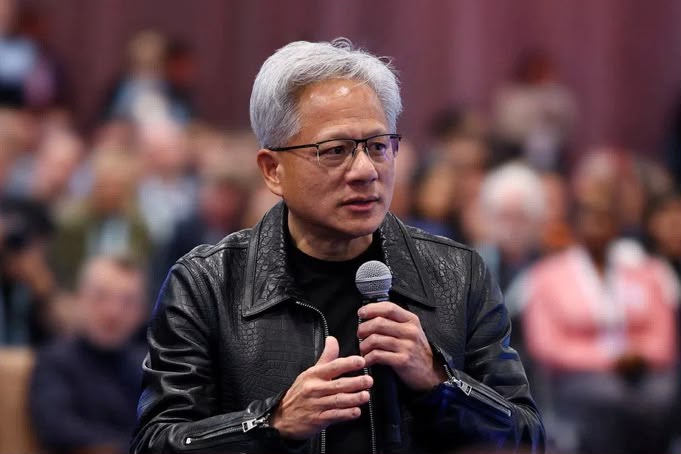
Photo credit: Jensen Huang

Nvidia’s annual report, however, acknowledges its heavy dependence on its longstanding leadership team. Huang reportedly maintained direct oversight of approximately 60 executives, giving him considerable influence over decisions across the company. This management structure raises questions about how much responsibility had become concentrated around him.

Despite his influence, Huang owned less than 4% of Nvidia. The company has no special voting structure protecting his position, leaving its 11-member board with the authority to remove him.

The circumstances surrounding his departure intensified concerns about corporate governance. On November 8, Nvidia announced an independent investigation into reports that Huang had been targeted in a foreign intelligence operation. The company maintained that it expected no evidence of compromised trade secrets or national security.

Huang acknowledged an extramarital affair in a memo to employees that same day, with reports of another relationship emerging afterwards. The board reportedly met on November 11, before his resignation was announced the following day. The allegations remain contested. Alice Huang, a former executive at Singapore-based data centre company Megaspeed, was reportedly identified by US intelligence as a Chinese intelligence asset. However, the US Justice Department had not established that she acted on behalf of the Chinese government. There was also no established indication that Jensen Huang knew of any alleged intelligence connection. Megaspeed denied wrongdoing and confirmed Alice Huang’s departure in 2025. The two Huangs are unrelated.

Huang’s resignation also raised questions about Nvidia’s succession planning. Although the company has experienced executives, including Kress, it remains unclear whether it has a sufficiently established leadership structure to replace his influence. Kress has been suggested as a possible interim CEO, while concerns persist over the absence of a clear second-in-command.

Founder dependence is a familiar concern in the technology industry. Similar questions surround Tesla and SpaceX, where Elon Musk’s influence remains central to both companies. Nvidia’s situation is particularly interesting because Huang built his authority through his reputation, industry relationships and leadership, despite owning a relatively small percentage of the business. The board’s acceptance of his resignation demonstrated its ability to act independently of the founder. Maintaining the commercial relationships and investor confidence associated with his leadership presents another challenge. His leather jackets can be reproduced cheaply, as the growing market for lookalikes demonstrates. His industry influence and business relationships are considerably harder to replicate.

Nvidia must now confront a question central to its future: can it preserve the market confidence and corporate identity Huang built while developing an institutional identity capable of surviving his departure?

The company’s financial performance, search for a permanent CEO and Huang’s expected congressional testimony will offer further indications of what comes next. His testimony has reportedly been discussed for late November and early December, although the timing remains uncertain. Nvidia’s next chapter will test how much of its success belongs to the institution and how much remains tied to the man who built it.

Photo credit: Xavier Collin/Image Press Agency; Getty Images
‍

Is Nvidia Jensen Huang’s True Soulmate?

Authored by
This is some text inside of a div block.

For 33 years, Jensen Huang was more than the man running Nvidia. In his signature leather jacket, he became one of the most recognisable faces in the technology industry, embodying the company through its rise from a graphics-chip maker to one of the most valuable businesses in the world. 

His departure, announced on November 12, raises a question about how much of Nvidia's identity and perceived value is tied to the man who built it. In a filing with the Securities and Exchange Commission, Nvidia disclosed that Huang had resigned as president, chief executive and member of the board, effective immediately.  The board had accepted his resignation the previous day, appointing CFO Colette Kress as interim CEO and Harvey C. Jones, a director since 1993, as the company's first-ever board chair. Axios reported that the announcement offered no reason for Huang's departure.

After 33 years without one, Nvidia created the position of board chair in the same announcement that confirmed its founder's exit. It raises a question that goes beyond succession: is Nvidia a business that Huang built and led, or has it become so closely associated with his personality that the market struggles to separate the two?

Huang’s public image was remarkably consistent. For over 20 years, he had maintained a signature look built around black leather jackets, some reportedly designed by Tom Ford and costing over $10,000.  His style eventually became a commercial phenomenon, with sellers advertising cheaper lookalikes using his name and photograph. Searches for “Jensen Huang leather jacket” also surged on Google.

In a 2016 Reddit AMA, Huang described himself as “the guy in the leather jacket who repeats things three times.” His showmanship extended to Nvidia’s product launches, including a 2020 presentation where he pulled a chip from his kitchen oven. By 2023, his public appearances were attracting thousands of attendees, with crowds gathering for photographs after his keynote in Taipei.

Huang’s influence also carried considerable financial weight. Some estimates suggested Nvidia could lose up to 30% of its market value without him. One analyst reportedly reduced his estimate of the company’s share value by 25%, citing Huang’s importance to its AI strategy, product development and customer relationships.

Huang also played a central role in Nvidia’s relationships with AI developers, cloud computing companies and major suppliers. His departure raised concerns about how easily those relationships could be maintained.

Nvidia shares reportedly fell by as much as 13%, with estimates suggesting the company lost hundreds of billions of dollars in market value. Some reports placed the losses at over $1 trillion across a two-week period. However, these figures covered different periods, and the losses cannot be attributed entirely to Huang’s departure or the investigation.

Nvidia remains a formidable business. Its CUDA software platform, introduced in the mid-2000s, helped establish its dominance in advanced computing. Its data centre business generated over $115 billion in fiscal 2025, while quarterly revenue reportedly reached $57 billion in fiscal 2026, representing growth of more than 60% compared with the previous year.

The company also has experienced executives, including CFO Colette Kress, who joined in 2013 after nearly 25 years in finance roles at Cisco and Microsoft. Nvidia’s board has assured investors that its operations, customer commitments and product plans will continue without interruption.

Photo credit: Jensen Huang

Nvidia’s annual report, however, acknowledges its heavy dependence on its longstanding leadership team. Huang reportedly maintained direct oversight of approximately 60 executives, giving him considerable influence over decisions across the company. This management structure raises questions about how much responsibility had become concentrated around him.

Despite his influence, Huang owned less than 4% of Nvidia. The company has no special voting structure protecting his position, leaving its 11-member board with the authority to remove him.

The circumstances surrounding his departure intensified concerns about corporate governance. On November 8, Nvidia announced an independent investigation into reports that Huang had been targeted in a foreign intelligence operation. The company maintained that it expected no evidence of compromised trade secrets or national security.

Huang acknowledged an extramarital affair in a memo to employees that same day, with reports of another relationship emerging afterwards. The board reportedly met on November 11, before his resignation was announced the following day. The allegations remain contested. Alice Huang, a former executive at Singapore-based data centre company Megaspeed, was reportedly identified by US intelligence as a Chinese intelligence asset. However, the US Justice Department had not established that she acted on behalf of the Chinese government. There was also no established indication that Jensen Huang knew of any alleged intelligence connection. Megaspeed denied wrongdoing and confirmed Alice Huang’s departure in 2025. The two Huangs are unrelated.

Huang’s resignation also raised questions about Nvidia’s succession planning. Although the company has experienced executives, including Kress, it remains unclear whether it has a sufficiently established leadership structure to replace his influence. Kress has been suggested as a possible interim CEO, while concerns persist over the absence of a clear second-in-command.

Founder dependence is a familiar concern in the technology industry. Similar questions surround Tesla and SpaceX, where Elon Musk’s influence remains central to both companies. Nvidia’s situation is particularly interesting because Huang built his authority through his reputation, industry relationships and leadership, despite owning a relatively small percentage of the business. The board’s acceptance of his resignation demonstrated its ability to act independently of the founder. Maintaining the commercial relationships and investor confidence associated with his leadership presents another challenge. His leather jackets can be reproduced cheaply, as the growing market for lookalikes demonstrates. His industry influence and business relationships are considerably harder to replicate.

Nvidia must now confront a question central to its future: can it preserve the market confidence and corporate identity Huang built while developing an institutional identity capable of surviving his departure?

The company’s financial performance, search for a permanent CEO and Huang’s expected congressional testimony will offer further indications of what comes next. His testimony has reportedly been discussed for late November and early December, although the timing remains uncertain. Nvidia’s next chapter will test how much of its success belongs to the institution and how much remains tied to the man who built it.

Photo credit: Xavier Collin/Image Press Agency; Getty Images

‍

This is some text inside of a div block.

Is Nvidia Jensen Huang’s True Soulmate?

Authored by

For 33 years, Jensen Huang was more than the man running Nvidia. In his signature leather jacket, he became one of the most recognisable faces in the technology industry, embodying the company through its rise from a graphics-chip maker to one of the most valuable businesses in the world. 

His departure, announced on November 12, raises a question about how much of Nvidia's identity and perceived value is tied to the man who built it. In a filing with the Securities and Exchange Commission, Nvidia disclosed that Huang had resigned as president, chief executive and member of the board, effective immediately.  The board had accepted his resignation the previous day, appointing CFO Colette Kress as interim CEO and Harvey C. Jones, a director since 1993, as the company's first-ever board chair. Axios reported that the announcement offered no reason for Huang's departure.

After 33 years without one, Nvidia created the position of board chair in the same announcement that confirmed its founder's exit. It raises a question that goes beyond succession: is Nvidia a business that Huang built and led, or has it become so closely associated with his personality that the market struggles to separate the two?

Huang’s public image was remarkably consistent. For over 20 years, he had maintained a signature look built around black leather jackets, some reportedly designed by Tom Ford and costing over $10,000.  His style eventually became a commercial phenomenon, with sellers advertising cheaper lookalikes using his name and photograph. Searches for “Jensen Huang leather jacket” also surged on Google.

In a 2016 Reddit AMA, Huang described himself as “the guy in the leather jacket who repeats things three times.” His showmanship extended to Nvidia’s product launches, including a 2020 presentation where he pulled a chip from his kitchen oven. By 2023, his public appearances were attracting thousands of attendees, with crowds gathering for photographs after his keynote in Taipei.

Huang’s influence also carried considerable financial weight. Some estimates suggested Nvidia could lose up to 30% of its market value without him. One analyst reportedly reduced his estimate of the company’s share value by 25%, citing Huang’s importance to its AI strategy, product development and customer relationships.

Huang also played a central role in Nvidia’s relationships with AI developers, cloud computing companies and major suppliers. His departure raised concerns about how easily those relationships could be maintained.

Nvidia shares reportedly fell by as much as 13%, with estimates suggesting the company lost hundreds of billions of dollars in market value. Some reports placed the losses at over $1 trillion across a two-week period. However, these figures covered different periods, and the losses cannot be attributed entirely to Huang’s departure or the investigation.

Nvidia remains a formidable business. Its CUDA software platform, introduced in the mid-2000s, helped establish its dominance in advanced computing. Its data centre business generated over $115 billion in fiscal 2025, while quarterly revenue reportedly reached $57 billion in fiscal 2026, representing growth of more than 60% compared with the previous year.

The company also has experienced executives, including CFO Colette Kress, who joined in 2013 after nearly 25 years in finance roles at Cisco and Microsoft. Nvidia’s board has assured investors that its operations, customer commitments and product plans will continue without interruption.

Photo credit: Jensen Huang

Nvidia’s annual report, however, acknowledges its heavy dependence on its longstanding leadership team. Huang reportedly maintained direct oversight of approximately 60 executives, giving him considerable influence over decisions across the company. This management structure raises questions about how much responsibility had become concentrated around him.

Despite his influence, Huang owned less than 4% of Nvidia. The company has no special voting structure protecting his position, leaving its 11-member board with the authority to remove him.

The circumstances surrounding his departure intensified concerns about corporate governance. On November 8, Nvidia announced an independent investigation into reports that Huang had been targeted in a foreign intelligence operation. The company maintained that it expected no evidence of compromised trade secrets or national security.

Huang acknowledged an extramarital affair in a memo to employees that same day, with reports of another relationship emerging afterwards. The board reportedly met on November 11, before his resignation was announced the following day. The allegations remain contested. Alice Huang, a former executive at Singapore-based data centre company Megaspeed, was reportedly identified by US intelligence as a Chinese intelligence asset. However, the US Justice Department had not established that she acted on behalf of the Chinese government. There was also no established indication that Jensen Huang knew of any alleged intelligence connection. Megaspeed denied wrongdoing and confirmed Alice Huang’s departure in 2025. The two Huangs are unrelated.

Huang’s resignation also raised questions about Nvidia’s succession planning. Although the company has experienced executives, including Kress, it remains unclear whether it has a sufficiently established leadership structure to replace his influence. Kress has been suggested as a possible interim CEO, while concerns persist over the absence of a clear second-in-command.

Founder dependence is a familiar concern in the technology industry. Similar questions surround Tesla and SpaceX, where Elon Musk’s influence remains central to both companies. Nvidia’s situation is particularly interesting because Huang built his authority through his reputation, industry relationships and leadership, despite owning a relatively small percentage of the business. The board’s acceptance of his resignation demonstrated its ability to act independently of the founder. Maintaining the commercial relationships and investor confidence associated with his leadership presents another challenge. His leather jackets can be reproduced cheaply, as the growing market for lookalikes demonstrates. His industry influence and business relationships are considerably harder to replicate.

Nvidia must now confront a question central to its future: can it preserve the market confidence and corporate identity Huang built while developing an institutional identity capable of surviving his departure?

The company’s financial performance, search for a permanent CEO and Huang’s expected congressional testimony will offer further indications of what comes next. His testimony has reportedly been discussed for late November and early December, although the timing remains uncertain. Nvidia’s next chapter will test how much of its success belongs to the institution and how much remains tied to the man who built it.

Photo credit: Xavier Collin/Image Press Agency; Getty Images

‍

Other Stories
London
London
Lagos
London
Newyork
London
Shop
Join the community.
You are now subscribed to receive updates.
Oops! Something went wrong while submitting the form.
Subscribe