Holding the Shape: A Tale of Paris FW26 in Five Acts

Authored by

With dozens of presentations across Paris, fashion week moved quickly, and this season’s collections addressed the realities of dressing right now: outfits made for movement, coats that anchor a wardrobe and tailored pieces calibrated for the everyday. Designers leaned into precision with sharper tailoring, deliberate proportions and a sense of restraint that wasn’t timid, just considered.

Where expectations were high for boundary-pushing, most houses instead delivered incremental evolution. This was a season that asked how do you create something new without unmooring it from what already works? In men’s fashion this fall/winter, the answer was through formulated purpose — collections that prioritised a contemporary silhouette over rhetorical risk, and a measured confidence instead of theatrics.

Across the week, responses to this question surfaced in different forms. Taken together, five collections — from Dries Van Noten to Amiri, via Willy Chavarria, Dior and Kwame Aduesei — read less as isolated statements than as connected moments in a larger progression. Through a sequence of acts, the season unfolds as a narrative, each collection offering a different approach to relevance, restraint and identity in menswear.

ACT I: Grounding the Season 

Dries Van Noten
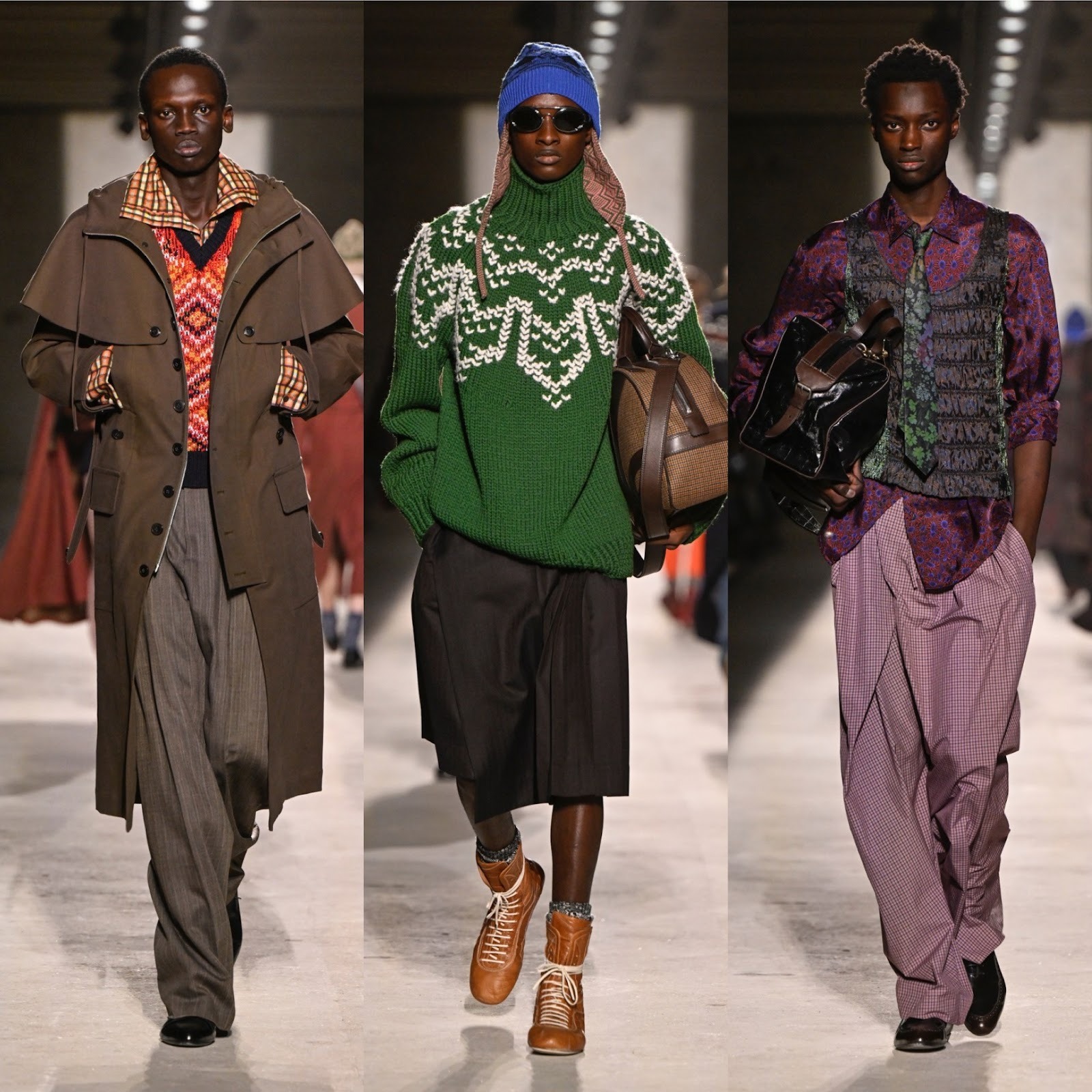
Dries Van Noten opens the season as a study in continuity without inertia. Titled When Dawn Breaks, Julian Klausner’s second menswear collection for the house did not attempt to redefine Dries so much as clarify what the brand already knows how to do: translate memory into clothes that feel lived-in, adaptable and contemporary.

Klausner modernised the house’s established codes with casual, almost incidental details like rolled sleeves, and a dense layering of prints and jacquards that felt assembled. Also, we saw softened pastels, muted bases of brown, and a palette that felt mostly worn-in.

The visual language leaned into oversized sweaters and inherited silhouettes that seemed like garments passed down. The styling suggested wearers experimenting for the first time with independence, mixing familiar pieces with new references in ways that felt instinctive. 

With a season defined by restraint, Dries Van Noten demonstrated that playing it safe does not have to mean standing still. The collection positioned legacy as something active, and if much of Paris this season avoided provocation, Dries showed why. 

ACT II: Expanding the Frame

Willy Chavarria
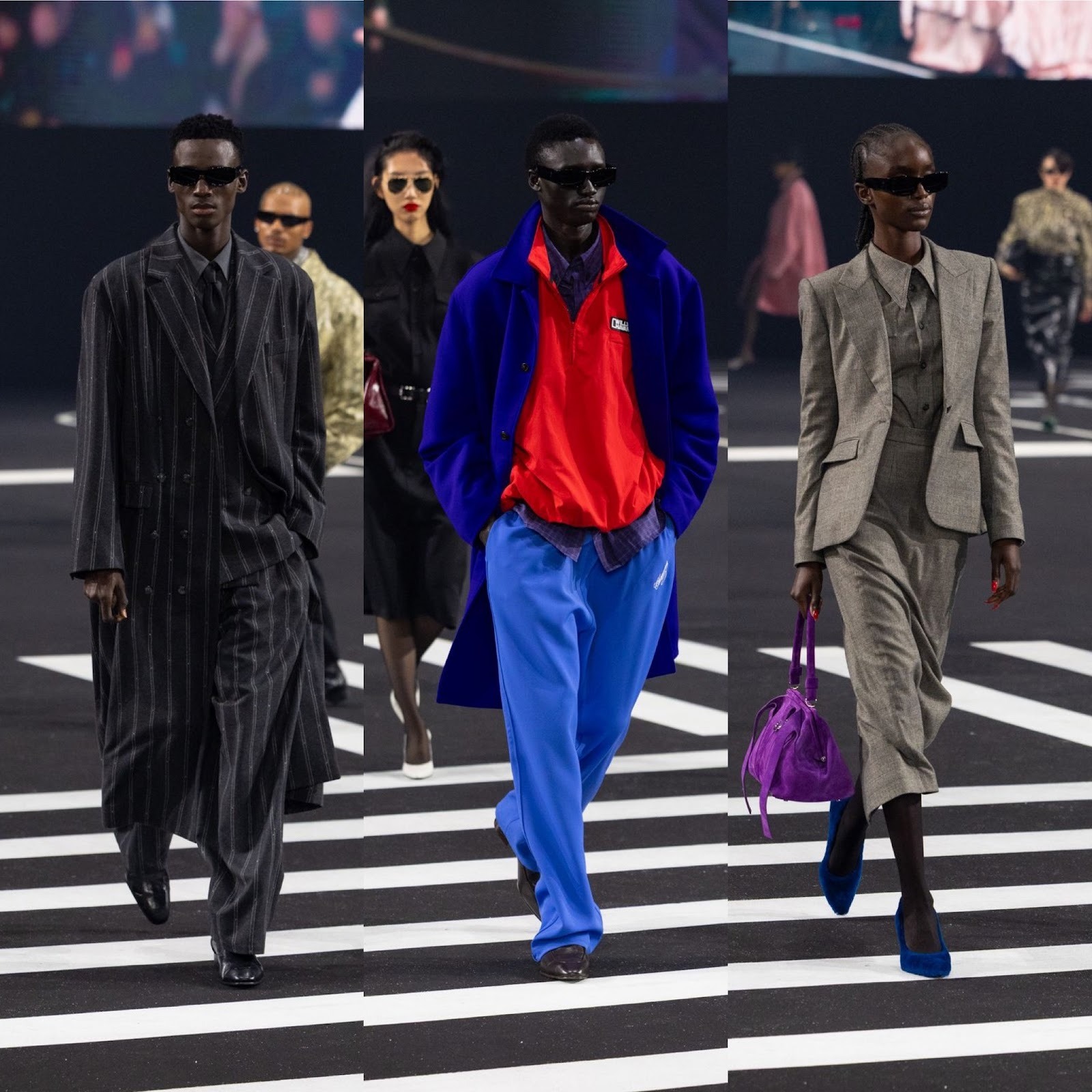
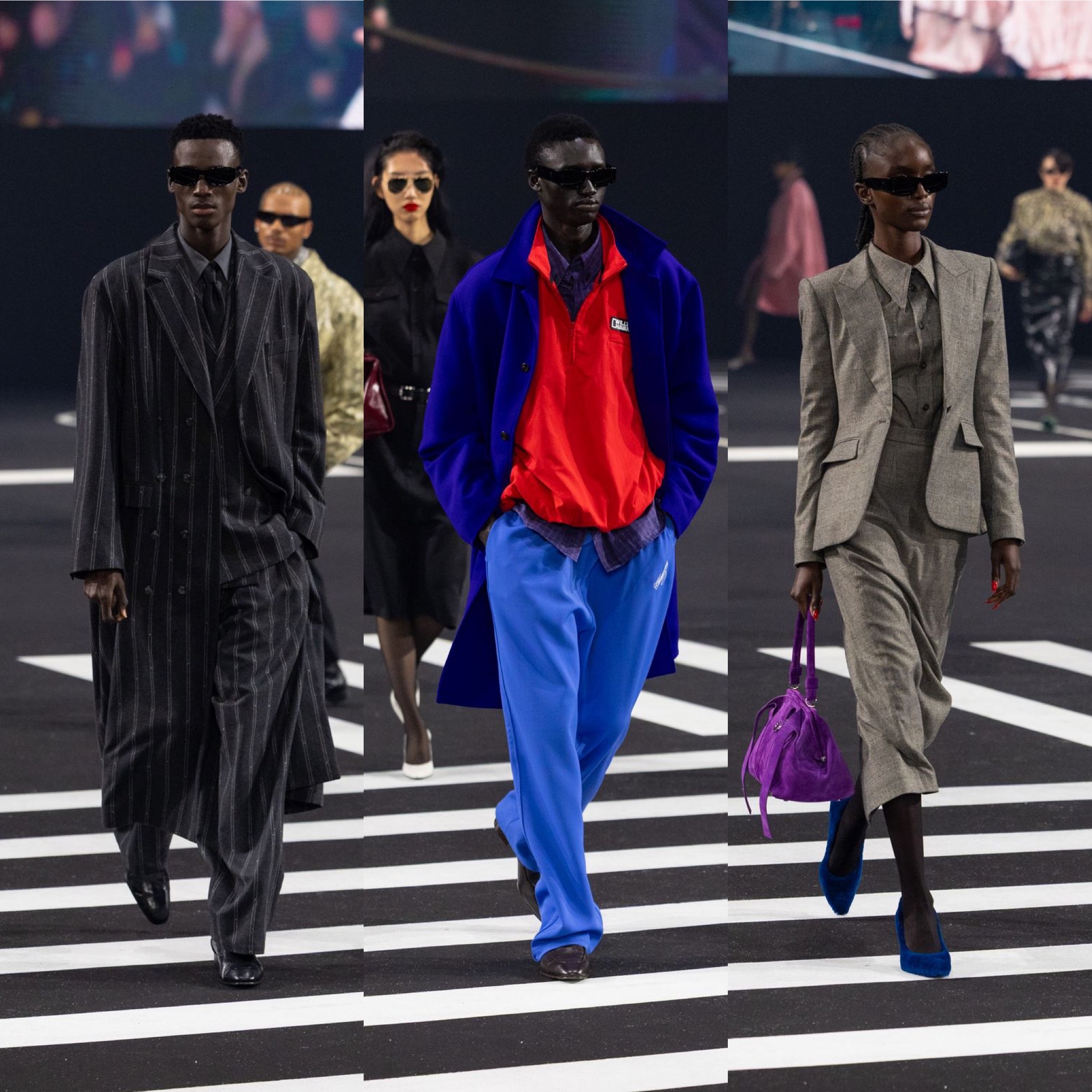
If Dries opened the season by grounding it in inheritance, Willy Chavarria followed by testing how far that foundation could stretch.

Staged as a half-hour, three-act production titled Eterno, the show unfolded across a floor marked like a city grid. Bedrooms, bus stops, cars and fragments of everyday life were arranged like film sets, blurring the line between fashion show, performance and live cinema. The scale was unapologetic and the intent was precise, situating clothing inside lived environments instead of abstract fantasy.

As the show moved through its various acts, Chavarria returned to a language he has been refining for years. Daywear arrived with gym-honed bodies in abbreviated shorts, and cinched tracksuits recalibrated into tailored forms. Then came the Big Willy, in khaki and black work trousers, bombers, shirts etc. The show also featured Chavarria’s fourth collaboration with adidas. The range moved fluidly between streetwear, athletic wear, and tailoring, reinforcing the designer’s long-standing refusal to separate luxury from the realities of daily life. 

ACT III: Imposing Order

Dior
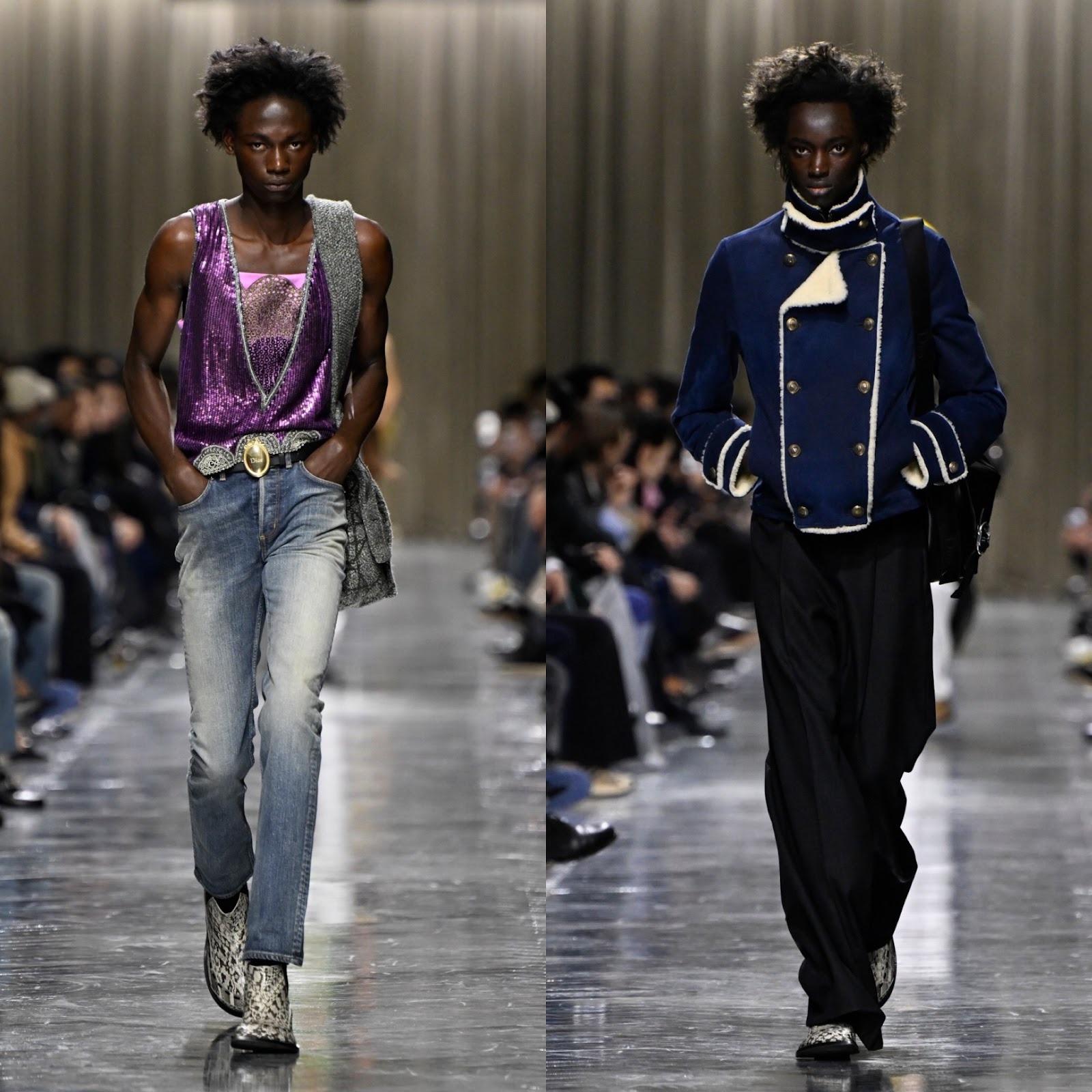
By the time Dior took the runway, restraint had solidified into strategy, imposing order on the openness that Chavarria introduced.

Jonathan Anderson’s Fall/Winter 2026 menswear collection arrived as a careful recalibration of the house's codes. Framed as a vision of a “new aristocracy,” the show proposed a controlled eccentricity: historical reference filtered through contemporary quirks, and excess disciplined by structure.

The collection moved decisively away from the oversized silhouettes dominating past seasons. Coats seen were fitted, trousers were lean and proportions were tightened. Denim appeared alongside tailoring, jacquards shimmered in electric colour combinations, and surface embellishment — rhinestones, sequins, brocade — was applied with precision. The effect was decorative and theatrical, without a loss of control. Outerwear was also a clear site of experimentation for the fashion house. 

Dior FW26 presented the modern man as deliberate, curated and fully legible — a figure allowed play, but within parameters. Where earlier acts of the season explored inheritance and insistence, Dior stabilises the conversation, and does so with immaculate control.

ACT IV: A Necessary Pause

Kwame Adusei
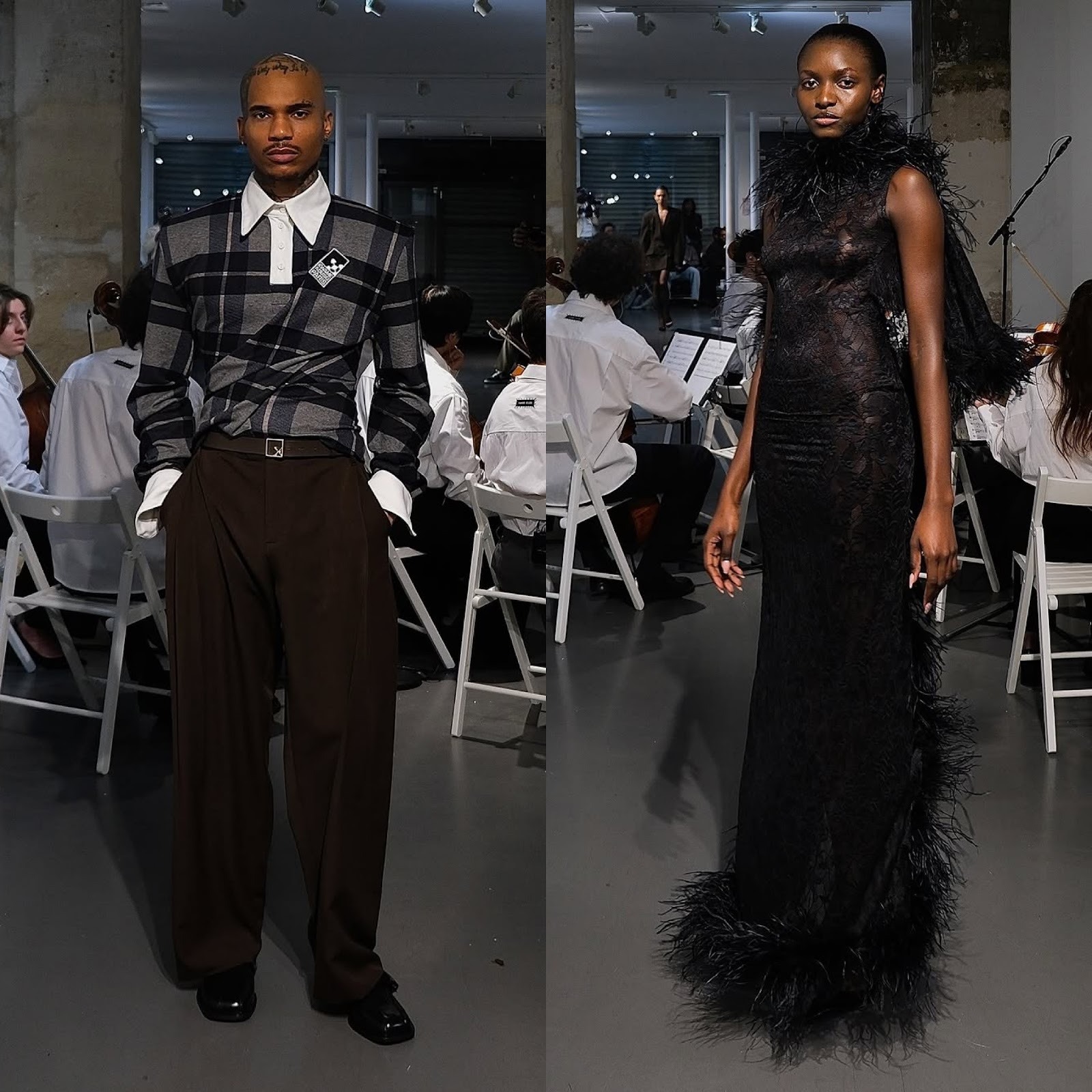
After the discipline of Dior, Kwame Adusei offered a pause.

Kwame Adusei’s presentation settled into the room and the collection, titled Between Life and Orchestra, unfolded deliberately. Kwame’s practice has long been shaped by constraint. Beginning in Accra with limited access to materials, secondhand textiles informed his approach to proportion and construction. That discipline remains visible in this collection. Seams are examined, and deconstruction functions as a method.

Music structured the presentation. Composed with Matt Jones, the clothes followed the score's pacing, reinforcing the idea of orchestra as coordination and timing. In a season shaped by control, Kwame Adusei reframed restraint with intention.

ACT V: Closing with Familiarity

Amiri
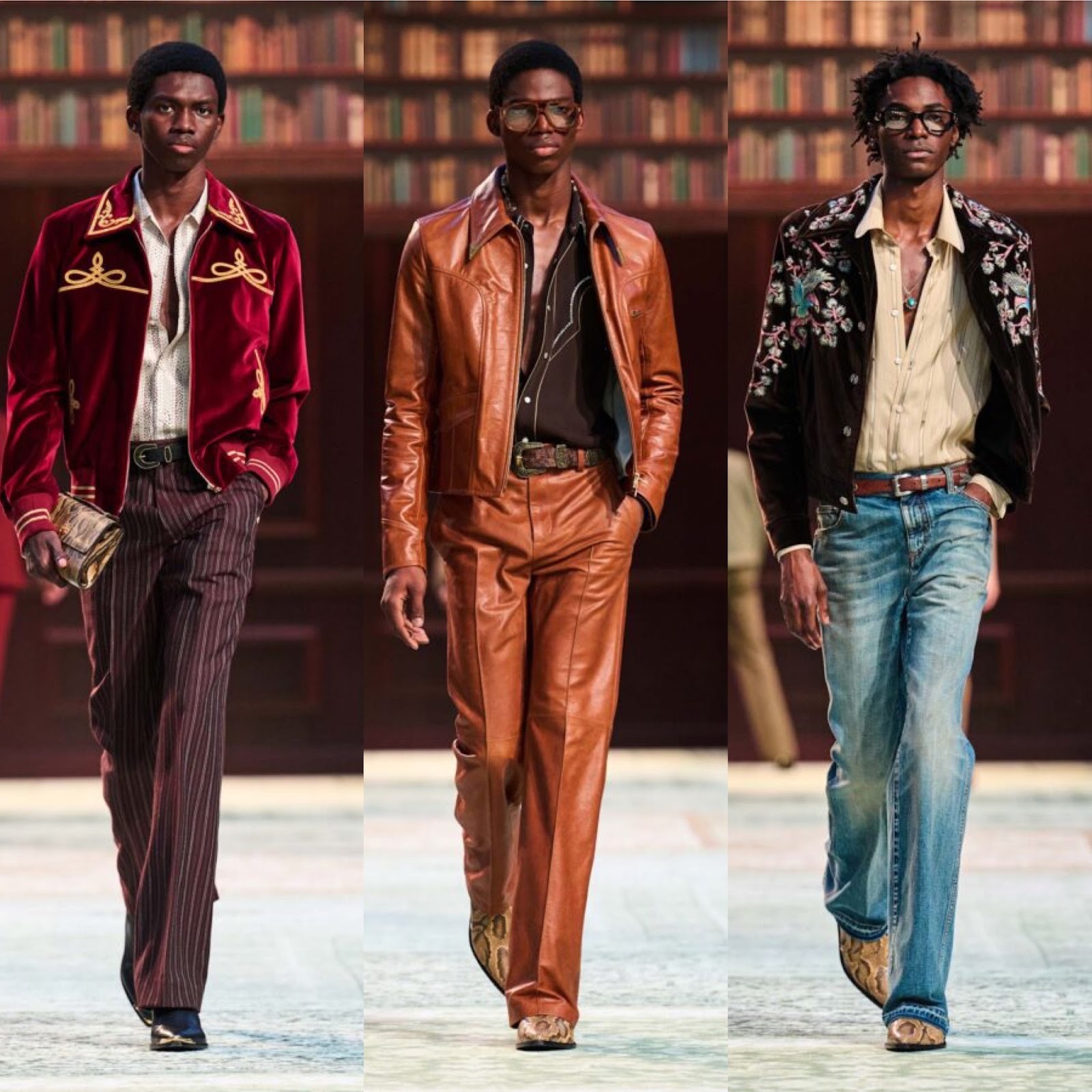
Every season concludes somewhere familiar. Amiri was that ending — returning to familiarity as a sort of resolution.

Set inside a room staged like a Laurel Canyon living space, complete with armchairs and a library, the collection leaned into recognition. Mike Amiri framed the show as a house party, referencing 1970s Los Angeles and the music scene that shaped it.This was a wardrobe shaped by memory, comfort and lifestyle.

The Fall-Winter 2026 collection revisited Amiri’s core language, as western tailoring, officer jackets, leather outerwear, embellished knits, and washed denim formed the backbone. Colours moved through dusty rose, vine green, merlot, seafoam and electric blue. The styling crossed decades freely, pulling from rock mythology and flea market romance. What grounded this collection was ease. Tailoring softened into something informal. Blazers paired with Henleys and denim. Embroidered cardigans and embellished shirts sat comfortably alongside leather jackets built for daily wear. These clothes were designed to be inhabited.

Amiri’s strength this season was their familiarity executed with confidence. The silhouettes were recognisable. The references were legible. Accessories extended that logic, with recalibrated western boots and signature bags. With a week shaped by restraint, refinement, and controlled ambition, Amiri delivered resolution.

Taken together, the season made its position clear.

Paris was much rather interested in clarity and coherence. Across the board, the collections shared a common instinct. Hold the shape. Refine the language. Make the work legible. Even the moments of experimentation we saw were contained. Risk existed within parameters, and expression remained disciplined.

What emerged was a portrait of the modern man as a known figure. His habits were understood. His references are familiar. His wardrobe is designed to support an existing life, not speculate on a future one, following the logic of less fantasy and more assurance.

In a year when fashion was expected to push boundaries, Paris FW26 chose another path. It reflected the present with precision, and instead of asking what comes next, this season focused on now.
Holding the Shape: A Tale of Paris FW26 in Five Acts

Authored by
This is some text inside of a div block.

With dozens of presentations across Paris, fashion week moved quickly, and this season’s collections addressed the realities of dressing right now: outfits made for movement, coats that anchor a wardrobe and tailored pieces calibrated for the everyday. Designers leaned into precision with sharper tailoring, deliberate proportions and a sense of restraint that wasn’t timid, just considered.

Where expectations were high for boundary-pushing, most houses instead delivered incremental evolution. This was a season that asked how do you create something new without unmooring it from what already works? In men’s fashion this fall/winter, the answer was through formulated purpose — collections that prioritised a contemporary silhouette over rhetorical risk, and a measured confidence instead of theatrics.

Across the week, responses to this question surfaced in different forms. Taken together, five collections — from Dries Van Noten to Amiri, via Willy Chavarria, Dior and Kwame Aduesei — read less as isolated statements than as connected moments in a larger progression. Through a sequence of acts, the season unfolds as a narrative, each collection offering a different approach to relevance, restraint and identity in menswear.

ACT I: Grounding the Season 

Dries Van Noten

Dries Van Noten opens the season as a study in continuity without inertia. Titled When Dawn Breaks, Julian Klausner’s second menswear collection for the house did not attempt to redefine Dries so much as clarify what the brand already knows how to do: translate memory into clothes that feel lived-in, adaptable and contemporary.

Klausner modernised the house’s established codes with casual, almost incidental details like rolled sleeves, and a dense layering of prints and jacquards that felt assembled. Also, we saw softened pastels, muted bases of brown, and a palette that felt mostly worn-in.

The visual language leaned into oversized sweaters and inherited silhouettes that seemed like garments passed down. The styling suggested wearers experimenting for the first time with independence, mixing familiar pieces with new references in ways that felt instinctive. 

With a season defined by restraint, Dries Van Noten demonstrated that playing it safe does not have to mean standing still. The collection positioned legacy as something active, and if much of Paris this season avoided provocation, Dries showed why. 

ACT II: Expanding the Frame

Willy Chavarria

If Dries opened the season by grounding it in inheritance, Willy Chavarria followed by testing how far that foundation could stretch.

Staged as a half-hour, three-act production titled Eterno, the show unfolded across a floor marked like a city grid. Bedrooms, bus stops, cars and fragments of everyday life were arranged like film sets, blurring the line between fashion show, performance and live cinema. The scale was unapologetic and the intent was precise, situating clothing inside lived environments instead of abstract fantasy.

As the show moved through its various acts, Chavarria returned to a language he has been refining for years. Daywear arrived with gym-honed bodies in abbreviated shorts, and cinched tracksuits recalibrated into tailored forms. Then came the Big Willy, in khaki and black work trousers, bombers, shirts etc. The show also featured Chavarria’s fourth collaboration with adidas. The range moved fluidly between streetwear, athletic wear, and tailoring, reinforcing the designer’s long-standing refusal to separate luxury from the realities of daily life. 

ACT III: Imposing Order

Dior

By the time Dior took the runway, restraint had solidified into strategy, imposing order on the openness that Chavarria introduced.

Jonathan Anderson’s Fall/Winter 2026 menswear collection arrived as a careful recalibration of the house's codes. Framed as a vision of a “new aristocracy,” the show proposed a controlled eccentricity: historical reference filtered through contemporary quirks, and excess disciplined by structure.

The collection moved decisively away from the oversized silhouettes dominating past seasons. Coats seen were fitted, trousers were lean and proportions were tightened. Denim appeared alongside tailoring, jacquards shimmered in electric colour combinations, and surface embellishment — rhinestones, sequins, brocade — was applied with precision. The effect was decorative and theatrical, without a loss of control. Outerwear was also a clear site of experimentation for the fashion house. 

Dior FW26 presented the modern man as deliberate, curated and fully legible — a figure allowed play, but within parameters. Where earlier acts of the season explored inheritance and insistence, Dior stabilises the conversation, and does so with immaculate control.

ACT IV: A Necessary Pause

Kwame Adusei

After the discipline of Dior, Kwame Adusei offered a pause.

Kwame Adusei’s presentation settled into the room and the collection, titled Between Life and Orchestra, unfolded deliberately. Kwame’s practice has long been shaped by constraint. Beginning in Accra with limited access to materials, secondhand textiles informed his approach to proportion and construction. That discipline remains visible in this collection. Seams are examined, and deconstruction functions as a method.

Music structured the presentation. Composed with Matt Jones, the clothes followed the score's pacing, reinforcing the idea of orchestra as coordination and timing. In a season shaped by control, Kwame Adusei reframed restraint with intention.

ACT V: Closing with Familiarity

Amiri

Every season concludes somewhere familiar. Amiri was that ending — returning to familiarity as a sort of resolution.

Set inside a room staged like a Laurel Canyon living space, complete with armchairs and a library, the collection leaned into recognition. Mike Amiri framed the show as a house party, referencing 1970s Los Angeles and the music scene that shaped it.This was a wardrobe shaped by memory, comfort and lifestyle.

The Fall-Winter 2026 collection revisited Amiri’s core language, as western tailoring, officer jackets, leather outerwear, embellished knits, and washed denim formed the backbone. Colours moved through dusty rose, vine green, merlot, seafoam and electric blue. The styling crossed decades freely, pulling from rock mythology and flea market romance. What grounded this collection was ease. Tailoring softened into something informal. Blazers paired with Henleys and denim. Embroidered cardigans and embellished shirts sat comfortably alongside leather jackets built for daily wear. These clothes were designed to be inhabited.

Amiri’s strength this season was their familiarity executed with confidence. The silhouettes were recognisable. The references were legible. Accessories extended that logic, with recalibrated western boots and signature bags. With a week shaped by restraint, refinement, and controlled ambition, Amiri delivered resolution.

Taken together, the season made its position clear.

Paris was much rather interested in clarity and coherence. Across the board, the collections shared a common instinct. Hold the shape. Refine the language. Make the work legible. Even the moments of experimentation we saw were contained. Risk existed within parameters, and expression remained disciplined.

What emerged was a portrait of the modern man as a known figure. His habits were understood. His references are familiar. His wardrobe is designed to support an existing life, not speculate on a future one, following the logic of less fantasy and more assurance.

In a year when fashion was expected to push boundaries, Paris FW26 chose another path. It reflected the present with precision, and instead of asking what comes next, this season focused on now.
This is some text inside of a div block.

Holding the Shape: A Tale of Paris FW26 in Five Acts

Authored by

With dozens of presentations across Paris, fashion week moved quickly, and this season’s collections addressed the realities of dressing right now: outfits made for movement, coats that anchor a wardrobe and tailored pieces calibrated for the everyday. Designers leaned into precision with sharper tailoring, deliberate proportions and a sense of restraint that wasn’t timid, just considered.

Where expectations were high for boundary-pushing, most houses instead delivered incremental evolution. This was a season that asked how do you create something new without unmooring it from what already works? In men’s fashion this fall/winter, the answer was through formulated purpose — collections that prioritised a contemporary silhouette over rhetorical risk, and a measured confidence instead of theatrics.

Across the week, responses to this question surfaced in different forms. Taken together, five collections — from Dries Van Noten to Amiri, via Willy Chavarria, Dior and Kwame Aduesei — read less as isolated statements than as connected moments in a larger progression. Through a sequence of acts, the season unfolds as a narrative, each collection offering a different approach to relevance, restraint and identity in menswear.

ACT I: Grounding the Season 

Dries Van Noten

Dries Van Noten opens the season as a study in continuity without inertia. Titled When Dawn Breaks, Julian Klausner’s second menswear collection for the house did not attempt to redefine Dries so much as clarify what the brand already knows how to do: translate memory into clothes that feel lived-in, adaptable and contemporary.

Klausner modernised the house’s established codes with casual, almost incidental details like rolled sleeves, and a dense layering of prints and jacquards that felt assembled. Also, we saw softened pastels, muted bases of brown, and a palette that felt mostly worn-in.

The visual language leaned into oversized sweaters and inherited silhouettes that seemed like garments passed down. The styling suggested wearers experimenting for the first time with independence, mixing familiar pieces with new references in ways that felt instinctive. 

With a season defined by restraint, Dries Van Noten demonstrated that playing it safe does not have to mean standing still. The collection positioned legacy as something active, and if much of Paris this season avoided provocation, Dries showed why. 

ACT II: Expanding the Frame

Willy Chavarria

If Dries opened the season by grounding it in inheritance, Willy Chavarria followed by testing how far that foundation could stretch.

Staged as a half-hour, three-act production titled Eterno, the show unfolded across a floor marked like a city grid. Bedrooms, bus stops, cars and fragments of everyday life were arranged like film sets, blurring the line between fashion show, performance and live cinema. The scale was unapologetic and the intent was precise, situating clothing inside lived environments instead of abstract fantasy.

As the show moved through its various acts, Chavarria returned to a language he has been refining for years. Daywear arrived with gym-honed bodies in abbreviated shorts, and cinched tracksuits recalibrated into tailored forms. Then came the Big Willy, in khaki and black work trousers, bombers, shirts etc. The show also featured Chavarria’s fourth collaboration with adidas. The range moved fluidly between streetwear, athletic wear, and tailoring, reinforcing the designer’s long-standing refusal to separate luxury from the realities of daily life. 

ACT III: Imposing Order

Dior

By the time Dior took the runway, restraint had solidified into strategy, imposing order on the openness that Chavarria introduced.

Jonathan Anderson’s Fall/Winter 2026 menswear collection arrived as a careful recalibration of the house's codes. Framed as a vision of a “new aristocracy,” the show proposed a controlled eccentricity: historical reference filtered through contemporary quirks, and excess disciplined by structure.

The collection moved decisively away from the oversized silhouettes dominating past seasons. Coats seen were fitted, trousers were lean and proportions were tightened. Denim appeared alongside tailoring, jacquards shimmered in electric colour combinations, and surface embellishment — rhinestones, sequins, brocade — was applied with precision. The effect was decorative and theatrical, without a loss of control. Outerwear was also a clear site of experimentation for the fashion house. 

Dior FW26 presented the modern man as deliberate, curated and fully legible — a figure allowed play, but within parameters. Where earlier acts of the season explored inheritance and insistence, Dior stabilises the conversation, and does so with immaculate control.

ACT IV: A Necessary Pause

Kwame Adusei

After the discipline of Dior, Kwame Adusei offered a pause.

Kwame Adusei’s presentation settled into the room and the collection, titled Between Life and Orchestra, unfolded deliberately. Kwame’s practice has long been shaped by constraint. Beginning in Accra with limited access to materials, secondhand textiles informed his approach to proportion and construction. That discipline remains visible in this collection. Seams are examined, and deconstruction functions as a method.

Music structured the presentation. Composed with Matt Jones, the clothes followed the score's pacing, reinforcing the idea of orchestra as coordination and timing. In a season shaped by control, Kwame Adusei reframed restraint with intention.

ACT V: Closing with Familiarity

Amiri

Every season concludes somewhere familiar. Amiri was that ending — returning to familiarity as a sort of resolution.

Set inside a room staged like a Laurel Canyon living space, complete with armchairs and a library, the collection leaned into recognition. Mike Amiri framed the show as a house party, referencing 1970s Los Angeles and the music scene that shaped it.This was a wardrobe shaped by memory, comfort and lifestyle.

The Fall-Winter 2026 collection revisited Amiri’s core language, as western tailoring, officer jackets, leather outerwear, embellished knits, and washed denim formed the backbone. Colours moved through dusty rose, vine green, merlot, seafoam and electric blue. The styling crossed decades freely, pulling from rock mythology and flea market romance. What grounded this collection was ease. Tailoring softened into something informal. Blazers paired with Henleys and denim. Embroidered cardigans and embellished shirts sat comfortably alongside leather jackets built for daily wear. These clothes were designed to be inhabited.

Amiri’s strength this season was their familiarity executed with confidence. The silhouettes were recognisable. The references were legible. Accessories extended that logic, with recalibrated western boots and signature bags. With a week shaped by restraint, refinement, and controlled ambition, Amiri delivered resolution.

Taken together, the season made its position clear.

Paris was much rather interested in clarity and coherence. Across the board, the collections shared a common instinct. Hold the shape. Refine the language. Make the work legible. Even the moments of experimentation we saw were contained. Risk existed within parameters, and expression remained disciplined.

What emerged was a portrait of the modern man as a known figure. His habits were understood. His references are familiar. His wardrobe is designed to support an existing life, not speculate on a future one, following the logic of less fantasy and more assurance.

In a year when fashion was expected to push boundaries, Paris FW26 chose another path. It reflected the present with precision, and instead of asking what comes next, this season focused on now.

Other Stories
London
London
Lagos
London
Newyork
London
Shop
Join the community.
You are now subscribed to receive updates.
Oops! Something went wrong while submitting the form.