.svg)

Every few months, a post about Ethiopia’s calendar goes viral. Someone points out that the country is in 2019 while the rest of the world is in 2026, and the comments quickly fill with jokes about time travel, confusion about how the calendar works, and people asking if Ethiopians know something everyone else has missed.
The post, typically, moves across timelines and group chats, creates a brief wave of fascination, and eventually disappears under the next viral story. What tends to get lost in the conversation is the more interesting question: why has Ethiopia kept its calendar after five centuries of globalisation, colonisation attempts and diplomatic pressure, while the Gregorian calendar became the standard everywhere else?

The Ethiopian calendar is a solar calendar derived from the ancient Coptic system, which itself developed from the Egyptian calendar that predates the Roman Empire. It has 13 months, with 12 months of 30 days each and a 13th month, Pagume, made up of five days or six in a leap year. The Ethiopian New Year, Enkutatash, falls in September on the Gregorian calendar. This year, it fell on September 11, marking the beginning of 2019 in Ethiopia. The calendar is seven years behind the Gregorian calendar from September to December and eight years behind from January to September.
Ethiopia is the only country that uses this calendar for everyday civil life, with businesses, public holidays and other aspects of daily life organised around it, rather than keeping it only as a religious or cultural tradition alongside the Gregorian calendar.
The difference comes from a theological disagreement that dates back to the introduction of the Gregorian calendar in 1582. Pope Gregory XIII introduced it as a reform of the Julian calendar, including a new calculation of the date of the Annunciation, when the Angel Gabriel told Mary she would conceive Jesus.
Meanwhile, the Ethiopian Orthodox Church did not accept Rome’s calculation. Its own dating of the Annunciation followed the Alexandrian tradition of the early Christian church, which meant there was no reason for the church to replace its existing calendar with one introduced by a Pope whose authority it did not recognise. Ethiopia kept the Coptic calendar, while the Gregorian calendar The Gregorian calendar spread globally alongside European influence, through trade, colonisation, diplomacy and the standardisation of international systems around European norms.
Countries that had used other calendars gradually adopted it, sometimes by choice and sometimes under political or economic pressure. Ethiopia resisted European colonisation more successfully than most African countries, most notably defeating Italy at the Battle of Adwa in 1896. Its calendar remained in use through that period and continued afterwards, preserving a system tied to the country’s own religious and cultural institutions.
The Ethiopian Orthodox Church had maintained its own traditions for centuries and did not regard the European system as something it needed to replace them with. In that sense, the survival of the calendar sits within a much longer history of Ethiopia maintaining its own institutions and traditions in the face of outside influence.
Calling Ethiopia “behind” assumes that the Gregorian calendar is the standard everyone should be using and that other systems are simply deviations from it. That assumption is worth questioning. The Gregorian calendar was a 16th-century Catholic reform that became the dominant global system as European influence expanded, and Ethiopia is one of the clearest examples of a country that kept its own calendar through that process. The seven-year difference that the internet treats as a curiosity is really the result of a disagreement that began five centuries ago and has never been settled.
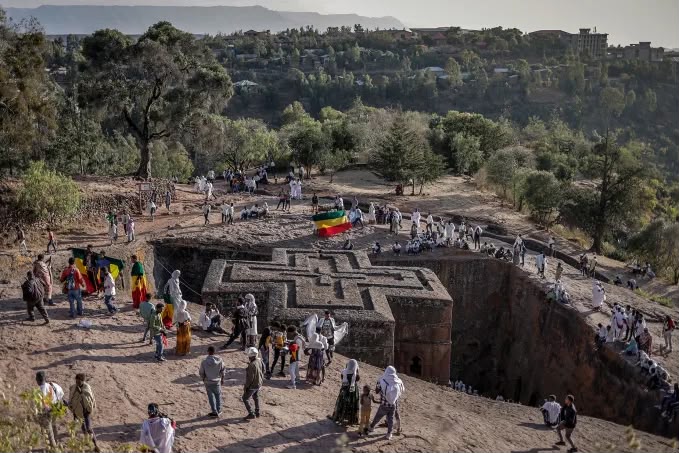
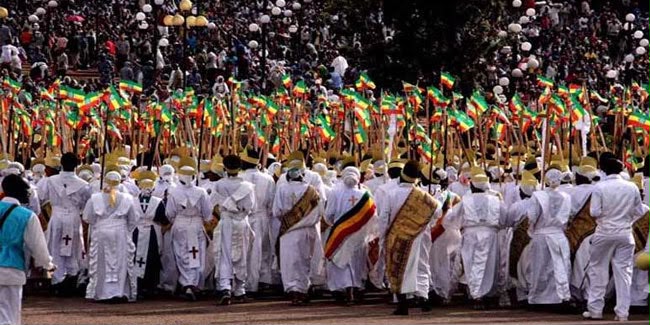
The Ethiopian calendar is tied to the way time is experienced through faith, community and everyday life. Enkutatash, the Ethiopian New Year, is traditionally linked to the return of the Queen of Sheba to Ethiopia after her visit to King Solomon in Jerusalem, where she is said to have received jewels from him. The celebration includes flowers, singing and feasting, and coincides with the beginning of a new agricultural cycle. Pagume, the calendar’s 13th month, also carries its own prayers and practices as the year comes to an end.
These traditions have developed alongside the calendar over centuries, shaped by Ethiopian Orthodox Christianity and the country’s agricultural life. Changing to the Gregorian calendar would therefore mean more than changing the number of the year. It would also mean moving away from a system of time that has been woven into Ethiopian religious and cultural life for centuries.
Ethiopia entered 2019, last week, on September 11, and in a few months the internet will probably discover this again. Someone will post about it, the jokes about time travel will return, and the conversation will move on to whatever comes next. The Ethiopian Orthodox Church, meanwhile, will continue using a calendar based on a system it has followed since the sixth century. What looks online like a seven-year discrepancy is the result of a disagreement that began centuries ago and survived the spread of the Gregorian calendar across the world.
Ethiopia has continued to use its own calendar in everyday life, keeping a system that connects its religious traditions, agricultural life and understanding of time. The next viral post will probably miss all of that.
Cover Credit: Enkutatash celebration





.png)

