Inside Maison Margiela’s Shanghai Exhibition: 58 Looks, Shipping Containers, and a Street-Level Archive

Authored by

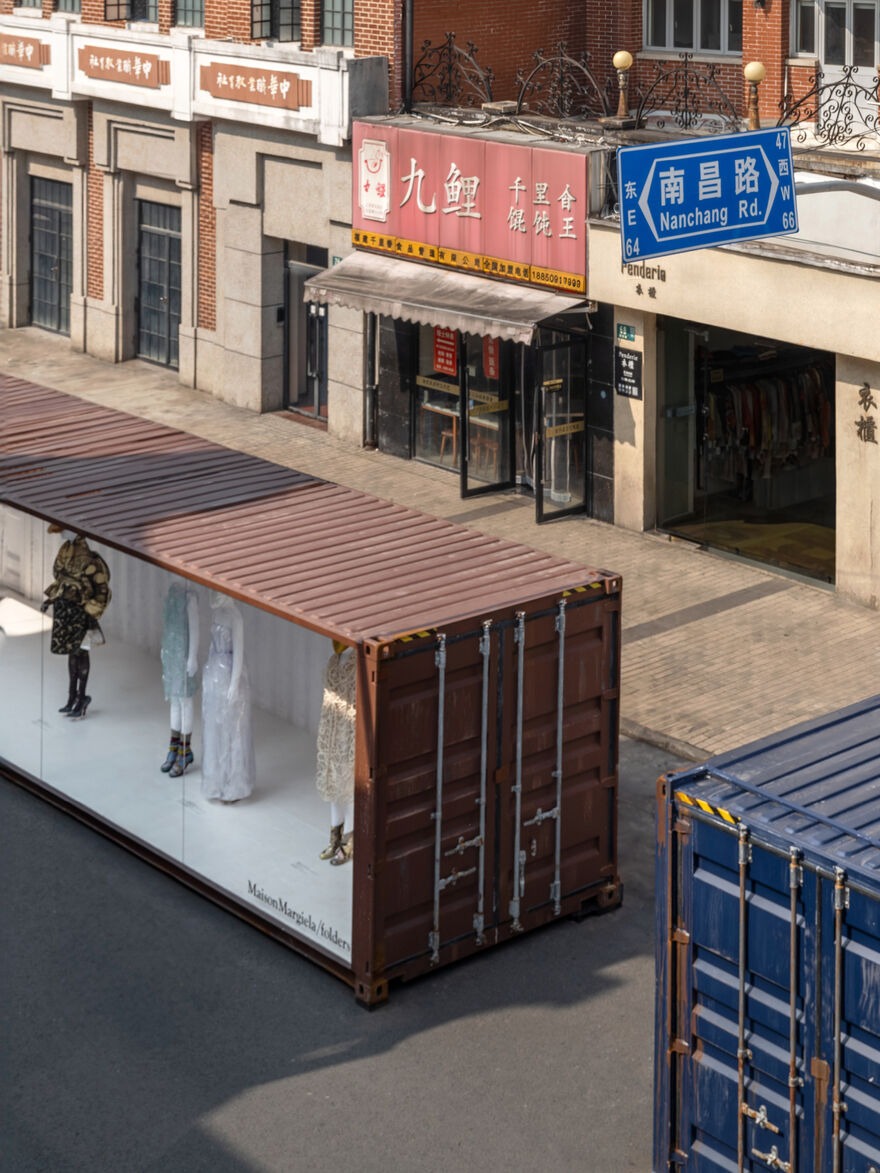
Maison Margiela has taken its Artisanal line out of the salon and placed it directly on the street. Artisanal: Our Creative Laboratory, staged in Huangpu District, Shanghai, brings together 58 couture looks spanning from 1989 to 2026, installed inside industrial shipping containers arranged in an open-air grid.

The setup is deliberate. The containers reference Shanghai’s port history and echo the brand’s recent runway, which Glenn Martens staged in a working shipyard. Instead of white gallery walls, garments sit against raw metal interiors, exposed to daylight, traffic noise, and footfall. The shift in setting changes how the work is read and makes it less insulated, more immediate, and harder to aestheticize from a distance.
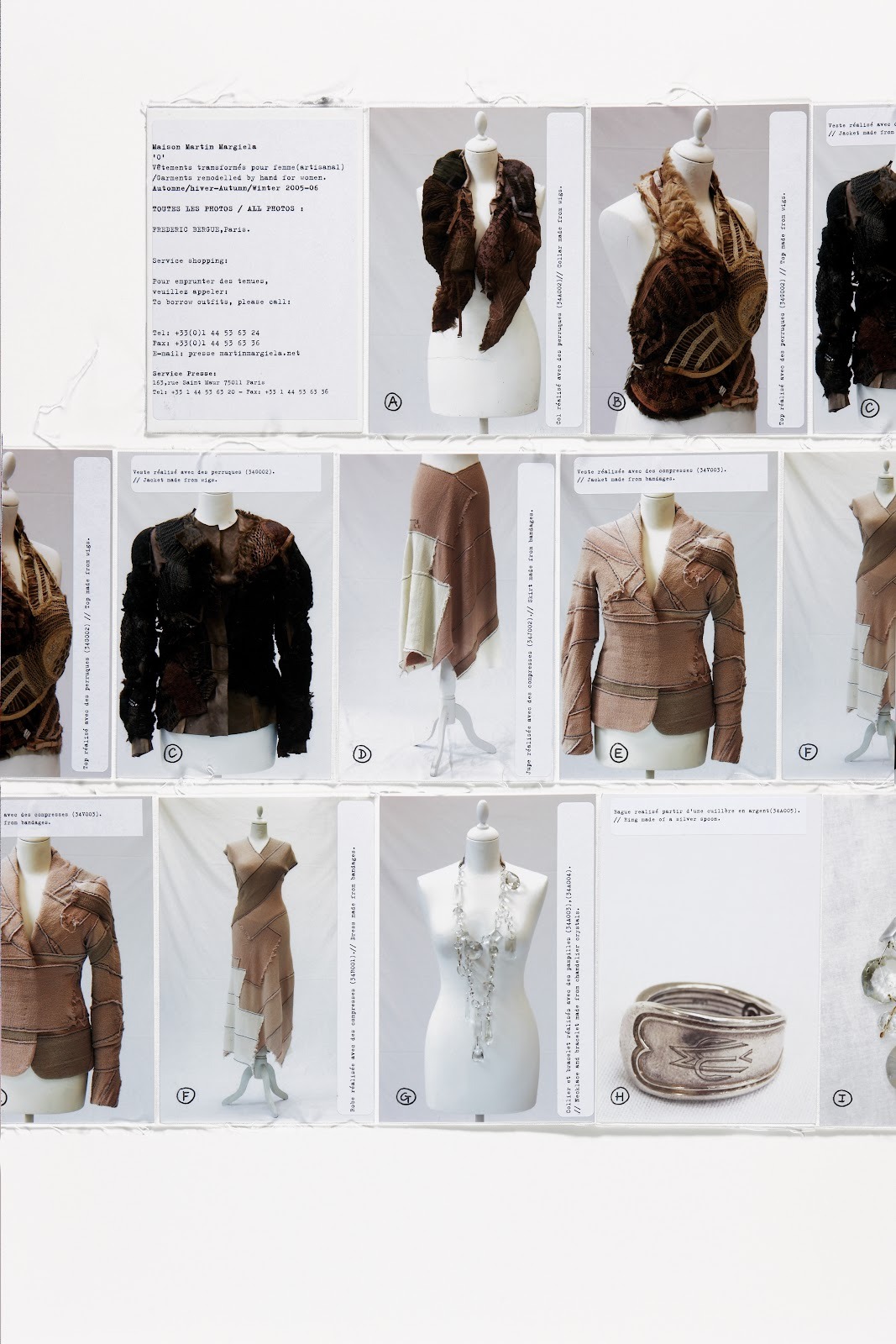
The selection begins with one of the house’s earliest Artisanal pieces, a porcelain plate waistcoat from Autumn/Winter 1989 which was created under Martin Margiela, and moves through to recent runway work, including a Edwardian-style gown, which was treated with beeswax, from the Fall/Winter 2026 collection. Seen together, the pieces map a consistent approach. Materials change, but the Margiela methods hold, taking familiar objects and reworking them until their original function becomes secondary.

Throughout the exhibition, that method is made visible. Garments built from combs or wigs sit alongside tailored pieces that have been pulled apart and reconstructed, their internal structures exposed. Elsewhere, surfaces mimic other materials entirely, with porcelain effects achieved through scanning and airbrushing, or finishes that read as aged and cracked through wax treatments. The emphasis stays on how things are made and what they are made from.
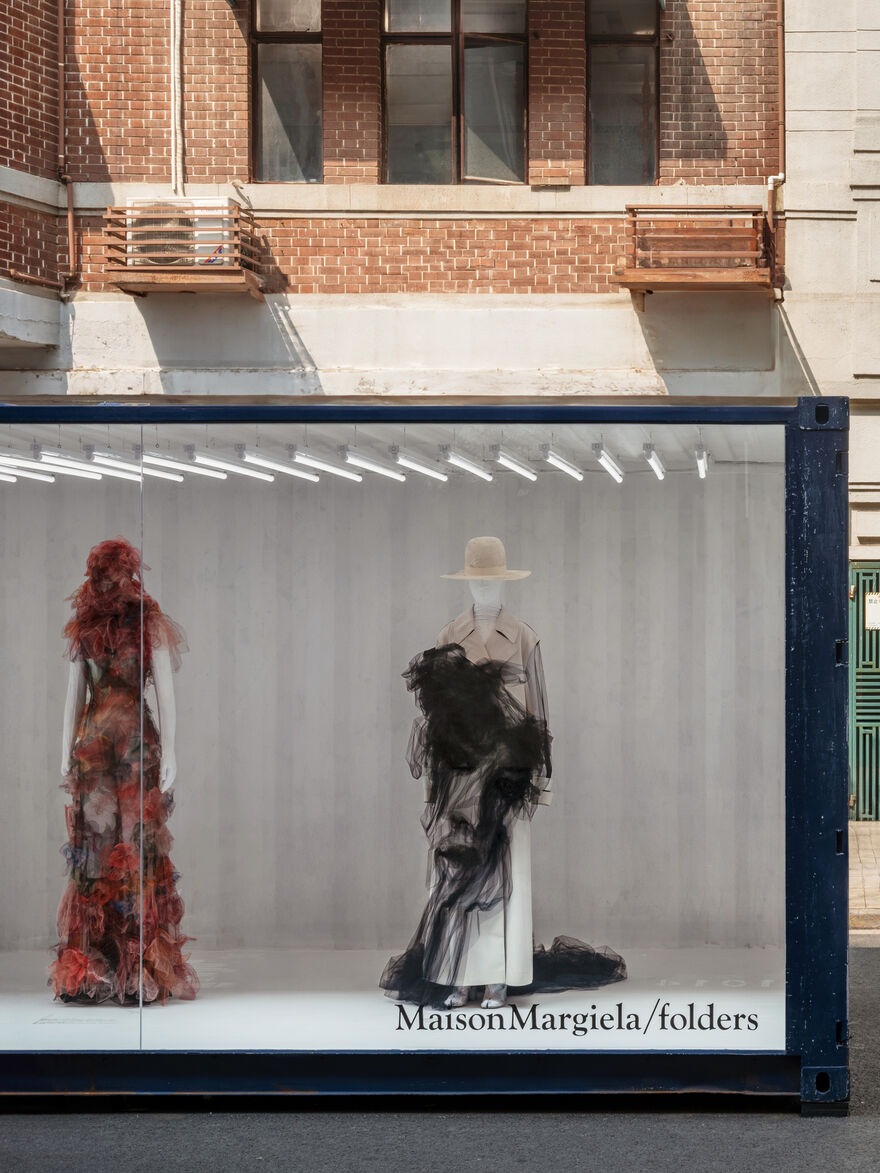
Several of the more recent runway pieces hold substance. A dress constructed from porcelain shards bound with organza reveals the various layers between fragility and structure. A beeswax-coated gown appears preserved and deteriorating at once, its surface catching light unevenly. Another look, built from 150,000 miniature star stickers, flattens into a single texture from afar but becomes dense and almost excessive when viewed at close range. A five-meter painted canvas, sourced from a Paris flea market, has been cut and reassembled into a column dress, its original imagery still partially legible across the body.

Martens keeps one of the house’s core ideas intact: that material hierarchy is flexible. As he noted during the Shanghai presentations, the starting point for Margiela was often the thrift store. What matters is how something is seen and reworked. That approach carries through here, where upholstery, plastic, paper, and wax are treated with the same attention as traditional couture fabrics.

The exhibition extends beyond the physical installation through a public digital folder where the house uploads process images, fittings, and documentation as the project unfolds. It offers a partial look into the making of the work without fully demystifying it. Shanghai marks the first stop in a four-city project titled Maison Margiela/Folders, with subsequent chapters set to focus on anonymity and masking in Beijing, the Tabi shoe in Chengdu, and the house’s white paint technique in Shenzhen.
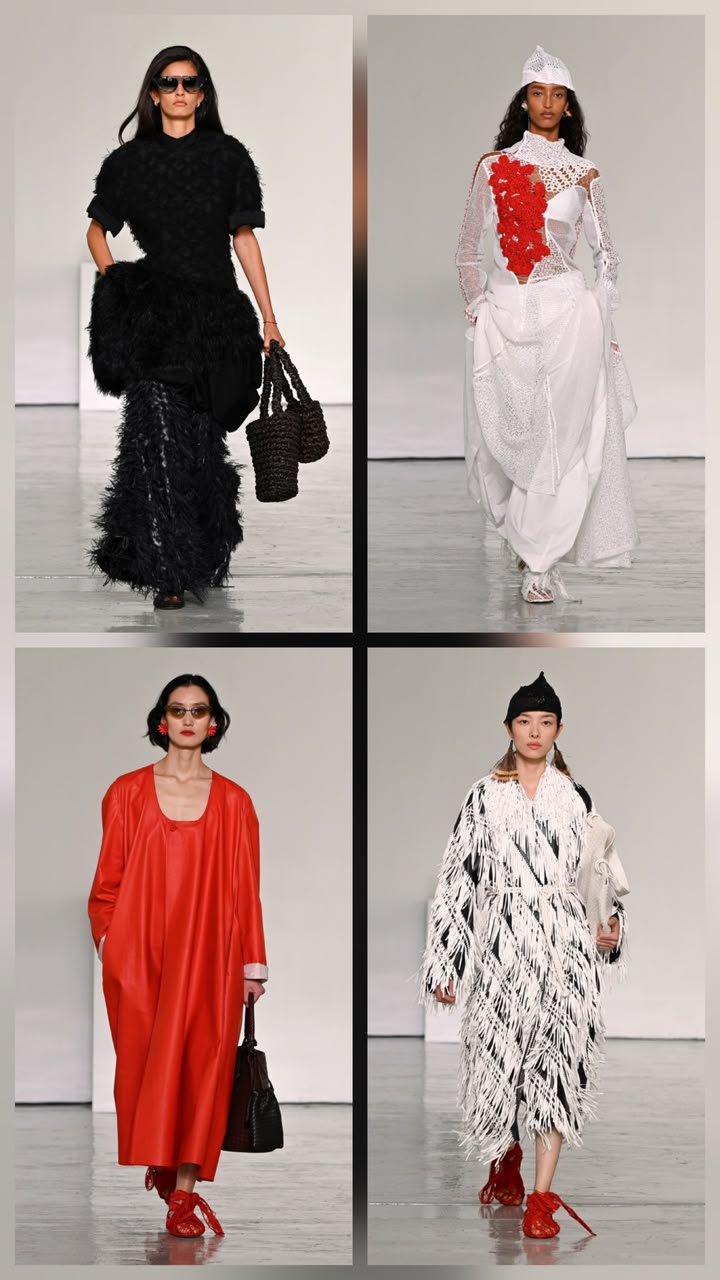
What holds the Shanghai exhibition together is its focus on construction. The labor behind each piece becomes more legible in this setting. A taffeta gown shaped through hundreds of hand-sculpted points, requiring close to 200 hours of work, reads as both controlled and excessive. Tailored jackets incorporate stretch jersey as internal structure, replacing traditional darts and subtly reshaping the body. Even the subtler pieces carry layered processes, printing, coating, binding, that only fully register at close range. When placed directly on the street, these details land differently. Visitors move through the containers without the usual cues of a fashion show or gallery, taking in the garments at their own pace. The result is material presence, pushed to its limit and held there.

Inside Maison Margiela’s Shanghai Exhibition: 58 Looks, Shipping Containers, and a Street-Level Archive

Authored by
This is some text inside of a div block.

Maison Margiela has taken its Artisanal line out of the salon and placed it directly on the street. Artisanal: Our Creative Laboratory, staged in Huangpu District, Shanghai, brings together 58 couture looks spanning from 1989 to 2026, installed inside industrial shipping containers arranged in an open-air grid.

The setup is deliberate. The containers reference Shanghai’s port history and echo the brand’s recent runway, which Glenn Martens staged in a working shipyard. Instead of white gallery walls, garments sit against raw metal interiors, exposed to daylight, traffic noise, and footfall. The shift in setting changes how the work is read and makes it less insulated, more immediate, and harder to aestheticize from a distance.

The selection begins with one of the house’s earliest Artisanal pieces, a porcelain plate waistcoat from Autumn/Winter 1989 which was created under Martin Margiela, and moves through to recent runway work, including a Edwardian-style gown, which was treated with beeswax, from the Fall/Winter 2026 collection. Seen together, the pieces map a consistent approach. Materials change, but the Margiela methods hold, taking familiar objects and reworking them until their original function becomes secondary.

Throughout the exhibition, that method is made visible. Garments built from combs or wigs sit alongside tailored pieces that have been pulled apart and reconstructed, their internal structures exposed. Elsewhere, surfaces mimic other materials entirely, with porcelain effects achieved through scanning and airbrushing, or finishes that read as aged and cracked through wax treatments. The emphasis stays on how things are made and what they are made from.

Several of the more recent runway pieces hold substance. A dress constructed from porcelain shards bound with organza reveals the various layers between fragility and structure. A beeswax-coated gown appears preserved and deteriorating at once, its surface catching light unevenly. Another look, built from 150,000 miniature star stickers, flattens into a single texture from afar but becomes dense and almost excessive when viewed at close range. A five-meter painted canvas, sourced from a Paris flea market, has been cut and reassembled into a column dress, its original imagery still partially legible across the body.

Martens keeps one of the house’s core ideas intact: that material hierarchy is flexible. As he noted during the Shanghai presentations, the starting point for Margiela was often the thrift store. What matters is how something is seen and reworked. That approach carries through here, where upholstery, plastic, paper, and wax are treated with the same attention as traditional couture fabrics.

The exhibition extends beyond the physical installation through a public digital folder where the house uploads process images, fittings, and documentation as the project unfolds. It offers a partial look into the making of the work without fully demystifying it. Shanghai marks the first stop in a four-city project titled Maison Margiela/Folders, with subsequent chapters set to focus on anonymity and masking in Beijing, the Tabi shoe in Chengdu, and the house’s white paint technique in Shenzhen.

What holds the Shanghai exhibition together is its focus on construction. The labor behind each piece becomes more legible in this setting. A taffeta gown shaped through hundreds of hand-sculpted points, requiring close to 200 hours of work, reads as both controlled and excessive. Tailored jackets incorporate stretch jersey as internal structure, replacing traditional darts and subtly reshaping the body. Even the subtler pieces carry layered processes, printing, coating, binding, that only fully register at close range. When placed directly on the street, these details land differently. Visitors move through the containers without the usual cues of a fashion show or gallery, taking in the garments at their own pace. The result is material presence, pushed to its limit and held there.
This is some text inside of a div block.

Inside Maison Margiela’s Shanghai Exhibition: 58 Looks, Shipping Containers, and a Street-Level Archive

Authored by

Maison Margiela has taken its Artisanal line out of the salon and placed it directly on the street. Artisanal: Our Creative Laboratory, staged in Huangpu District, Shanghai, brings together 58 couture looks spanning from 1989 to 2026, installed inside industrial shipping containers arranged in an open-air grid.

The setup is deliberate. The containers reference Shanghai’s port history and echo the brand’s recent runway, which Glenn Martens staged in a working shipyard. Instead of white gallery walls, garments sit against raw metal interiors, exposed to daylight, traffic noise, and footfall. The shift in setting changes how the work is read and makes it less insulated, more immediate, and harder to aestheticize from a distance.

The selection begins with one of the house’s earliest Artisanal pieces, a porcelain plate waistcoat from Autumn/Winter 1989 which was created under Martin Margiela, and moves through to recent runway work, including a Edwardian-style gown, which was treated with beeswax, from the Fall/Winter 2026 collection. Seen together, the pieces map a consistent approach. Materials change, but the Margiela methods hold, taking familiar objects and reworking them until their original function becomes secondary.

Throughout the exhibition, that method is made visible. Garments built from combs or wigs sit alongside tailored pieces that have been pulled apart and reconstructed, their internal structures exposed. Elsewhere, surfaces mimic other materials entirely, with porcelain effects achieved through scanning and airbrushing, or finishes that read as aged and cracked through wax treatments. The emphasis stays on how things are made and what they are made from.

Several of the more recent runway pieces hold substance. A dress constructed from porcelain shards bound with organza reveals the various layers between fragility and structure. A beeswax-coated gown appears preserved and deteriorating at once, its surface catching light unevenly. Another look, built from 150,000 miniature star stickers, flattens into a single texture from afar but becomes dense and almost excessive when viewed at close range. A five-meter painted canvas, sourced from a Paris flea market, has been cut and reassembled into a column dress, its original imagery still partially legible across the body.

Martens keeps one of the house’s core ideas intact: that material hierarchy is flexible. As he noted during the Shanghai presentations, the starting point for Margiela was often the thrift store. What matters is how something is seen and reworked. That approach carries through here, where upholstery, plastic, paper, and wax are treated with the same attention as traditional couture fabrics.

The exhibition extends beyond the physical installation through a public digital folder where the house uploads process images, fittings, and documentation as the project unfolds. It offers a partial look into the making of the work without fully demystifying it. Shanghai marks the first stop in a four-city project titled Maison Margiela/Folders, with subsequent chapters set to focus on anonymity and masking in Beijing, the Tabi shoe in Chengdu, and the house’s white paint technique in Shenzhen.

What holds the Shanghai exhibition together is its focus on construction. The labor behind each piece becomes more legible in this setting. A taffeta gown shaped through hundreds of hand-sculpted points, requiring close to 200 hours of work, reads as both controlled and excessive. Tailored jackets incorporate stretch jersey as internal structure, replacing traditional darts and subtly reshaping the body. Even the subtler pieces carry layered processes, printing, coating, binding, that only fully register at close range. When placed directly on the street, these details land differently. Visitors move through the containers without the usual cues of a fashion show or gallery, taking in the garments at their own pace. The result is material presence, pushed to its limit and held there.

Other Stories
London
London
Lagos
London
Newyork
London
Shop
Join the community.
You are now subscribed to receive updates.
Oops! Something went wrong while submitting the form.