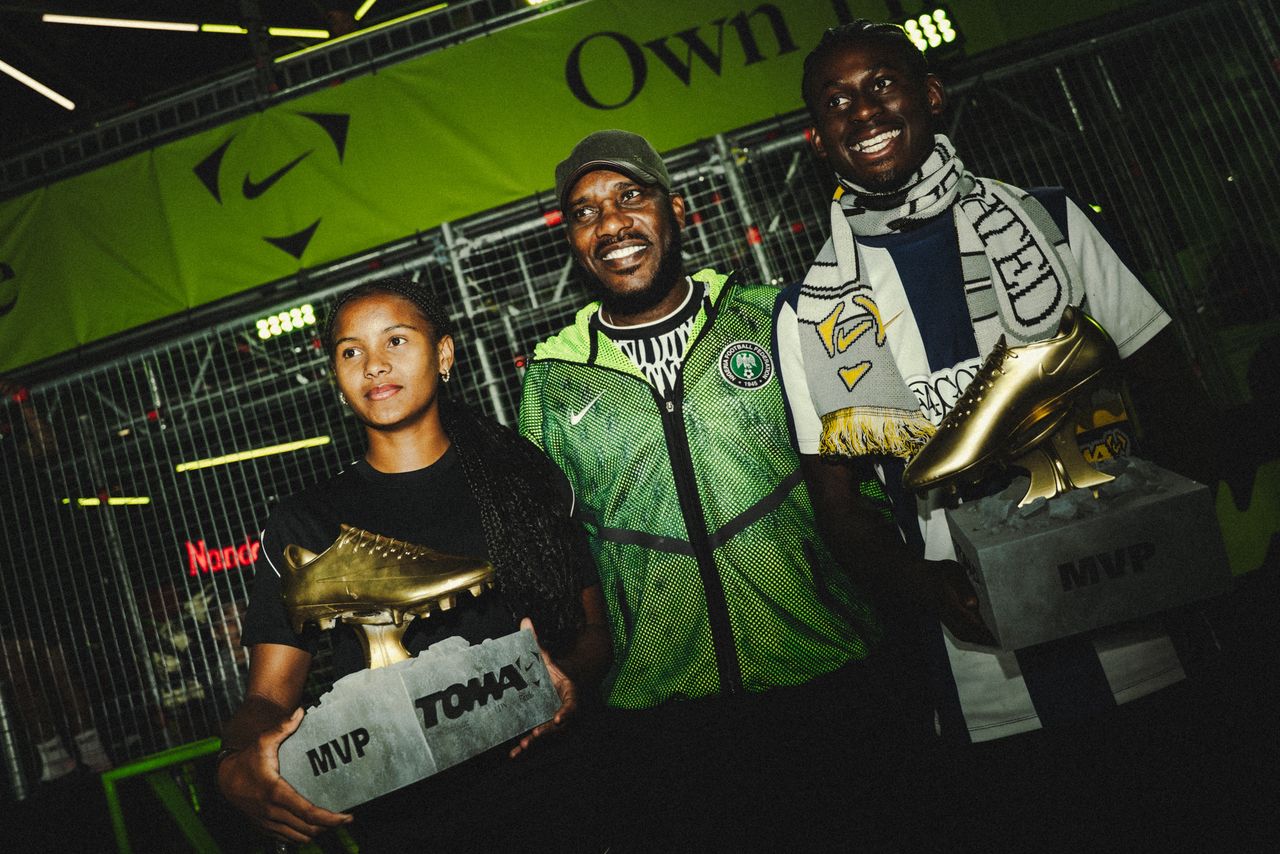
Inside Toma Own The Cage: London Final.

Authored by

Where Street Football's Past Meets Its Future.

There is a version of London that rarely gets written about: one where different communities, cultures and generations meet around the game.
That was the atmosphere at TOMA London OWN The Cage Finals in Shoreditch, a day where football, music and self-expression came together around the cage.

At its heart, the event was a community showing up for football. Different backgrounds, different parts of London and different generations converged around one cage, with families bringing their kids to play for their teams and the atmosphere building throughout the day.
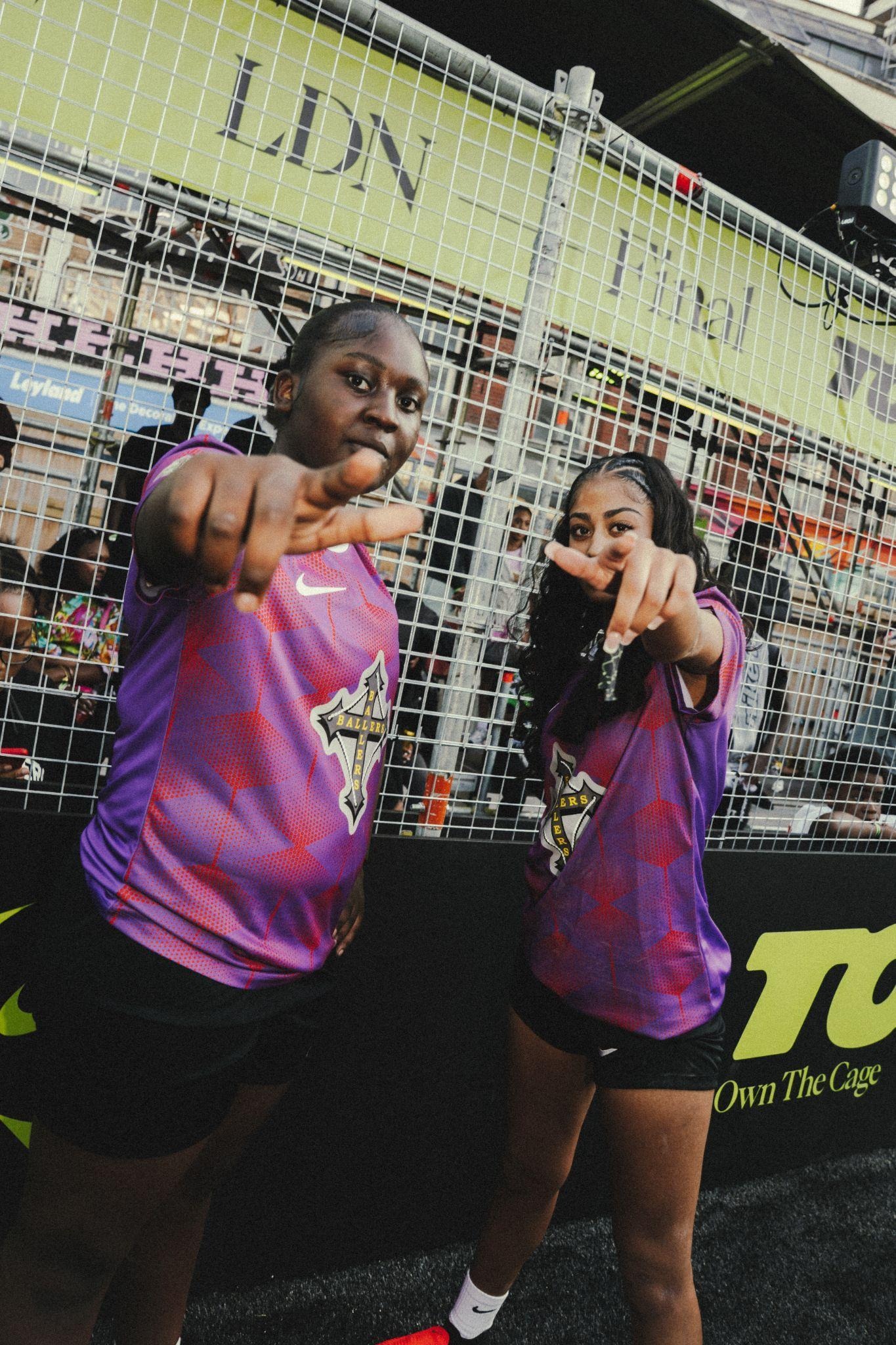
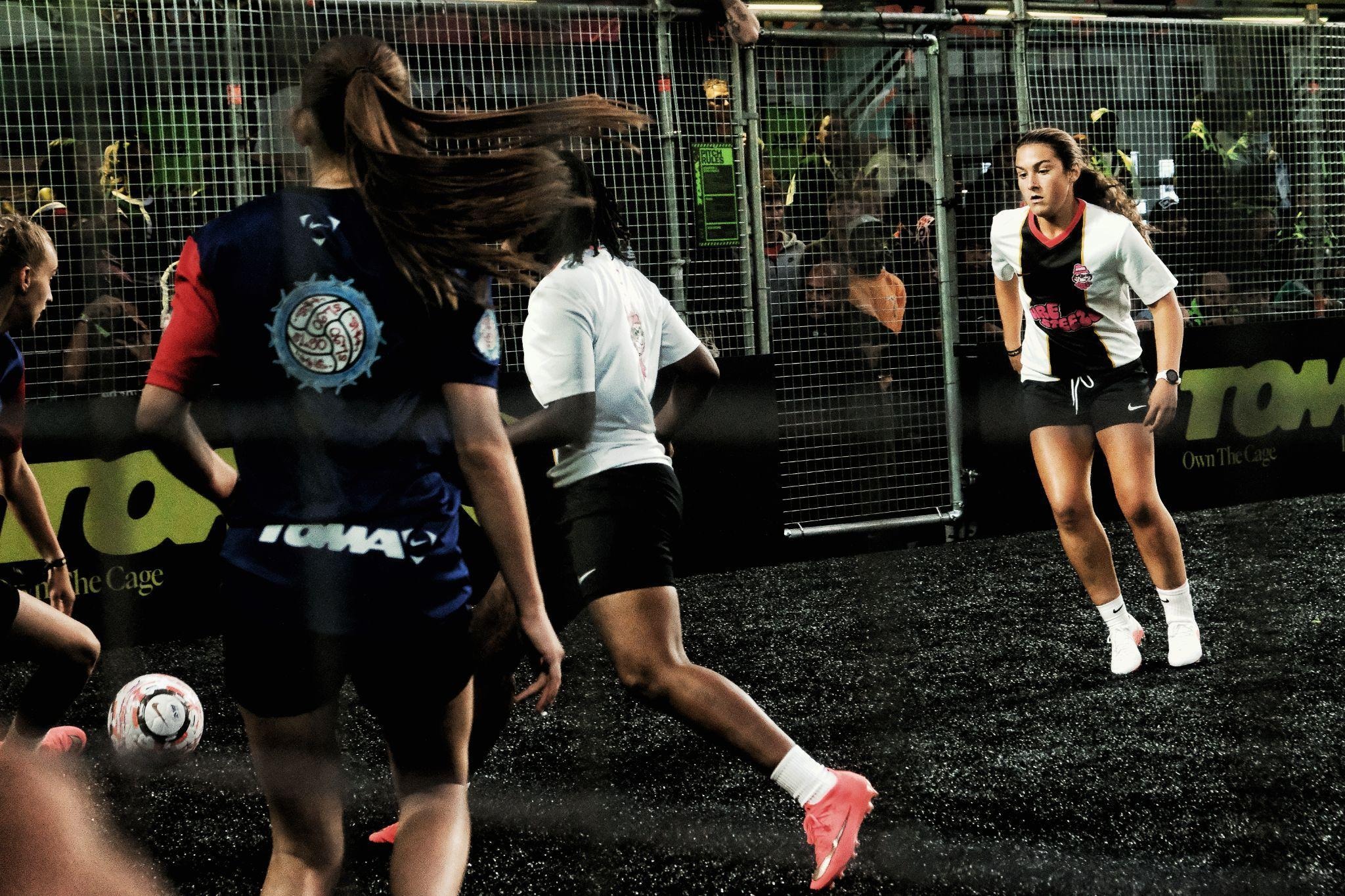
The football matched the energy. The men's games were tactical and tricky, with four-a-side cage football forcing quick decisions in tight spaces.

The women's games brought their own intensity, with high-scoring, high-energy matches that built towards a final every bit as tense as anything on the men's side. Two different rhythms, one shared intensity.
Music and sport blurred into each other too. Lancey Foux and CityBoyMoe performed courtside, bringing their own energy to a day built around football and self-expression.

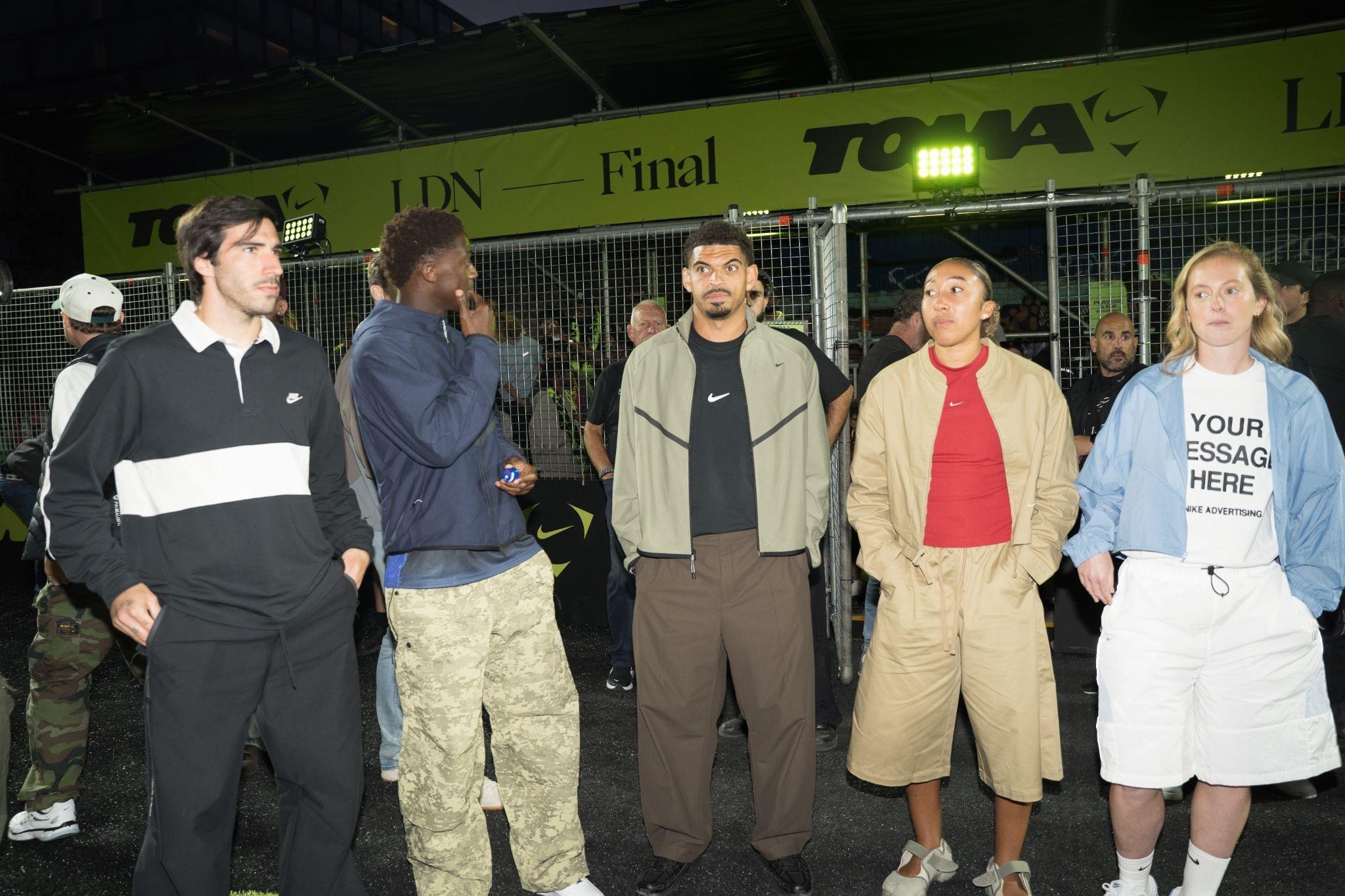
Watching from the sidelines were professional footballers Sandro Tonali,  Kobbie Mainoo, Morgan Gibbs-White,  Lauren James and Keira Walsh, adding another layer of experience and inspiration to a day centred on the next generation.
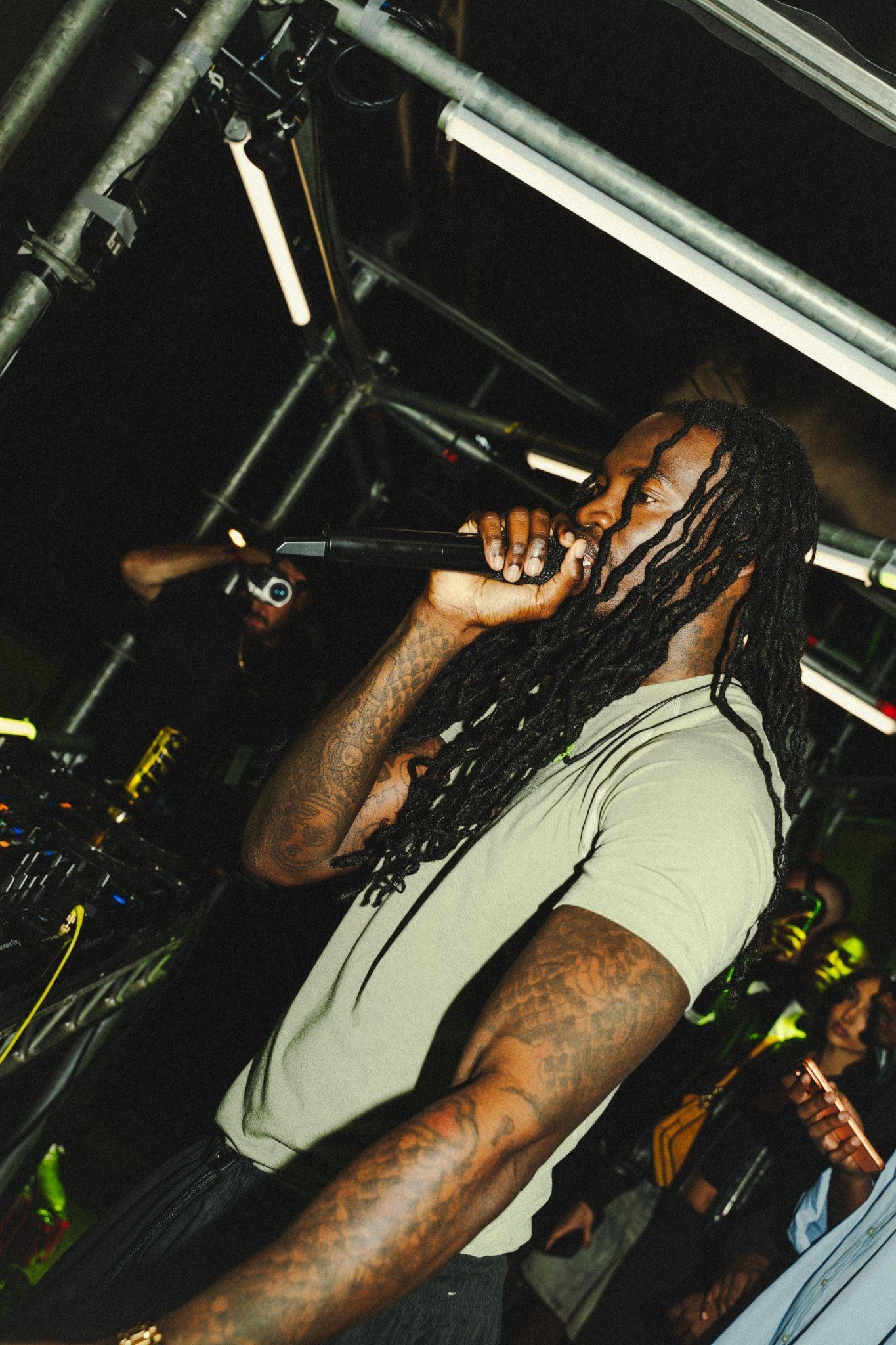
For those documenting the day, the appeal was more than capturing big names. It was seeing players, families, creatives and first-time content creators share the same space and express themselves through the game.

For the day, Shoreditch became a meeting point for football, music, creativity and community, all centred around the cage.

That spirit of expression connects directly to what Toma Own The Cage: London Final set out to celebrate. Jay-Jay Okocha, on hand as one of the tournament's guests, spoke about what stood out to him from watching the qualifiers: players trying things, taking risks and showing what they could do with the ball without being afraid to get it wrong.

“I totally relate to that,” he said, “and I'm delighted that Nike have gone back to the street to discover talent.”
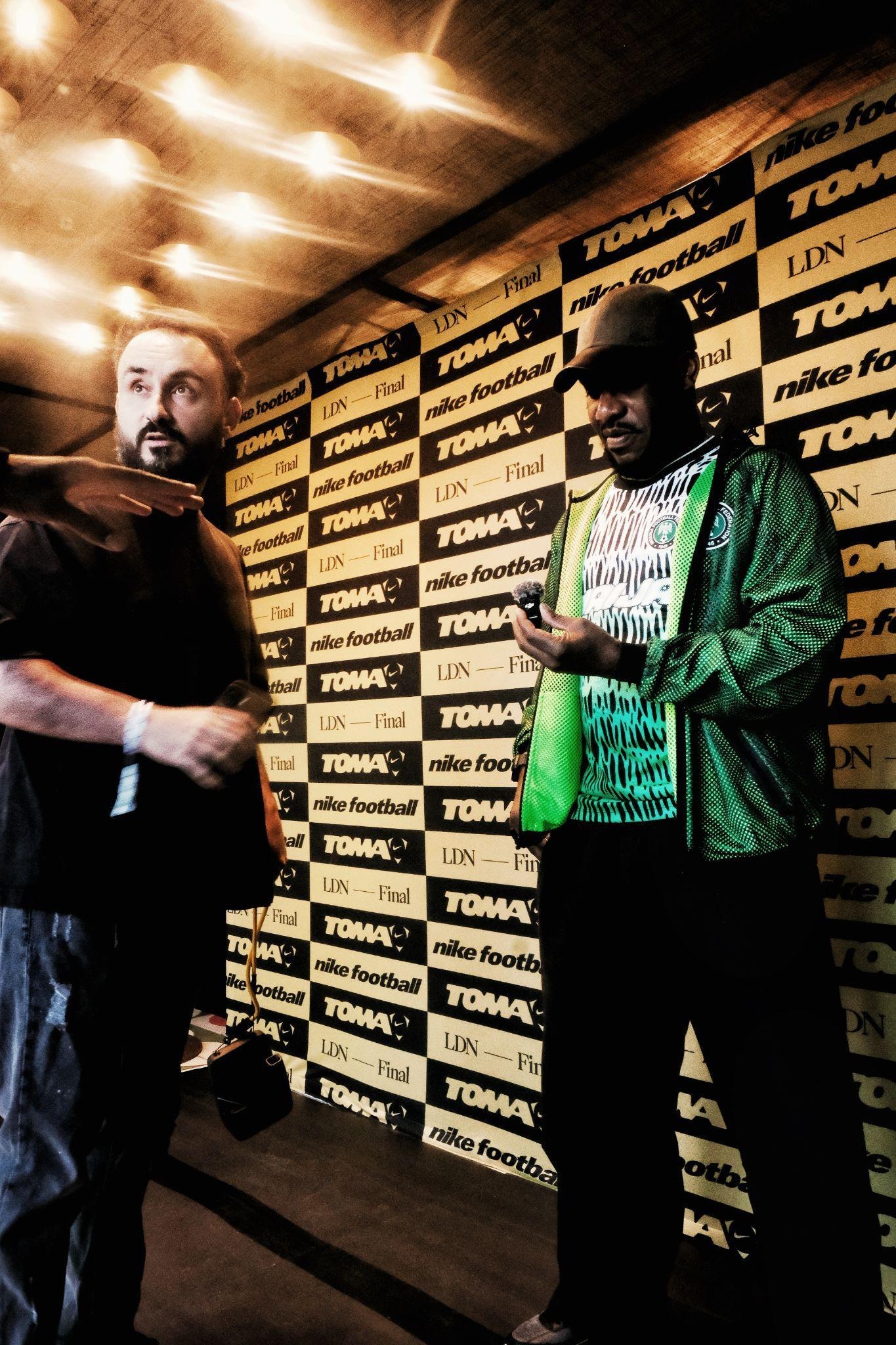
Okocha's presence added another layer of connection between generations of footballers, reflecting the freedom and creativity that the day was built around.

Asked what still separates the best street footballers from everyone else, his answer went beyond skill moves: the ability to trust instinct, play for the team, be unpredictable and keep opponents guessing.

Asked about his own legacy, Okocha didn't reach for medals or moments. He spoke about joy.

“The most important thing is just the smiles I put on people's faces,” he said. “People go through a lot, and it's always hard to make them smile.”

There was room for lighter moments too. Rattling off some of his favourite Nigerian street football lingos, he said  “e dey come” (man on) and “turn belle” (the awareness to hold and turn with the ball)

He handed the next generation a piece of language that's been passed down on Lagos streets for decades, the same instinct Toma Own The Cage: London Final is trying to protect on cages across London.

That same spirit of instinct, creativity and self-expression was present throughout.

By the end of the day, it wasn't any single name on the bill that stood out. It was the people around the cage: families, footballers, musicians, creators and fans, all brought together by the game.

Toma Own The Cage: London Final, was a reminder of what happens when players are given the freedom to take the game and make it their own.
In Shoreditch, that meant football played with instinct, creativity and personality  and a cage that gave everyone a reason to step in.

CREDIT:
Zeks, Creative Exec. Testimony on event atmosphere.
Amran Mohamed, Independent Writer & Documentarian. Behind-the-scenes testimony on event atmosphere.
Jay Jay Okocha. Main interview by Zeks (deeds Magazine)
Photos by: Sage Complex & Makuochukwu Nwajagu 
John-Henry (JHFORTHY) -  EDITOR

Inside Toma Own The Cage: London Final.

Authored by
This is some text inside of a div block.

Where Street Football's Past Meets Its Future.

There is a version of London that rarely gets written about: one where different communities, cultures and generations meet around the game.
That was the atmosphere at TOMA London OWN The Cage Finals in Shoreditch, a day where football, music and self-expression came together around the cage.

At its heart, the event was a community showing up for football. Different backgrounds, different parts of London and different generations converged around one cage, with families bringing their kids to play for their teams and the atmosphere building throughout the day.

The football matched the energy. The men's games were tactical and tricky, with four-a-side cage football forcing quick decisions in tight spaces.

The women's games brought their own intensity, with high-scoring, high-energy matches that built towards a final every bit as tense as anything on the men's side. Two different rhythms, one shared intensity.

Music and sport blurred into each other too. Lancey Foux and CityBoyMoe performed courtside, bringing their own energy to a day built around football and self-expression.

Watching from the sidelines were professional footballers Sandro Tonali,  Kobbie Mainoo, Morgan Gibbs-White,  Lauren James and Keira Walsh, adding another layer of experience and inspiration to a day centred on the next generation.

For those documenting the day, the appeal was more than capturing big names. It was seeing players, families, creatives and first-time content creators share the same space and express themselves through the game.

For the day, Shoreditch became a meeting point for football, music, creativity and community, all centred around the cage.

That spirit of expression connects directly to what Toma Own The Cage: London Final set out to celebrate. Jay-Jay Okocha, on hand as one of the tournament's guests, spoke about what stood out to him from watching the qualifiers: players trying things, taking risks and showing what they could do with the ball without being afraid to get it wrong.

“I totally relate to that,” he said, “and I'm delighted that Nike have gone back to the street to discover talent.”

Okocha's presence added another layer of connection between generations of footballers, reflecting the freedom and creativity that the day was built around.

Asked what still separates the best street footballers from everyone else, his answer went beyond skill moves: the ability to trust instinct, play for the team, be unpredictable and keep opponents guessing.

Asked about his own legacy, Okocha didn't reach for medals or moments. He spoke about joy.

“The most important thing is just the smiles I put on people's faces,” he said. “People go through a lot, and it's always hard to make them smile.”

There was room for lighter moments too. Rattling off some of his favourite Nigerian street football lingos, he said  “e dey come” (man on) and “turn belle” (the awareness to hold and turn with the ball)

He handed the next generation a piece of language that's been passed down on Lagos streets for decades, the same instinct Toma Own The Cage: London Final is trying to protect on cages across London.

That same spirit of instinct, creativity and self-expression was present throughout.

By the end of the day, it wasn't any single name on the bill that stood out. It was the people around the cage: families, footballers, musicians, creators and fans, all brought together by the game.

Toma Own The Cage: London Final, was a reminder of what happens when players are given the freedom to take the game and make it their own.
In Shoreditch, that meant football played with instinct, creativity and personality  and a cage that gave everyone a reason to step in.

CREDIT:
Zeks, Creative Exec. Testimony on event atmosphere.
Amran Mohamed, Independent Writer & Documentarian. Behind-the-scenes testimony on event atmosphere.
Jay Jay Okocha. Main interview by Zeks (deeds Magazine)
Photos by: Sage Complex & Makuochukwu Nwajagu 
John-Henry (JHFORTHY) -  EDITOR
This is some text inside of a div block.

Inside Toma Own The Cage: London Final.

Authored by

Where Street Football's Past Meets Its Future.

There is a version of London that rarely gets written about: one where different communities, cultures and generations meet around the game.
That was the atmosphere at TOMA London OWN The Cage Finals in Shoreditch, a day where football, music and self-expression came together around the cage.

At its heart, the event was a community showing up for football. Different backgrounds, different parts of London and different generations converged around one cage, with families bringing their kids to play for their teams and the atmosphere building throughout the day.

The football matched the energy. The men's games were tactical and tricky, with four-a-side cage football forcing quick decisions in tight spaces.

The women's games brought their own intensity, with high-scoring, high-energy matches that built towards a final every bit as tense as anything on the men's side. Two different rhythms, one shared intensity.

Music and sport blurred into each other too. Lancey Foux and CityBoyMoe performed courtside, bringing their own energy to a day built around football and self-expression.

Watching from the sidelines were professional footballers Sandro Tonali,  Kobbie Mainoo, Morgan Gibbs-White,  Lauren James and Keira Walsh, adding another layer of experience and inspiration to a day centred on the next generation.

For those documenting the day, the appeal was more than capturing big names. It was seeing players, families, creatives and first-time content creators share the same space and express themselves through the game.

For the day, Shoreditch became a meeting point for football, music, creativity and community, all centred around the cage.

That spirit of expression connects directly to what Toma Own The Cage: London Final set out to celebrate. Jay-Jay Okocha, on hand as one of the tournament's guests, spoke about what stood out to him from watching the qualifiers: players trying things, taking risks and showing what they could do with the ball without being afraid to get it wrong.

“I totally relate to that,” he said, “and I'm delighted that Nike have gone back to the street to discover talent.”

Okocha's presence added another layer of connection between generations of footballers, reflecting the freedom and creativity that the day was built around.

Asked what still separates the best street footballers from everyone else, his answer went beyond skill moves: the ability to trust instinct, play for the team, be unpredictable and keep opponents guessing.

Asked about his own legacy, Okocha didn't reach for medals or moments. He spoke about joy.

“The most important thing is just the smiles I put on people's faces,” he said. “People go through a lot, and it's always hard to make them smile.”

There was room for lighter moments too. Rattling off some of his favourite Nigerian street football lingos, he said  “e dey come” (man on) and “turn belle” (the awareness to hold and turn with the ball)

He handed the next generation a piece of language that's been passed down on Lagos streets for decades, the same instinct Toma Own The Cage: London Final is trying to protect on cages across London.

That same spirit of instinct, creativity and self-expression was present throughout.

By the end of the day, it wasn't any single name on the bill that stood out. It was the people around the cage: families, footballers, musicians, creators and fans, all brought together by the game.

Toma Own The Cage: London Final, was a reminder of what happens when players are given the freedom to take the game and make it their own.
In Shoreditch, that meant football played with instinct, creativity and personality  and a cage that gave everyone a reason to step in.

CREDIT:
Zeks, Creative Exec. Testimony on event atmosphere.
Amran Mohamed, Independent Writer & Documentarian. Behind-the-scenes testimony on event atmosphere.
Jay Jay Okocha. Main interview by Zeks (deeds Magazine)
Photos by: Sage Complex & Makuochukwu Nwajagu 
John-Henry (JHFORTHY) -  EDITOR

Other Stories
London
London
Lagos
London
Newyork
London
Shop
Join the community.
You are now subscribed to receive updates.
Oops! Something went wrong while submitting the form.
Subscribe