.svg)


The Nigerian-Ghanaian stylist and Ivorian designer Kader Diaby's first collaboration looked effortless. Here's what it actually took.
Jahn Affah's styling feels effortless but there's intention behind every choice. So when he styled Olooh's Lagos Fashion Week SS26 show, the collaboration looked seamless, like two creatives who'd worked together for years. But this was their first time working together. The late nights, the Uber receipts, the backstage moments when everything could go wrong, all of it proved that the best creative partnerships don't need history. Just clarity, respect, and a shared vision for what modern African fashion can be.
Jahn had been watching Olooh from a distance for years. The Ivorian brand, founded by photographer turned designer, Kader Diaby in 2018, had already made waves at Arise Fashion Week with its minimalist silhouettes and impeccable tailoring. Olooh's aesthetic, rooted in the Malinké tradition of northern Côte d'Ivoire but filtered through Abidjan's urban energy, was exactly the kind of work that resonated with Jahn's approach to styling: elevated, intentional, never forced. The collaboration came together the way most good things in African fashion do: through mutual connections and organic timing. "I was in Abidjan late last year, helping a model friend find a photographer," Jahn tells me. "Someone connected me to Kader. Afterwards, he reached out and asked if I'd be interested in styling his show."
The answer was immediate. "It just felt right, so I said yes."
What strikes me about this is how much trust that requires. Saying yes to someone you've never worked with, for one of Africa's biggest fashion platforms, with just weeks to pull it together.
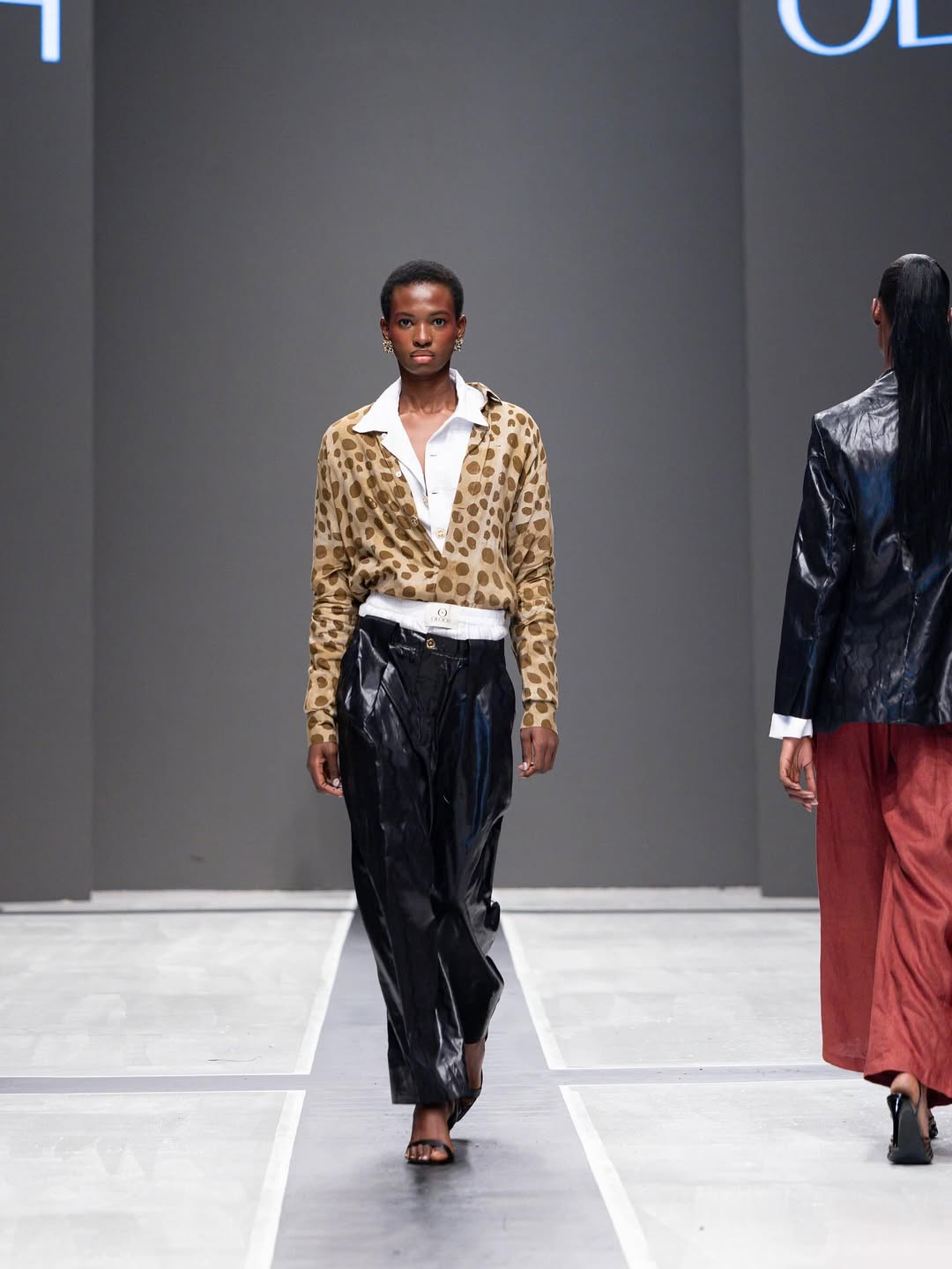
When asked about his vision for the show, Jahn is deliberately spare with his words. "I wanted the looks to feel chic, elevated, and fresh," he says. "The designs already had a strong identity, so my job was to bring that energy to life in a way that felt current but still timeless."
But "chic" here isn't vague aesthetic language, it's specific. It's a functional philosophy that meant letting Diaby's craftsmanship speak first. Olooh works exclusively with organic fabrics; linen, cotton, leather, dyed by female artisans in Abidjan's Treichville commune. The brand's sustainability isn't marketing language; it's how Diaby builds clothes.
"Olooh's designs are sustainable by nature, that's how he works," Jahn notes. "So the garments already had that ethos built in. I didn't have to push for it; I just had to respect it."
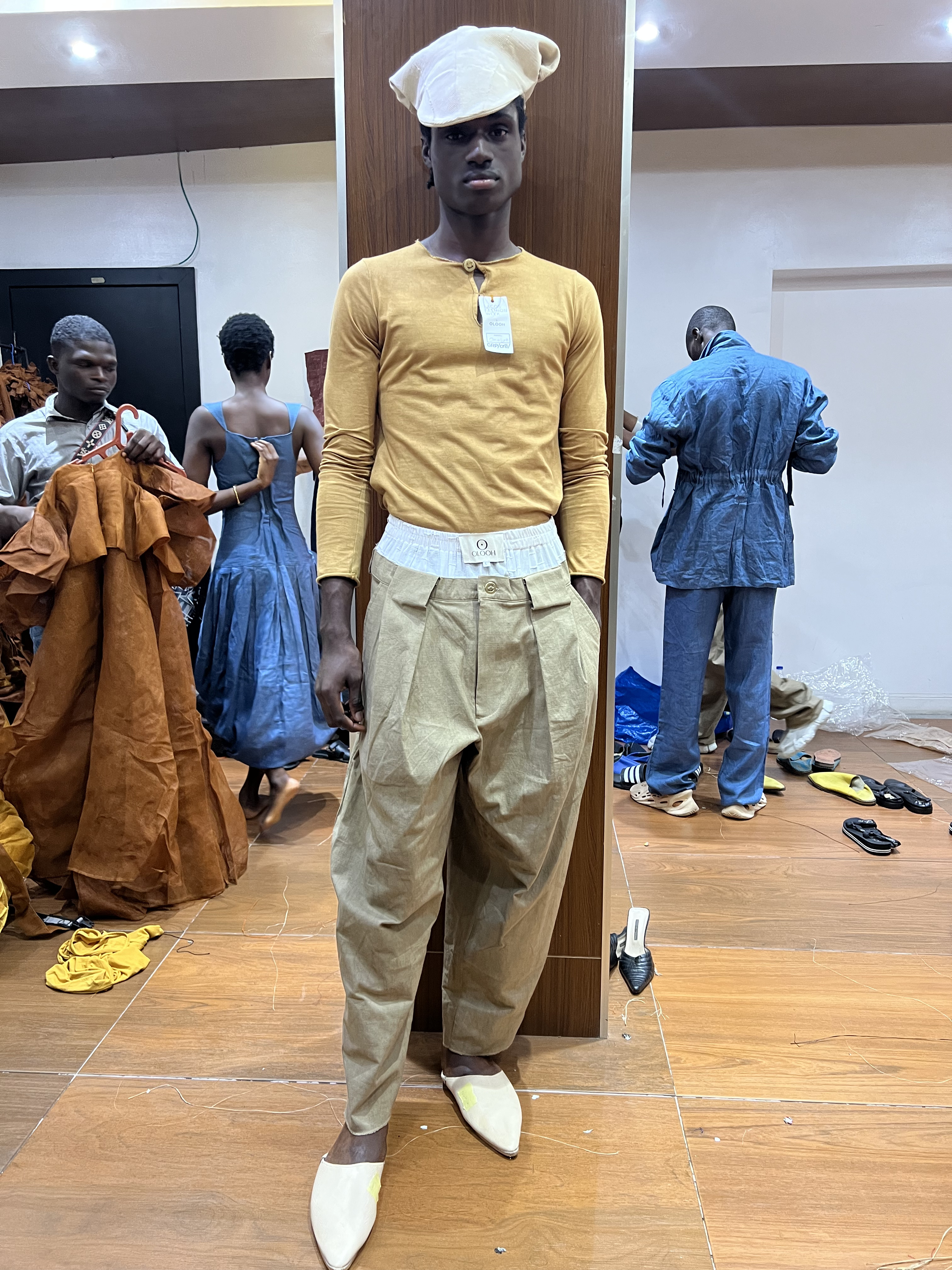
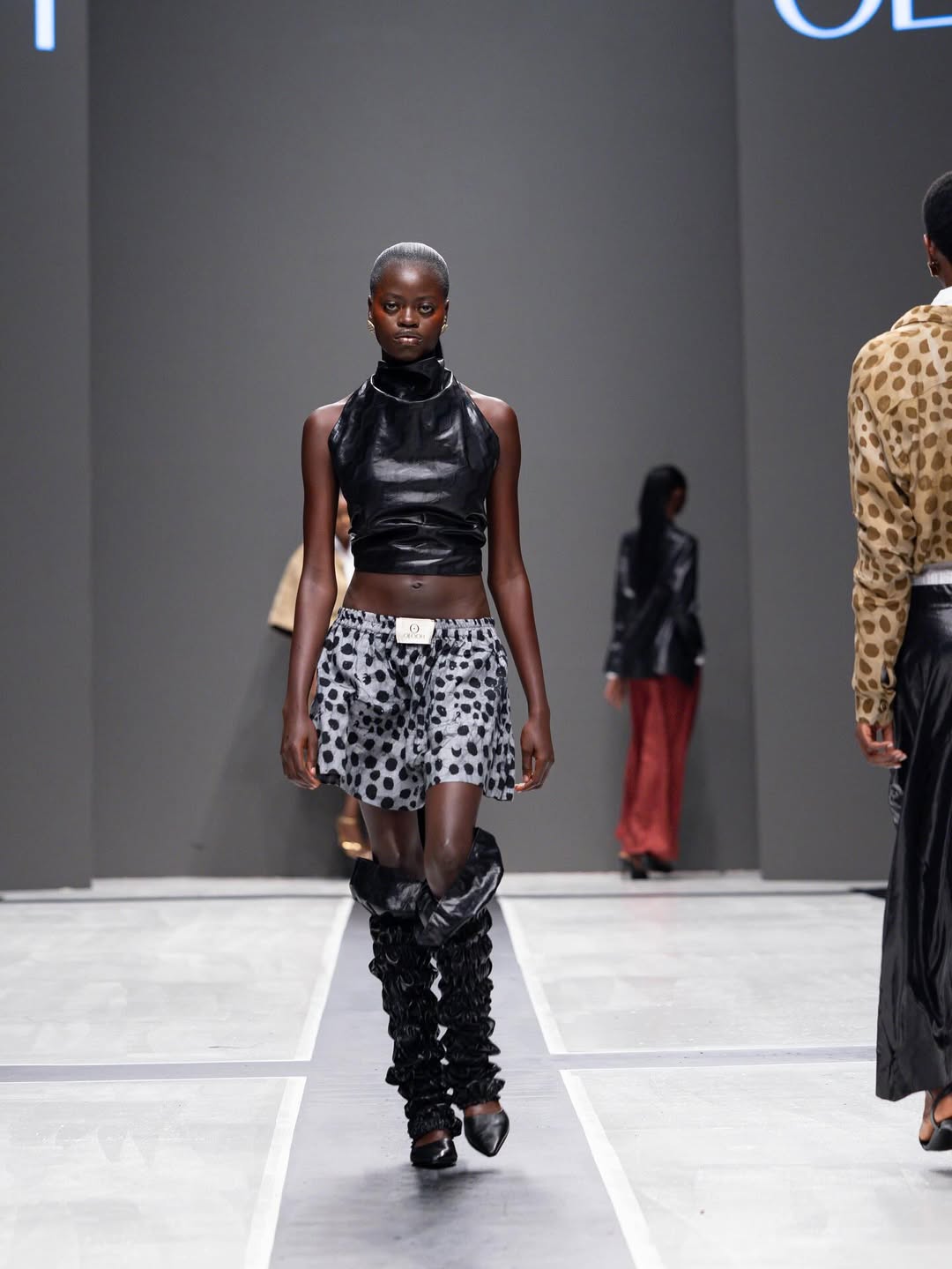
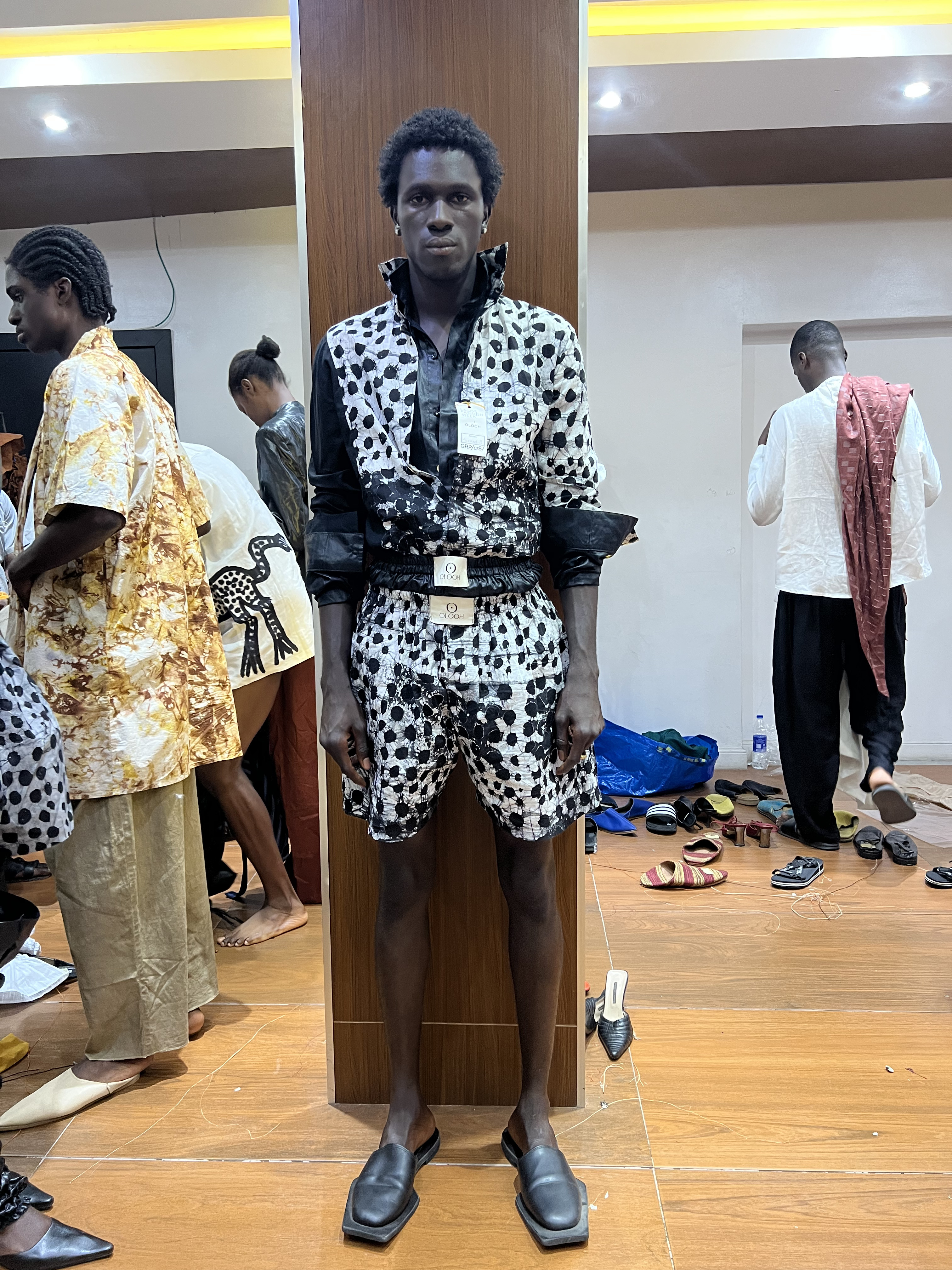
This respect translated into styling choices that honored the collection's DNA while pushing it forward. One look in particular captures the methodology: "There was this one look that instantly reminded me of the Jean Paul Gaultier Male ads—fresh but sensual. I rolled the sleeves, added a hat, kept the silhouette sharp, matching shoes in the same shade. It had that modern, cool-boy energy that still feels very intentional."
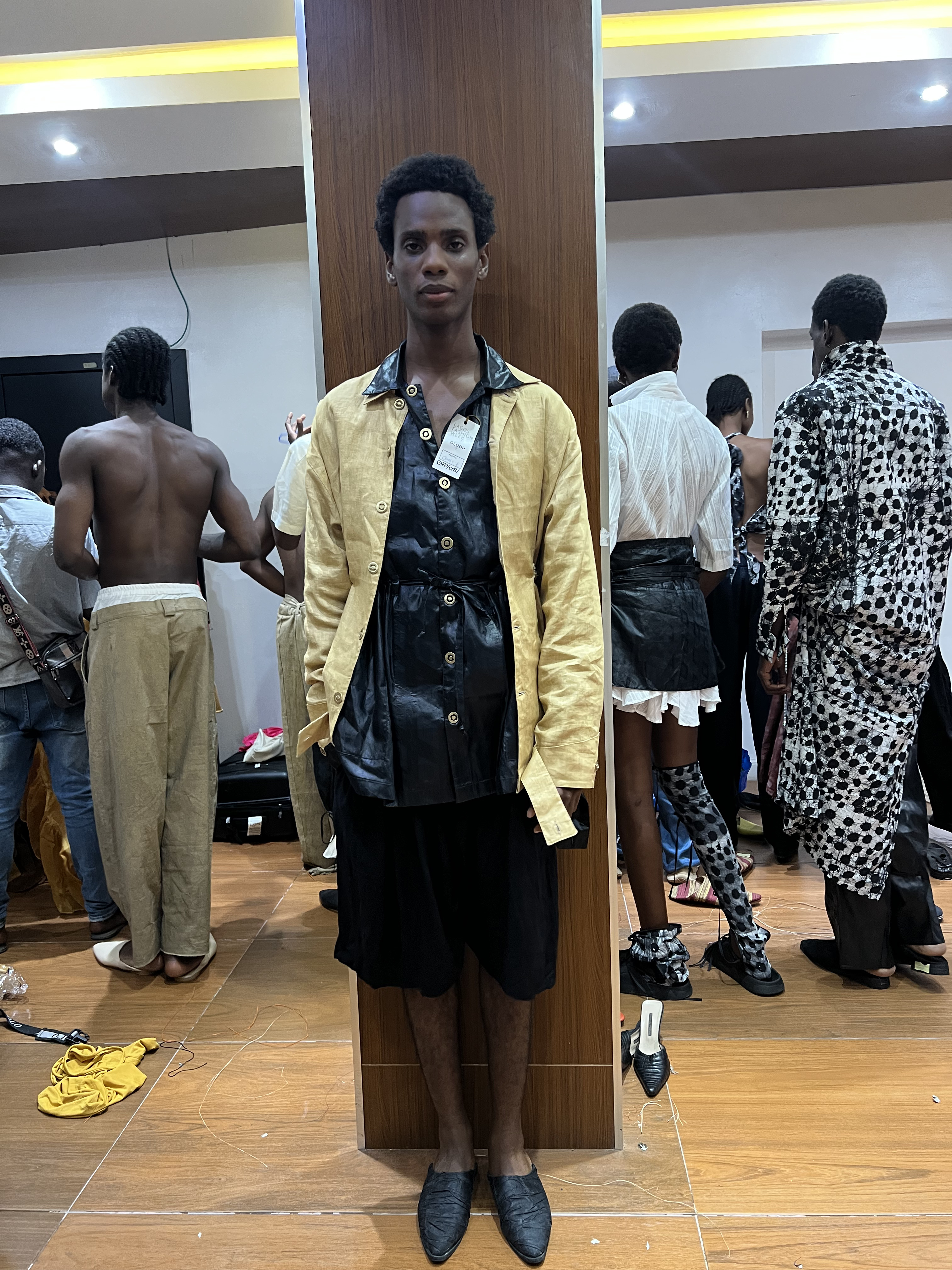
Ask any stylist who's worked Lagos Fashion Week and they'll tell you the same story: fittings that bleed into each other, traffic that eats hours, Uber receipts that make you say “Omo!”. "Fittings, fittings, and more fittings," Jahn laughs. "Late nights, little sleep, meetings. Lots of traffic. Too much money spent on Ubers, if I'm being honest." But he reframes what most people call "the hard part." "I don't really like the word 'hard,' because I feel like once you label something that way, you give it too much power. Yes, it was intense. Yes, you need a clear head. But I just see it as part of the work."
It's not toxic positivity, it's a professional understanding that pressure is the medium you work in, not an obstacle to overcome. This mindset becomes critical when things inevitably go sideways. This year's Lagos Fashion Week backstage moved even faster than usual, so fast that some fully dressed models never made it onto the runway. "We actually had a few models who were fully dressed but didn't make it onto the runway because of the timing," Jahn shares. "That was tough, especially knowing how much effort went into every look." The solution? Refuse to let the work disappear. "We made up for it afterward by shooting a full campaign so the entire collection got its moment."
There's a gap between what people think runway styling is and what it actually requires. The misconception shows up constantly in conversations about fashion: that styling is intuitive, something anyone with taste could do.
"Biggest misconception? That styling is just 'putting clothes on people,'" Jahn confirms. "It's deeper than that. It's narrative, mood, energy."
With runway specifically, the focus isn't the stylist, it's the designer, the garments, and the world they're being sent into. This distinction matters because it changes how you approach every decision. Jahn's process starts with questions, not answers. "I always start by asking questions. I want to understand the collection fully — what inspired it, what it's saying, what the designer wants people to feel when they see it."
For the Olooh show, this meant extensive conversations with Diaby about his references, his materials, his Abidjan. Someone from production later mentioned how impressed they were by Jahn and Kader's "mental sync", they didn't realize it was their first collaboration. "That's what happens when communication is clear," Jahn says simply.
Jahn also doesn't claim the Lagos Fashion Week experience taught him something brand new. Instead, it reinforced something he already knew but needed to practice: "Working under pressure is an art. It's not just about surviving it — it's about staying intentional in the middle of it."
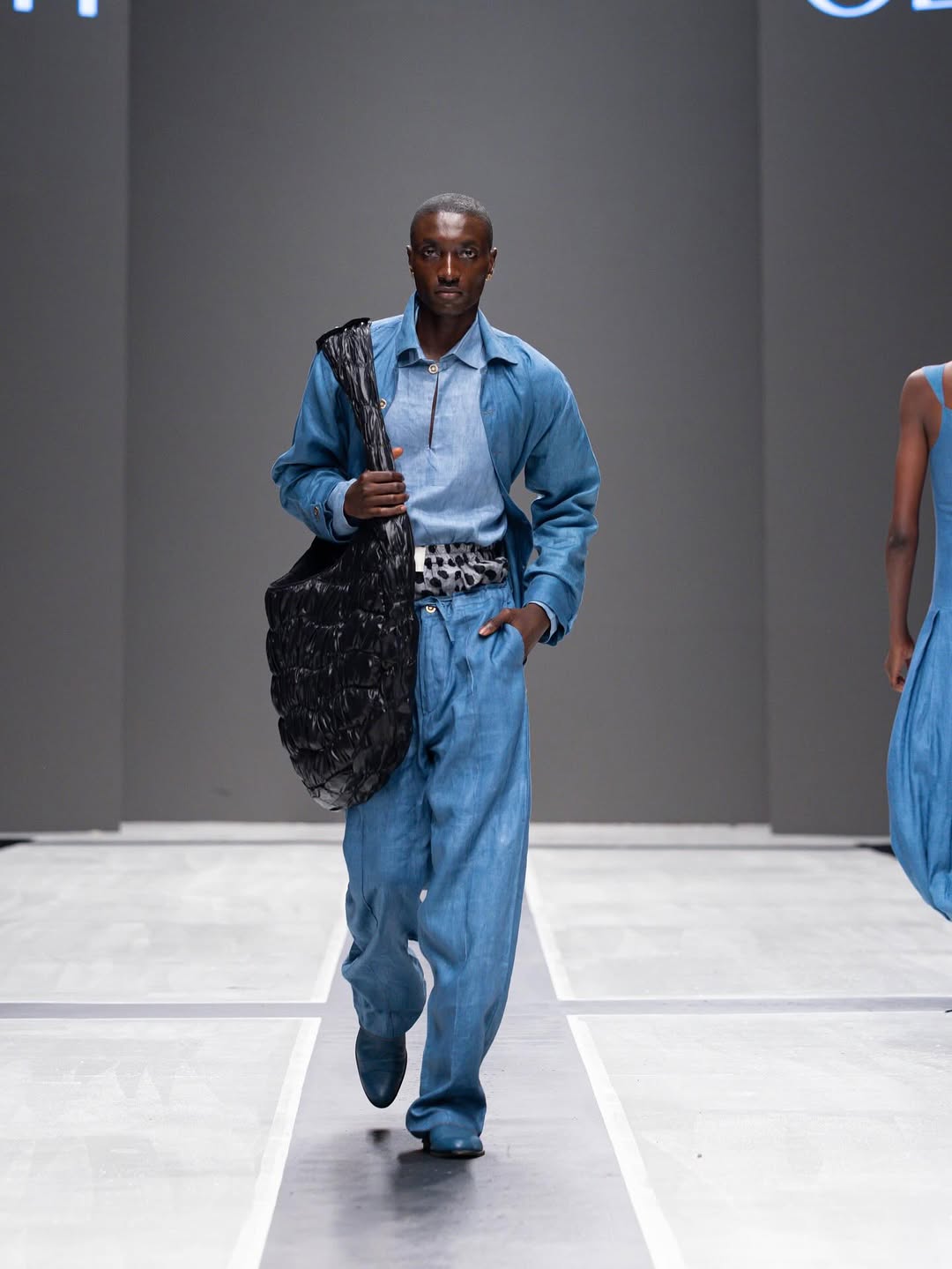
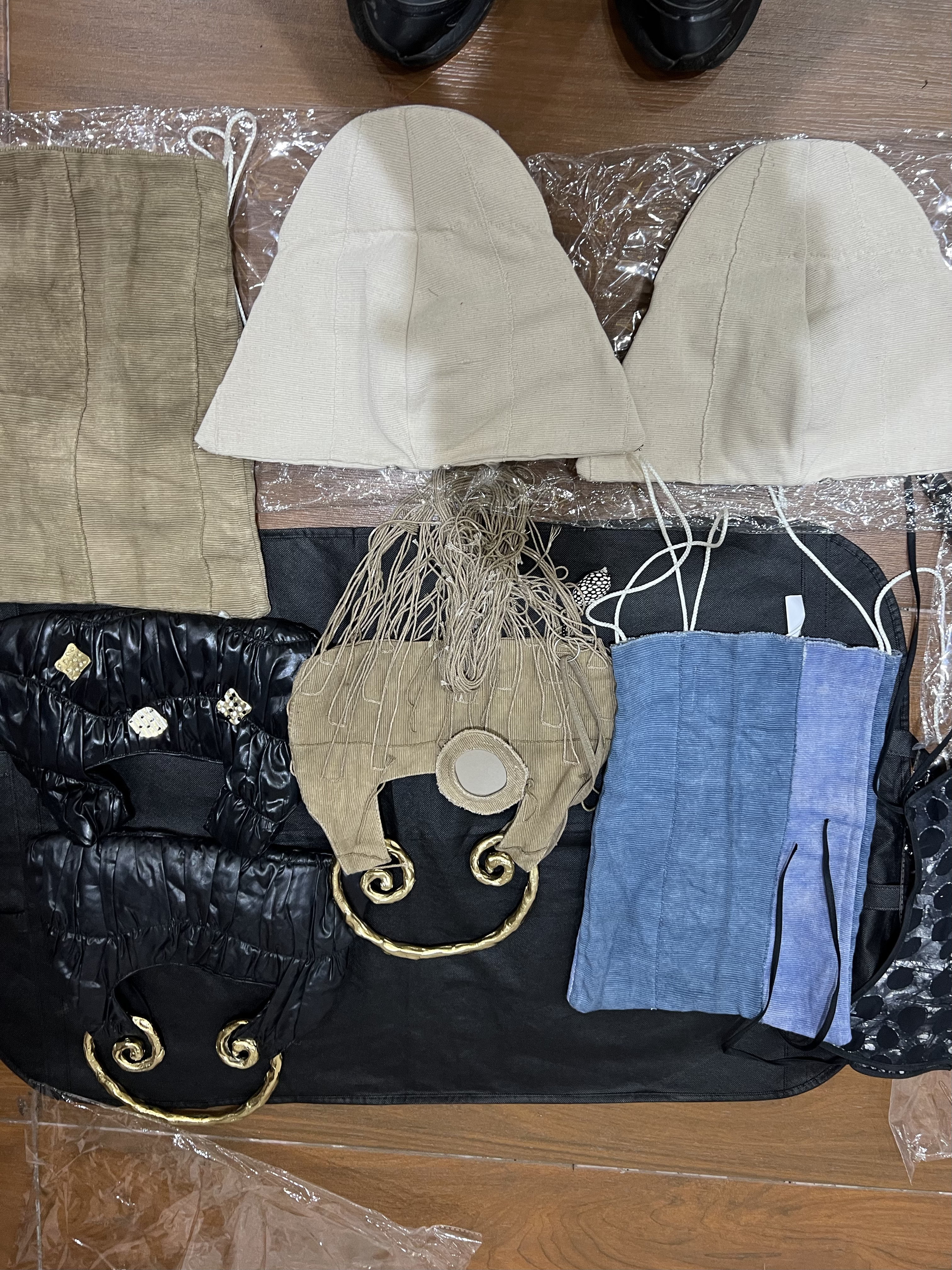
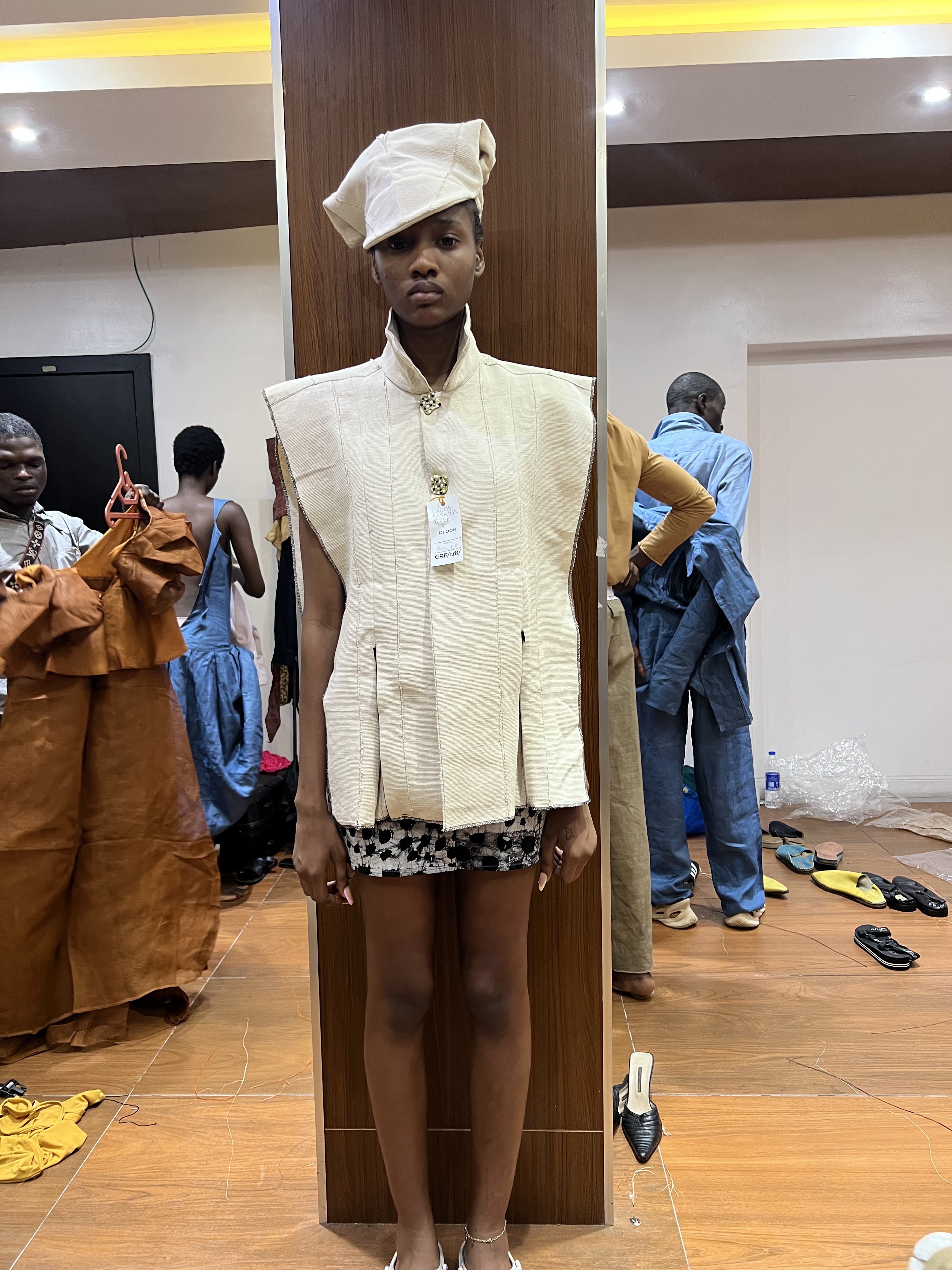
This intentionality shows up in small choices that accumulate into a cohesive vision. The rolled sleeves. The matched shoes. The sculptured headpieces that frame faces without overwhelming Diaby's fabrics. The way color moves across the runway, earth tones anchoring more saturated blues and blacks, creating rhythm without forcing it.
For emerging stylists eyeing Lagos Fashion Week, Jahn's advice is practical, not aspirational. "Start with collaboration. Volunteer. Style your friends. Assist people. I know the word 'internship' gets side-eyed a lot, but that's how I started. There's a lot of power in saying yes to the right opportunities, especially when you're just beginning. Put in the work behind the scenes — it pays off."
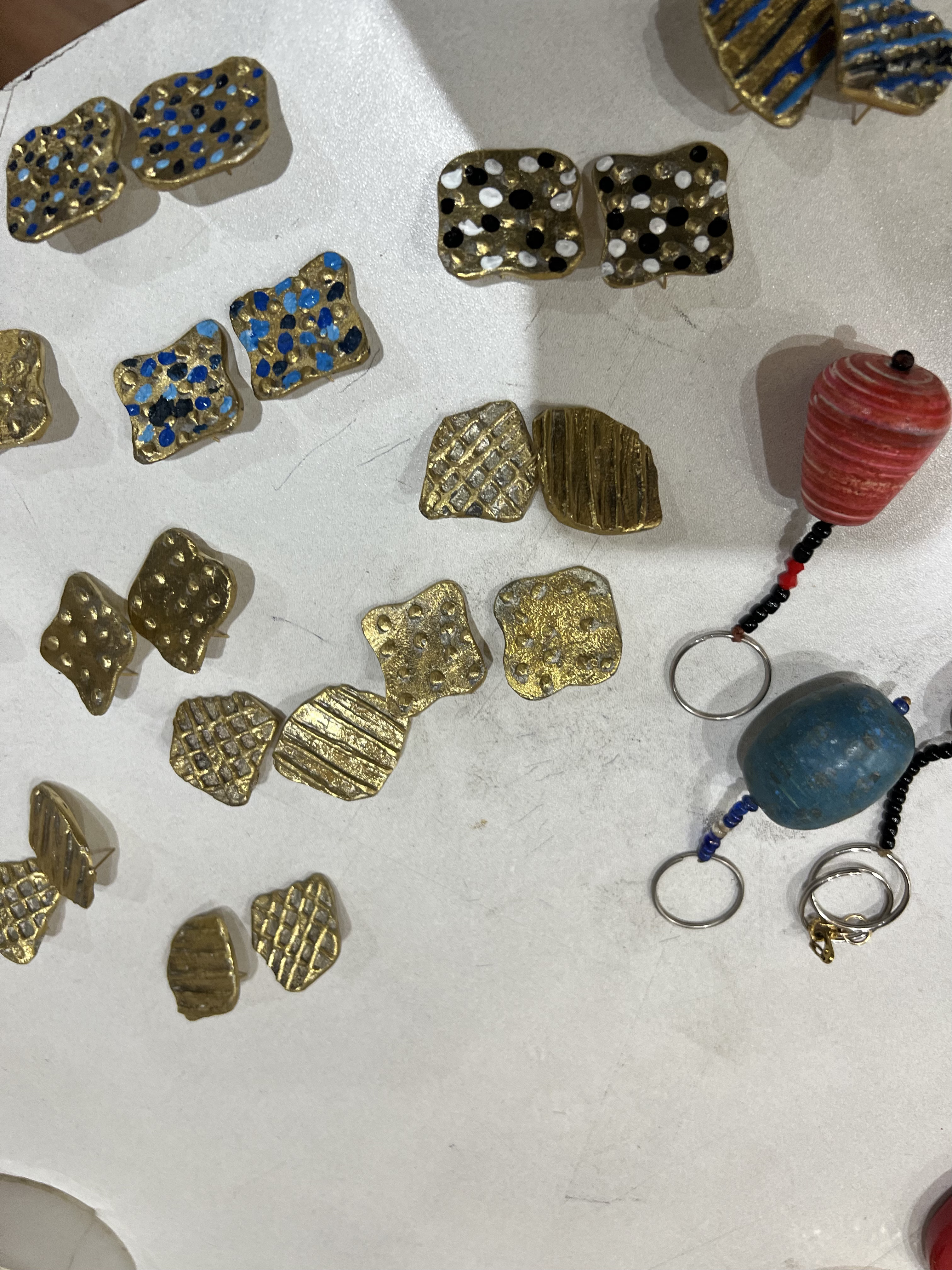
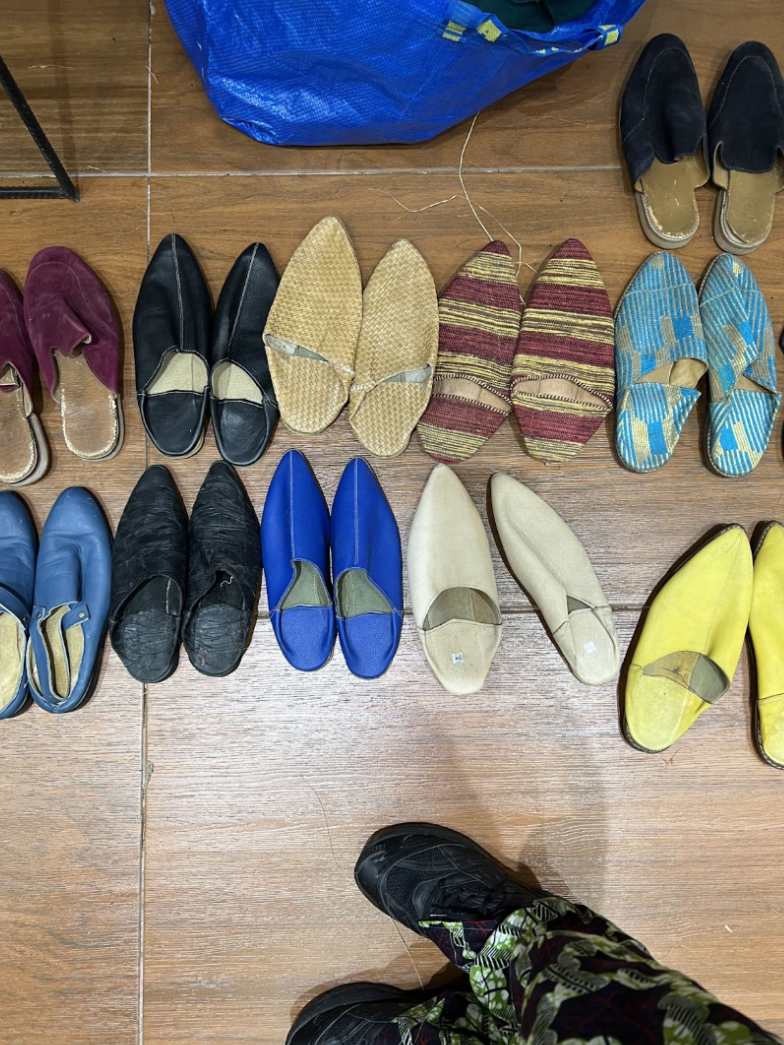
The backstage images tell their own story: models in various states of dress, accessories scattered across tables, the compressed timeline of showtime bearing down. But there's also structure. Garments organized by look. Shoes lined up by color and style. The gold and bronze accessories from Grand-Bassam laid out deliberately.
This is what it looks like when a Nigerian-Ghanaian stylist creative director who's worked with Skepta, Wizkid, Vogue and Tems amongst others sits down with an Ivorian designer-photographer showing at Africa's largest fashion platform. Two creatives who understand that modern African fashion doesn't need to announce itself loudly, it just needs to be undeniably good.
The Olooh show at Lagos Fashion Week SS26 was Jahn Affah's first time working with Kader Diaby. He'd do it again. And based on how the collection looked on that runway — clean, confident, completely itself, so would anyone else paying attention.


.png)

