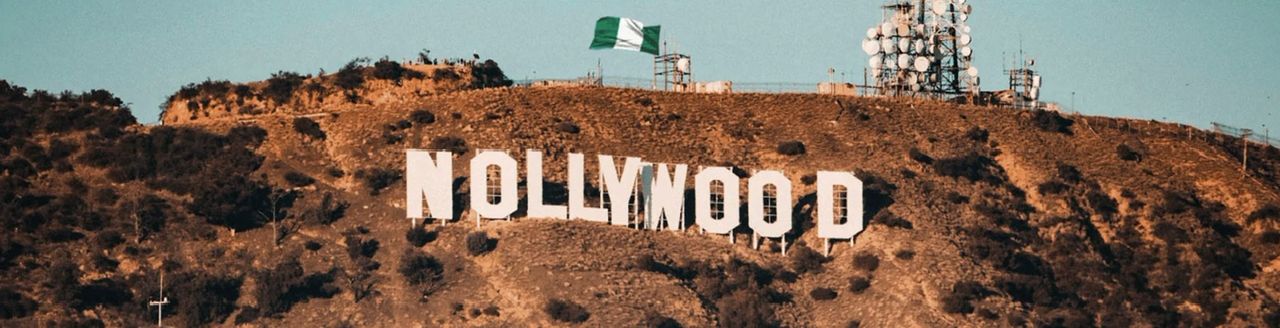
'NollyTube' Could Transform Nollywood. But It Has A Casting Problem

Authored by

Nigeria’s YouTube ecosystem, NollyTube, is the latest boom within the country’s film industry. While Netflix and Amazon Prime investment reduced within Nollywood, NollyTube expanded significantly within the past four years. It grew so popular that more than half of NollyTube videos were consumed from outside Nigeria, a move that’s positioned it as a viable sub-industry and one of Nollywood’s biggest global distribution channels. 

Without commissioning bottlenecks, cinema splits and distribution gatekeepers, NollyTube producers have been creating non-stop with growth as their north star. The only thing that might be slow in catching up, however, is its storytelling. 

Nollywood lovers know that “feeling”, one where they already predict a plot synopsis before the screenplay gets past the first act. Sometimes, from just the thumbnail and title, the plot already looks familiar: the cheating husband, the rich man hiding his wealth, the mother-in-law who cannot let her son's marriage breathe. The volume of films arriving on Nigerian YouTube every week is genuinely extraordinary. The sameness running beneath all of it is what is troubling. 
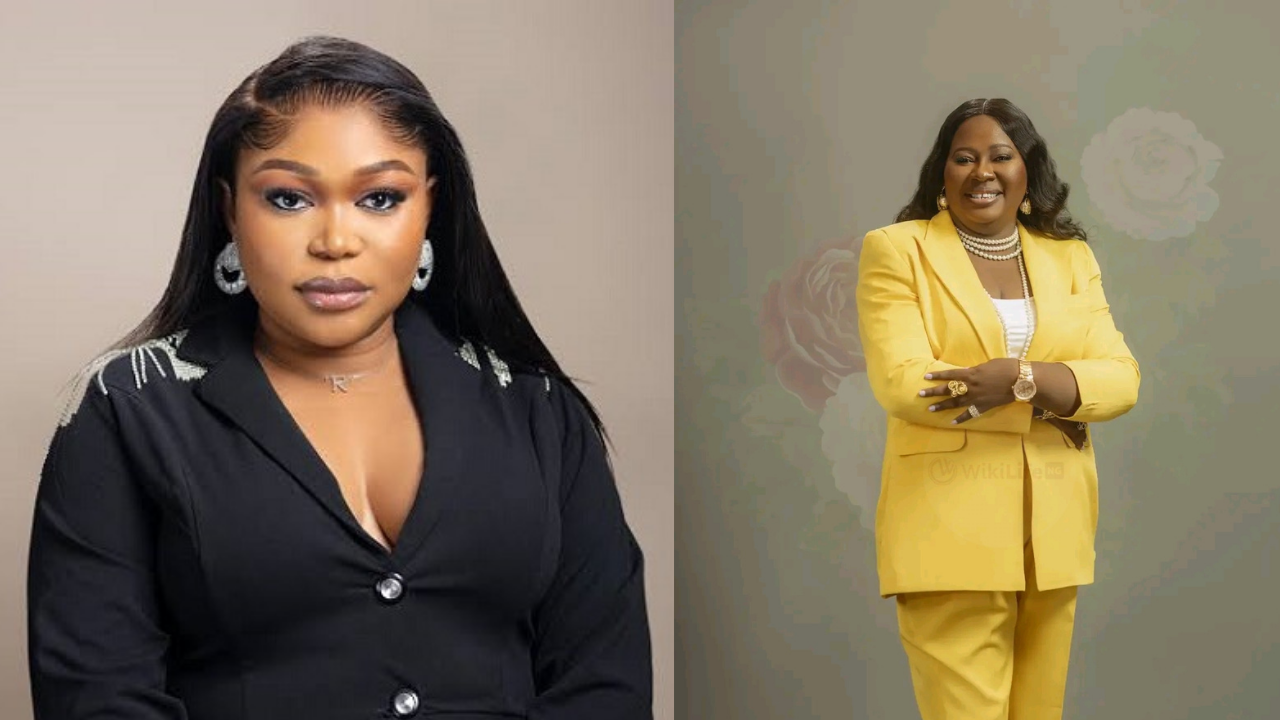
Credit: Ruth Kadiri & Uche Nancy

But how did we get here? 

How did a handful of Nigerians elevate a country’s film industry with crude resources, sheer gut instinct, and will? Well, in 2014, Ruth Kadiri and Uche Nancy set out to answer that question. 

Four years earlier, Jason Njoku began to legally license Nollywood films for YouTube, attracting over a million subscribers on his NollywoodLove channel. He later developed his own streaming platform iROKOtv and focused his attention there, leaving a clear path for Kadiri and Nancy to emerge as NollyTube’s next heaviest contributors. 

Kadiri launched RuthKadiri247 from Lagos. Uche Nancy built a parallel wave from Asaba, creating a YouTube ecosystem for the actors based there, with her own daughters appearing across her productions. Notably, Uduak Isong, a veteran Nollywood producer with over two decades in the industry, moved toward YouTube before it became the default. Their model worked well enough that by 2019, Uche Nancy had acquired a dedicated property specifically for her productions, to combat frequent sabotages from street urchins who attack them when they film outside. As a result, many NollyTube movies became apartment-themed. 

Credit: Uche Montana, Uchenna Mbunabo, Sonia Uche & Maurice Sam.

Others built on what Kadiri and Nancy started. Uchenna Mbunabo now has 3.6 million subscribers. Maurice Sam has been on YouTube since 2013 and has amassed 2.5 million subscribers. Uche Montana's channel sits at 1.4 million subscribers, with her movie Chemistry starring Maurice Sam at 11 million views, and Better Half starring Chidi Dike at 23 million. 

Nollywood diva Sonia Uche has 1.3 million. ChineyLove Eze TV has been building on the platform long enough to bridge the pioneer era and the current wave. 

A Blessing in disguise?

The NollyTube era has also been a blessing in disguise to both emerging and veteran actors. Veterans like Chioma Akpotha, Uche Jumbo and Regina Daniels all run their own channels. Regina Daniels who appeared in old Nollywood films as a child now produces her own YouTube content, her presence sitting alongside the broader return of veteran Nollywood actors to the platform. Kanayo O. Kanayo, Emeka Ike, Zubby Michaels, Mike Ezuruonye, Patience Ozokwor, Ngozi Ezeonu and Chioma Okpotha are all back on screen, on YouTube, in films that would not have existed for them in any other distribution model. Their return is the clearest evidence that NollyTube has become mainstream enough to attract the actors who built Nollywood before it had a digital arm.

The model works, and the numbers are only part of why. Marketing on NollyTube has become genuinely interactive in a way traditional distribution never allowed. Actors now shoot skits, behind-the-scenes content and character previews specifically to promote upcoming films, building anticipation directly on the same platforms where their audiences already spend time. The cost of reaching those audiences is a fraction of what a cinema marketing campaign would require. 

Casting, Production Problems

On the flipside, many traditional Nigerian filmmakers from the vintage Nollywood era including Kanayo O. Kanayo has called out some of NollyTube’s casting problems. He’s spoken about NollyTube movies using the same faces, the same pairings, and the same storylines at a pace that prioritises output over originality. 

The mechanism behind the typecasting is not difficult to trace. When an audience responds well to a pairing, for instance, Michael Dappa and Ekama Etim-Inyang, Victory Michael and Omeche Oko, the algorithm validates that response and producers take note. Repeating the pairing is a rational commercial decision - it worked before and the data says it will work again. 

In January 2025, social media personality Lizzy Adebayo catalogued the casting repetition publicly, naming the pairings audiences had begun to identify as NollyTube defaults: Ruth Kadiri and Destiny Etiko, Sam Morris and Sonia Uche, Etinosa and Nosa Rex, Timini Egbuson and Bimbo Ademoye. Afrocritik reviewed Christmas Between Worlds with a single observation: "another romcom starring Michael Dappa, again." The complaint was never about those actors' ability. 

The problem is that rational commercial decisions made consistently across an entire industry produce an ecosystem where creative judgment has been quietly replaced by market logic, and the films begin to feel less like stories than like proven formulas being rerun with minor variations. 

Also, rushed production schedules compound this. When the pressure is to keep channels supplied with content, the time available for casting decisions that go beyond what is familiar shrinks accordingly. The result is an industry that is genuinely productive and genuinely repetitive at the same time, and the two conditions are not separate problems. They have the same problem wearing different faces.

There are also glaring and embarrassing production issues common across NollyTube. Many did not begin with the platform; they were inherited from the same apathy towards excellence that has long troubled conventional Nollywood. Continuity errors, forgotten props, ill-fitting wigs and actors sleeping in full makeup are now easily captured and circulated outside the films themselves by accounts such as GamePhoGuns. These are production-accountability failures intensified by an ecosystem where the pressure to upload consistently often outweighs the need for proper review. 

YouTube’s recent training programmes in Nigeria on monetisation, algorithm optimisation and AI production tools also show that the platform is doing more than hosting this culture of speed; it is helping shape it.

Is NollyTube The Ideal Future?

Nosa Rex appeared on Channels Television to argue that YouTube is saving Nigeria's movie industry. He is one of the actors' fans' names when they describe the overuse problem. Both observations are accurate. YouTube created income and visibility for filmmakers and actors who had no viable path before. It also gave that opportunity to work that has not improved alongside the access it now enjoys. 

Nigerian filmmaker Mo Fakorede has said YouTube budgets cannot support the production scale the industry needs to grow internationally. Kunle Afolayan, at the Lagos Business of Film Summit 2026, said YouTube suits filmmakers who want to bypass gatekeepers, but that for those who want to go international, it is not the future.

Around 70 percent of watch time for Nigerian content on YouTube comes from outside Nigeria. A film uploaded from Lagos is in London, Toronto and Dubai within hours, watched by an audience that can compare, criticise and replay every frame. Ruth Kadiri and Uche Nancy built something that mattered in 2014. The channels that followed them built audiences the same way. Some of those channels are gone now, their content floating across the platform under other people's names. The ones still running are producing more films than ever. Whether more films means better films is the question NollyTube has been uploading since the first channel went live.
'NollyTube' Could Transform Nollywood. But It Has A Casting Problem

Authored by
This is some text inside of a div block.

Nigeria’s YouTube ecosystem, NollyTube, is the latest boom within the country’s film industry. While Netflix and Amazon Prime investment reduced within Nollywood, NollyTube expanded significantly within the past four years. It grew so popular that more than half of NollyTube videos were consumed from outside Nigeria, a move that’s positioned it as a viable sub-industry and one of Nollywood’s biggest global distribution channels. 

Without commissioning bottlenecks, cinema splits and distribution gatekeepers, NollyTube producers have been creating non-stop with growth as their north star. The only thing that might be slow in catching up, however, is its storytelling. 

Nollywood lovers know that “feeling”, one where they already predict a plot synopsis before the screenplay gets past the first act. Sometimes, from just the thumbnail and title, the plot already looks familiar: the cheating husband, the rich man hiding his wealth, the mother-in-law who cannot let her son's marriage breathe. The volume of films arriving on Nigerian YouTube every week is genuinely extraordinary. The sameness running beneath all of it is what is troubling. 

Credit: Ruth Kadiri & Uche Nancy

But how did we get here? 

How did a handful of Nigerians elevate a country’s film industry with crude resources, sheer gut instinct, and will? Well, in 2014, Ruth Kadiri and Uche Nancy set out to answer that question. 

Four years earlier, Jason Njoku began to legally license Nollywood films for YouTube, attracting over a million subscribers on his NollywoodLove channel. He later developed his own streaming platform iROKOtv and focused his attention there, leaving a clear path for Kadiri and Nancy to emerge as NollyTube’s next heaviest contributors. 

Kadiri launched RuthKadiri247 from Lagos. Uche Nancy built a parallel wave from Asaba, creating a YouTube ecosystem for the actors based there, with her own daughters appearing across her productions. Notably, Uduak Isong, a veteran Nollywood producer with over two decades in the industry, moved toward YouTube before it became the default. Their model worked well enough that by 2019, Uche Nancy had acquired a dedicated property specifically for her productions, to combat frequent sabotages from street urchins who attack them when they film outside. As a result, many NollyTube movies became apartment-themed. 

Credit: Uche Montana, Uchenna Mbunabo, Sonia Uche & Maurice Sam.

Others built on what Kadiri and Nancy started. Uchenna Mbunabo now has 3.6 million subscribers. Maurice Sam has been on YouTube since 2013 and has amassed 2.5 million subscribers. Uche Montana's channel sits at 1.4 million subscribers, with her movie Chemistry starring Maurice Sam at 11 million views, and Better Half starring Chidi Dike at 23 million. 

Nollywood diva Sonia Uche has 1.3 million. ChineyLove Eze TV has been building on the platform long enough to bridge the pioneer era and the current wave. 

A Blessing in disguise?

The NollyTube era has also been a blessing in disguise to both emerging and veteran actors. Veterans like Chioma Akpotha, Uche Jumbo and Regina Daniels all run their own channels. Regina Daniels who appeared in old Nollywood films as a child now produces her own YouTube content, her presence sitting alongside the broader return of veteran Nollywood actors to the platform. Kanayo O. Kanayo, Emeka Ike, Zubby Michaels, Mike Ezuruonye, Patience Ozokwor, Ngozi Ezeonu and Chioma Okpotha are all back on screen, on YouTube, in films that would not have existed for them in any other distribution model. Their return is the clearest evidence that NollyTube has become mainstream enough to attract the actors who built Nollywood before it had a digital arm.

The model works, and the numbers are only part of why. Marketing on NollyTube has become genuinely interactive in a way traditional distribution never allowed. Actors now shoot skits, behind-the-scenes content and character previews specifically to promote upcoming films, building anticipation directly on the same platforms where their audiences already spend time. The cost of reaching those audiences is a fraction of what a cinema marketing campaign would require. 

Casting, Production Problems

On the flipside, many traditional Nigerian filmmakers from the vintage Nollywood era including Kanayo O. Kanayo has called out some of NollyTube’s casting problems. He’s spoken about NollyTube movies using the same faces, the same pairings, and the same storylines at a pace that prioritises output over originality. 

The mechanism behind the typecasting is not difficult to trace. When an audience responds well to a pairing, for instance, Michael Dappa and Ekama Etim-Inyang, Victory Michael and Omeche Oko, the algorithm validates that response and producers take note. Repeating the pairing is a rational commercial decision - it worked before and the data says it will work again. 

In January 2025, social media personality Lizzy Adebayo catalogued the casting repetition publicly, naming the pairings audiences had begun to identify as NollyTube defaults: Ruth Kadiri and Destiny Etiko, Sam Morris and Sonia Uche, Etinosa and Nosa Rex, Timini Egbuson and Bimbo Ademoye. Afrocritik reviewed Christmas Between Worlds with a single observation: "another romcom starring Michael Dappa, again." The complaint was never about those actors' ability. 

The problem is that rational commercial decisions made consistently across an entire industry produce an ecosystem where creative judgment has been quietly replaced by market logic, and the films begin to feel less like stories than like proven formulas being rerun with minor variations. 

Also, rushed production schedules compound this. When the pressure is to keep channels supplied with content, the time available for casting decisions that go beyond what is familiar shrinks accordingly. The result is an industry that is genuinely productive and genuinely repetitive at the same time, and the two conditions are not separate problems. They have the same problem wearing different faces.

There are also glaring and embarrassing production issues common across NollyTube. Many did not begin with the platform; they were inherited from the same apathy towards excellence that has long troubled conventional Nollywood. Continuity errors, forgotten props, ill-fitting wigs and actors sleeping in full makeup are now easily captured and circulated outside the films themselves by accounts such as GamePhoGuns. These are production-accountability failures intensified by an ecosystem where the pressure to upload consistently often outweighs the need for proper review. 

YouTube’s recent training programmes in Nigeria on monetisation, algorithm optimisation and AI production tools also show that the platform is doing more than hosting this culture of speed; it is helping shape it.

Is NollyTube The Ideal Future?

Nosa Rex appeared on Channels Television to argue that YouTube is saving Nigeria's movie industry. He is one of the actors' fans' names when they describe the overuse problem. Both observations are accurate. YouTube created income and visibility for filmmakers and actors who had no viable path before. It also gave that opportunity to work that has not improved alongside the access it now enjoys. 

Nigerian filmmaker Mo Fakorede has said YouTube budgets cannot support the production scale the industry needs to grow internationally. Kunle Afolayan, at the Lagos Business of Film Summit 2026, said YouTube suits filmmakers who want to bypass gatekeepers, but that for those who want to go international, it is not the future.

Around 70 percent of watch time for Nigerian content on YouTube comes from outside Nigeria. A film uploaded from Lagos is in London, Toronto and Dubai within hours, watched by an audience that can compare, criticise and replay every frame. Ruth Kadiri and Uche Nancy built something that mattered in 2014. The channels that followed them built audiences the same way. Some of those channels are gone now, their content floating across the platform under other people's names. The ones still running are producing more films than ever. Whether more films means better films is the question NollyTube has been uploading since the first channel went live.
This is some text inside of a div block.

'NollyTube' Could Transform Nollywood. But It Has A Casting Problem

Authored by

Nigeria’s YouTube ecosystem, NollyTube, is the latest boom within the country’s film industry. While Netflix and Amazon Prime investment reduced within Nollywood, NollyTube expanded significantly within the past four years. It grew so popular that more than half of NollyTube videos were consumed from outside Nigeria, a move that’s positioned it as a viable sub-industry and one of Nollywood’s biggest global distribution channels. 

Without commissioning bottlenecks, cinema splits and distribution gatekeepers, NollyTube producers have been creating non-stop with growth as their north star. The only thing that might be slow in catching up, however, is its storytelling. 

Nollywood lovers know that “feeling”, one where they already predict a plot synopsis before the screenplay gets past the first act. Sometimes, from just the thumbnail and title, the plot already looks familiar: the cheating husband, the rich man hiding his wealth, the mother-in-law who cannot let her son's marriage breathe. The volume of films arriving on Nigerian YouTube every week is genuinely extraordinary. The sameness running beneath all of it is what is troubling. 

Credit: Ruth Kadiri & Uche Nancy

But how did we get here? 

How did a handful of Nigerians elevate a country’s film industry with crude resources, sheer gut instinct, and will? Well, in 2014, Ruth Kadiri and Uche Nancy set out to answer that question. 

Four years earlier, Jason Njoku began to legally license Nollywood films for YouTube, attracting over a million subscribers on his NollywoodLove channel. He later developed his own streaming platform iROKOtv and focused his attention there, leaving a clear path for Kadiri and Nancy to emerge as NollyTube’s next heaviest contributors. 

Kadiri launched RuthKadiri247 from Lagos. Uche Nancy built a parallel wave from Asaba, creating a YouTube ecosystem for the actors based there, with her own daughters appearing across her productions. Notably, Uduak Isong, a veteran Nollywood producer with over two decades in the industry, moved toward YouTube before it became the default. Their model worked well enough that by 2019, Uche Nancy had acquired a dedicated property specifically for her productions, to combat frequent sabotages from street urchins who attack them when they film outside. As a result, many NollyTube movies became apartment-themed. 

Credit: Uche Montana, Uchenna Mbunabo, Sonia Uche & Maurice Sam.

Others built on what Kadiri and Nancy started. Uchenna Mbunabo now has 3.6 million subscribers. Maurice Sam has been on YouTube since 2013 and has amassed 2.5 million subscribers. Uche Montana's channel sits at 1.4 million subscribers, with her movie Chemistry starring Maurice Sam at 11 million views, and Better Half starring Chidi Dike at 23 million. 

Nollywood diva Sonia Uche has 1.3 million. ChineyLove Eze TV has been building on the platform long enough to bridge the pioneer era and the current wave. 

A Blessing in disguise?

The NollyTube era has also been a blessing in disguise to both emerging and veteran actors. Veterans like Chioma Akpotha, Uche Jumbo and Regina Daniels all run their own channels. Regina Daniels who appeared in old Nollywood films as a child now produces her own YouTube content, her presence sitting alongside the broader return of veteran Nollywood actors to the platform. Kanayo O. Kanayo, Emeka Ike, Zubby Michaels, Mike Ezuruonye, Patience Ozokwor, Ngozi Ezeonu and Chioma Okpotha are all back on screen, on YouTube, in films that would not have existed for them in any other distribution model. Their return is the clearest evidence that NollyTube has become mainstream enough to attract the actors who built Nollywood before it had a digital arm.

The model works, and the numbers are only part of why. Marketing on NollyTube has become genuinely interactive in a way traditional distribution never allowed. Actors now shoot skits, behind-the-scenes content and character previews specifically to promote upcoming films, building anticipation directly on the same platforms where their audiences already spend time. The cost of reaching those audiences is a fraction of what a cinema marketing campaign would require. 

Casting, Production Problems

On the flipside, many traditional Nigerian filmmakers from the vintage Nollywood era including Kanayo O. Kanayo has called out some of NollyTube’s casting problems. He’s spoken about NollyTube movies using the same faces, the same pairings, and the same storylines at a pace that prioritises output over originality. 

The mechanism behind the typecasting is not difficult to trace. When an audience responds well to a pairing, for instance, Michael Dappa and Ekama Etim-Inyang, Victory Michael and Omeche Oko, the algorithm validates that response and producers take note. Repeating the pairing is a rational commercial decision - it worked before and the data says it will work again. 

In January 2025, social media personality Lizzy Adebayo catalogued the casting repetition publicly, naming the pairings audiences had begun to identify as NollyTube defaults: Ruth Kadiri and Destiny Etiko, Sam Morris and Sonia Uche, Etinosa and Nosa Rex, Timini Egbuson and Bimbo Ademoye. Afrocritik reviewed Christmas Between Worlds with a single observation: "another romcom starring Michael Dappa, again." The complaint was never about those actors' ability. 

The problem is that rational commercial decisions made consistently across an entire industry produce an ecosystem where creative judgment has been quietly replaced by market logic, and the films begin to feel less like stories than like proven formulas being rerun with minor variations. 

Also, rushed production schedules compound this. When the pressure is to keep channels supplied with content, the time available for casting decisions that go beyond what is familiar shrinks accordingly. The result is an industry that is genuinely productive and genuinely repetitive at the same time, and the two conditions are not separate problems. They have the same problem wearing different faces.

There are also glaring and embarrassing production issues common across NollyTube. Many did not begin with the platform; they were inherited from the same apathy towards excellence that has long troubled conventional Nollywood. Continuity errors, forgotten props, ill-fitting wigs and actors sleeping in full makeup are now easily captured and circulated outside the films themselves by accounts such as GamePhoGuns. These are production-accountability failures intensified by an ecosystem where the pressure to upload consistently often outweighs the need for proper review. 

YouTube’s recent training programmes in Nigeria on monetisation, algorithm optimisation and AI production tools also show that the platform is doing more than hosting this culture of speed; it is helping shape it.

Is NollyTube The Ideal Future?

Nosa Rex appeared on Channels Television to argue that YouTube is saving Nigeria's movie industry. He is one of the actors' fans' names when they describe the overuse problem. Both observations are accurate. YouTube created income and visibility for filmmakers and actors who had no viable path before. It also gave that opportunity to work that has not improved alongside the access it now enjoys. 

Nigerian filmmaker Mo Fakorede has said YouTube budgets cannot support the production scale the industry needs to grow internationally. Kunle Afolayan, at the Lagos Business of Film Summit 2026, said YouTube suits filmmakers who want to bypass gatekeepers, but that for those who want to go international, it is not the future.

Around 70 percent of watch time for Nigerian content on YouTube comes from outside Nigeria. A film uploaded from Lagos is in London, Toronto and Dubai within hours, watched by an audience that can compare, criticise and replay every frame. Ruth Kadiri and Uche Nancy built something that mattered in 2014. The channels that followed them built audiences the same way. Some of those channels are gone now, their content floating across the platform under other people's names. The ones still running are producing more films than ever. Whether more films means better films is the question NollyTube has been uploading since the first channel went live.

Other Stories
London
London
Lagos
London
Newyork
London
Shop
Join the community.
You are now subscribed to receive updates.
Oops! Something went wrong while submitting the form.
Subscribe