.svg)

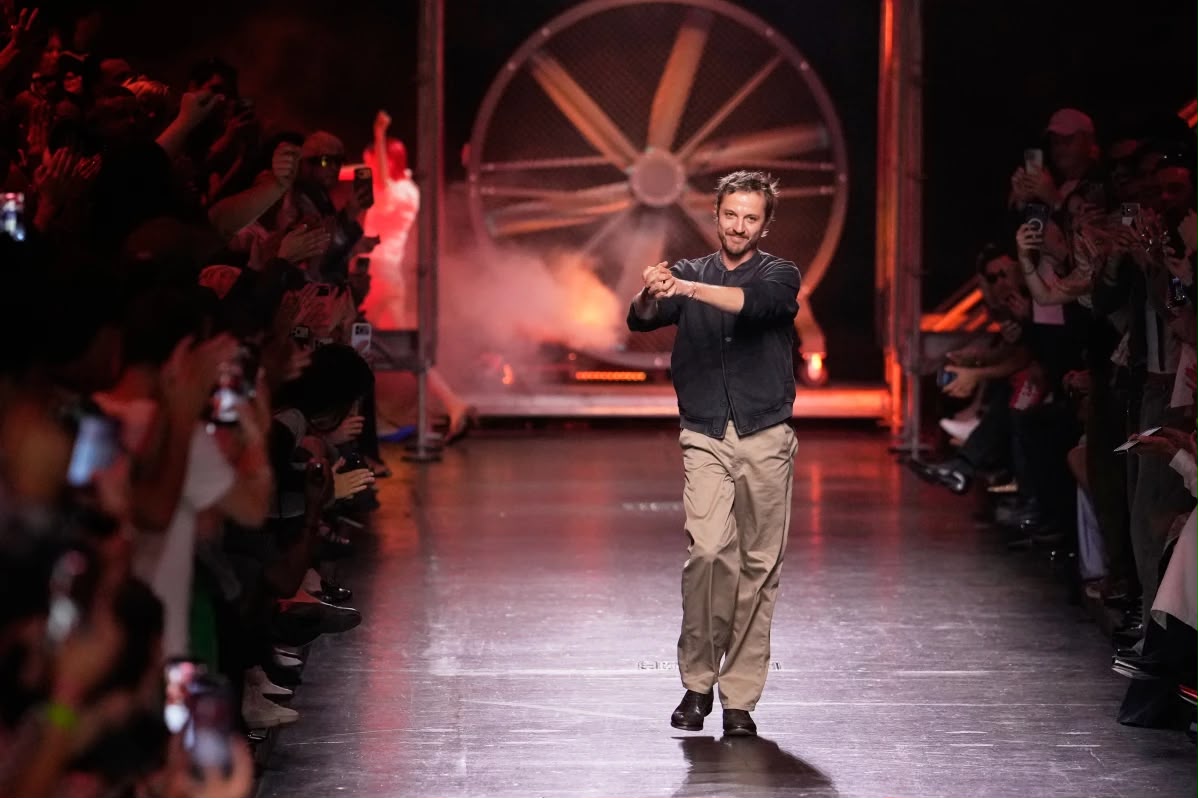
At Diesel’s Summer/Spring 2027 show in Milan, guests sat along a runway surrounded by scaffolding, red light and thick white smoke being pushed through the room by industrial fans. Sitting among them were 200 performers from the Marseille-based artist collective (LA) HORDE, dressed like everyone else and waiting quietly for their cue. For a while, there was no way to tell who had come to watch the show and who had come to become part of it.
Diesel was founded, in 1978, by Renzo Rosso as a denim brand for people who did not want to dress like everyone else. Its history has always been tied to the idea that clothes can shape how people behave, not simply how they look. The advertising campaigns of the 1990s were rarely only about the jeans. They sold a way of life around them, built on irreverence, sex and self-expression. When Glenn Martens arrived in 2020, the brand had been without a creative director since 2017 and was trying to reconnect with the cultural relevance it had once had. His task was not simply to redesign the clothes. It was to give Diesel a reason to be looked at again.
Martens did that by giving every season its own event logic -- a rather sensual one at that. The Autumn/Winter 23 show distributed 200,000 boxes of Durex condoms to guests. Show invitations arrived shaped like butt plugs. Giant inflatable figures rode each other on runways. Rihanna wore Diesel. Michelle Obama wore Diesel. Martens rebuilt the brand around the same ideas Rosso had established, using desire, humour and self-expression to make each collection's presentation feel like part of a larger world. The shows became events in themselves, and the events helped define what Diesel was trying to say.
The SS27 collection is deconstructed and deliberately imperfect. Denim is permanently creased with resin, while extra-long jeans are cut with varied slits at the ends. There are cutaways and trompe l'oeil details, alongside club-ready pieces designed for bodies in motion. Martens described the collection as capturing the morning-after feeling, when you wake up in what you wore the night before and decide that it is fine, that it is actually the point. The clothes are not presented as pristine objects removed from everyday life. They look worn, lived-in and slightly undone, as though the night has already happened.
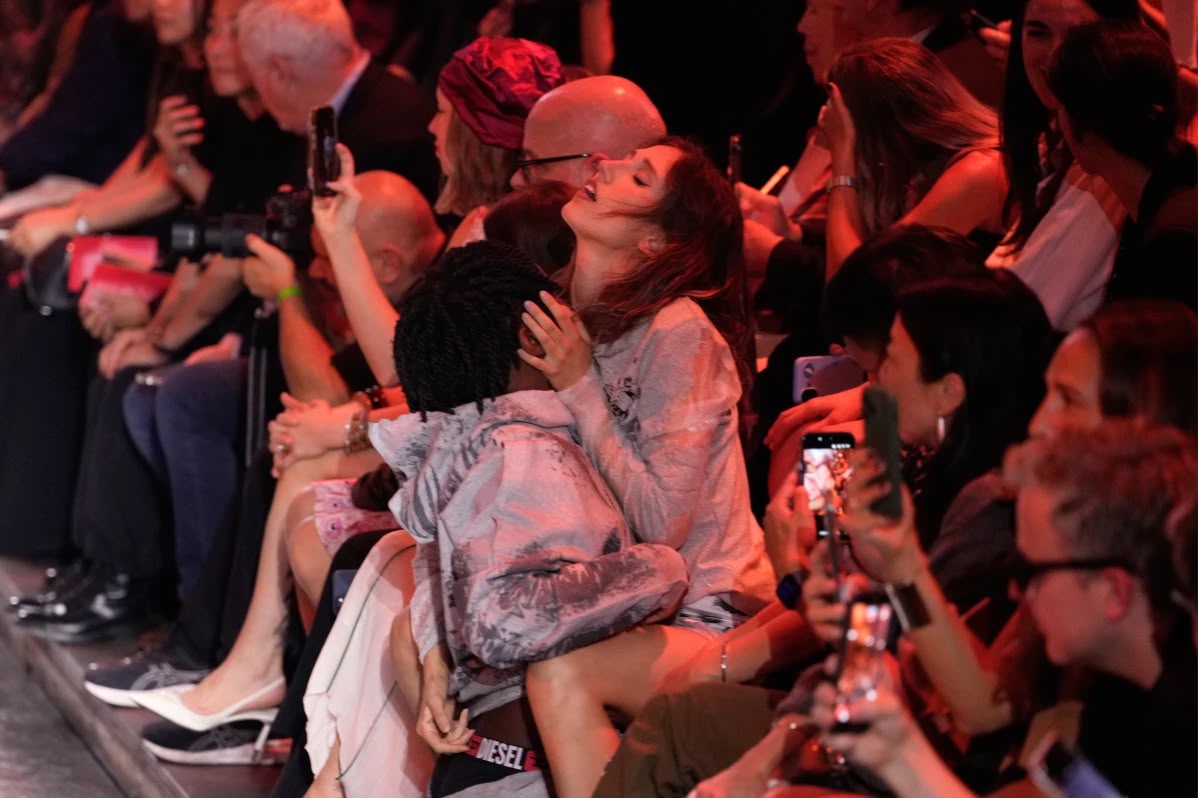
Midway through the show, the (LA) HORDE performers began to react. Headbanging. Kissing. Making out. Moaning. Some put their fingers to their throats. The actions became increasingly sensual and strange as the show progressed, spreading through the seated audience as the room became harder to read. The soundtrack escalated alongside them, tense and electronic at the opening before fragments of Donna Summer's Love to Love You Baby began surfacing underneath the mix. By the time the performance reached its peak, the people in the room could no longer easily tell who was part of the show and who was simply watching it. The boundary between performer and guest had dissolved, and the runway was no longer the only place where the show was happening.
Gigi Goode walked the runway. Kim Petras and ATEEZ's Yunho watched from the audience. The Donna Summer record played underneath everything, getting louder as the room became stranger. Martens said backstage: "Every season we try to do something unexpected. This one was a bit more experimental."
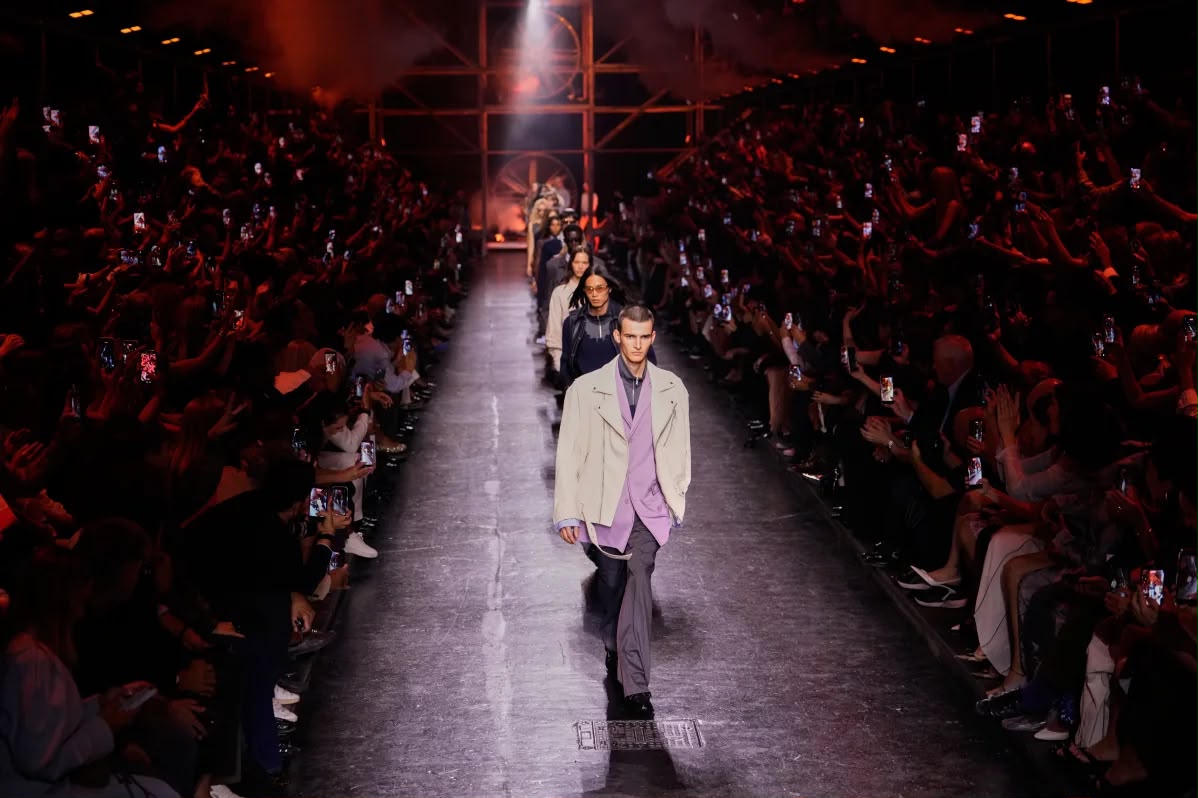
After six years of making Diesel presentations increasingly difficult to separate from the culture around them, his final collection did not need another spectacle outside the clothes. It brought the spectacle into the audience.
Fashion farewells are usually more solemn. There are retrospectives, archival looks and a designer taking a final bow in front of the industry that watched them work. Martens gave Diesel something else. He gave it one more night that felt like the brand he had spent six years rebuilding: loud, sensual, playful and slightly uncomfortable. The clothes came out creased. The audience became part of the performance. By the end, it was difficult to say exactly when the fashion show had ended and the party had begun. That was perhaps the clearest expression of what Martens built at Diesel. He made the clothes and the world around them feel inseparable, and for his final show, he left that world running until there was nothing left to do but walk out.
Cover Credit: Luca Bruno



.png)

