.svg)

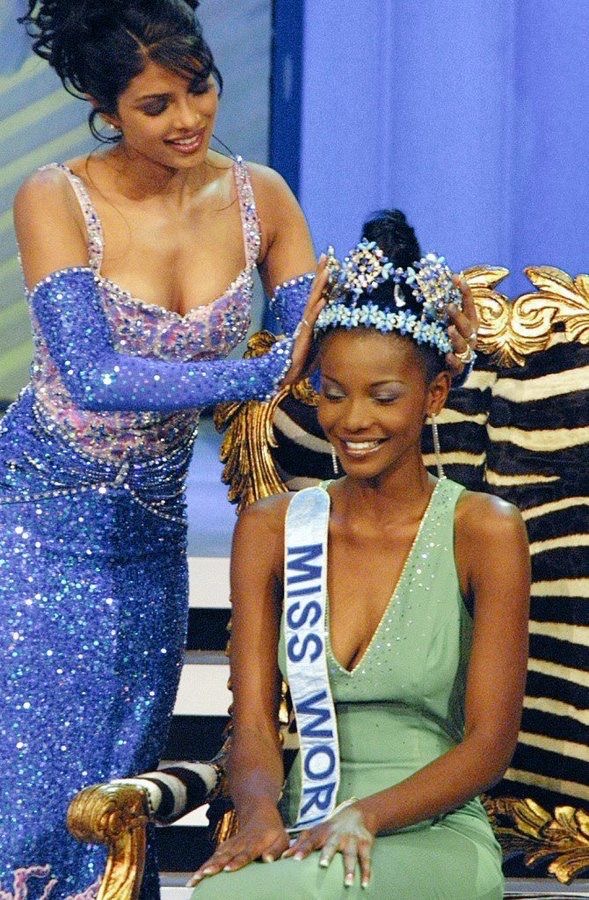
Far from frivolous spectacle, modern African beauty pageants have functioned as parallel modelling institutions — particularly in countries where editorial and fashion infrastructures remain limited. In many contexts, pageantry became the only formalized system through which models could access visibility, training, and international representation. This reliance, however, is both enabling and constraining. Pageantry has opened doors, producing globally visible figures and offering structured pathways where none previously existed. At the same time, its dominance has concentrated opportunity within a single annual figure, limiting the breadth and continuity required for a sustainable modelling ecosystem. Where there were no agencies, no fashion weeks, and no sustained investment in modelling as an industry, there was a crown, and with it, a yearly delegate to the global stage.
The Early Architecture of Representation
Beauty pageants within the continent began taking shape in the mid-1950s. In 1956, Norma Vorster was crowned in the first official Miss South Africa competition, created to send a national representative to the global Miss World stage. A year later, Nigeria launched its own pageant. Organized by the Daily Times newspaper in 1957, Miss Nigeria crowned Grace Atinuke Oyelude as its inaugural titleholder. Oyelude was a trained nurse and midwife who later became a hospital administrator, and entered the competition through a photograph submission — then standard practice. Her win marked the beginning of a national ritual of beauty as cultural display.
By 1958, South Africa’s Penny Coelen became the first representative from Africa to win a major international crown when she secured the Miss World title. Nigeria would later enter the Miss World competition in 1963, expanding its participation to global performance.
Though initially modeled on Western templates, these competitions rapidly absorbed local aesthetics, politics and cultural aspirations. They became hybrid spaces — part colonial inheritance, part national re-invention. In many ways, early pageantry functioned as gendered diplomacy: a soft, aesthetic mechanism through which nations negotiated visibility, modernity and belonging. What appears, at first glance, as simple spectacle was also infrastructure and one of the earliest organized systems through which African countries curated and exported an image of themselves to the world.
When the Crown Becomes the Only Runway
Looking back now, it feels curious how these pageants, initially imported, became improvisational spaces, and the default modelling institutions of their nations.
For decades, modelling infrastructure and documentation across much of the continent had remained thin, with no consistent casting agencies, few international placements, and limited editorial ecosystems. And so, pageantry stepped into that vacuum.
When Nigeria’s Agbani Darego won Miss World in 2001, becoming the first indigenous African woman to win Miss World, the moment felt seismic. Her victory changed global perceptions of African beauty and created tangible modelling opportunities beyond the pageant sphere.
Similarly, Ethiopian model Melkam Endale, who won Miss Ethiopia in 2010 and later Miss World Ethiopia in 2012, has spoken about how pageantry opened doors to international modelling opportunities. While not all contestants become career models, the system has, in these instances, served as a launchpad where few alternatives exist.
But what does it mean when the only structured pipeline to fashion begins with a beauty pageant?
Nigeria, South Africa, Kenya, for instance, have developed increasingly visible modelling infrastructures, with established agencies like Beth Model Africa, Few Models, Boss Models South Africa, alongside fashion platforms including Lagos Fashion Week, South African Fashion Week, and Nairobi Fashion Week that facilitate editorial exposure and sustained visibility beyond competition stages. Within these contexts, pageantry no longer functions as the sole gateway but exists as a parallel form of exposure.
By contrast, where agency representation remains sparse and editorial economies fragile, including parts of Uganda, Tanzania, Zambia, and smaller West and Central African markets, pageantry continues to function as a primary infrastructure for visibility. The result is a continental unevenness where pageantry exists simultaneously as supplement and substitute, and shapes how models enter global circuits depending less on talent than on national industry capacity. Without robust fashion ecosystems, pageantry remains the primary mechanism for producing African models from these regions. This centralization narrows the scope of modelling to a singular, annual spectacle instead of a diversified and multifaceted creative industry.
So where pageantry retains centrality, the implications are significant. African beauty queens now carry diplomatic weight by default. Participation in competitions such as Miss Universe and Miss World has become a strategic exercise in soft power. Titleholders promote tourism, cultural heritage, sustainable development, and national identity abroad. International victories are interpreted as validation — aesthetic, political, and cultural.
The economic structure of global pageantry reinforces this diplomatic dimension. At the international level, franchises like Miss Universe monetize intellectual property through licensing, broadcast rights, sponsorships, and branding extensions. National committees, meanwhile, operate through fragile balances of government funding and private partnerships. Participation in Miss Universe for instance, requires national directors to absorb franchise fees, production expenses, wardrobe, and international travel, costs typically stabilized through corporate sponsorship or informal state support. Where these financial networks are inconsistent, contestants may arrive with fewer resources for styling, media coaching, and sustained visibility, shaping which presentations of beauty appear globally polished and competitive. This funding structure can expose competitions to politicization and public scrutiny.
Also, some national organizations have responded by reframing their missions explicitly around social impact. Increasingly, titleholders champion anti-gender-based violence campaigns, girls’ education initiatives, and female entrepreneurship. The modern Miss is expected to embody both beauty and civic responsibility.
For all its visibility, pageantry has never been free of tension. It can reinforce rigid standards and the very system aimed to elevate can also narrow. Critics have argued that the format risks objectification, particularly when economic safeguards for contestants are weak. The 2024 controversy surrounding Chidimma Adetshina exposed another fault line. After facing xenophobic backlash and online harassment questioning her eligibility and heritage, Adetshina withdrew from Miss South Africa. The incident revealed how quickly celebration can turn into scrutiny and how national pride can morph into policing.
Even amid critique, pageants persist, not necessarily out of cultural attachment, but because in some countries they remain the only consistent modelling apparatus. Where there are no robust editorial circuits, no established casting agencies, and little institutional investment in diversified fashion sectors, pageantry fills the vacuum. One queen a year. One global attempt. One moment of amplified visibility.
African pageantry exists in paradox. It has constrained beauty within rigid frameworks while simultaneously providing rare visibility and mobility. It is easy to dismiss as spectacle, but in many countries it still operates as infrastructure and the only consistent system producing international faces. The crown validated Black beauty on a global stage — but only when that beauty aligned with digestible proportions, controlled poise, and a kind of translatable elegance. So even when pageants claimed to foreground culture, they often translated it into something externally palatable. Local identity passed through a filter already set elsewhere.
When pageantry becomes the dominant or only modelling pipeline, it narrows the imagination of what modelling can be. It concentrates resources around a single annual figure instead of building ecosystems that allow for true multiplicity. If modelling industries across African countries remain unevenly developed, the crown will continue to carry too much weight. It will continue to be both gateway and gatekeeper.
The real work, then, is not in abolishing the crown. It is in decentralizing it. Decentralization looks like sustained investment in local agencies, independent runway platforms, union and labour protections, editorial commissions, and fashion infrastructures that allow models to exist beyond the pageant cycle. It looks like careers built through continuity.
One crown cannot substitute for an entire ecosystem. Editorial, runway, and independent modelling industries must exist as parallel structures. Until these parallel structures are meaningfully supported, the crown will continue to stand in for an ecosystem it was never designed to replace, a singular symbol asked to carry the weight of an entire industry.



.png)

