Pharrell's Most Interesting Shoe Is Also Adidas' Most Complicated Problem.

Authored by

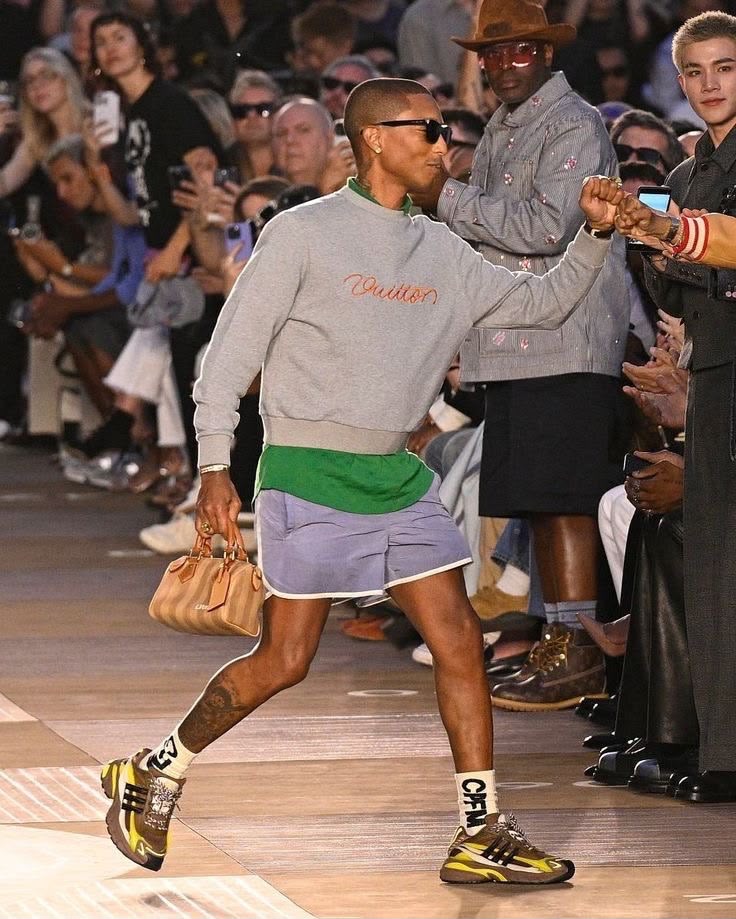
Last summer, Pharrell Williams walked out of his Louis Vuitton presentation at Paris Fashion Week wearing a shoe nobody had seen before. Chunky, strange, nearly six inches wide, built on the chassis of a 2005 Adidas Adistar Cushion 3 running shoe but bearing almost no resemblance to it. 

The 3D moulded rubber panels protruding from the surface in organic, dimensional clusters gave the shoe its name. The Virginia Adistar Jellyfish. Footwear News named it their 2025 Sneaker of the Year. Every colourway sold out the moment it became available. The shoe that nobody had seen before became one that everybody wanted.

The Jellyfish sits outside everything Pharrell has been doing at Louis Vuitton. His LV tenure, now in its third year, has produced wearable, considered, commercially reliable collections season after season, with the spectacle of the shows absorbing the creative risk the clothes themselves rarely take on. The Pont Neuf debut, the Snakes and Ladders installation at the Pompidou, the DROPHAUS Zen garden: all of it ambitious, theatrical, and surrounding garments that critics have consistently found safe. The Jellyfish operates on different logic. It is polarising, technically strange, deeply personal, designed under his VIRGINIA creative alias, named after his Virginia roots, priced at $300 and built around an aesthetic that most brands would have softened before it reached retail. For once, the object itself was carrying the risk.
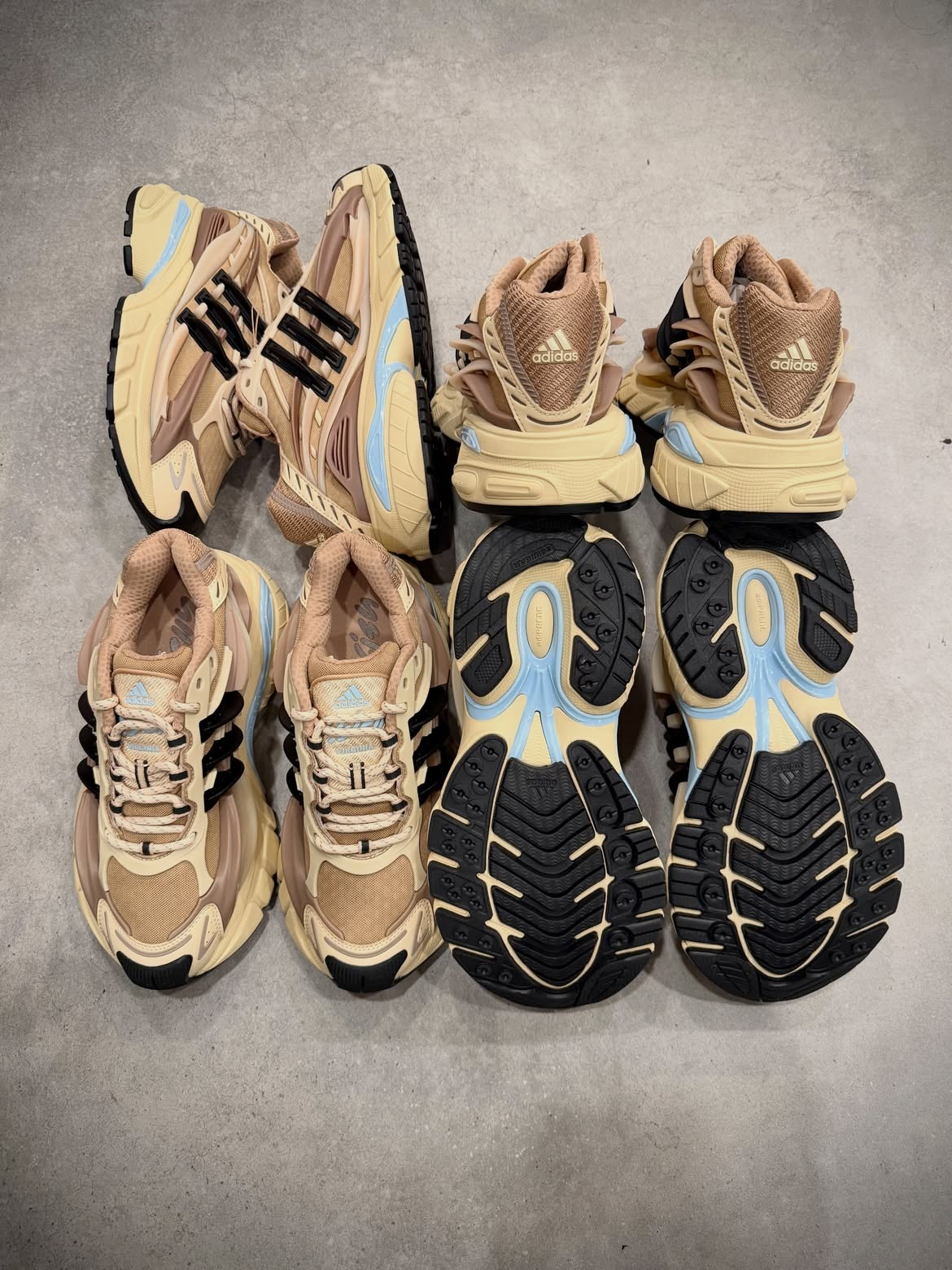
Credit: Pharrell Williams x Adidas VIRGINIA Adistar Jellyfish

From August 2025 through July 2026, every Jellyfish colourway sold out immediately. The Focus Olive/Orange debut. The Real Green and Solid Grey paired release. The Triple Black and Royal Blue in February. Each drop was deliberately limited: raffle releases, Virginia website exclusives, pop-up appearances in cities including Chicago where Pharrell arrived in a box truck to the Adidas store in Wicker Park. 

The shoe commanded nearly triple its retail price on StockX and GOAT. Pharrell and Adidas had built one of the most coveted sneaker stories in recent memory, and the conversation around the Jellyfish stayed alive because demand consistently outpaced supply.

The Triple White dropped August 1, 2026, and something shifted. For the first time, a Jellyfish colourway was made available through big-box retailers, Foot Locker, Finish Line, wider distribution than any previous release. It was the first colourway to sit. Business of Fashion asked directly whether Adidas was misreading the market. The sneaker community noticed. The shoe that had never been findable for longer than it took a line to clear was suddenly on shelves.

What happened next is the more interesting part of the story. The Crystal Sand dropped August 22, also in wider distribution, and sold through considerably faster. The Triple White sitting was not the end of the Jellyfish hype. It was a data point Adidas absorbed and responded to. 

For the Timber, dropping September 5, Adidas introduced a Golden Ticket system through the ‘confirmed’ app, giving select fans guaranteed purchase access without the usual release-day scramble. The brand is not retreating from wider distribution. It is learning how to manage it. The Golden Ticket is a demand management tool, a way of maintaining the feeling of exclusivity inside a release that is no longer actually exclusive.

Adidas has also already produced a takedown model, the Adistar XLG 2.0, a more accessible version of the Jellyfish silhouette that signals the shoe has become significant enough to warrant its own ecosystem. 
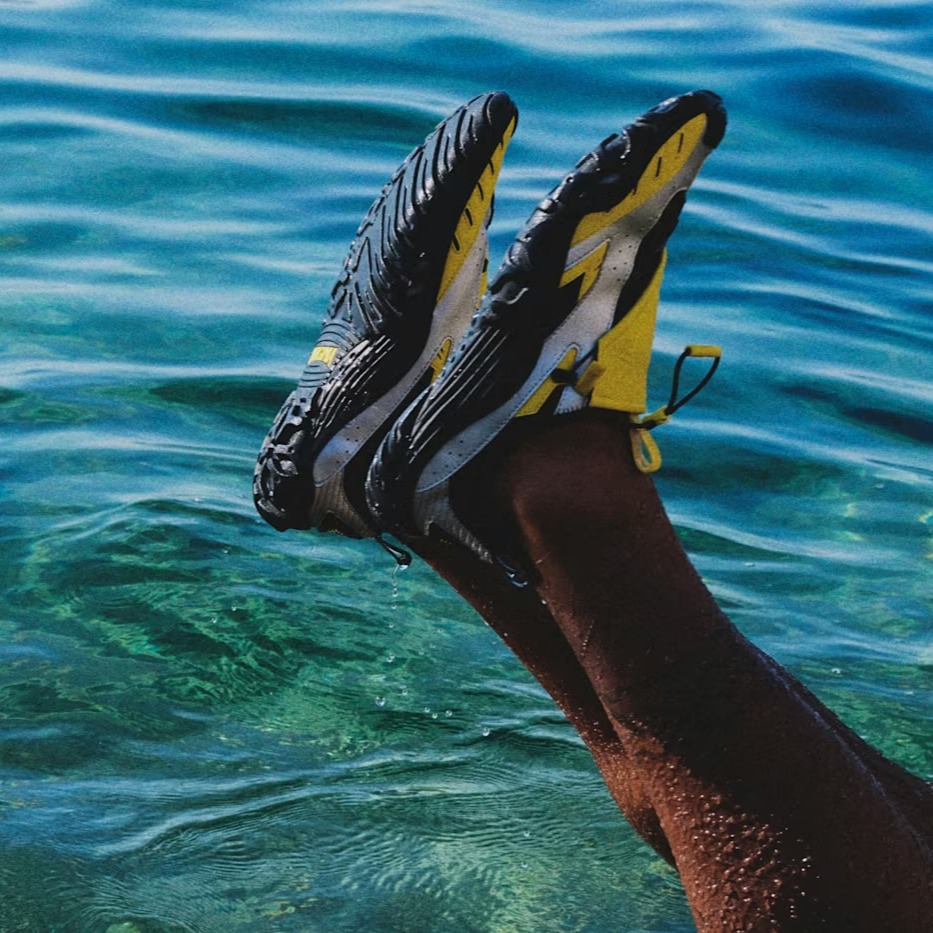
Credit: Pharrell Williams x Adidas VIRGINIA watermic

This is how hype products mature. They generate a more accessible tier that lets the original retain its cultural position while the brand captures a wider market. It is the same logic that produced the Stan Smith Recon after the original Stan Smith became ubiquitous, and the same logic that will determine whether the Jellyfish remains a cultural object or becomes a product that used to mean something.

The Watermoc makes the architecture even clearer. Dropping the same day as the Timber, September 5, and priced at $140, the VIRGINIA Watermoc is the third silhouette in Pharrell's footwear line alongside the Jellyfish and the Flat Earther. 

Built on an early-2000s Adidas Adventure Water Moc base, it has a neoprene upper, bungee lacing, reflective webbing and a rubber lug outsole built for wet terrain. It debuted at a VIRGINIA beach takeover in Marseille earlier this summer. Three colourways, Blue, Yellow and Black, launch globally September 5 through the CONFIRMED app and select retailers. 

Where the Jellyfish is about expression, the Flat Earther reinterpretation, the Watermoc is where VIRGINIA gets experimental, and at $140 it brings a different customer into the ecosystem without touching what the Jellyfish represents at $300. This is not Adidas managing one shoe's hype. It is Pharrell building a brand with deliberate tiers, and the Jellyfish sits at the top of it.

The problem Adidas is trying to solve does not have a precedent that ends well: whether a shoe can be both coveted and available, both culturally significant and commercially maximised, is a question the sneaker industry has been trying to answer for decades without arriving at a clean solution. 

Pharrell designed something genuinely strange and it worked, commercially, culturally, critically. Adidas now has to decide how to scale something whose value was partly built on the fact that it could not be scaled. The Triple White sitting suggested the market had a ceiling. The Crystal Sand recovering suggested the ceiling was higher than one bad week implied. The Golden Ticket system suggests Adidas is trying to find a distribution model that preserves the feeling of the shoe without limiting the revenue it can generate.

Pharrell wore the Timber colourway at his Louis Vuitton SS26 show in Paris before it had a release date. The worlds he is operating in, LV, VIRGINIA, Adidas, are not separate. They are different expressions of the same design thinking, and the Jellyfish is where that thinking has produced its most uncompromising result. The Timber drops September 5, and nothing about how it performs will settle what is actually being decided here.

Pharrell's Most Interesting Shoe Is Also Adidas' Most Complicated Problem.

Authored by
This is some text inside of a div block.

Last summer, Pharrell Williams walked out of his Louis Vuitton presentation at Paris Fashion Week wearing a shoe nobody had seen before. Chunky, strange, nearly six inches wide, built on the chassis of a 2005 Adidas Adistar Cushion 3 running shoe but bearing almost no resemblance to it. 

The 3D moulded rubber panels protruding from the surface in organic, dimensional clusters gave the shoe its name. The Virginia Adistar Jellyfish. Footwear News named it their 2025 Sneaker of the Year. Every colourway sold out the moment it became available. The shoe that nobody had seen before became one that everybody wanted.

The Jellyfish sits outside everything Pharrell has been doing at Louis Vuitton. His LV tenure, now in its third year, has produced wearable, considered, commercially reliable collections season after season, with the spectacle of the shows absorbing the creative risk the clothes themselves rarely take on. The Pont Neuf debut, the Snakes and Ladders installation at the Pompidou, the DROPHAUS Zen garden: all of it ambitious, theatrical, and surrounding garments that critics have consistently found safe. The Jellyfish operates on different logic. It is polarising, technically strange, deeply personal, designed under his VIRGINIA creative alias, named after his Virginia roots, priced at $300 and built around an aesthetic that most brands would have softened before it reached retail. For once, the object itself was carrying the risk.

Credit: Pharrell Williams x Adidas VIRGINIA Adistar Jellyfish

From August 2025 through July 2026, every Jellyfish colourway sold out immediately. The Focus Olive/Orange debut. The Real Green and Solid Grey paired release. The Triple Black and Royal Blue in February. Each drop was deliberately limited: raffle releases, Virginia website exclusives, pop-up appearances in cities including Chicago where Pharrell arrived in a box truck to the Adidas store in Wicker Park. 

The shoe commanded nearly triple its retail price on StockX and GOAT. Pharrell and Adidas had built one of the most coveted sneaker stories in recent memory, and the conversation around the Jellyfish stayed alive because demand consistently outpaced supply.

The Triple White dropped August 1, 2026, and something shifted. For the first time, a Jellyfish colourway was made available through big-box retailers, Foot Locker, Finish Line, wider distribution than any previous release. It was the first colourway to sit. Business of Fashion asked directly whether Adidas was misreading the market. The sneaker community noticed. The shoe that had never been findable for longer than it took a line to clear was suddenly on shelves.

What happened next is the more interesting part of the story. The Crystal Sand dropped August 22, also in wider distribution, and sold through considerably faster. The Triple White sitting was not the end of the Jellyfish hype. It was a data point Adidas absorbed and responded to. 

For the Timber, dropping September 5, Adidas introduced a Golden Ticket system through the ‘confirmed’ app, giving select fans guaranteed purchase access without the usual release-day scramble. The brand is not retreating from wider distribution. It is learning how to manage it. The Golden Ticket is a demand management tool, a way of maintaining the feeling of exclusivity inside a release that is no longer actually exclusive.

Adidas has also already produced a takedown model, the Adistar XLG 2.0, a more accessible version of the Jellyfish silhouette that signals the shoe has become significant enough to warrant its own ecosystem. 

Credit: Pharrell Williams x Adidas VIRGINIA watermic

This is how hype products mature. They generate a more accessible tier that lets the original retain its cultural position while the brand captures a wider market. It is the same logic that produced the Stan Smith Recon after the original Stan Smith became ubiquitous, and the same logic that will determine whether the Jellyfish remains a cultural object or becomes a product that used to mean something.

The Watermoc makes the architecture even clearer. Dropping the same day as the Timber, September 5, and priced at $140, the VIRGINIA Watermoc is the third silhouette in Pharrell's footwear line alongside the Jellyfish and the Flat Earther. 

Built on an early-2000s Adidas Adventure Water Moc base, it has a neoprene upper, bungee lacing, reflective webbing and a rubber lug outsole built for wet terrain. It debuted at a VIRGINIA beach takeover in Marseille earlier this summer. Three colourways, Blue, Yellow and Black, launch globally September 5 through the CONFIRMED app and select retailers. 

Where the Jellyfish is about expression, the Flat Earther reinterpretation, the Watermoc is where VIRGINIA gets experimental, and at $140 it brings a different customer into the ecosystem without touching what the Jellyfish represents at $300. This is not Adidas managing one shoe's hype. It is Pharrell building a brand with deliberate tiers, and the Jellyfish sits at the top of it.

The problem Adidas is trying to solve does not have a precedent that ends well: whether a shoe can be both coveted and available, both culturally significant and commercially maximised, is a question the sneaker industry has been trying to answer for decades without arriving at a clean solution. 

Pharrell designed something genuinely strange and it worked, commercially, culturally, critically. Adidas now has to decide how to scale something whose value was partly built on the fact that it could not be scaled. The Triple White sitting suggested the market had a ceiling. The Crystal Sand recovering suggested the ceiling was higher than one bad week implied. The Golden Ticket system suggests Adidas is trying to find a distribution model that preserves the feeling of the shoe without limiting the revenue it can generate.

Pharrell wore the Timber colourway at his Louis Vuitton SS26 show in Paris before it had a release date. The worlds he is operating in, LV, VIRGINIA, Adidas, are not separate. They are different expressions of the same design thinking, and the Jellyfish is where that thinking has produced its most uncompromising result. The Timber drops September 5, and nothing about how it performs will settle what is actually being decided here.

This is some text inside of a div block.

Pharrell's Most Interesting Shoe Is Also Adidas' Most Complicated Problem.

Authored by

Last summer, Pharrell Williams walked out of his Louis Vuitton presentation at Paris Fashion Week wearing a shoe nobody had seen before. Chunky, strange, nearly six inches wide, built on the chassis of a 2005 Adidas Adistar Cushion 3 running shoe but bearing almost no resemblance to it. 

The 3D moulded rubber panels protruding from the surface in organic, dimensional clusters gave the shoe its name. The Virginia Adistar Jellyfish. Footwear News named it their 2025 Sneaker of the Year. Every colourway sold out the moment it became available. The shoe that nobody had seen before became one that everybody wanted.

The Jellyfish sits outside everything Pharrell has been doing at Louis Vuitton. His LV tenure, now in its third year, has produced wearable, considered, commercially reliable collections season after season, with the spectacle of the shows absorbing the creative risk the clothes themselves rarely take on. The Pont Neuf debut, the Snakes and Ladders installation at the Pompidou, the DROPHAUS Zen garden: all of it ambitious, theatrical, and surrounding garments that critics have consistently found safe. The Jellyfish operates on different logic. It is polarising, technically strange, deeply personal, designed under his VIRGINIA creative alias, named after his Virginia roots, priced at $300 and built around an aesthetic that most brands would have softened before it reached retail. For once, the object itself was carrying the risk.

Credit: Pharrell Williams x Adidas VIRGINIA Adistar Jellyfish

From August 2025 through July 2026, every Jellyfish colourway sold out immediately. The Focus Olive/Orange debut. The Real Green and Solid Grey paired release. The Triple Black and Royal Blue in February. Each drop was deliberately limited: raffle releases, Virginia website exclusives, pop-up appearances in cities including Chicago where Pharrell arrived in a box truck to the Adidas store in Wicker Park. 

The shoe commanded nearly triple its retail price on StockX and GOAT. Pharrell and Adidas had built one of the most coveted sneaker stories in recent memory, and the conversation around the Jellyfish stayed alive because demand consistently outpaced supply.

The Triple White dropped August 1, 2026, and something shifted. For the first time, a Jellyfish colourway was made available through big-box retailers, Foot Locker, Finish Line, wider distribution than any previous release. It was the first colourway to sit. Business of Fashion asked directly whether Adidas was misreading the market. The sneaker community noticed. The shoe that had never been findable for longer than it took a line to clear was suddenly on shelves.

What happened next is the more interesting part of the story. The Crystal Sand dropped August 22, also in wider distribution, and sold through considerably faster. The Triple White sitting was not the end of the Jellyfish hype. It was a data point Adidas absorbed and responded to. 

For the Timber, dropping September 5, Adidas introduced a Golden Ticket system through the ‘confirmed’ app, giving select fans guaranteed purchase access without the usual release-day scramble. The brand is not retreating from wider distribution. It is learning how to manage it. The Golden Ticket is a demand management tool, a way of maintaining the feeling of exclusivity inside a release that is no longer actually exclusive.

Adidas has also already produced a takedown model, the Adistar XLG 2.0, a more accessible version of the Jellyfish silhouette that signals the shoe has become significant enough to warrant its own ecosystem. 

Credit: Pharrell Williams x Adidas VIRGINIA watermic

This is how hype products mature. They generate a more accessible tier that lets the original retain its cultural position while the brand captures a wider market. It is the same logic that produced the Stan Smith Recon after the original Stan Smith became ubiquitous, and the same logic that will determine whether the Jellyfish remains a cultural object or becomes a product that used to mean something.

The Watermoc makes the architecture even clearer. Dropping the same day as the Timber, September 5, and priced at $140, the VIRGINIA Watermoc is the third silhouette in Pharrell's footwear line alongside the Jellyfish and the Flat Earther. 

Built on an early-2000s Adidas Adventure Water Moc base, it has a neoprene upper, bungee lacing, reflective webbing and a rubber lug outsole built for wet terrain. It debuted at a VIRGINIA beach takeover in Marseille earlier this summer. Three colourways, Blue, Yellow and Black, launch globally September 5 through the CONFIRMED app and select retailers. 

Where the Jellyfish is about expression, the Flat Earther reinterpretation, the Watermoc is where VIRGINIA gets experimental, and at $140 it brings a different customer into the ecosystem without touching what the Jellyfish represents at $300. This is not Adidas managing one shoe's hype. It is Pharrell building a brand with deliberate tiers, and the Jellyfish sits at the top of it.

The problem Adidas is trying to solve does not have a precedent that ends well: whether a shoe can be both coveted and available, both culturally significant and commercially maximised, is a question the sneaker industry has been trying to answer for decades without arriving at a clean solution. 

Pharrell designed something genuinely strange and it worked, commercially, culturally, critically. Adidas now has to decide how to scale something whose value was partly built on the fact that it could not be scaled. The Triple White sitting suggested the market had a ceiling. The Crystal Sand recovering suggested the ceiling was higher than one bad week implied. The Golden Ticket system suggests Adidas is trying to find a distribution model that preserves the feeling of the shoe without limiting the revenue it can generate.

Pharrell wore the Timber colourway at his Louis Vuitton SS26 show in Paris before it had a release date. The worlds he is operating in, LV, VIRGINIA, Adidas, are not separate. They are different expressions of the same design thinking, and the Jellyfish is where that thinking has produced its most uncompromising result. The Timber drops September 5, and nothing about how it performs will settle what is actually being decided here.

Other Stories
London
London
Lagos
London
Newyork
London
Shop
Join the community.
You are now subscribed to receive updates.
Oops! Something went wrong while submitting the form.
Subscribe