.svg)

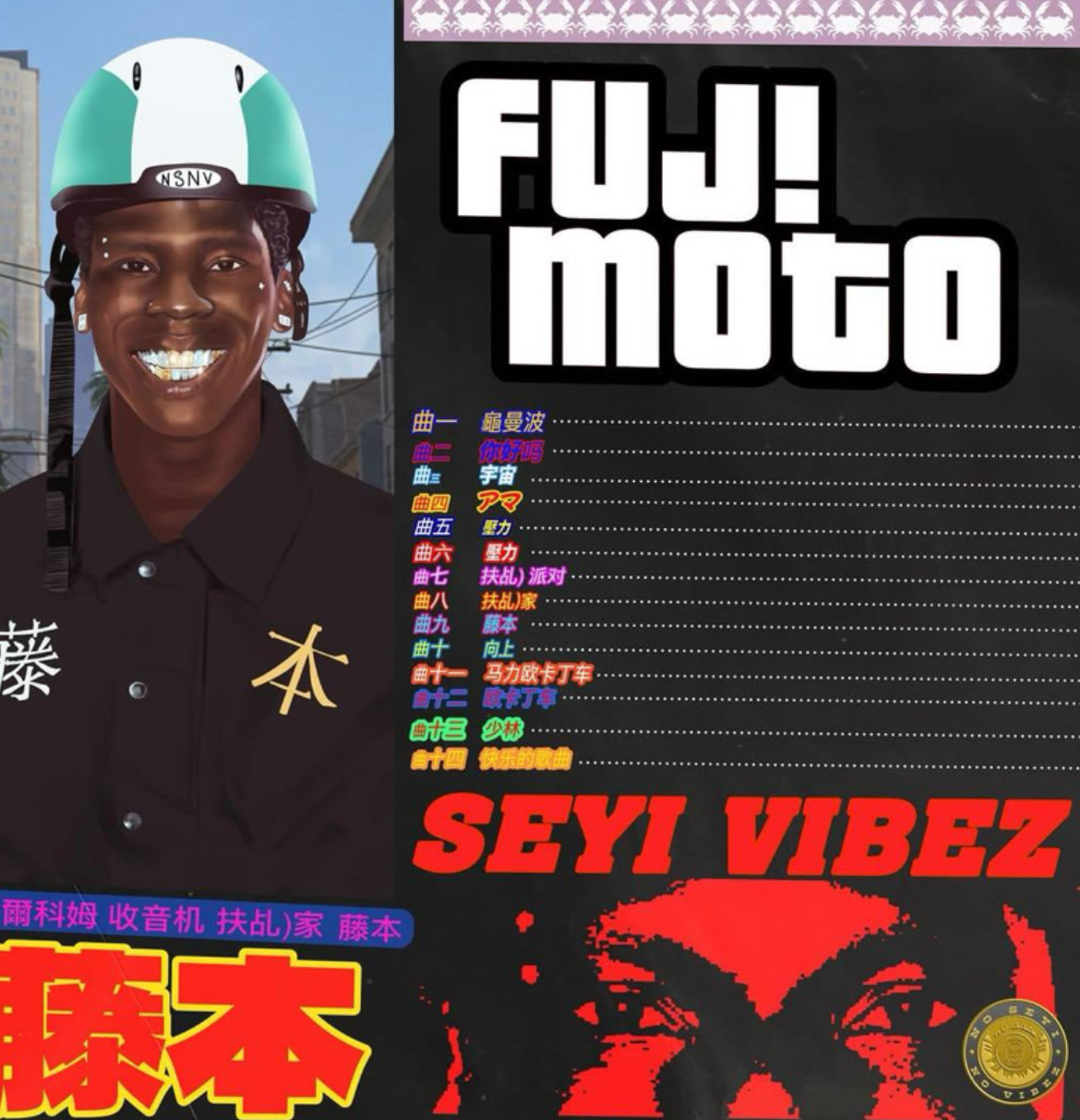
Over the years, Seyi Vibez has been organically carving a lane that blends street realism with emotional honesty. On ‘Fuji Moto’, he presses further into a cultural experimentation, presenting an album that feels both rooted in Yoruba musical tradition and sharpened for modern global ears. This isn't some street-pop album; it's a statement of identity, ambition, and forward motion.
Alone, the title 'Fuji Moto' sets expectations. "Fuji" establishes its connection to legacy, rhythm, and lineage, while "Moto" suggests energy, propulsion, and a machine in motion. The title, all in all, reflects the dual purpose of the album: to address the past and pick up speed into new terrain.
Across the tracklist, the project leans heavily into the percussive DNA of Fuji: layered drums, call-and-response sequencing, and melodic phrasing give the album a textured backbone. What stands out most, however, is how Vibez stitches these elements together with the emotional vulnerability that has become his hallmark. He isn't attempting to represent Fuji but rather reinterpret it: reframing the sound through contemporary street-pop production and global influence.
The collaborations on 'Fuji Moto' are strategic without feeling forced. From the local synergy with Olamide through to international appearances from French Montana and Trippie Redd, features that help widen the album's scope never overshadow the presence of Vibez. Every guest adds dimension, but the direction of the project firmly stays in his hands. His voice is raw, textured, and emotionally charged, carrying the thematic weight of the record.
Lyrically, the album wavers between introspection and ambition. In the softer moments, Vibez reflects on personal growth, the pressure, and the weight of expectation. Emotional tracks like "How Are You" showcase his ability to be open without losing the grit that defines his sound. On the opposite end are celebratory records built for movement, energy, and nightlife. It's a balance that makes for a project both musically dynamic and narratively cohesive.
One of the biggest strengths of the album is its commitment to authenticity. Rather than lean into some contrived, mainstream formula, Vibez speaks to a cultural memory with a sound that still feels refreshing to a younger audience. His decision to foreground Fuji elements in 2025 is bold, especially in a market dominated by Afrobeats and global pop sensibilities. It represents an artist confident enough to lead rather than follow.
That said, the album's ambition sometimes risks overwhelming its cohesion. The wide sonic palette means certain moments feel slightly disconnected, especially when moving between traditional influences and the heavy presence of global features. The pacing also dips in a few sections, not due to lack of quality but because of the album's generous length. Still, these are minor quibbles in an otherwise unified body of work.
Culturally, the song “Fuji Moto” is important. It introduces elements of Fuji to a wider global audience in a manner that feels very intentional and modern. Vibez is not just experimenting; he bridges. His approach gives respect to the pioneers of the genre while allowing it to organically transition through his voice and perspective.
This album feels like a turning point in the context of his career. It carries the emotional narrative one expects from him, but the musical framework is bigger, sharper, and more ambitious. 'Fuji Moto' positions Vibez as more than a street favourite; it presents him as an artist capable of reshaping how contemporary Nigerian music interacts with its traditions.
Verdict: 'Fuji Moto' is a bold, culturally rooted album showing growth, experimentation, and intentional storytelling. Even with minor pacing inconsistencies, it is one of Seyi Vibez's most fully realised statements – a project that pays homage to legacy while pushing the sound ahead.





.png)

