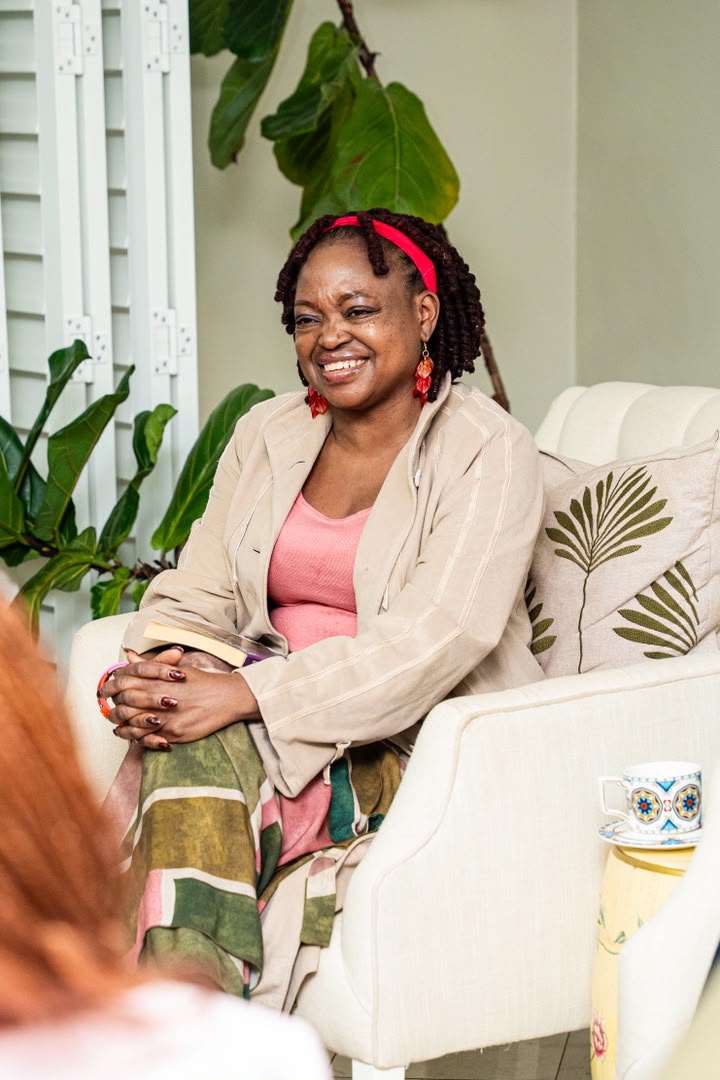
Sue Nyathi Has Always Been a Writer. The World Is Finally Catching Up

Authored by

Long before The Polygamist became a 22-episode Netflix series in 2026, there was a young girl, in Bulawayo, Zimbabwe, cutting pictures out of magazines and writing stories around them. 

Today, Sukoluhle (Sue) Nyathi needs no introduction. The Zimbabwean-born South African writer has spent more than a decade turning the complicated terrain of women, relationships, migration, family and identity into stories that refuse to sit quietly on the page. 

At 13, she wrote her first novel, Crazy Over You, inspired by the American comic-drama series Sweet Valley High. She would eventually study finance, build a career in investment and economic development, write a relationship column for the Sunday Mail, work in television and publish the novels that would establish her as one of Zimbabwe's distinctive contemporary voices. She always kept the pen close. 

That persistence is perhaps most visible in The Polygamist, which Nyathi self-published in 2012 after being rejected by traditional publishers. Fourteen years later, its Netflix adaptation has not only introduced the story to audiences far beyond its Southern African origins, but also amplified interest in Nyathi's wider body of work. Netflix reports that the series reached No. 1 in 21 countries, entered the Top 10 in 62 and helped triple sales of the original book.

But it is only one part of the conversation. Across her other titles The Gold Diggers, A Family Affair, An Angel's Demise and When Secrets Become Stories, Nyathi repeatedly returns to people negotiating the space between who society expects them to be and who they are trying to become. She writes about women, power, migration, family, violence and survival, but beneath it all is a fascination with what happens when people begin to question the lives they have been handed.

Now, with the world listening at a much larger scale, Nyathi is still doing what she has always done: telling stories. Deeds turns the page with the prolific scribe, looking beyond the Netflix success to the writing life that came before it.

Stanley for Deeds: For readers discovering you through The Polygamist and Netflix, there is a whole Sue Nyathi story that predates both. You were writing from childhood, studied finance, built a career in economic development, wrote a relationship column, and eventually became a novelist and screenwriter. Looking back, where was the writer in you hiding in plain sight?

She wasn't hiding. She was always there, even as a child. I always say I used to tell stories even during my playtime. I used to cut out pictures from magazines and write stories around them. I had already shown that inclination for telling stories from a young age. I was just discouraged from pursuing it because our parents at the time didn't want us to pursue professions that they wouldn't consider respectable. They wanted you to be a doctor, an accountant, or a lawyer. 

I remember my dad would have his notes from work, and they'd be typed out. And sometimes when he discarded those scripts, I would always write my stories at the back. I would use those papers to write because I just wrote anywhere I could find paper. So that's why I say it was always there, and they knew it. But yeah, it was just not encouraged. 

You've described writing as an escape from the “drudgery of economic shop talk and financial markets.” You also spent years writing manuscripts that weren't published, including A Family Affair. What kept you writing when there was so little external evidence that the world was waiting for your work?

It was just the love for it. I loved doing it. Even when I was pretty bad at it, if I look at some of my earlier work, there was nothing there that said, "Oh wow, this is our next Shakespeare." It was just the love to tell stories and entertain people. And then I think because of the nature that my career took, none of it ever sort of invited or exposed that creativity. So as a result, I think I was just yearning to tell stories, so it just became an outlet.

The Polygamist was self-published in 2012 after rejection from traditional publishers, and fourteen years later it's become a global Netflix phenomenon. Do you think the audience found the book late, or finally caught up with it?

I think the way the world is structured, they found it late, but I don't blame them because oftentimes when you're published in Southern Africa, books don't travel upwards. They are sold downwards. 

So an African writer that's published overseas in America or the UK, you are more likely to find their work in Africa because it's easier then to sell it down. But it doesn't really work the other way around. So you'll find that a lot of writers will go undiscovered, unnoticed. 

And so I think for me, what this series has done is just to amplify my body of work and market it in a way that I would never have been able to do so, on my own or even with the publisher here. It's given me that kind of visibility that most writers yearn for. 
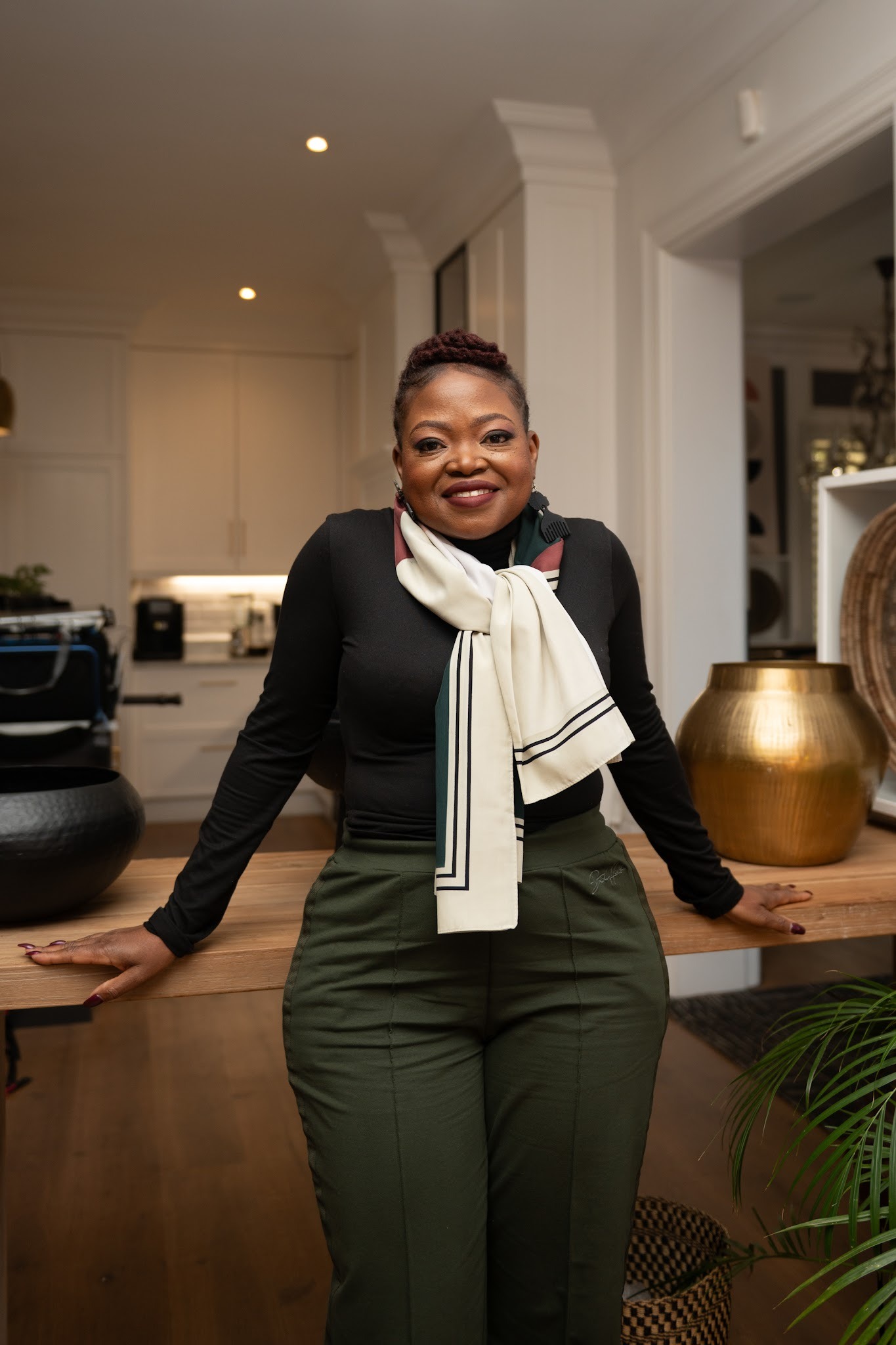
Photo courtesy of Sue Nyathi 

The book specifically came from observing a kind of ‘modern polygamy’ in Harare, where men maintain parallel relationships while presenting themselves as monogamous. Has your understanding of that phenomenon changed in the 14 years since you wrote the book, particularly as conversations around toxic masculinity, emotional manipulation, and women's agency overall have evolved? 

It hasn't changed, and I think it also is kind of validated by people's responses because the book came out in 2012, and people either agreed with some of the observations or they say it's happening. It resonated with them, which means it must be true for a lot of people, even though it may be untrue for a few.

So it means it really hasn't changed from what I observed back then, which is quite sad in a way because we would like to actually say we've evolved, but we haven't. It just actually shows that society is not evolving. We are regressing and degenerating because that's not what we want to see when we look at ourselves. So that's actually quite sad. 

There's a moment when Matipa reflects, “I felt like I was getting a preview into my future if I remained in Jonasi’s life.” She ultimately decides she still has a “fighting chance” and walks away. What did you want readers to understand about the moment a woman begins to choose herself? 

That we have agency, and you can decide to exercise it for your good. And I know there's a lot of harsh judgment on Matipa. A lot of women say she left her kids behind. But how many men leave their kids behind? She didn't leave them with strangers; she left them with their father. Men do it all the time, but you never hear people saying, "He left his kids." 

But for women, and I saw a lot of that, that's a double standard where we've been conditioned to say it's the same crime, but somehow when a woman does it, some go as far as women are thrown in jail for that, whereas men can leave. They leave every day. 

But just to demonstrate that she chose herself, and that sometimes you have to, and she saved herself because the violence would have only escalated. So that women's agency. 

Those themes seem to run through much of your work. A Family Affair explores marriage, religion and respectability, while When Secrets Become Stories gives women space to speak about gender-based violence. Do you think you've become increasingly interested in what women are permitted to be versus what they actually want to be?

It's a bit of a catch-22, in the sense that we have what we aspire to be, and then we have what we really are. And the two are very different. 

And I see it across not just unclassed rural or urban women. It cuts across the divide. Even the women who are empowered, educated, still suffer gender-based violence, the same way that the rural, uneducated women do. So for me, one just has a voice about it, but might not necessarily act on it. And just for me, it's like, these are two things: what we aspire to be as women and what we really are.

Speaking about your migration to South Africa in 2008, and The Gold Diggers follows the Zimbabweans making that same journey. Did migration change the way you understood both Zimbabwe and South Africa – and your own identity as an African writer?

Not necessarily. It just makes you question things, right? So if you grow up in one country, there's almost like a national psyche or collective way of thinking, of viewing things. And sometimes it takes you when you remove yourself from that environment. You can actually interrogate what you've grown up around and actually start to question: is this really okay or is it not? 

And then you compare with the country you're in, and then there's certain things that you may like from them that you don't find in yours. And you sort of compare and contrast. And then you actually find that there are also similarities. You know, you might be in a different country, but the mindsets are almost the same. 

So I think it just opens you up in one way than you would be if you, I think if you write in one place, you just become defined largely by that place. Unless you're writing historical stuff. But I mean, for the kind of work that I write, I kind of see myself as an advocate for women and their issues through my storytelling. So it's important to see what else is happening on the continent is the same. 

And I think from the series, we realize it's actually very much the same. It doesn't matter where you are. There's a lot of resonance. So it also bridges that gap. 
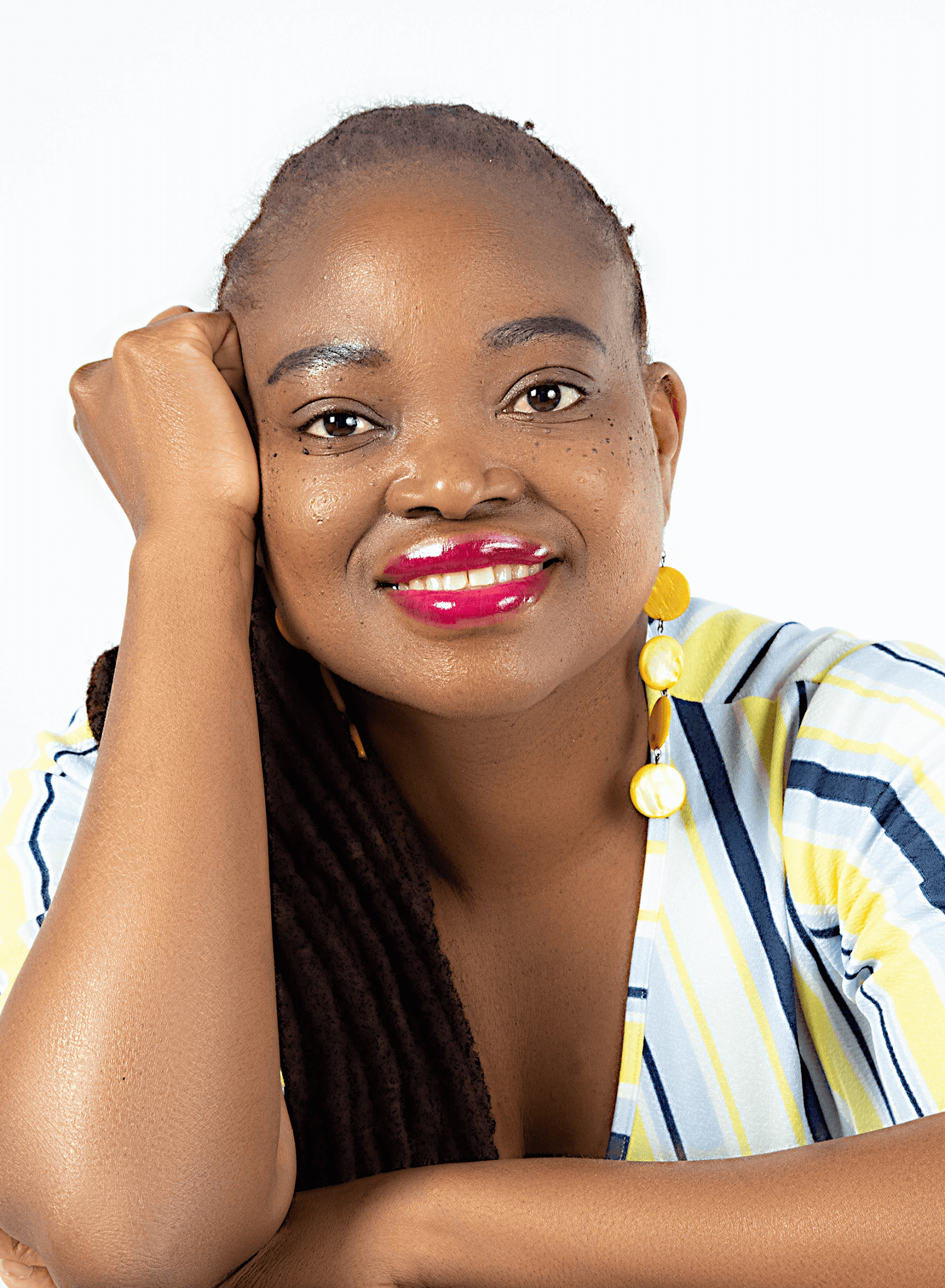
Courtesy of Sue Nyathi | Photo by Carrington Gonzalos

The Gold Diggers in itself was partly a response to the 2008 xenophobic violence in South Africa, and nearly two decades later, xenophobic issue and anti-migrant sentiment remains deeply present across the continent. What has changed since you wrote the book, and what has disturbingly stayed the same? 

Well, nothing has changed. I think the anti-xenophobic sentiment has increased, as you have seen over the years, and it correlates really, with the performance of the economy. When the economy is doing badly, we see an increase in the violence. 

And it is. I think most economies, it's not just South Africa, globally. It's been a tough economic climate everywhere. It's almost like we're heading for a global recession. And everywhere as well, in the U.S., UK, you see the anti-foreigner sentiment. 

So it's not just in South Africa. I think it's also an important story. I mean in Europe foreigners are drowning in the Mediterranean Sea. So that's why I'm saying it's a story of our times. 

You’ve spoken about Africans drowning in the Mediterranean in search of a better life. With African culture now receiving enormous global attention, do you think our celebration of that success can sometimes obscure the realities still pushing ordinary Africans to leave home? 

You know, there's something about success that makes one celebrated. Look at the soccer stars. How they are received, in Europe and wherever they are. Their trajectory is different. But they are not representative of the ordinary person. 

And I think it's like that across. Successful people are always welcomed because they have something of value that they are bringing. But then the average Joe is not. And even though her value is not quantifiable, it doesn't negate his or her needs. They're still valid. Whatever reasons they're there for. 

It also changes the dynamics. So it doesn't really matter. You could be a singer, you've got something of export value, so you will be valued. But most people don't. They just want to survive. They are just looking to survive. It's just basic survival. It's just that simple. 

Having worked in television long before The Polygamist reached Netflix. Has working in screenwriting changed how you write novels – or has novel-writing changed how you approach a screenplay? ? 

Yes and no. So I think just working in television has made me understand the mechanics of filmmaking and the differences between the two. So you kind of have an appreciation of what you can do and what you can't do. 

For instance, when you're writing a novel, your world is limitless. I'm not controlled by budgets. I don't have constraints of time. Literally I can do anything in a novel. But in film, you have a budget, time and other constraints. So it's a tightly controlled world. 

When I write novels, I'm not writing them for TV. So that's what I want to be very clear about. Because people think maybe I was writing with the intention of having my books adapted. It was always, it would be nice if it happened, but I was never writing for that medium. I was just writing a story. 

And I think people should look at it that way. Just write a story. And I want, even going forward, I'm not now writing with that as the end goal. I'm still telling a story, which is very important. 
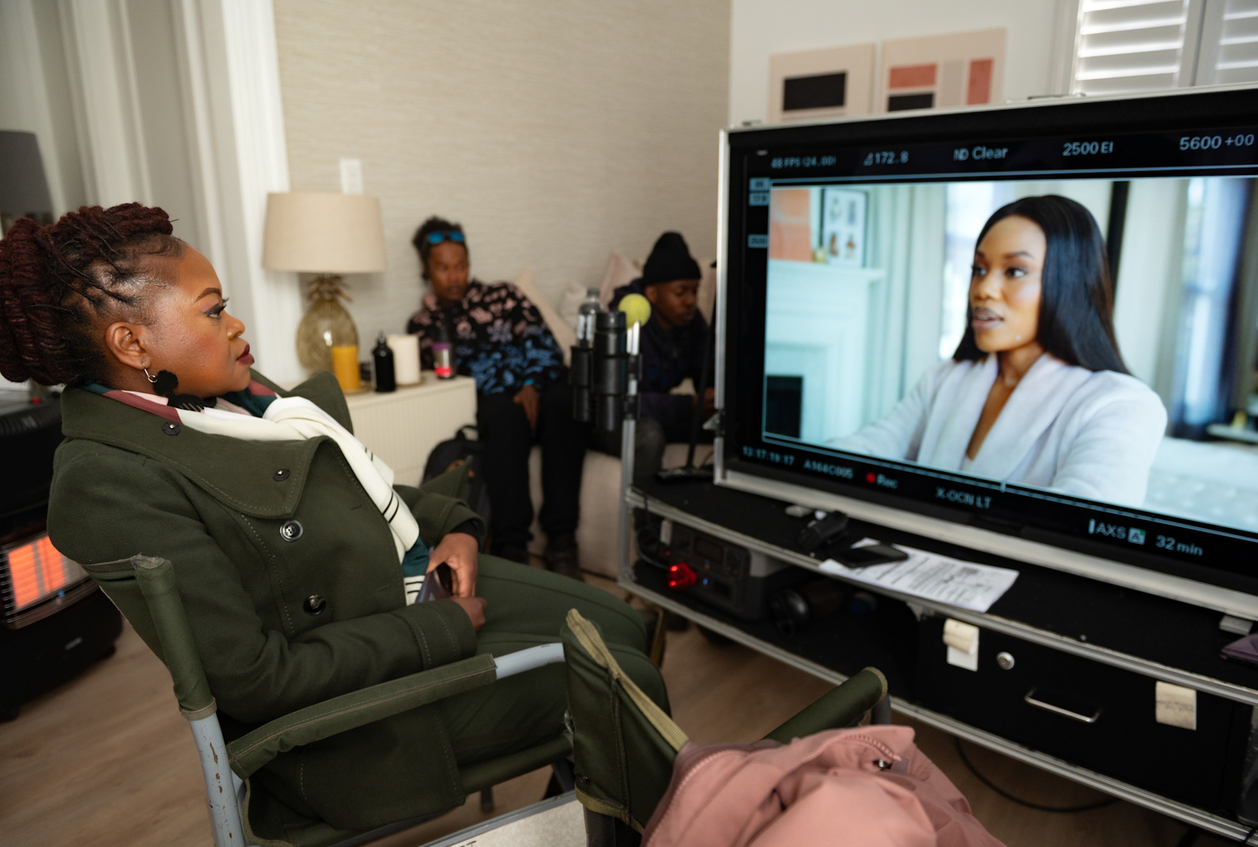
Courtesy of Netflix South Africa

And then the show takes that even further. Characters who existed privately in your imagination suddenly belong to actors, directors and producers. Did seeing Jonasi, Joyce, Matipa, Essie and Lindani on screen make you rethink any of them – or understand them differently?

No. I think they were like the characters in the book. The series did change them, if you look at Joyce's character; in the book she is more passive. In the series she's very aggressive, very cunning, manipulative. She poisons her husband, which is not something she would do in the book. 

So that's what I'm saying. They took that leeway. They took it there. Did that make me understand her better? No. I was like, that wasn't who she was. In writing, the story arc wasn't really about being vengeful. It was more about coming into her own.  

She thought about it. I mean, there were times she thought she wanted to kill him, right? And that really is now the interpretation. So maybe the producers of the series thought, okay, let's show that aspect, her acting on those feelings. But it's just that sometimes you do get mad at people. You want to do things, but you actually don't. And that was really Joyce and her character. 

This is where sometimes the problem with filmmaking, every character has to have a friend. Then they answer things. It works, but then in the instance of Joyce, now you have Joyce having this friend. But in the book she doesn't have friends.

And the reason why she doesn't have friends with a man like Jonasi, would any of her friends be safe around him? You know, it just wouldn't have been a conducive environment. It isolates her in that sense. 

So it's also something they add, but not realizing why. What was the reason for not having them? That's what I'm saying. Certain things, because they're right, you think it's to say, I'm having this woman, and this is why it has to go this way and not this way. 

But for me, no. You know, the characters make sense. Even in the new story onset they introduced, they also make sense. They were not motivated. So it just balanced out. But I can't really say I learned something new. No, they added things which make sense. I mean, like the whole thing of having Lindani as the daughter's friend, which wasn't in the book, but it makes sense, because now you really see Jonasi as a predatory male. 

It just amplifies that character flaw. And I remember thinking, why did I write like that, and then just realizing that in the world that the story is set in, it would not have worked. 

The adaptation has now reached audiences around the world. What has it meant to you to watch people see something of themselves in characters you once created privately?  

Yeah, it's almost like a pat on your back to say, “Well done.” That's really simply what it is. There's power in characterisation, because I always felt that was a strength of the book – these well-formed characters. And you see it in how they translated and resonated and carried, not just in Africa but across the world. Also it's one thing to write these brilliant characters, but I think getting the talent to execute them is also important. This is one of those things where everything came together perfectly.

A lot of African writers dream of seeing their books adapted for film or television. Looking at Queen of Katwe, Children of Blood and Bone and now your experience with The Polygamist, what should African authors pay close attention to when Hollywood comes calling — particularly around rights and creative control? 

Yeah, it's a very tricky one, and I think as a writer you need to really consider what you're giving away and what you're gaining. It's all well and good to say you gain something, because it's not every adaptation that does well. Lots of books have been adapted before, and they don't. Film is a very tricky industry. Some do well, some don't. You never know if it will work out well or it won't.

And some adaptations are very good and some are very bad. It's very fickle as well. They love something, they hate something. So I don't know if there's a formula to it. I wish I could say there is.

And even having creative control doesn't necessarily mean you like the outcome. If you look at Children of Blood and Bone, Tomi had a seat at the writers' table, and that's what every writer would probably think is a dream – to be able to co-write this. But still, even after that, she wasn't happy.

And so that's what I'm saying. Sometimes it's no guarantee that you will like the outcome. For me, sometimes I think if you really want it done the way you would want it, it's actually being the executive producer. That's what you want to be. That's where you really call the shots. Then it becomes: do you have the money to call the shots? Because you have to back that with the investment.

So that's where it really gets tricky. A lot of people in Africa, unfortunately, don't own the IP. And that's where the real power lies – in owning it and being able to leverage it.

And so for me, yes, an adaptation is a start, but it's not the definition of the end game. It's just the beginning. I don't think any writer should see it as the end. It should be the start of something, not the end.

You spent years working in finance and investment before writing full-time. What business lessons from that career have helped you survive as a writer – particularly around contracts, income and intellectual property?  

It's also understanding that creativity is a business. Making films is a business. No one's doing it for fun. And I think writers need to start to realise: how do you monetize your work? I didn't always understand this, but publishing a book is just the starting point. You might not necessarily make money from sales. But look at the book as a door to other things. It could be a door to a motivational speaking career. Some people just have one book, and they're invited all over the world to speak on that book, and they're cashing in on those talks.

In the same way, the film could be a door to film rights, getting money. But what is that money also giving you? What is it opening a door to? The book is also bundled with different rights. What are they giving you? And how can you exploit those different rights? Just don't think in one dimension that it has to be book, published, sales. There's more to that story. Once you see it exist in different forms, then you can see the possibilities. Books become TV shows, there's merchandising, T-shirts – you can do all sorts of things with it.

You've experienced rejection, self-publishing, traditional publishing and now screen adaptation. How do you see the African publishing industry today, particularly for young writers trying to land that first book deal and build sustainable careers?  

Writing is one of those industries with low barriers to entry. Anyone can write. You just have to pick up a pen and paper. There are also low barriers to publishing now. You can literally get your work out there if you want to.

It's very competitive though, and I think people need to understand that environment that you're going into. There are thousands of books every day, new authors. But also understanding that books have longevity. A good story will never die.

I mean, here we are almost 14 years later. The Polygamist came out in 2012. It wasn't a runaway bestseller when it first came out. It had been in the world, but people kept coming back to it. It's also being patient, knowing that, okay, it might not happen now. A lot of writers want instant success, and it happens for other writers, but not necessarily for all of them. So I think it's just having love for what you do and being patient and persevering.

Who are some of the writers whose work you read and admire? What do you love about the way they approach their stories? 

I think the refreshingness they bring to a subject, with a different perspective. There's a book called The Youth of God by Hassan Ghedi Santur about migration. It's about a Somali boy. He's growing up in Canada and it also just explores the same themes of displacement and identity which is something that I explore in The Gold Diggers, but he also does it in quite an interesting way. 

And then there's also another book about migration, Songbirds by Christy Lefteri. I write about domestic workers also in The Gold Diggers, and their lives, you know, especially immigrant workers, and she also tackles the same subject of exploitation, but she does it differently as well. So also you look at it and think, oh wow. 

People like Fatima Bala, the way she brings a refreshing take to romance. I mean, romance as a genre is not something I normally pick up, but the way she wrote Broken was very intriguing. Riveting reads. It's just books that make you reflect. I like contemporary African fictions that I tend to gravitate towards.

And away from writing, who is Sue when work can wait? What does a day off look like for you?  

I would say I like to relax, because I guess my life is very busy. I tend to enjoy spa days, because there aren't so many times I actually get to pamper myself. And get some attention and just indulge myself. 

Cover Image Courtesy of Sue Nyathi
‍

Sue Nyathi Has Always Been a Writer. The World Is Finally Catching Up

Authored by
This is some text inside of a div block.

Long before The Polygamist became a 22-episode Netflix series in 2026, there was a young girl, in Bulawayo, Zimbabwe, cutting pictures out of magazines and writing stories around them. 

Today, Sukoluhle (Sue) Nyathi needs no introduction. The Zimbabwean-born South African writer has spent more than a decade turning the complicated terrain of women, relationships, migration, family and identity into stories that refuse to sit quietly on the page. 

At 13, she wrote her first novel, Crazy Over You, inspired by the American comic-drama series Sweet Valley High. She would eventually study finance, build a career in investment and economic development, write a relationship column for the Sunday Mail, work in television and publish the novels that would establish her as one of Zimbabwe's distinctive contemporary voices. She always kept the pen close. 

That persistence is perhaps most visible in The Polygamist, which Nyathi self-published in 2012 after being rejected by traditional publishers. Fourteen years later, its Netflix adaptation has not only introduced the story to audiences far beyond its Southern African origins, but also amplified interest in Nyathi's wider body of work. Netflix reports that the series reached No. 1 in 21 countries, entered the Top 10 in 62 and helped triple sales of the original book.

But it is only one part of the conversation. Across her other titles The Gold Diggers, A Family Affair, An Angel's Demise and When Secrets Become Stories, Nyathi repeatedly returns to people negotiating the space between who society expects them to be and who they are trying to become. She writes about women, power, migration, family, violence and survival, but beneath it all is a fascination with what happens when people begin to question the lives they have been handed.

Now, with the world listening at a much larger scale, Nyathi is still doing what she has always done: telling stories. Deeds turns the page with the prolific scribe, looking beyond the Netflix success to the writing life that came before it.

Stanley for Deeds: For readers discovering you through The Polygamist and Netflix, there is a whole Sue Nyathi story that predates both. You were writing from childhood, studied finance, built a career in economic development, wrote a relationship column, and eventually became a novelist and screenwriter. Looking back, where was the writer in you hiding in plain sight?

She wasn't hiding. She was always there, even as a child. I always say I used to tell stories even during my playtime. I used to cut out pictures from magazines and write stories around them. I had already shown that inclination for telling stories from a young age. I was just discouraged from pursuing it because our parents at the time didn't want us to pursue professions that they wouldn't consider respectable. They wanted you to be a doctor, an accountant, or a lawyer. 

I remember my dad would have his notes from work, and they'd be typed out. And sometimes when he discarded those scripts, I would always write my stories at the back. I would use those papers to write because I just wrote anywhere I could find paper. So that's why I say it was always there, and they knew it. But yeah, it was just not encouraged. 

You've described writing as an escape from the “drudgery of economic shop talk and financial markets.” You also spent years writing manuscripts that weren't published, including A Family Affair. What kept you writing when there was so little external evidence that the world was waiting for your work?

It was just the love for it. I loved doing it. Even when I was pretty bad at it, if I look at some of my earlier work, there was nothing there that said, "Oh wow, this is our next Shakespeare." It was just the love to tell stories and entertain people. And then I think because of the nature that my career took, none of it ever sort of invited or exposed that creativity. So as a result, I think I was just yearning to tell stories, so it just became an outlet.

The Polygamist was self-published in 2012 after rejection from traditional publishers, and fourteen years later it's become a global Netflix phenomenon. Do you think the audience found the book late, or finally caught up with it?

I think the way the world is structured, they found it late, but I don't blame them because oftentimes when you're published in Southern Africa, books don't travel upwards. They are sold downwards. 

So an African writer that's published overseas in America or the UK, you are more likely to find their work in Africa because it's easier then to sell it down. But it doesn't really work the other way around. So you'll find that a lot of writers will go undiscovered, unnoticed. 

And so I think for me, what this series has done is just to amplify my body of work and market it in a way that I would never have been able to do so, on my own or even with the publisher here. It's given me that kind of visibility that most writers yearn for. 

Photo courtesy of Sue Nyathi 

The book specifically came from observing a kind of ‘modern polygamy’ in Harare, where men maintain parallel relationships while presenting themselves as monogamous. Has your understanding of that phenomenon changed in the 14 years since you wrote the book, particularly as conversations around toxic masculinity, emotional manipulation, and women's agency overall have evolved? 

It hasn't changed, and I think it also is kind of validated by people's responses because the book came out in 2012, and people either agreed with some of the observations or they say it's happening. It resonated with them, which means it must be true for a lot of people, even though it may be untrue for a few.

So it means it really hasn't changed from what I observed back then, which is quite sad in a way because we would like to actually say we've evolved, but we haven't. It just actually shows that society is not evolving. We are regressing and degenerating because that's not what we want to see when we look at ourselves. So that's actually quite sad. 

There's a moment when Matipa reflects, “I felt like I was getting a preview into my future if I remained in Jonasi’s life.” She ultimately decides she still has a “fighting chance” and walks away. What did you want readers to understand about the moment a woman begins to choose herself? 

That we have agency, and you can decide to exercise it for your good. And I know there's a lot of harsh judgment on Matipa. A lot of women say she left her kids behind. But how many men leave their kids behind? She didn't leave them with strangers; she left them with their father. Men do it all the time, but you never hear people saying, "He left his kids." 

But for women, and I saw a lot of that, that's a double standard where we've been conditioned to say it's the same crime, but somehow when a woman does it, some go as far as women are thrown in jail for that, whereas men can leave. They leave every day. 

But just to demonstrate that she chose herself, and that sometimes you have to, and she saved herself because the violence would have only escalated. So that women's agency. 

Those themes seem to run through much of your work. A Family Affair explores marriage, religion and respectability, while When Secrets Become Stories gives women space to speak about gender-based violence. Do you think you've become increasingly interested in what women are permitted to be versus what they actually want to be?

It's a bit of a catch-22, in the sense that we have what we aspire to be, and then we have what we really are. And the two are very different. 

And I see it across not just unclassed rural or urban women. It cuts across the divide. Even the women who are empowered, educated, still suffer gender-based violence, the same way that the rural, uneducated women do. So for me, one just has a voice about it, but might not necessarily act on it. And just for me, it's like, these are two things: what we aspire to be as women and what we really are.

Speaking about your migration to South Africa in 2008, and The Gold Diggers follows the Zimbabweans making that same journey. Did migration change the way you understood both Zimbabwe and South Africa – and your own identity as an African writer?

Not necessarily. It just makes you question things, right? So if you grow up in one country, there's almost like a national psyche or collective way of thinking, of viewing things. And sometimes it takes you when you remove yourself from that environment. You can actually interrogate what you've grown up around and actually start to question: is this really okay or is it not? 

And then you compare with the country you're in, and then there's certain things that you may like from them that you don't find in yours. And you sort of compare and contrast. And then you actually find that there are also similarities. You know, you might be in a different country, but the mindsets are almost the same. 

So I think it just opens you up in one way than you would be if you, I think if you write in one place, you just become defined largely by that place. Unless you're writing historical stuff. But I mean, for the kind of work that I write, I kind of see myself as an advocate for women and their issues through my storytelling. So it's important to see what else is happening on the continent is the same. 

And I think from the series, we realize it's actually very much the same. It doesn't matter where you are. There's a lot of resonance. So it also bridges that gap. 

Courtesy of Sue Nyathi | Photo by Carrington Gonzalos

The Gold Diggers in itself was partly a response to the 2008 xenophobic violence in South Africa, and nearly two decades later, xenophobic issue and anti-migrant sentiment remains deeply present across the continent. What has changed since you wrote the book, and what has disturbingly stayed the same? 

Well, nothing has changed. I think the anti-xenophobic sentiment has increased, as you have seen over the years, and it correlates really, with the performance of the economy. When the economy is doing badly, we see an increase in the violence. 

And it is. I think most economies, it's not just South Africa, globally. It's been a tough economic climate everywhere. It's almost like we're heading for a global recession. And everywhere as well, in the U.S., UK, you see the anti-foreigner sentiment. 

So it's not just in South Africa. I think it's also an important story. I mean in Europe foreigners are drowning in the Mediterranean Sea. So that's why I'm saying it's a story of our times. 

You’ve spoken about Africans drowning in the Mediterranean in search of a better life. With African culture now receiving enormous global attention, do you think our celebration of that success can sometimes obscure the realities still pushing ordinary Africans to leave home? 

You know, there's something about success that makes one celebrated. Look at the soccer stars. How they are received, in Europe and wherever they are. Their trajectory is different. But they are not representative of the ordinary person. 

And I think it's like that across. Successful people are always welcomed because they have something of value that they are bringing. But then the average Joe is not. And even though her value is not quantifiable, it doesn't negate his or her needs. They're still valid. Whatever reasons they're there for. 

It also changes the dynamics. So it doesn't really matter. You could be a singer, you've got something of export value, so you will be valued. But most people don't. They just want to survive. They are just looking to survive. It's just basic survival. It's just that simple. 

Having worked in television long before The Polygamist reached Netflix. Has working in screenwriting changed how you write novels – or has novel-writing changed how you approach a screenplay? ? 

Yes and no. So I think just working in television has made me understand the mechanics of filmmaking and the differences between the two. So you kind of have an appreciation of what you can do and what you can't do. 

For instance, when you're writing a novel, your world is limitless. I'm not controlled by budgets. I don't have constraints of time. Literally I can do anything in a novel. But in film, you have a budget, time and other constraints. So it's a tightly controlled world. 

When I write novels, I'm not writing them for TV. So that's what I want to be very clear about. Because people think maybe I was writing with the intention of having my books adapted. It was always, it would be nice if it happened, but I was never writing for that medium. I was just writing a story. 

And I think people should look at it that way. Just write a story. And I want, even going forward, I'm not now writing with that as the end goal. I'm still telling a story, which is very important. 

Courtesy of Netflix South Africa

And then the show takes that even further. Characters who existed privately in your imagination suddenly belong to actors, directors and producers. Did seeing Jonasi, Joyce, Matipa, Essie and Lindani on screen make you rethink any of them – or understand them differently?

No. I think they were like the characters in the book. The series did change them, if you look at Joyce's character; in the book she is more passive. In the series she's very aggressive, very cunning, manipulative. She poisons her husband, which is not something she would do in the book. 

So that's what I'm saying. They took that leeway. They took it there. Did that make me understand her better? No. I was like, that wasn't who she was. In writing, the story arc wasn't really about being vengeful. It was more about coming into her own.  

She thought about it. I mean, there were times she thought she wanted to kill him, right? And that really is now the interpretation. So maybe the producers of the series thought, okay, let's show that aspect, her acting on those feelings. But it's just that sometimes you do get mad at people. You want to do things, but you actually don't. And that was really Joyce and her character. 

This is where sometimes the problem with filmmaking, every character has to have a friend. Then they answer things. It works, but then in the instance of Joyce, now you have Joyce having this friend. But in the book she doesn't have friends.

And the reason why she doesn't have friends with a man like Jonasi, would any of her friends be safe around him? You know, it just wouldn't have been a conducive environment. It isolates her in that sense. 

So it's also something they add, but not realizing why. What was the reason for not having them? That's what I'm saying. Certain things, because they're right, you think it's to say, I'm having this woman, and this is why it has to go this way and not this way. 

But for me, no. You know, the characters make sense. Even in the new story onset they introduced, they also make sense. They were not motivated. So it just balanced out. But I can't really say I learned something new. No, they added things which make sense. I mean, like the whole thing of having Lindani as the daughter's friend, which wasn't in the book, but it makes sense, because now you really see Jonasi as a predatory male. 

It just amplifies that character flaw. And I remember thinking, why did I write like that, and then just realizing that in the world that the story is set in, it would not have worked. 

The adaptation has now reached audiences around the world. What has it meant to you to watch people see something of themselves in characters you once created privately?  

Yeah, it's almost like a pat on your back to say, “Well done.” That's really simply what it is. There's power in characterisation, because I always felt that was a strength of the book – these well-formed characters. And you see it in how they translated and resonated and carried, not just in Africa but across the world. Also it's one thing to write these brilliant characters, but I think getting the talent to execute them is also important. This is one of those things where everything came together perfectly.

A lot of African writers dream of seeing their books adapted for film or television. Looking at Queen of Katwe, Children of Blood and Bone and now your experience with The Polygamist, what should African authors pay close attention to when Hollywood comes calling — particularly around rights and creative control? 

Yeah, it's a very tricky one, and I think as a writer you need to really consider what you're giving away and what you're gaining. It's all well and good to say you gain something, because it's not every adaptation that does well. Lots of books have been adapted before, and they don't. Film is a very tricky industry. Some do well, some don't. You never know if it will work out well or it won't.

And some adaptations are very good and some are very bad. It's very fickle as well. They love something, they hate something. So I don't know if there's a formula to it. I wish I could say there is.

And even having creative control doesn't necessarily mean you like the outcome. If you look at Children of Blood and Bone, Tomi had a seat at the writers' table, and that's what every writer would probably think is a dream – to be able to co-write this. But still, even after that, she wasn't happy.

And so that's what I'm saying. Sometimes it's no guarantee that you will like the outcome. For me, sometimes I think if you really want it done the way you would want it, it's actually being the executive producer. That's what you want to be. That's where you really call the shots. Then it becomes: do you have the money to call the shots? Because you have to back that with the investment.

So that's where it really gets tricky. A lot of people in Africa, unfortunately, don't own the IP. And that's where the real power lies – in owning it and being able to leverage it.

And so for me, yes, an adaptation is a start, but it's not the definition of the end game. It's just the beginning. I don't think any writer should see it as the end. It should be the start of something, not the end.

You spent years working in finance and investment before writing full-time. What business lessons from that career have helped you survive as a writer – particularly around contracts, income and intellectual property?  

It's also understanding that creativity is a business. Making films is a business. No one's doing it for fun. And I think writers need to start to realise: how do you monetize your work? I didn't always understand this, but publishing a book is just the starting point. You might not necessarily make money from sales. But look at the book as a door to other things. It could be a door to a motivational speaking career. Some people just have one book, and they're invited all over the world to speak on that book, and they're cashing in on those talks.

In the same way, the film could be a door to film rights, getting money. But what is that money also giving you? What is it opening a door to? The book is also bundled with different rights. What are they giving you? And how can you exploit those different rights? Just don't think in one dimension that it has to be book, published, sales. There's more to that story. Once you see it exist in different forms, then you can see the possibilities. Books become TV shows, there's merchandising, T-shirts – you can do all sorts of things with it.

You've experienced rejection, self-publishing, traditional publishing and now screen adaptation. How do you see the African publishing industry today, particularly for young writers trying to land that first book deal and build sustainable careers?  

Writing is one of those industries with low barriers to entry. Anyone can write. You just have to pick up a pen and paper. There are also low barriers to publishing now. You can literally get your work out there if you want to.

It's very competitive though, and I think people need to understand that environment that you're going into. There are thousands of books every day, new authors. But also understanding that books have longevity. A good story will never die.

I mean, here we are almost 14 years later. The Polygamist came out in 2012. It wasn't a runaway bestseller when it first came out. It had been in the world, but people kept coming back to it. It's also being patient, knowing that, okay, it might not happen now. A lot of writers want instant success, and it happens for other writers, but not necessarily for all of them. So I think it's just having love for what you do and being patient and persevering.

Who are some of the writers whose work you read and admire? What do you love about the way they approach their stories? 

I think the refreshingness they bring to a subject, with a different perspective. There's a book called The Youth of God by Hassan Ghedi Santur about migration. It's about a Somali boy. He's growing up in Canada and it also just explores the same themes of displacement and identity which is something that I explore in The Gold Diggers, but he also does it in quite an interesting way. 

And then there's also another book about migration, Songbirds by Christy Lefteri. I write about domestic workers also in The Gold Diggers, and their lives, you know, especially immigrant workers, and she also tackles the same subject of exploitation, but she does it differently as well. So also you look at it and think, oh wow. 

People like Fatima Bala, the way she brings a refreshing take to romance. I mean, romance as a genre is not something I normally pick up, but the way she wrote Broken was very intriguing. Riveting reads. It's just books that make you reflect. I like contemporary African fictions that I tend to gravitate towards.

And away from writing, who is Sue when work can wait? What does a day off look like for you?  

I would say I like to relax, because I guess my life is very busy. I tend to enjoy spa days, because there aren't so many times I actually get to pamper myself. And get some attention and just indulge myself. 

Cover Image Courtesy of Sue Nyathi
‍

This is some text inside of a div block.

Sue Nyathi Has Always Been a Writer. The World Is Finally Catching Up

Authored by

Long before The Polygamist became a 22-episode Netflix series in 2026, there was a young girl, in Bulawayo, Zimbabwe, cutting pictures out of magazines and writing stories around them. 

Today, Sukoluhle (Sue) Nyathi needs no introduction. The Zimbabwean-born South African writer has spent more than a decade turning the complicated terrain of women, relationships, migration, family and identity into stories that refuse to sit quietly on the page. 

At 13, she wrote her first novel, Crazy Over You, inspired by the American comic-drama series Sweet Valley High. She would eventually study finance, build a career in investment and economic development, write a relationship column for the Sunday Mail, work in television and publish the novels that would establish her as one of Zimbabwe's distinctive contemporary voices. She always kept the pen close. 

That persistence is perhaps most visible in The Polygamist, which Nyathi self-published in 2012 after being rejected by traditional publishers. Fourteen years later, its Netflix adaptation has not only introduced the story to audiences far beyond its Southern African origins, but also amplified interest in Nyathi's wider body of work. Netflix reports that the series reached No. 1 in 21 countries, entered the Top 10 in 62 and helped triple sales of the original book.

But it is only one part of the conversation. Across her other titles The Gold Diggers, A Family Affair, An Angel's Demise and When Secrets Become Stories, Nyathi repeatedly returns to people negotiating the space between who society expects them to be and who they are trying to become. She writes about women, power, migration, family, violence and survival, but beneath it all is a fascination with what happens when people begin to question the lives they have been handed.

Now, with the world listening at a much larger scale, Nyathi is still doing what she has always done: telling stories. Deeds turns the page with the prolific scribe, looking beyond the Netflix success to the writing life that came before it.

Stanley for Deeds: For readers discovering you through The Polygamist and Netflix, there is a whole Sue Nyathi story that predates both. You were writing from childhood, studied finance, built a career in economic development, wrote a relationship column, and eventually became a novelist and screenwriter. Looking back, where was the writer in you hiding in plain sight?

She wasn't hiding. She was always there, even as a child. I always say I used to tell stories even during my playtime. I used to cut out pictures from magazines and write stories around them. I had already shown that inclination for telling stories from a young age. I was just discouraged from pursuing it because our parents at the time didn't want us to pursue professions that they wouldn't consider respectable. They wanted you to be a doctor, an accountant, or a lawyer. 

I remember my dad would have his notes from work, and they'd be typed out. And sometimes when he discarded those scripts, I would always write my stories at the back. I would use those papers to write because I just wrote anywhere I could find paper. So that's why I say it was always there, and they knew it. But yeah, it was just not encouraged. 

You've described writing as an escape from the “drudgery of economic shop talk and financial markets.” You also spent years writing manuscripts that weren't published, including A Family Affair. What kept you writing when there was so little external evidence that the world was waiting for your work?

It was just the love for it. I loved doing it. Even when I was pretty bad at it, if I look at some of my earlier work, there was nothing there that said, "Oh wow, this is our next Shakespeare." It was just the love to tell stories and entertain people. And then I think because of the nature that my career took, none of it ever sort of invited or exposed that creativity. So as a result, I think I was just yearning to tell stories, so it just became an outlet.

The Polygamist was self-published in 2012 after rejection from traditional publishers, and fourteen years later it's become a global Netflix phenomenon. Do you think the audience found the book late, or finally caught up with it?

I think the way the world is structured, they found it late, but I don't blame them because oftentimes when you're published in Southern Africa, books don't travel upwards. They are sold downwards. 

So an African writer that's published overseas in America or the UK, you are more likely to find their work in Africa because it's easier then to sell it down. But it doesn't really work the other way around. So you'll find that a lot of writers will go undiscovered, unnoticed. 

And so I think for me, what this series has done is just to amplify my body of work and market it in a way that I would never have been able to do so, on my own or even with the publisher here. It's given me that kind of visibility that most writers yearn for. 

Photo courtesy of Sue Nyathi 

The book specifically came from observing a kind of ‘modern polygamy’ in Harare, where men maintain parallel relationships while presenting themselves as monogamous. Has your understanding of that phenomenon changed in the 14 years since you wrote the book, particularly as conversations around toxic masculinity, emotional manipulation, and women's agency overall have evolved? 

It hasn't changed, and I think it also is kind of validated by people's responses because the book came out in 2012, and people either agreed with some of the observations or they say it's happening. It resonated with them, which means it must be true for a lot of people, even though it may be untrue for a few.

So it means it really hasn't changed from what I observed back then, which is quite sad in a way because we would like to actually say we've evolved, but we haven't. It just actually shows that society is not evolving. We are regressing and degenerating because that's not what we want to see when we look at ourselves. So that's actually quite sad. 

There's a moment when Matipa reflects, “I felt like I was getting a preview into my future if I remained in Jonasi’s life.” She ultimately decides she still has a “fighting chance” and walks away. What did you want readers to understand about the moment a woman begins to choose herself? 

That we have agency, and you can decide to exercise it for your good. And I know there's a lot of harsh judgment on Matipa. A lot of women say she left her kids behind. But how many men leave their kids behind? She didn't leave them with strangers; she left them with their father. Men do it all the time, but you never hear people saying, "He left his kids." 

But for women, and I saw a lot of that, that's a double standard where we've been conditioned to say it's the same crime, but somehow when a woman does it, some go as far as women are thrown in jail for that, whereas men can leave. They leave every day. 

But just to demonstrate that she chose herself, and that sometimes you have to, and she saved herself because the violence would have only escalated. So that women's agency. 

Those themes seem to run through much of your work. A Family Affair explores marriage, religion and respectability, while When Secrets Become Stories gives women space to speak about gender-based violence. Do you think you've become increasingly interested in what women are permitted to be versus what they actually want to be?

It's a bit of a catch-22, in the sense that we have what we aspire to be, and then we have what we really are. And the two are very different. 

And I see it across not just unclassed rural or urban women. It cuts across the divide. Even the women who are empowered, educated, still suffer gender-based violence, the same way that the rural, uneducated women do. So for me, one just has a voice about it, but might not necessarily act on it. And just for me, it's like, these are two things: what we aspire to be as women and what we really are.

Speaking about your migration to South Africa in 2008, and The Gold Diggers follows the Zimbabweans making that same journey. Did migration change the way you understood both Zimbabwe and South Africa – and your own identity as an African writer?

Not necessarily. It just makes you question things, right? So if you grow up in one country, there's almost like a national psyche or collective way of thinking, of viewing things. And sometimes it takes you when you remove yourself from that environment. You can actually interrogate what you've grown up around and actually start to question: is this really okay or is it not? 

And then you compare with the country you're in, and then there's certain things that you may like from them that you don't find in yours. And you sort of compare and contrast. And then you actually find that there are also similarities. You know, you might be in a different country, but the mindsets are almost the same. 

So I think it just opens you up in one way than you would be if you, I think if you write in one place, you just become defined largely by that place. Unless you're writing historical stuff. But I mean, for the kind of work that I write, I kind of see myself as an advocate for women and their issues through my storytelling. So it's important to see what else is happening on the continent is the same. 

And I think from the series, we realize it's actually very much the same. It doesn't matter where you are. There's a lot of resonance. So it also bridges that gap. 

Courtesy of Sue Nyathi | Photo by Carrington Gonzalos

The Gold Diggers in itself was partly a response to the 2008 xenophobic violence in South Africa, and nearly two decades later, xenophobic issue and anti-migrant sentiment remains deeply present across the continent. What has changed since you wrote the book, and what has disturbingly stayed the same? 

Well, nothing has changed. I think the anti-xenophobic sentiment has increased, as you have seen over the years, and it correlates really, with the performance of the economy. When the economy is doing badly, we see an increase in the violence. 

And it is. I think most economies, it's not just South Africa, globally. It's been a tough economic climate everywhere. It's almost like we're heading for a global recession. And everywhere as well, in the U.S., UK, you see the anti-foreigner sentiment. 

So it's not just in South Africa. I think it's also an important story. I mean in Europe foreigners are drowning in the Mediterranean Sea. So that's why I'm saying it's a story of our times. 

You’ve spoken about Africans drowning in the Mediterranean in search of a better life. With African culture now receiving enormous global attention, do you think our celebration of that success can sometimes obscure the realities still pushing ordinary Africans to leave home? 

You know, there's something about success that makes one celebrated. Look at the soccer stars. How they are received, in Europe and wherever they are. Their trajectory is different. But they are not representative of the ordinary person. 

And I think it's like that across. Successful people are always welcomed because they have something of value that they are bringing. But then the average Joe is not. And even though her value is not quantifiable, it doesn't negate his or her needs. They're still valid. Whatever reasons they're there for. 

It also changes the dynamics. So it doesn't really matter. You could be a singer, you've got something of export value, so you will be valued. But most people don't. They just want to survive. They are just looking to survive. It's just basic survival. It's just that simple. 

Having worked in television long before The Polygamist reached Netflix. Has working in screenwriting changed how you write novels – or has novel-writing changed how you approach a screenplay? ? 

Yes and no. So I think just working in television has made me understand the mechanics of filmmaking and the differences between the two. So you kind of have an appreciation of what you can do and what you can't do. 

For instance, when you're writing a novel, your world is limitless. I'm not controlled by budgets. I don't have constraints of time. Literally I can do anything in a novel. But in film, you have a budget, time and other constraints. So it's a tightly controlled world. 

When I write novels, I'm not writing them for TV. So that's what I want to be very clear about. Because people think maybe I was writing with the intention of having my books adapted. It was always, it would be nice if it happened, but I was never writing for that medium. I was just writing a story. 

And I think people should look at it that way. Just write a story. And I want, even going forward, I'm not now writing with that as the end goal. I'm still telling a story, which is very important. 

Courtesy of Netflix South Africa

And then the show takes that even further. Characters who existed privately in your imagination suddenly belong to actors, directors and producers. Did seeing Jonasi, Joyce, Matipa, Essie and Lindani on screen make you rethink any of them – or understand them differently?

No. I think they were like the characters in the book. The series did change them, if you look at Joyce's character; in the book she is more passive. In the series she's very aggressive, very cunning, manipulative. She poisons her husband, which is not something she would do in the book. 

So that's what I'm saying. They took that leeway. They took it there. Did that make me understand her better? No. I was like, that wasn't who she was. In writing, the story arc wasn't really about being vengeful. It was more about coming into her own.  

She thought about it. I mean, there were times she thought she wanted to kill him, right? And that really is now the interpretation. So maybe the producers of the series thought, okay, let's show that aspect, her acting on those feelings. But it's just that sometimes you do get mad at people. You want to do things, but you actually don't. And that was really Joyce and her character. 

This is where sometimes the problem with filmmaking, every character has to have a friend. Then they answer things. It works, but then in the instance of Joyce, now you have Joyce having this friend. But in the book she doesn't have friends.

And the reason why she doesn't have friends with a man like Jonasi, would any of her friends be safe around him? You know, it just wouldn't have been a conducive environment. It isolates her in that sense. 

So it's also something they add, but not realizing why. What was the reason for not having them? That's what I'm saying. Certain things, because they're right, you think it's to say, I'm having this woman, and this is why it has to go this way and not this way. 

But for me, no. You know, the characters make sense. Even in the new story onset they introduced, they also make sense. They were not motivated. So it just balanced out. But I can't really say I learned something new. No, they added things which make sense. I mean, like the whole thing of having Lindani as the daughter's friend, which wasn't in the book, but it makes sense, because now you really see Jonasi as a predatory male. 

It just amplifies that character flaw. And I remember thinking, why did I write like that, and then just realizing that in the world that the story is set in, it would not have worked. 

The adaptation has now reached audiences around the world. What has it meant to you to watch people see something of themselves in characters you once created privately?  

Yeah, it's almost like a pat on your back to say, “Well done.” That's really simply what it is. There's power in characterisation, because I always felt that was a strength of the book – these well-formed characters. And you see it in how they translated and resonated and carried, not just in Africa but across the world. Also it's one thing to write these brilliant characters, but I think getting the talent to execute them is also important. This is one of those things where everything came together perfectly.

A lot of African writers dream of seeing their books adapted for film or television. Looking at Queen of Katwe, Children of Blood and Bone and now your experience with The Polygamist, what should African authors pay close attention to when Hollywood comes calling — particularly around rights and creative control? 

Yeah, it's a very tricky one, and I think as a writer you need to really consider what you're giving away and what you're gaining. It's all well and good to say you gain something, because it's not every adaptation that does well. Lots of books have been adapted before, and they don't. Film is a very tricky industry. Some do well, some don't. You never know if it will work out well or it won't.

And some adaptations are very good and some are very bad. It's very fickle as well. They love something, they hate something. So I don't know if there's a formula to it. I wish I could say there is.

And even having creative control doesn't necessarily mean you like the outcome. If you look at Children of Blood and Bone, Tomi had a seat at the writers' table, and that's what every writer would probably think is a dream – to be able to co-write this. But still, even after that, she wasn't happy.

And so that's what I'm saying. Sometimes it's no guarantee that you will like the outcome. For me, sometimes I think if you really want it done the way you would want it, it's actually being the executive producer. That's what you want to be. That's where you really call the shots. Then it becomes: do you have the money to call the shots? Because you have to back that with the investment.

So that's where it really gets tricky. A lot of people in Africa, unfortunately, don't own the IP. And that's where the real power lies – in owning it and being able to leverage it.

And so for me, yes, an adaptation is a start, but it's not the definition of the end game. It's just the beginning. I don't think any writer should see it as the end. It should be the start of something, not the end.

You spent years working in finance and investment before writing full-time. What business lessons from that career have helped you survive as a writer – particularly around contracts, income and intellectual property?  

It's also understanding that creativity is a business. Making films is a business. No one's doing it for fun. And I think writers need to start to realise: how do you monetize your work? I didn't always understand this, but publishing a book is just the starting point. You might not necessarily make money from sales. But look at the book as a door to other things. It could be a door to a motivational speaking career. Some people just have one book, and they're invited all over the world to speak on that book, and they're cashing in on those talks.

In the same way, the film could be a door to film rights, getting money. But what is that money also giving you? What is it opening a door to? The book is also bundled with different rights. What are they giving you? And how can you exploit those different rights? Just don't think in one dimension that it has to be book, published, sales. There's more to that story. Once you see it exist in different forms, then you can see the possibilities. Books become TV shows, there's merchandising, T-shirts – you can do all sorts of things with it.

You've experienced rejection, self-publishing, traditional publishing and now screen adaptation. How do you see the African publishing industry today, particularly for young writers trying to land that first book deal and build sustainable careers?  

Writing is one of those industries with low barriers to entry. Anyone can write. You just have to pick up a pen and paper. There are also low barriers to publishing now. You can literally get your work out there if you want to.

It's very competitive though, and I think people need to understand that environment that you're going into. There are thousands of books every day, new authors. But also understanding that books have longevity. A good story will never die.

I mean, here we are almost 14 years later. The Polygamist came out in 2012. It wasn't a runaway bestseller when it first came out. It had been in the world, but people kept coming back to it. It's also being patient, knowing that, okay, it might not happen now. A lot of writers want instant success, and it happens for other writers, but not necessarily for all of them. So I think it's just having love for what you do and being patient and persevering.

Who are some of the writers whose work you read and admire? What do you love about the way they approach their stories? 

I think the refreshingness they bring to a subject, with a different perspective. There's a book called The Youth of God by Hassan Ghedi Santur about migration. It's about a Somali boy. He's growing up in Canada and it also just explores the same themes of displacement and identity which is something that I explore in The Gold Diggers, but he also does it in quite an interesting way. 

And then there's also another book about migration, Songbirds by Christy Lefteri. I write about domestic workers also in The Gold Diggers, and their lives, you know, especially immigrant workers, and she also tackles the same subject of exploitation, but she does it differently as well. So also you look at it and think, oh wow. 

People like Fatima Bala, the way she brings a refreshing take to romance. I mean, romance as a genre is not something I normally pick up, but the way she wrote Broken was very intriguing. Riveting reads. It's just books that make you reflect. I like contemporary African fictions that I tend to gravitate towards.

And away from writing, who is Sue when work can wait? What does a day off look like for you?  

I would say I like to relax, because I guess my life is very busy. I tend to enjoy spa days, because there aren't so many times I actually get to pamper myself. And get some attention and just indulge myself. 

Cover Image Courtesy of Sue Nyathi

‍

Other Stories
London
London
Lagos
London
Newyork
London
Shop
Join the community.
You are now subscribed to receive updates.
Oops! Something went wrong while submitting the form.
Subscribe