.svg)

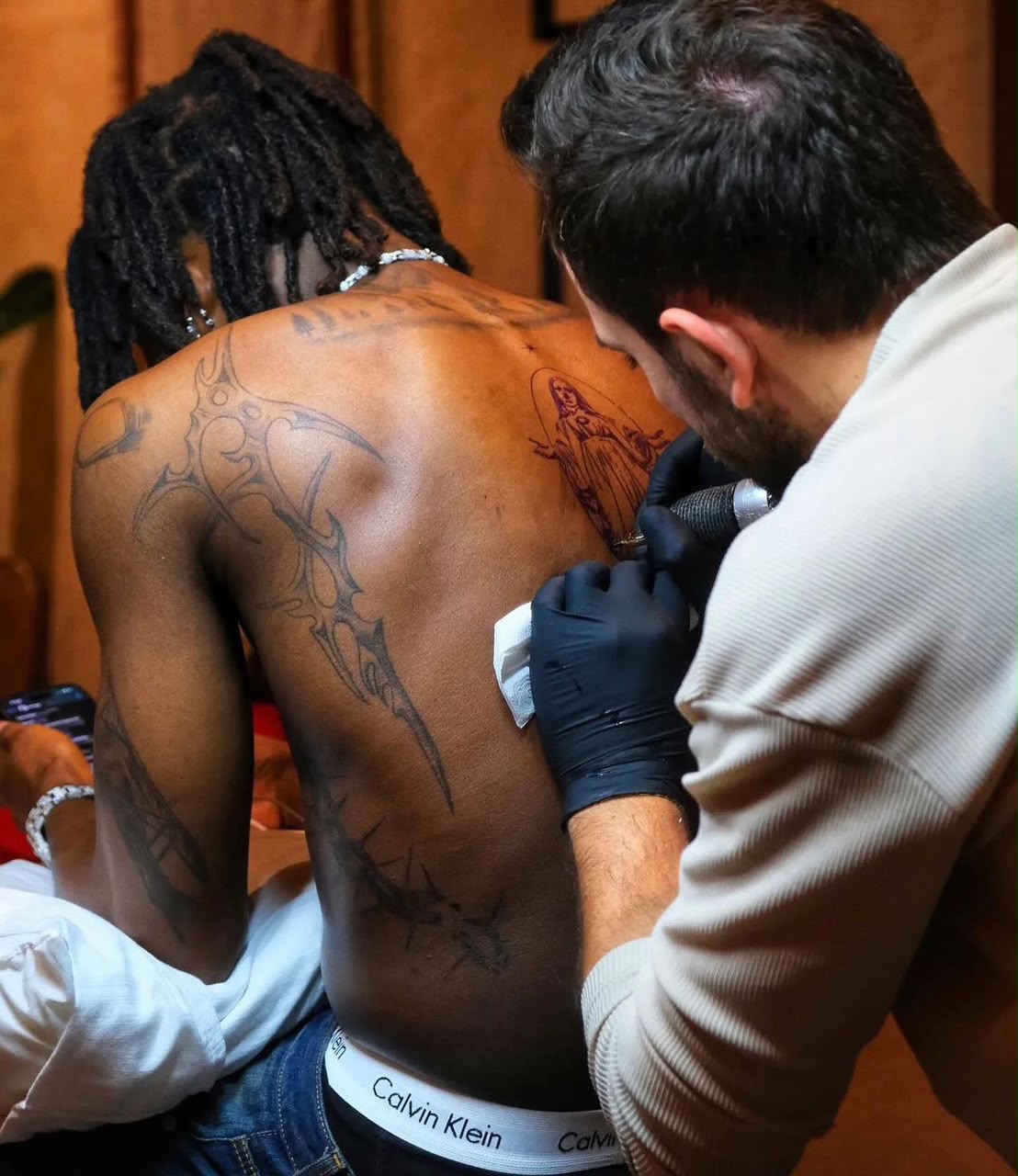
Tattoos have become one of the most popular forms of body modification among young people. Yet they are far from a Gen Z phenomenon. Tattooing has existed for thousands of years across cultures in Japan, Polynesia and numerous African communities, including those in Nigeria, Mozambique and Tanzania. These permanent designs are created by inserting ink and pigments into the dermis, the skin’s deeper layer.
In Nigeria, permanent body markings have long appeared across different cultures. Among Yoruba communities, facial markings and scarification historically signalled lineage and identity, while other forms of body marking across the country have conveyed courage, beauty or spiritual protection.
Tattoo artist Emmanuel Item describes his style as “West African Tribalwork” and treats his art “like a living archive.” He spoke at length about Africa’s tattoo heritage, noting that it was not originally practised simply for fashion or style.
“Back then, our grandparents used to carry different styles of tattoos, which were lost [...] around our parents’ generation,” he explained. “In the old times, tattoos and scarification had healing purposes. They were used to protect the wearer spiritually or show someone’s identity and tribe.”
The fashionable business of tattoos
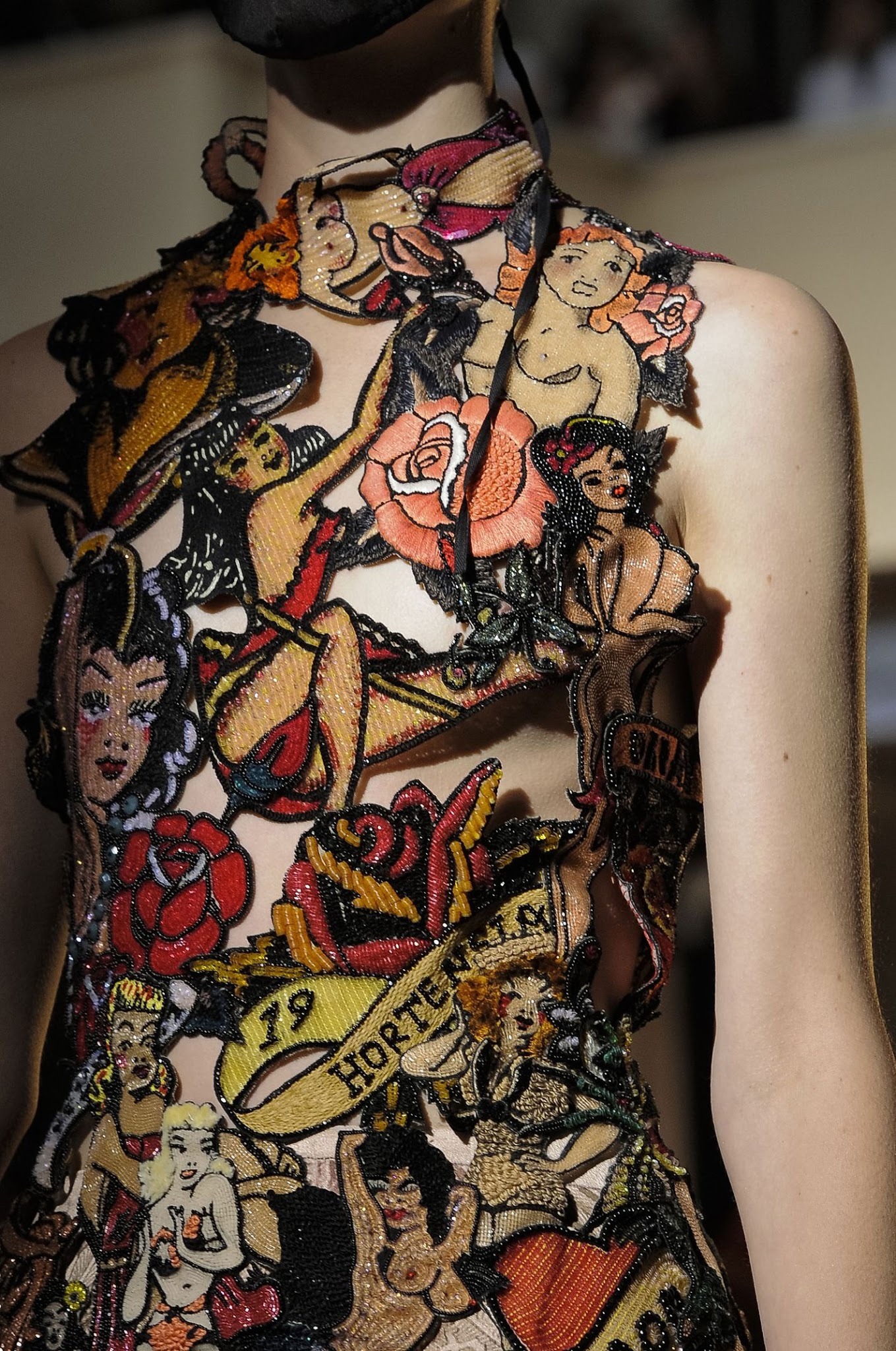
Tattoo imagery is no stranger to the fashion world. In 2014, one of Maison Martin Margiela’s couture pieces featured an intricately embroidered top based on the work of tattoo legend Norman “Sailor Jerry” Collins. One of America’s most influential tattoo artists, Collins helped define the American traditional tattoo style.
Tattooing has also had notable runway moments in Jean Paul Gaultier’s Spring/Summer 1994 Les Tatouages collection and Rodarte’s Spring 2010 show.
For Ola, a 24-year-old Nigerian artist whose personal style is heavily inspired by gothic and alternative culture, tattoos are both fashionable and political. “Sometimes, tattoos go beyond fashion because they’re permanent and deeply personal. There’s a personal connection and ownership of oneself involved in deciding what you want to permanently put on your body.”
Ola has two tattoos, one of which was designed by her boyfriend. She has since attached sentimental meaning to the tattoo and the memory of having it inked.
Many of the tattoo artists we spoke with see a direct link between tattoos and personal style. It is unsurprising that tattoos appear across fashion subcultures such as hippie and alt-goth. Both Inked by Shallz and Emmanuel agree that tattoos can function as accessories to a person’s style.
Bizzyaski Tattoos offered a more cautionary view: “Five years back, people didn’t care about the meaning of tattoos; they just wanted anything they liked on their bodies. I always give advice on what a client wants to put on their body, regardless of their personal style, because it is something that will be part of them for the rest of their life. So, it must have great meaning.”
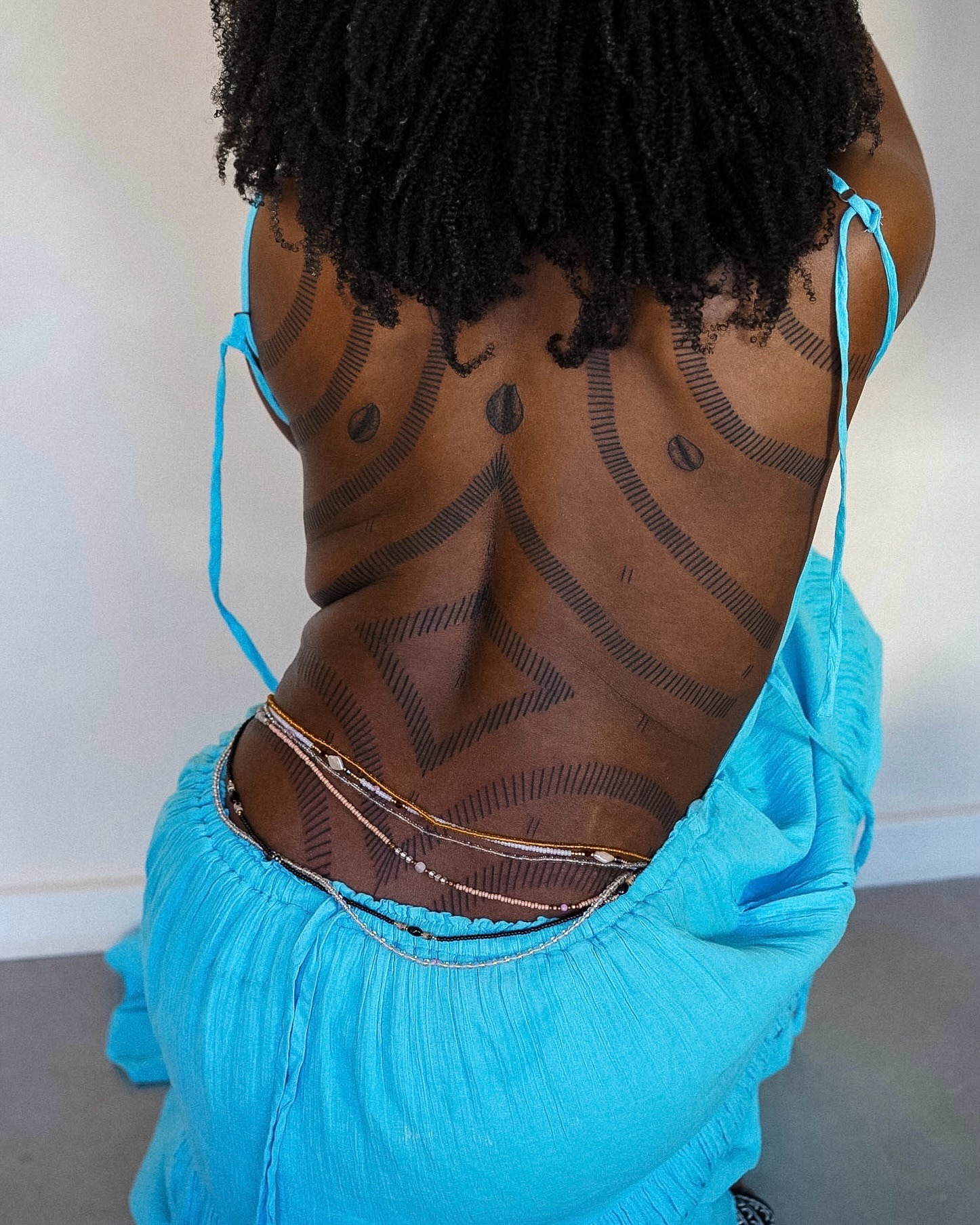
One of the most intriguing aspects of the connection between tattoos and personal style is the symbolism behind the designs and the styles to which people are drawn. Emmanuel Item runs ỌJI HUB, a studio in Vienna—ọjị means kola nut in Igbo—and believes clients need to find the right tattooist to express themselves fully.
He never repeats a tattoo, and his work contains extensive cultural symbolism. According to him, most of his clients want to “express their connection to their ancestral roots on the African continent, often through symbolic elements from their cultures.”
He has also observed the effect of tattoo trends on personal style: “You will see a certain ‘trashy’ adaptation of ’90s tribal tattoos, now called cybersigilism, that became super popular during my years living in Berlin.”
The cyclical nature of fashion trends and the permanence of tattoos create an intriguing style contradiction. Bizzyaski Tattoos noted that popular design preferences often differ by gender. His male clients mostly favour religious imagery such as praying hands, Jesus and crucifixes, while his female clients are drawn to flowers, phoenixes and butterflies.
Inked by Shallz says her clients “are drawn towards tattoos that have personal meaning, mostly names, dates or symbols that remind them of people they love or stories that mean a lot to them.”
Tattoos and the society
Across ancient Egypt and parts of Southeast Asia, tattooing has at different times carried spiritual, religious or protective meanings. Today, some evangelical Christians interpret biblical teachings as prohibiting tattoos, while many Sunni Islamic scholars consider permanent tattoos as haram. Christianity and Islam are Nigeria’s predominant religions, and these beliefs continue to shape public perceptions of tattoos.
Where, then, is the line between self-expression and socioreligious expectations? The #EndSARS protests of October 2020 brought wider attention to the harassment faced by young Nigerians whose appearance was considered alternative. Such profiling has led to arrests, detention and, in graver cases, deaths. The protests exposed abuses by the Special Anti-Robbery Squad and led to its official disbandment.
Although SARS has officially been disbanded, the stigma remains: tattoos are still frequently viewed as rebellious or immature in Nigeria. I wondered how much room fashion leaves for self-expression when society places limitations on that expression.
Ola’s response was simple: “F***k it all.
“Part of existing authentically is being willing to sit with the discomfort that other people might have about the way you choose to exist. I’m aware that negative views exist, but they don’t determine what I put on my body. I’m very attached to my identity, and other people’s perceptions cannot take that away from me.”
Since she began tattooing in 2023, Inked by Shallz has witnessed clients being harassed or questioned by the authorities because of their tattoos.
“I’ve had several incidents where clients came back to cover up tattoos of birds I had done for them earlier, not because they didn’t like them, but because they had been harassed by police officers who accused them of belonging to a certain cult associated with birds. Another client came to cover up the number 777 because some cultists threatened to cut off his hand if he kept the tattoo.”
She added that tattoos are increasingly being viewed through a less rebellious lens. Some clients are becoming comfortable with visible placements, while others now bring their parents to tattoo appointments. These, she said, are some of her favourite sessions.
Mofe, a visual artist from Lagos, rarely encounters trouble from members of the public or the authorities, partly because of the size and placement of his tattoos. Tunta, who has 12 tattoos, sometimes highlights “certain tattoos or makes them more visible.” Societal expectations, however, do not affect her tattoo choices.
For her, “Getting tattoos makes me feel like my body is mine, and I can do whatever I like with it.”
Emmanuel attributes many of the negative stereotypes surrounding tattoos in Nigeria and across much of Africa to colonialism.
“Colonialism, religion and certain individuals spread pseudoscience about tattoos,” he said. “This created a negative stigma that has become deeply embedded in cultures around the world.”
He nevertheless believes young people can give tattoos a more positive image in society.
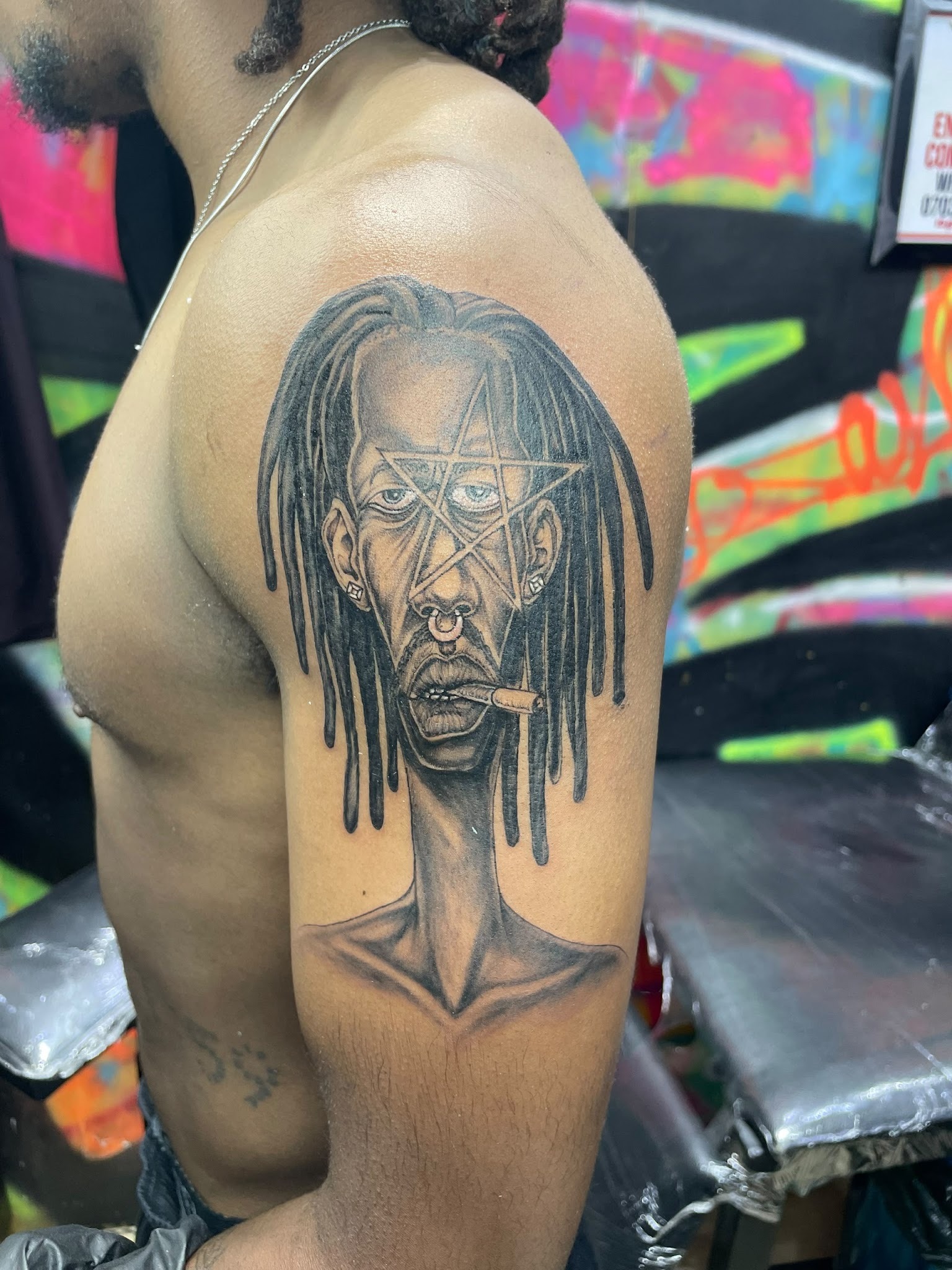
Bizzyaski Tattoos operates studios in Nigeria and New York, and he noted little difference between how tattoos are received by his clients at home and abroad.
Speaking about the police stereotyping tattooed people as criminals, Bizzyaski said that when clients do not know their rights as Nigerians, societal pressure can heavily influence the tattoo styles they choose.
Tattoos in fashion: A hit or a miss?
The answer to “Are tattoos fashionable?” is complicated because tattoos are deeply subjective. Different people get them for different reasons.
Mofe believes tattoos can be fashionable. He explained it through an interior-design metaphor—a telling choice, given his work in production design: “It’s like a plain wall versus a mural wall. It can make a person more visually interesting.”
Inked by Shallz insists that tattoos do not exist separately from fashion: “Fashion isn’t just about what you put on your body but also how you present your body. Tattoos can completely change how a look comes together. They can be the main statement or they can feel delicate, like an accessory.”
Ola believes tattoos contribute to her style, while Tunta says they are not necessarily central to hers.
Tattoos exist on a subjective plane, inviting different opinions into the conversation. Yet reducing them to a debate about whether they are stylish sweeps their culturally rich history under the rug. Tattooing has existed for thousands of years. Like other forms of visual art, it transcends fashion and style.
Cover Credits: unorthodox reviews via Instagram


.png)

