The Black Beauty Architects Behind the Met

Authored by
Every iconic Met face starts somewhere. More often than not, in the hands of Black beauty artists.

The Met Gala has always sold fantasy. Every first Monday in May, fashion’s most powerful names climb those museum steps dressed as references, rebellions, and walking mood boards, each look carefully engineered to dominate headlines. By morning, best-dressed roundups, reaction memes, and zoomed-in carpet shots have already decided who “understood the assignment” and who didn’t. But while designers often take center stage in the conversation, there’s another layer of authorship hiding in plain sight–one that lives in skin prep, foundation mixes, perfectly placed shimmer, and the kind of glow that survives a hundred camera flashes. Before the dress, the fittings, the flashbulbs and the Vogue slideshows, there’s the canvas: the face. 

And more often than not, some of the most unforgettable faces at the Met begin in the hands of Black beauty artists who understand not just makeup, but skin, light, texture, tone and presence. Artists who know that glam isn’t simply about looking expensive, but about looking remembered. For decades, Black makeup artists have quietly shaped the language of red carpet beauty, often without the same visibility as the celebrities or fashion houses they help elevate. But if the 2026 Met Gala proved anything, it’s that some of the night’s most defining beauty moments weren’t created under the spotlight. They were created long before it. 

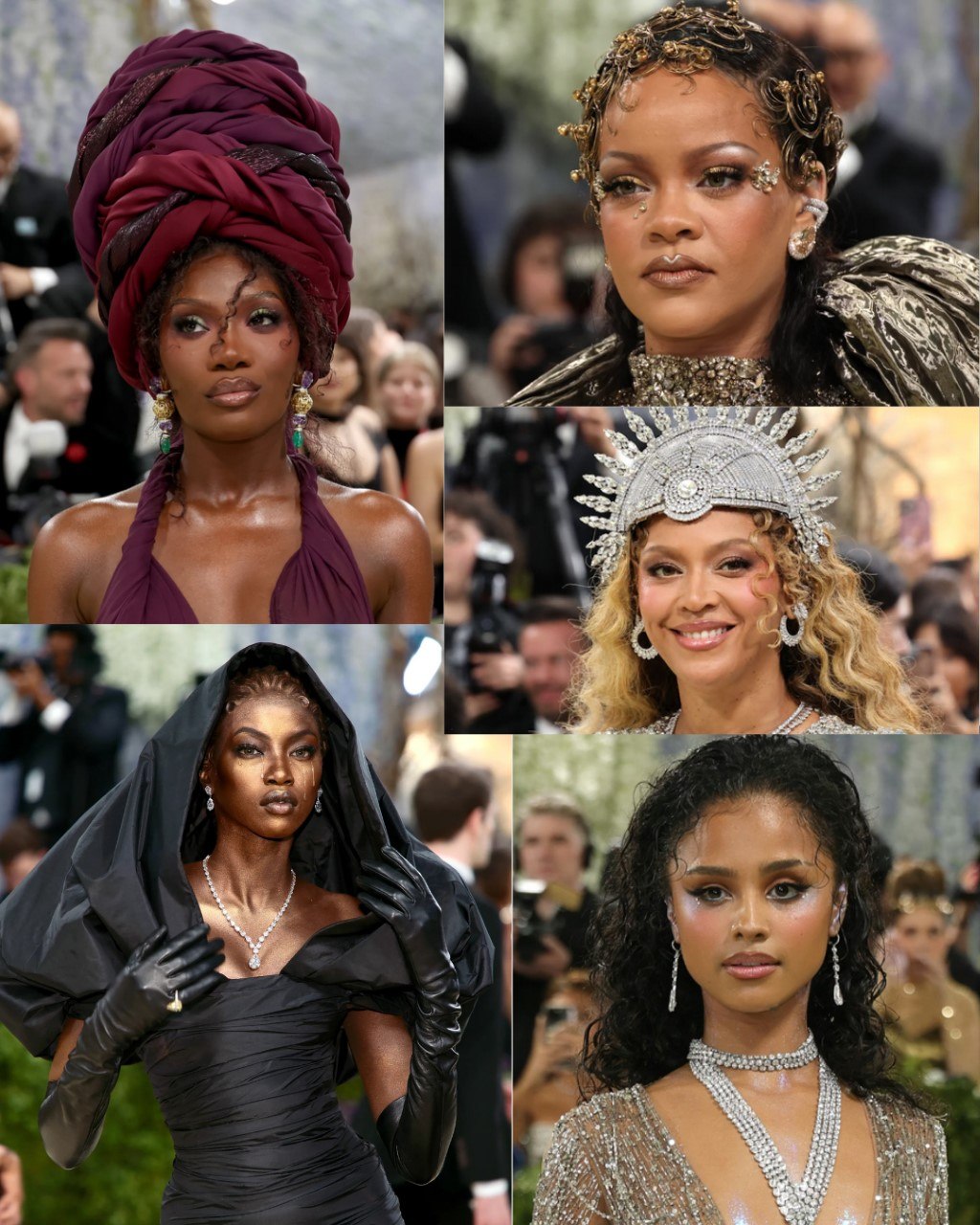
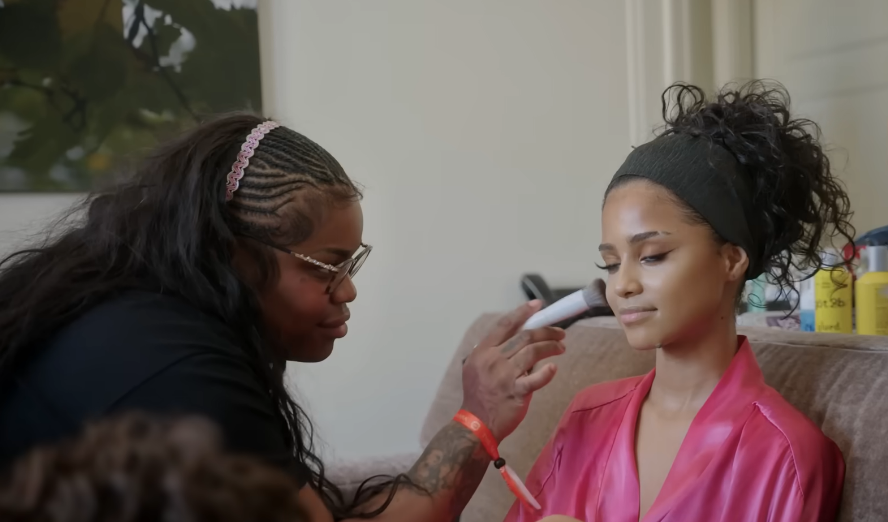
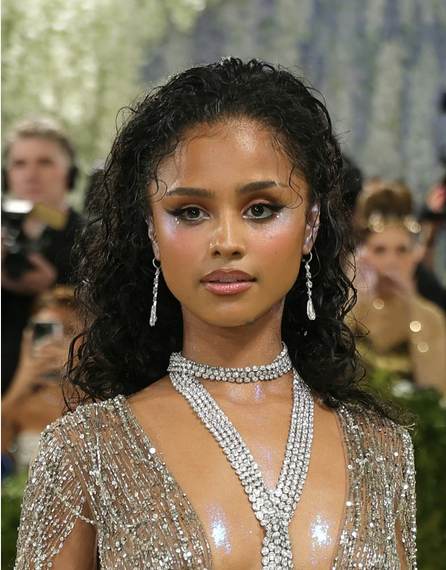
Among this year’s standouts was Ngozi Esther Edeme, better known as Painted by Esther, whose work on Tyla felt quietly magnetic. Nothing about the look screamed for attention, yet it was impossible to ignore. The skin was luminous without looking overworked, radiant without feeling artificial, and in many ways, that restraint became its power. For the Nigerian-born, UK-based artist, Edeme represents a generation of African beauty artists bringing a different kind of precision to global fashion spaces, one rooted not in trends, but in an intimate understanding of melanin. Her extensive portfolio also includes fan-favorites such as Naomi Campbell, Viola Davis, Olandria and more. 
‍

MUA Esther Edeme prepares Tyla for the 2026 Met Gala 
Tyla, Credit: Michael Loccisano/GA/The Hollywood Reporter/Getty Images 

Artists like Edeme are walking through doors that artists like Sir John spent years forcing open. Through years of shaping Beyoncé’s Renaissance-era glow, Super Bowl glam, and countless red carpet moments, he has helped redefine what Black luxury beauty could look like on the world stage. His signature skin that breathes, glow that feels intentional, glamour that never over-explains itself, has become so embedded in modern celebrity beauty that it almost feels invisible. But influence often works like that. You stop noticing it because it’s everywhere.

Beyoncé, Credit: Julian Hamilton/Getty Images 

That same poise showed up in Chelsea Uchenna’s work on longtime facebeat client Doechii, one of the freshest beauty moments of the night. Sharp liner, lifted skin, and a softly sculpted complexion gave the rapper a look that felt equal parts futuristic and unmistakably her. There was structure, edge, and just enough attitude to keep the look from feeling safe. Uchenna understands that the best makeup doesn’t erase personality–it amplifies it. In a space where image can sometimes overpower individuality, her work made sure the woman behind the glam never disappeared.

Doechii, Credit: John Shearer 

Afro-Latino artist Hector Espinal approached beauty from another angle entirely, helping create one of the evening’s most sculptural celebrity faces with Rihanna. Metallic finishes, dimension, controlled drama–Espinal’s work felt less like makeup and more like visual storytelling. His artistry sits at the intersection of editorial beauty and cultural identity, proving that Black beauty doesn’t belong to one geography or one aesthetic. It keeps evolving and reinventing itself.

Rihanna, Credit: Gilbert Flores/Variety/Getty Images 
Anok Yai, Credit: Gilbert Flores/Variety

When Sheika Daley got her hands on Anok Yai ahead of this year’s Met, the result was iconographic as per usual. The 2025 Model of the Year arrived as a modern Black Madonna–her skin bronzed to near-sculptural perfection, cheekbones lifted with almost architectural precision, and eyes framed in soft metallic tones that caught the light like gilded artwork. Against Balenciaga’s dramatic hooded silhouette, Daley’s beauty direction didn’t simply complement the fashion–it deepened the story, turning Yai into something between fashion muse and living sculpture. 

Laura Harrier, Credit: Taylor Hill | Getty Images

For Harold James, whose work on Laura Harrier delivered one of the evening’s most quietly sophisticated beauty moments. Harrier’s skin looked almost glass-like under the flash; fresh, breathable, impossibly even, while softly defined eyes and a muted lip kept the look feeling effortless rather than overworked. Against the drama of the Met carpet, James chose restraint over excess, proving once again that sometimes the most memorable beauty doesn’t always have to be the loudest in the room.

Angela Basset, Credit: Theo Wargo/FilmMagic/Getty Images

If anyone understands how to make elegance feel cinematic, it’s D’Andre Michael. For Angela Bassett’s 2026 Met appearance, Michael used makeup to tie the entire look together, drawing inspiration from Laura Wheeler Waring’s 1927 portrait Girl in a Pink Dress. With luminous skin, softly sculpted contours, flushed pink tones across the eyes and cheeks, and subtle touches of gold, Bassett looked less red carpet-ready and more like a living portrait. Nothing felt excessive–just polished, intentional, and a beautiful look that completed the story as powerfully as the gown itself.

Ultimately, in a room built to celebrate fashion as art, perhaps it’s only fitting that some of the night’s most powerful masterpieces were never stitched, draped, or tailored at all. They were blended, sculpted, softened, bronzed, and brought to life by artists who understood that sometimes the most unforgettable part of the look is what’s staring back at you. 

IG:@_stanleykilonzo

The Black Beauty Architects Behind the Met

Authored by
This is some text inside of a div block.
Every iconic Met face starts somewhere. More often than not, in the hands of Black beauty artists.

The Met Gala has always sold fantasy. Every first Monday in May, fashion’s most powerful names climb those museum steps dressed as references, rebellions, and walking mood boards, each look carefully engineered to dominate headlines. By morning, best-dressed roundups, reaction memes, and zoomed-in carpet shots have already decided who “understood the assignment” and who didn’t. But while designers often take center stage in the conversation, there’s another layer of authorship hiding in plain sight–one that lives in skin prep, foundation mixes, perfectly placed shimmer, and the kind of glow that survives a hundred camera flashes. Before the dress, the fittings, the flashbulbs and the Vogue slideshows, there’s the canvas: the face. 

And more often than not, some of the most unforgettable faces at the Met begin in the hands of Black beauty artists who understand not just makeup, but skin, light, texture, tone and presence. Artists who know that glam isn’t simply about looking expensive, but about looking remembered. For decades, Black makeup artists have quietly shaped the language of red carpet beauty, often without the same visibility as the celebrities or fashion houses they help elevate. But if the 2026 Met Gala proved anything, it’s that some of the night’s most defining beauty moments weren’t created under the spotlight. They were created long before it. 

Among this year’s standouts was Ngozi Esther Edeme, better known as Painted by Esther, whose work on Tyla felt quietly magnetic. Nothing about the look screamed for attention, yet it was impossible to ignore. The skin was luminous without looking overworked, radiant without feeling artificial, and in many ways, that restraint became its power. For the Nigerian-born, UK-based artist, Edeme represents a generation of African beauty artists bringing a different kind of precision to global fashion spaces, one rooted not in trends, but in an intimate understanding of melanin. Her extensive portfolio also includes fan-favorites such as Naomi Campbell, Viola Davis, Olandria and more. 
‍

MUA Esther Edeme prepares Tyla for the 2026 Met Gala 
Tyla, Credit: Michael Loccisano/GA/The Hollywood Reporter/Getty Images 

Artists like Edeme are walking through doors that artists like Sir John spent years forcing open. Through years of shaping Beyoncé’s Renaissance-era glow, Super Bowl glam, and countless red carpet moments, he has helped redefine what Black luxury beauty could look like on the world stage. His signature skin that breathes, glow that feels intentional, glamour that never over-explains itself, has become so embedded in modern celebrity beauty that it almost feels invisible. But influence often works like that. You stop noticing it because it’s everywhere.
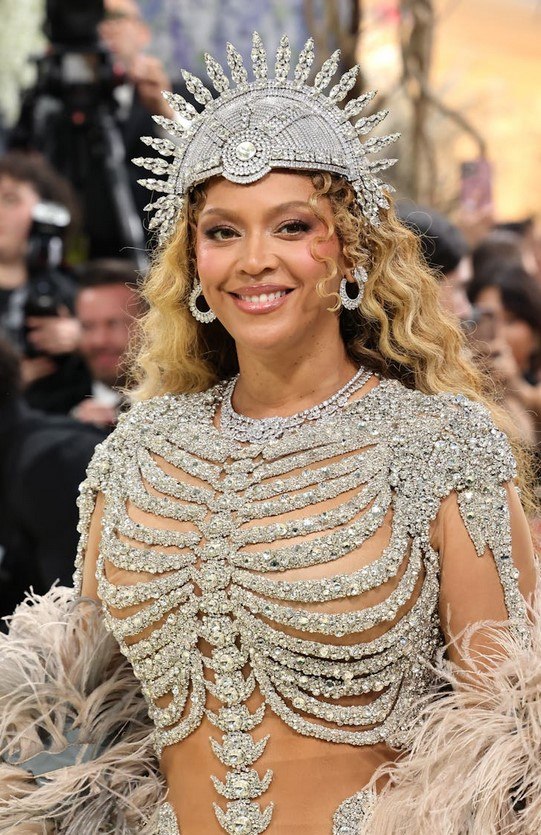
Beyoncé, Credit: Julian Hamilton/Getty Images 

That same poise showed up in Chelsea Uchenna’s work on longtime facebeat client Doechii, one of the freshest beauty moments of the night. Sharp liner, lifted skin, and a softly sculpted complexion gave the rapper a look that felt equal parts futuristic and unmistakably her. There was structure, edge, and just enough attitude to keep the look from feeling safe. Uchenna understands that the best makeup doesn’t erase personality–it amplifies it. In a space where image can sometimes overpower individuality, her work made sure the woman behind the glam never disappeared.
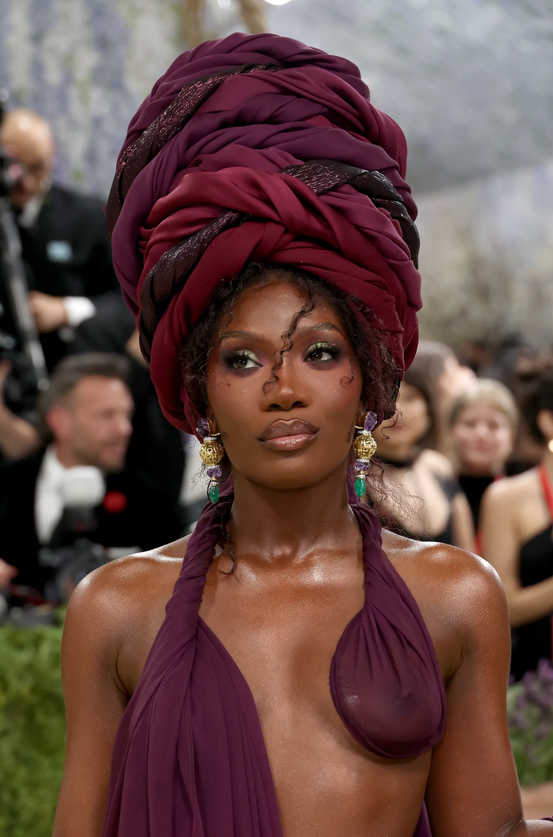
Doechii, Credit: John Shearer 

Afro-Latino artist Hector Espinal approached beauty from another angle entirely, helping create one of the evening’s most sculptural celebrity faces with Rihanna. Metallic finishes, dimension, controlled drama–Espinal’s work felt less like makeup and more like visual storytelling. His artistry sits at the intersection of editorial beauty and cultural identity, proving that Black beauty doesn’t belong to one geography or one aesthetic. It keeps evolving and reinventing itself.
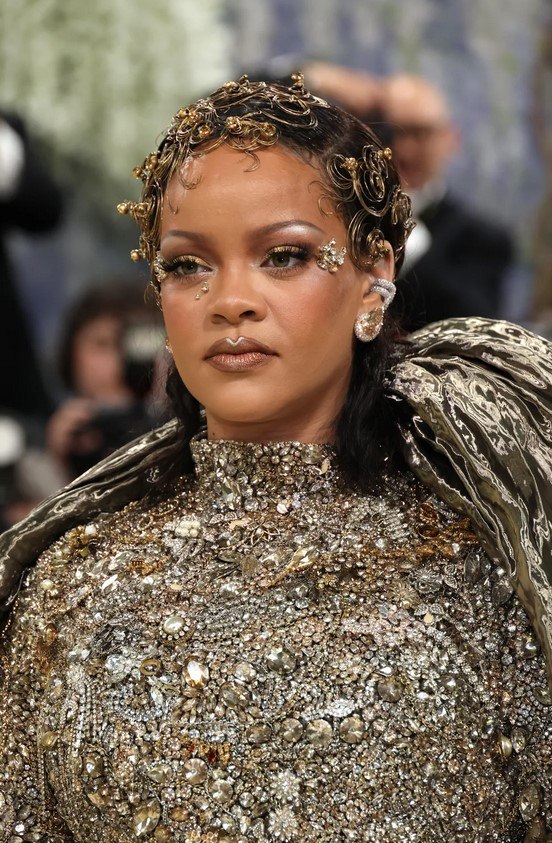
Rihanna, Credit: Gilbert Flores/Variety/Getty Images 
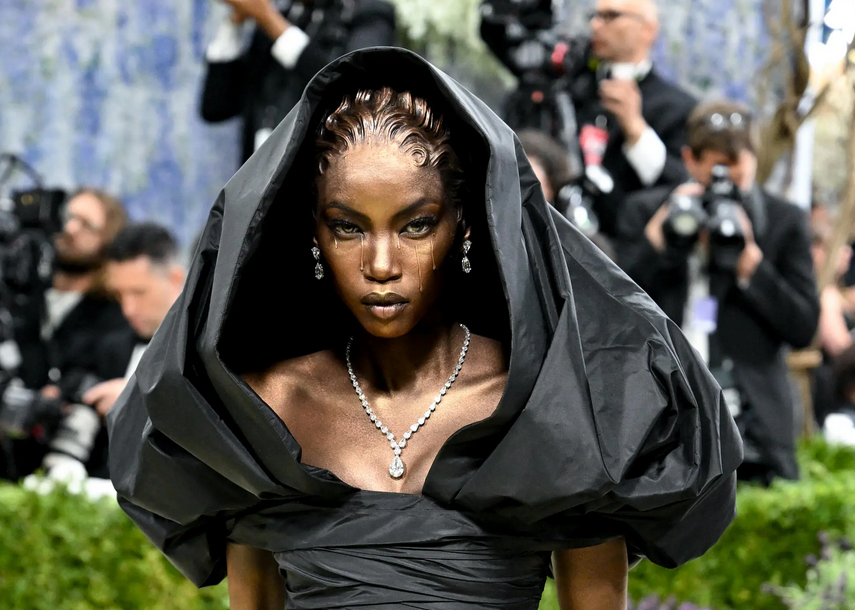
Anok Yai, Credit: Gilbert Flores/Variety

When Sheika Daley got her hands on Anok Yai ahead of this year’s Met, the result was iconographic as per usual. The 2025 Model of the Year arrived as a modern Black Madonna–her skin bronzed to near-sculptural perfection, cheekbones lifted with almost architectural precision, and eyes framed in soft metallic tones that caught the light like gilded artwork. Against Balenciaga’s dramatic hooded silhouette, Daley’s beauty direction didn’t simply complement the fashion–it deepened the story, turning Yai into something between fashion muse and living sculpture. 
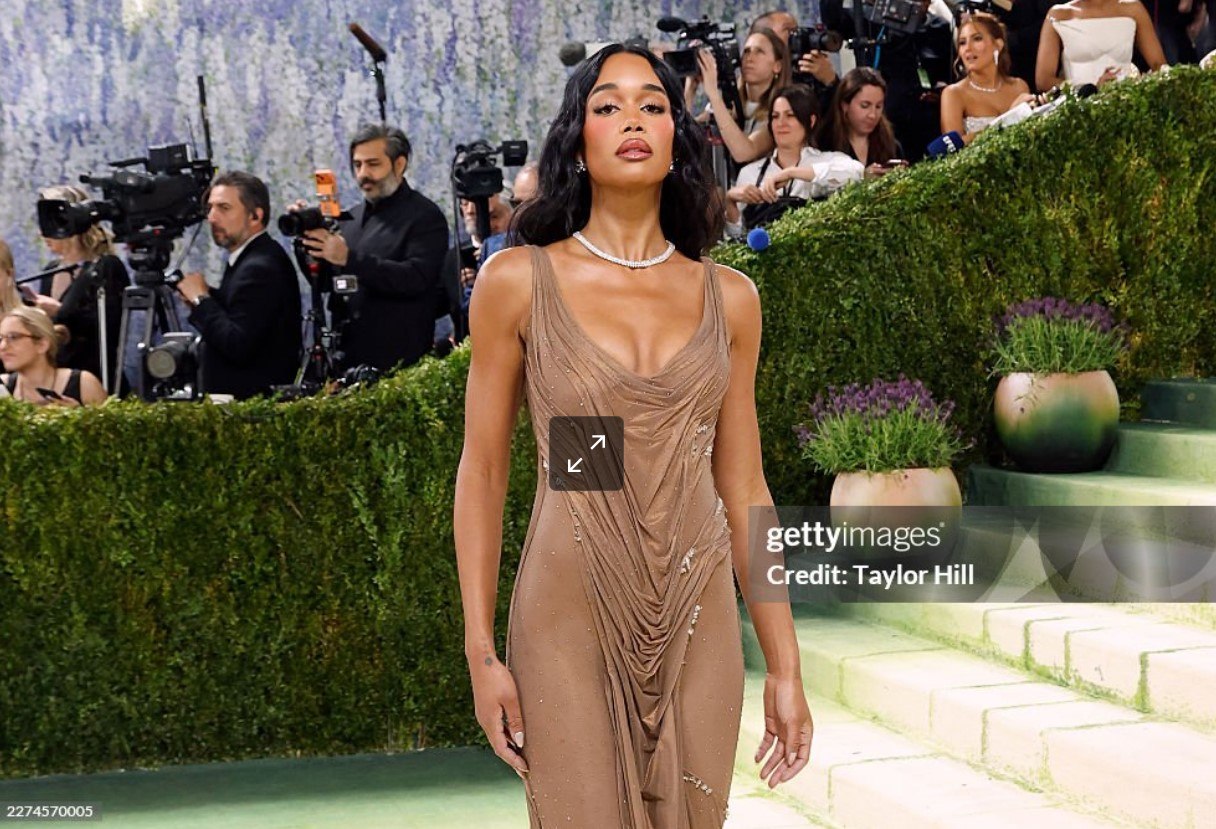
Laura Harrier, Credit: Taylor Hill | Getty Images

For Harold James, whose work on Laura Harrier delivered one of the evening’s most quietly sophisticated beauty moments. Harrier’s skin looked almost glass-like under the flash; fresh, breathable, impossibly even, while softly defined eyes and a muted lip kept the look feeling effortless rather than overworked. Against the drama of the Met carpet, James chose restraint over excess, proving once again that sometimes the most memorable beauty doesn’t always have to be the loudest in the room.
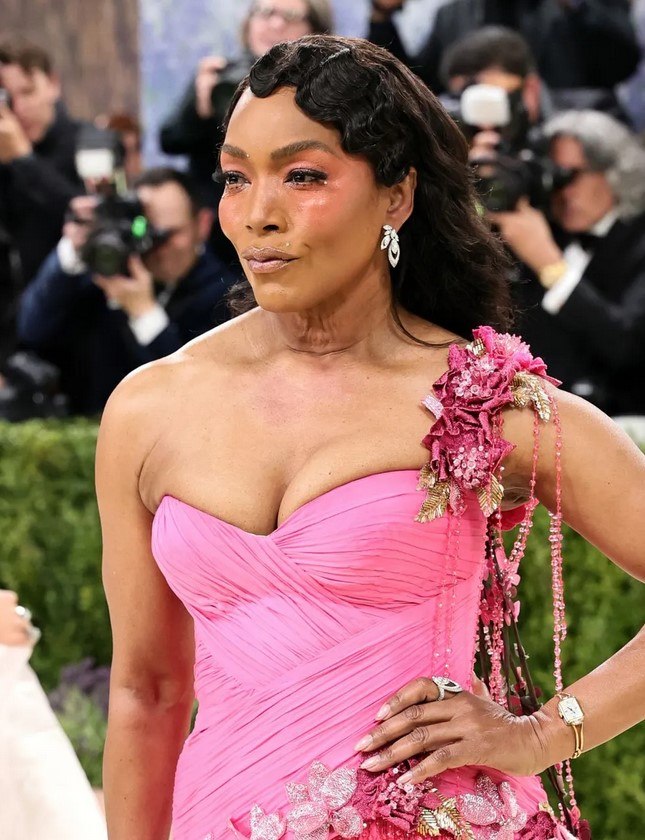
Angela Basset, Credit: Theo Wargo/FilmMagic/Getty Images

If anyone understands how to make elegance feel cinematic, it’s D’Andre Michael. For Angela Bassett’s 2026 Met appearance, Michael used makeup to tie the entire look together, drawing inspiration from Laura Wheeler Waring’s 1927 portrait Girl in a Pink Dress. With luminous skin, softly sculpted contours, flushed pink tones across the eyes and cheeks, and subtle touches of gold, Bassett looked less red carpet-ready and more like a living portrait. Nothing felt excessive–just polished, intentional, and a beautiful look that completed the story as powerfully as the gown itself.

Ultimately, in a room built to celebrate fashion as art, perhaps it’s only fitting that some of the night’s most powerful masterpieces were never stitched, draped, or tailored at all. They were blended, sculpted, softened, bronzed, and brought to life by artists who understood that sometimes the most unforgettable part of the look is what’s staring back at you. 
IG:@_stanleykilonzo

This is some text inside of a div block.

The Black Beauty Architects Behind the Met

Authored by
Every iconic Met face starts somewhere. More often than not, in the hands of Black beauty artists.

The Met Gala has always sold fantasy. Every first Monday in May, fashion’s most powerful names climb those museum steps dressed as references, rebellions, and walking mood boards, each look carefully engineered to dominate headlines. By morning, best-dressed roundups, reaction memes, and zoomed-in carpet shots have already decided who “understood the assignment” and who didn’t. But while designers often take center stage in the conversation, there’s another layer of authorship hiding in plain sight–one that lives in skin prep, foundation mixes, perfectly placed shimmer, and the kind of glow that survives a hundred camera flashes. Before the dress, the fittings, the flashbulbs and the Vogue slideshows, there’s the canvas: the face. 

And more often than not, some of the most unforgettable faces at the Met begin in the hands of Black beauty artists who understand not just makeup, but skin, light, texture, tone and presence. Artists who know that glam isn’t simply about looking expensive, but about looking remembered. For decades, Black makeup artists have quietly shaped the language of red carpet beauty, often without the same visibility as the celebrities or fashion houses they help elevate. But if the 2026 Met Gala proved anything, it’s that some of the night’s most defining beauty moments weren’t created under the spotlight. They were created long before it. 

Among this year’s standouts was Ngozi Esther Edeme, better known as Painted by Esther, whose work on Tyla felt quietly magnetic. Nothing about the look screamed for attention, yet it was impossible to ignore. The skin was luminous without looking overworked, radiant without feeling artificial, and in many ways, that restraint became its power. For the Nigerian-born, UK-based artist, Edeme represents a generation of African beauty artists bringing a different kind of precision to global fashion spaces, one rooted not in trends, but in an intimate understanding of melanin. Her extensive portfolio also includes fan-favorites such as Naomi Campbell, Viola Davis, Olandria and more. 

‍

MUA Esther Edeme prepares Tyla for the 2026 Met Gala 
Tyla, Credit: Michael Loccisano/GA/The Hollywood Reporter/Getty Images 

Artists like Edeme are walking through doors that artists like Sir John spent years forcing open. Through years of shaping Beyoncé’s Renaissance-era glow, Super Bowl glam, and countless red carpet moments, he has helped redefine what Black luxury beauty could look like on the world stage. His signature skin that breathes, glow that feels intentional, glamour that never over-explains itself, has become so embedded in modern celebrity beauty that it almost feels invisible. But influence often works like that. You stop noticing it because it’s everywhere.

Beyoncé, Credit: Julian Hamilton/Getty Images 

That same poise showed up in Chelsea Uchenna’s work on longtime facebeat client Doechii, one of the freshest beauty moments of the night. Sharp liner, lifted skin, and a softly sculpted complexion gave the rapper a look that felt equal parts futuristic and unmistakably her. There was structure, edge, and just enough attitude to keep the look from feeling safe. Uchenna understands that the best makeup doesn’t erase personality–it amplifies it. In a space where image can sometimes overpower individuality, her work made sure the woman behind the glam never disappeared.

Doechii, Credit: John Shearer 

Afro-Latino artist Hector Espinal approached beauty from another angle entirely, helping create one of the evening’s most sculptural celebrity faces with Rihanna. Metallic finishes, dimension, controlled drama–Espinal’s work felt less like makeup and more like visual storytelling. His artistry sits at the intersection of editorial beauty and cultural identity, proving that Black beauty doesn’t belong to one geography or one aesthetic. It keeps evolving and reinventing itself.

Rihanna, Credit: Gilbert Flores/Variety/Getty Images 
Anok Yai, Credit: Gilbert Flores/Variety

When Sheika Daley got her hands on Anok Yai ahead of this year’s Met, the result was iconographic as per usual. The 2025 Model of the Year arrived as a modern Black Madonna–her skin bronzed to near-sculptural perfection, cheekbones lifted with almost architectural precision, and eyes framed in soft metallic tones that caught the light like gilded artwork. Against Balenciaga’s dramatic hooded silhouette, Daley’s beauty direction didn’t simply complement the fashion–it deepened the story, turning Yai into something between fashion muse and living sculpture. 

Laura Harrier, Credit: Taylor Hill | Getty Images

For Harold James, whose work on Laura Harrier delivered one of the evening’s most quietly sophisticated beauty moments. Harrier’s skin looked almost glass-like under the flash; fresh, breathable, impossibly even, while softly defined eyes and a muted lip kept the look feeling effortless rather than overworked. Against the drama of the Met carpet, James chose restraint over excess, proving once again that sometimes the most memorable beauty doesn’t always have to be the loudest in the room.

Angela Basset, Credit: Theo Wargo/FilmMagic/Getty Images

If anyone understands how to make elegance feel cinematic, it’s D’Andre Michael. For Angela Bassett’s 2026 Met appearance, Michael used makeup to tie the entire look together, drawing inspiration from Laura Wheeler Waring’s 1927 portrait Girl in a Pink Dress. With luminous skin, softly sculpted contours, flushed pink tones across the eyes and cheeks, and subtle touches of gold, Bassett looked less red carpet-ready and more like a living portrait. Nothing felt excessive–just polished, intentional, and a beautiful look that completed the story as powerfully as the gown itself.

Ultimately, in a room built to celebrate fashion as art, perhaps it’s only fitting that some of the night’s most powerful masterpieces were never stitched, draped, or tailored at all. They were blended, sculpted, softened, bronzed, and brought to life by artists who understood that sometimes the most unforgettable part of the look is what’s staring back at you. 

IG:@_stanleykilonzo

Other Stories
London
London
Lagos
London
Newyork
London
Shop
Join the community.
You are now subscribed to receive updates.
Oops! Something went wrong while submitting the form.