The History of Fête de la Musique

Authored by

Take a look at the long history of the Parisian most famous Summer street party, and where it may head in the future

Every year since 1982, on June 21st, the vibrant streets of France come alive, taken over by musicians and DJs alike, with some performing just outside their apartment windows and creating a gathering where everyone is welcome. This phenomena is called Fête de la Musique, also known as FDLM, and it has created a massive cultural hub across the country as a big f*ck you to institutions and bureaucracy within French creative circles, which for a long time, have made it difficult for emerging talents to persevere in the creative industry However, in light of recent editions it’s worth examining if one can still make that claim.

Fête de la Musique was an idea first derived from American musician Joel Cohen in 1976. It was then developed by the Ministry of Culture, which discovered through a 1982 study that 5 million French people, including one in two young people, played a musical instrument. The premise is simple: if you have a musical gift, take it on the street and let the world know what you’re made of.

In recent decades, the event gained extreme popularity among diasporic communities. The gatherings, filled with emerging musicians and rappers, extended to include up and coming Djs trying to make a name for themselves. This, in turn, resulted in many local artists receiving their “big break” in the music industry through the free marketing and exposure Fête de la Musique brings to their communities. One of such artists is Kim, a French-Martinican Zouk and Afropop singer who rose to prominence during the festival in 2004. Guinean-French artist MHD also utilized the traction of the festival to upscale his Afrotrap series, and eventually became France’s national treasure back in 2016. Both of these acts were French locals with a story to tell who came from communities often disregarded by society.  For the first time, artists from the banlieue had the opportunity to be discovered and garner an audience by circumventing the music industry politics that made it difficult to reach the masses. 
Credit: Marvyn Ngikila (marvyn_07)

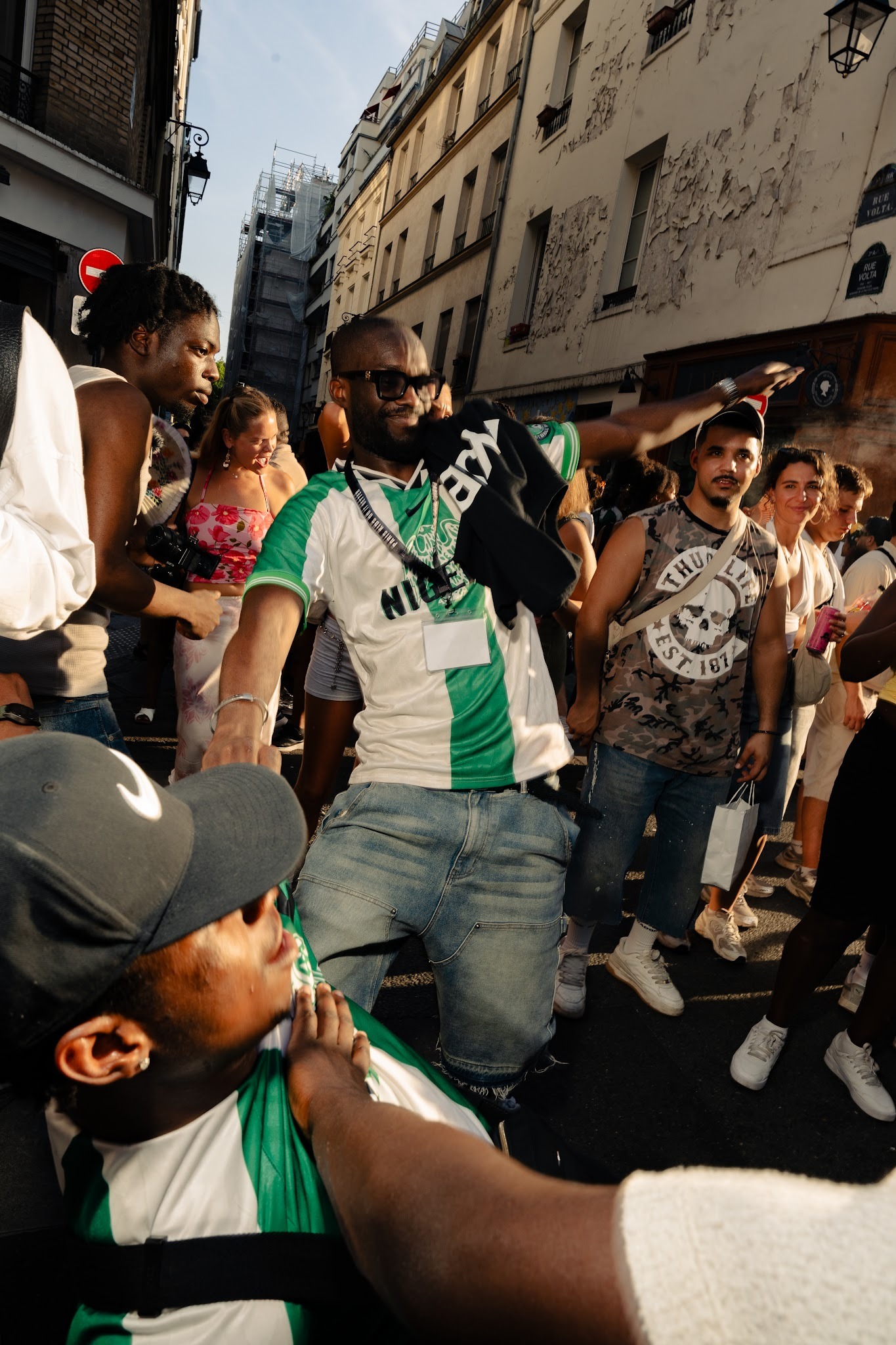
The 2026 edition was arguably the biggest Fête de la Musique we have seen yet, with streets packed to the brim with attendees celebrating under the hard-hitting sun. It is safe to say it has never been this popular. However, the festivities did not come without complaints. The first wave of backlash came before the event started. Locals took to socials to complain about Londoners bringing their sense of excitement, which is fairly different from French culture, with them to FDLM. Regardless of that, most hosts were still welcoming.

The second wave of backlash began due to foreign organizers beginning the festive days earlier than planned. These organizers came with their own lineup, often not including local DJs and artists. This was taken by the locals with mixed reactions. Some expressed shock at the organizations, stating that Londoners were taking over Fête de la Musique, while others credited the organizers for their strategy, stating local organizers should take notes and follow suit. Whether one was for or against the change, it was clear the festive would be overcrowded.

This then hints at the final backlash, Fête de la Musique moving away from what it originally represented. With a lot of investors and established artists taking the stage, it leaves little space for emerging local acts to get involved and noticed. What once felt like an opportunity to discover new artists has visibly shrunken. Arguably, this year had more street parties than ever, and as a result, those who were supposed to receive their big break ended up underwhelmed. Many locals felt like it had begun resembling a commercialized festival, and no longer felt like the street parties many grew up adoring.

Noticeable acts who performed but fell massively under the radar during the 2026 Fête de la Musique were, for example, 63OG, a Cameroon-French rapper with incredible musical range. Another was Jeune Morty, an Ivorian-French new-gen vocalist who had one of the most memorable French bangers of this year with Ivoire Feeling”. Another worth mentioning was (D)Juno, a Congolese-French singer who has done remarkable numbers with her breakout hit BB Bringue”. Some might say they were all overshadowed by the presence of established artists, such as Tayc, Tiakola and Theodora, who performed amongst them.

Like past occurrences, this moment should have been their big break, their rise to stardom, but it seemingly did the opposite. Local artists, emerging musicians, and small-time DJs were not the center of this Fête de la Musique. Instead, established artists, commercialized events, and foreign organizers took over. It left little room for new acts to find a new audience. This is a vast shift from its origins and what FDLM initially intended to do, making participants wonder where the festive is heading in the coming years and whether it still holds a place in the heart of their community.

Credit: Marvyn Ngikila (marvyn_07)
The History of Fête de la Musique

Authored by
This is some text inside of a div block.

Take a look at the long history of the Parisian most famous Summer street party, and where it may head in the future

Every year since 1982, on June 21st, the vibrant streets of France come alive, taken over by musicians and DJs alike, with some performing just outside their apartment windows and creating a gathering where everyone is welcome. This phenomena is called Fête de la Musique, also known as FDLM, and it has created a massive cultural hub across the country as a big f*ck you to institutions and bureaucracy within French creative circles, which for a long time, have made it difficult for emerging talents to persevere in the creative industry However, in light of recent editions it’s worth examining if one can still make that claim.

Fête de la Musique was an idea first derived from American musician Joel Cohen in 1976. It was then developed by the Ministry of Culture, which discovered through a 1982 study that 5 million French people, including one in two young people, played a musical instrument. The premise is simple: if you have a musical gift, take it on the street and let the world know what you’re made of.

In recent decades, the event gained extreme popularity among diasporic communities. The gatherings, filled with emerging musicians and rappers, extended to include up and coming Djs trying to make a name for themselves. This, in turn, resulted in many local artists receiving their “big break” in the music industry through the free marketing and exposure Fête de la Musique brings to their communities. One of such artists is Kim, a French-Martinican Zouk and Afropop singer who rose to prominence during the festival in 2004. Guinean-French artist MHD also utilized the traction of the festival to upscale his Afrotrap series, and eventually became France’s national treasure back in 2016. Both of these acts were French locals with a story to tell who came from communities often disregarded by society.  For the first time, artists from the banlieue had the opportunity to be discovered and garner an audience by circumventing the music industry politics that made it difficult to reach the masses. 

Credit: Marvyn Ngikila (marvyn_07)

The 2026 edition was arguably the biggest Fête de la Musique we have seen yet, with streets packed to the brim with attendees celebrating under the hard-hitting sun. It is safe to say it has never been this popular. However, the festivities did not come without complaints. The first wave of backlash came before the event started. Locals took to socials to complain about Londoners bringing their sense of excitement, which is fairly different from French culture, with them to FDLM. Regardless of that, most hosts were still welcoming.

The second wave of backlash began due to foreign organizers beginning the festive days earlier than planned. These organizers came with their own lineup, often not including local DJs and artists. This was taken by the locals with mixed reactions. Some expressed shock at the organizations, stating that Londoners were taking over Fête de la Musique, while others credited the organizers for their strategy, stating local organizers should take notes and follow suit. Whether one was for or against the change, it was clear the festive would be overcrowded.

This then hints at the final backlash, Fête de la Musique moving away from what it originally represented. With a lot of investors and established artists taking the stage, it leaves little space for emerging local acts to get involved and noticed. What once felt like an opportunity to discover new artists has visibly shrunken. Arguably, this year had more street parties than ever, and as a result, those who were supposed to receive their big break ended up underwhelmed. Many locals felt like it had begun resembling a commercialized festival, and no longer felt like the street parties many grew up adoring.

Noticeable acts who performed but fell massively under the radar during the 2026 Fête de la Musique were, for example, 63OG, a Cameroon-French rapper with incredible musical range. Another was Jeune Morty, an Ivorian-French new-gen vocalist who had one of the most memorable French bangers of this year with Ivoire Feeling”. Another worth mentioning was (D)Juno, a Congolese-French singer who has done remarkable numbers with her breakout hit BB Bringue”. Some might say they were all overshadowed by the presence of established artists, such as Tayc, Tiakola and Theodora, who performed amongst them.

Like past occurrences, this moment should have been their big break, their rise to stardom, but it seemingly did the opposite. Local artists, emerging musicians, and small-time DJs were not the center of this Fête de la Musique. Instead, established artists, commercialized events, and foreign organizers took over. It left little room for new acts to find a new audience. This is a vast shift from its origins and what FDLM initially intended to do, making participants wonder where the festive is heading in the coming years and whether it still holds a place in the heart of their community.

Credit: Marvyn Ngikila (marvyn_07)

This is some text inside of a div block.

The History of Fête de la Musique

Authored by

Take a look at the long history of the Parisian most famous Summer street party, and where it may head in the future

Every year since 1982, on June 21st, the vibrant streets of France come alive, taken over by musicians and DJs alike, with some performing just outside their apartment windows and creating a gathering where everyone is welcome. This phenomena is called Fête de la Musique, also known as FDLM, and it has created a massive cultural hub across the country as a big f*ck you to institutions and bureaucracy within French creative circles, which for a long time, have made it difficult for emerging talents to persevere in the creative industry However, in light of recent editions it’s worth examining if one can still make that claim.

Fête de la Musique was an idea first derived from American musician Joel Cohen in 1976. It was then developed by the Ministry of Culture, which discovered through a 1982 study that 5 million French people, including one in two young people, played a musical instrument. The premise is simple: if you have a musical gift, take it on the street and let the world know what you’re made of.

In recent decades, the event gained extreme popularity among diasporic communities. The gatherings, filled with emerging musicians and rappers, extended to include up and coming Djs trying to make a name for themselves. This, in turn, resulted in many local artists receiving their “big break” in the music industry through the free marketing and exposure Fête de la Musique brings to their communities. One of such artists is Kim, a French-Martinican Zouk and Afropop singer who rose to prominence during the festival in 2004. Guinean-French artist MHD also utilized the traction of the festival to upscale his Afrotrap series, and eventually became France’s national treasure back in 2016. Both of these acts were French locals with a story to tell who came from communities often disregarded by society.  For the first time, artists from the banlieue had the opportunity to be discovered and garner an audience by circumventing the music industry politics that made it difficult to reach the masses. 

Credit: Marvyn Ngikila (marvyn_07)

The 2026 edition was arguably the biggest Fête de la Musique we have seen yet, with streets packed to the brim with attendees celebrating under the hard-hitting sun. It is safe to say it has never been this popular. However, the festivities did not come without complaints. The first wave of backlash came before the event started. Locals took to socials to complain about Londoners bringing their sense of excitement, which is fairly different from French culture, with them to FDLM. Regardless of that, most hosts were still welcoming.

The second wave of backlash began due to foreign organizers beginning the festive days earlier than planned. These organizers came with their own lineup, often not including local DJs and artists. This was taken by the locals with mixed reactions. Some expressed shock at the organizations, stating that Londoners were taking over Fête de la Musique, while others credited the organizers for their strategy, stating local organizers should take notes and follow suit. Whether one was for or against the change, it was clear the festive would be overcrowded.

This then hints at the final backlash, Fête de la Musique moving away from what it originally represented. With a lot of investors and established artists taking the stage, it leaves little space for emerging local acts to get involved and noticed. What once felt like an opportunity to discover new artists has visibly shrunken. Arguably, this year had more street parties than ever, and as a result, those who were supposed to receive their big break ended up underwhelmed. Many locals felt like it had begun resembling a commercialized festival, and no longer felt like the street parties many grew up adoring.

Noticeable acts who performed but fell massively under the radar during the 2026 Fête de la Musique were, for example, 63OG, a Cameroon-French rapper with incredible musical range. Another was Jeune Morty, an Ivorian-French new-gen vocalist who had one of the most memorable French bangers of this year with Ivoire Feeling”. Another worth mentioning was (D)Juno, a Congolese-French singer who has done remarkable numbers with her breakout hit BB Bringue”. Some might say they were all overshadowed by the presence of established artists, such as Tayc, Tiakola and Theodora, who performed amongst them.

Like past occurrences, this moment should have been their big break, their rise to stardom, but it seemingly did the opposite. Local artists, emerging musicians, and small-time DJs were not the center of this Fête de la Musique. Instead, established artists, commercialized events, and foreign organizers took over. It left little room for new acts to find a new audience. This is a vast shift from its origins and what FDLM initially intended to do, making participants wonder where the festive is heading in the coming years and whether it still holds a place in the heart of their community.

Credit: Marvyn Ngikila (marvyn_07)

Other Stories
London
London
Lagos
London
Newyork
London
Shop
Join the community.
You are now subscribed to receive updates.
Oops! Something went wrong while submitting the form.