.svg)

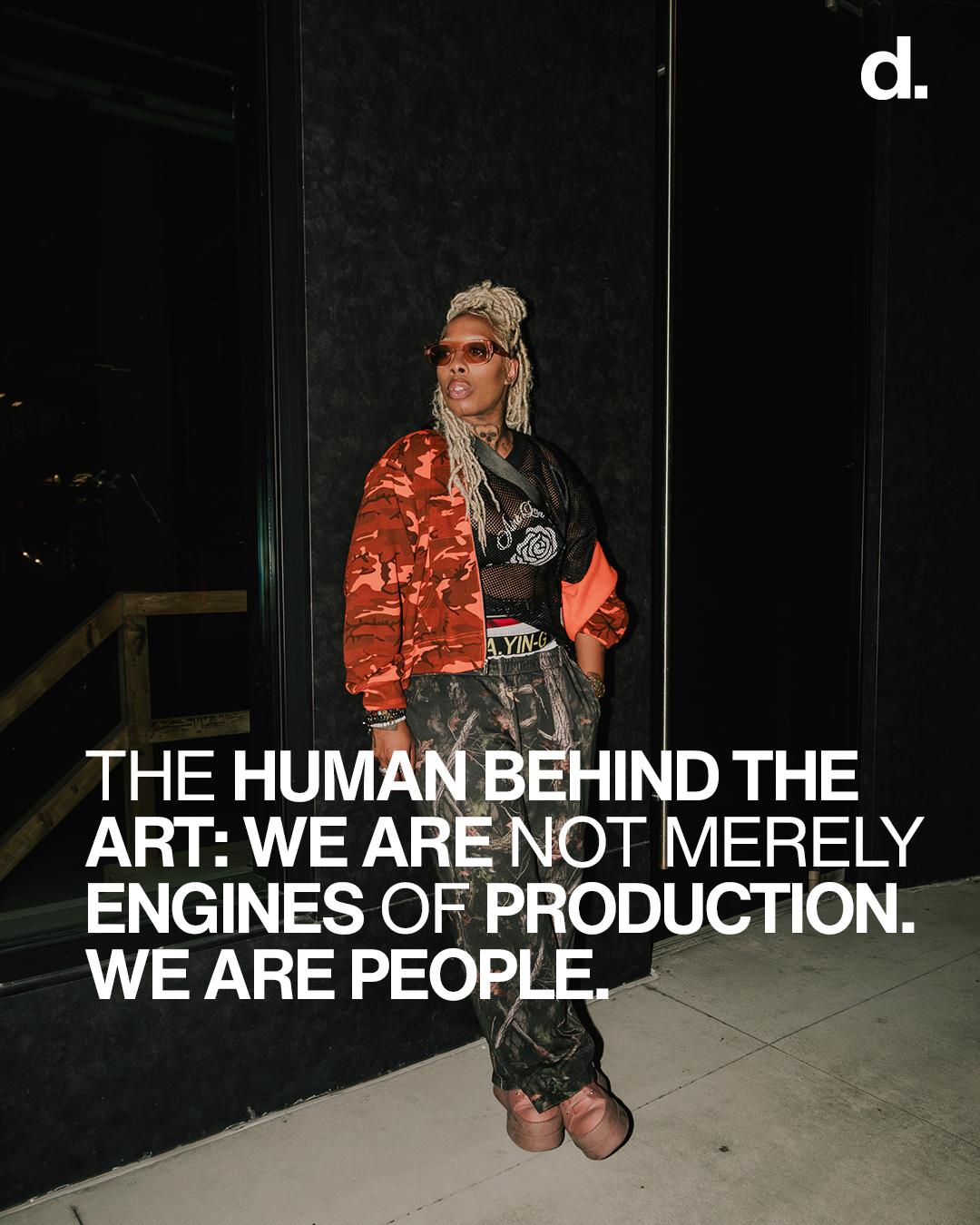
The New York City sky turns a heavy, slate grey early these days. It is that specific time of year when the days are short, the light is scarce, and the cold bites through even the heaviest layers. Riding through the city this week, watching the winter settle in, I found myself overcome by a sudden, visceral wave of emotion.
Perhaps it is the season, or perhaps it is the inevitable reflection that comes with the end of a long year, looking at the synopsis of the last twelve months, tallying the things I have accomplished against the things left incomplete. To the outside world, I am a celebrity stylist and a fashion director. I am the person responsible for the polish and the perfection. But today, stepping into this new arena of journalism, I am stripping away the layers to speak on something that has been weighing on my spirit.
I am a person who believes fiercely in intention. In my business and my personal life, transparency is my baseline. My moral compass is the center from which every decision extends; I strive to leave a positive impact in every room I enter. But I am not perfect. I am dyslexic. I am tired. And I am realizing that in the pursuit of creating beauty for others, we often forget to extend grace to ourselves.
In the creative industry, there is a silent, pervasive assumption that if the output is beautiful, the creator must be fine. Because I dress well, because my nails and hair are done, because I am consistent in the gym and my business appears to thrive, the world assumes perfection. They assume I am a machine that runs on inspiration and requires no maintenance.
Rarely does anyone ask, "How are you?" without chasing it immediately with, "Can you do this for me?"
Too often, the question isn't even asked at all. The conversation jumps straight to the favor, the demand, the deadline. I want to speak on behalf of all creatives when I say that we are not merely engines of production. We are people. We live, we breathe, and we have lives outside of the things we make.
We need to fundamentally shift how we view talent. We must stop viewing creatives as disposable commodities or vending machines for ideas. It takes an immense amount of spiritual and physical energy to produce something that has never existed before. To see a vision in your mind, bring it to fruition, monetize it, and build a life around it is a feat of endurance. It is a specific kind of labor that only we can do, yet the infrastructure rarely supports the human doing the work.
Many of us do not have the safety net of corporate jobs with built-in healthcare. There is no "off" switch in this life. We rarely disconnect because there is no time card to punch. Even when we try to take a moment to breathe, our phones are often blown up by texts and emails demanding immediate attention, blurring the lines between our livelihood and our sanity.
I want to urge us all to build a habit of pausing. Before you put unnecessary pressure on the next creative you work with, or any human being, for that matter, ask yourself what they might be carrying. In this industry, we often spend more time with our business relationships than we do with our own blood families. These relationships matter. But we must remember that the person on the other end of that email is a mother, a brother, a sister, a father, a daughter.
Sometimes, a slow response has nothing to do with you. It might mean that person is feeling unsafe, overwhelmed, or is simply having a human moment that they don't feel free to share. There is a terrifying fear in our industry that if we admit we are struggling, if we admit we are having an off week or month, we will be deemed "unstable." We worry that our livelihood is at risk if the mask slips. We feel forced to choose between being professional and being honest. This needs to stop.
As we look toward the future and prepare for the years ahead, I am asking for a return to humanity. I am asking you to look past what a person can do for you and see the person standing there. We all deserve time to be in a safe space. We all need a minute to decompress.
Picture Credits: @yb_captures




.png)

