.svg)

.png)
Across the vast belt of the Sahara and Sahel — from Niger to Chad, Sudan to Somalia, and across Mauritania — lives the fictional nomadic people known as the Khal’rin. Their entire creative identity is built around camel-hair art, an expression shaped by desert life, spiritual memory, and survival.
They say:
“The desert gives the camel, the camel gives the culture.”
.JPG)
ORIGINS — Where the Art Began
Legend says that the first Khal’rin artist, Sahelah the Weaver, survived a fierce sandstorm by burying herself in a tent woven from camel hair. When she emerged the next morning, the wind had carved natural patterns into the fabric — shapes that resembled dunes, stars, and desert spirits.
Inspired by this “gift of the wind,” the Khal’rin began trimming, weaving, and painting camel hair as a way to communicate with the desert and honor the animals that carried them through it.
To this day, every Khal’rin child is taught:
“The wind shapes the hair, and the hair teaches the hand.”
ART FORMS OF THE KHAL’RIN
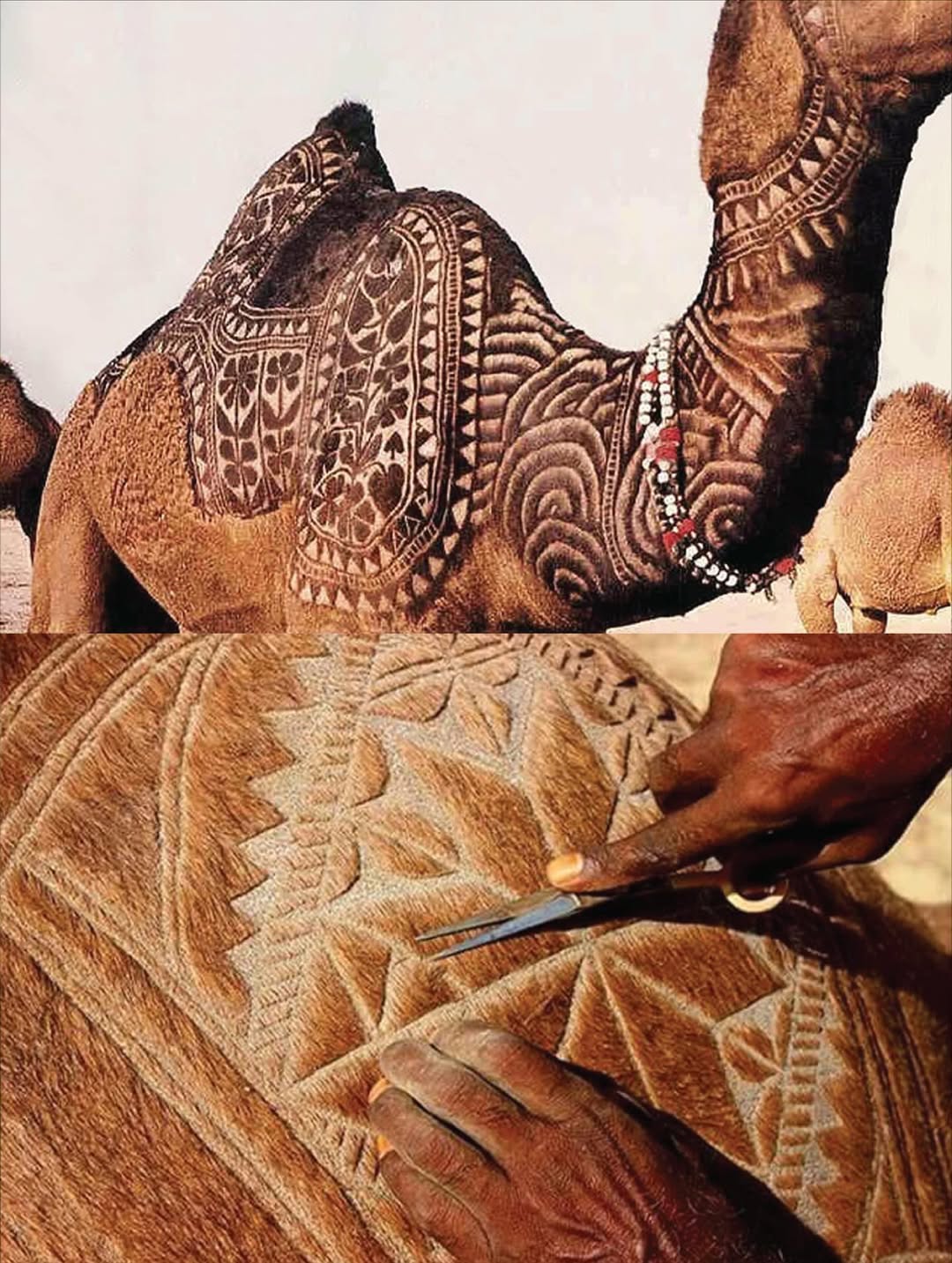
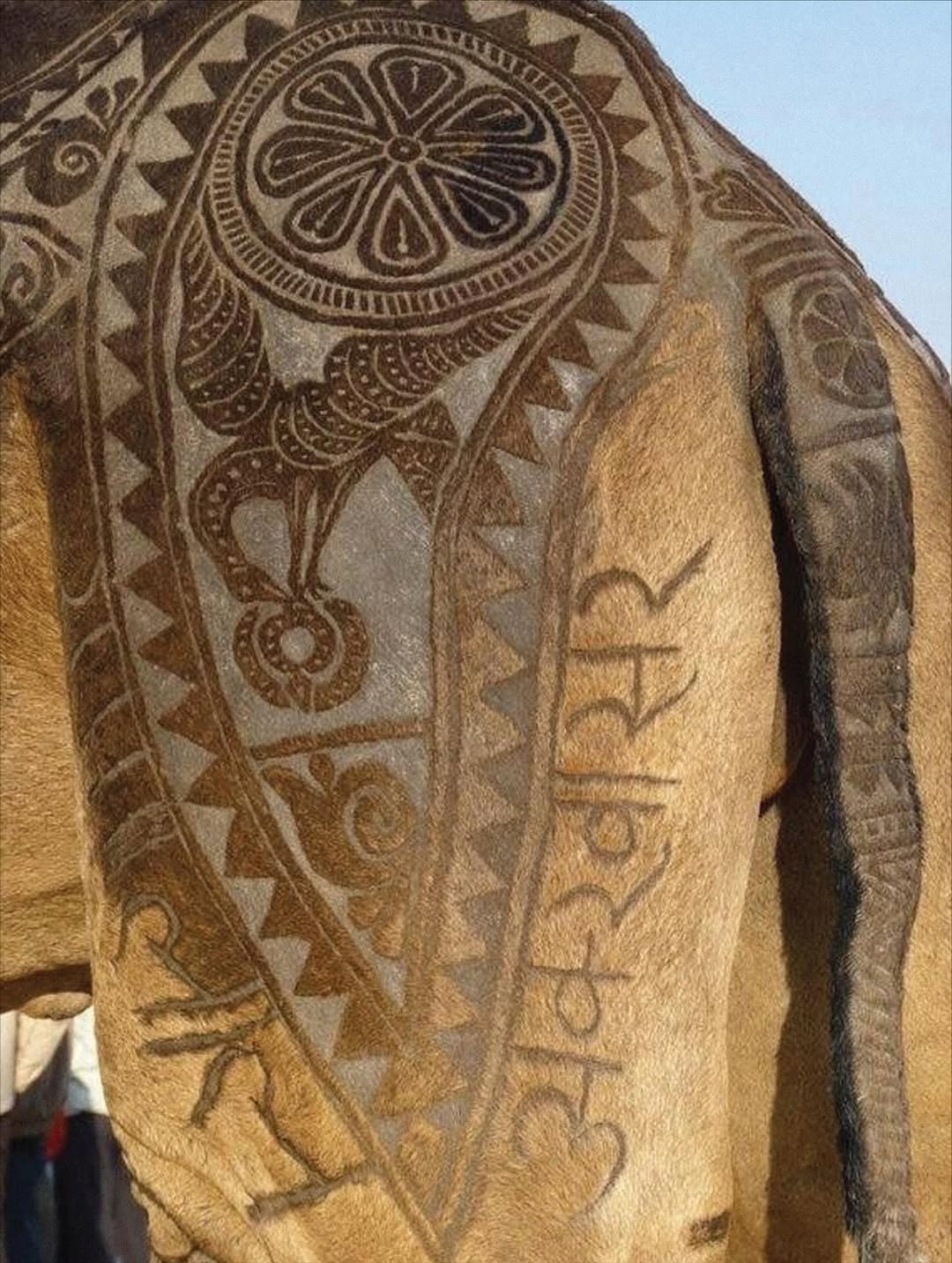
- Camel Hair Carving (Live Fur Art)
The most respected practice is shaving detailed patterns into the coats of living camels a tradition echoing real practices seen in parts of Sudan and Somalia.
Motifs include:
- Dune Spirals — protection
- Desert Star — guidance
- Ancestor Lines — family identity
Camels become walking tapestries, carrying the stories of their owners.
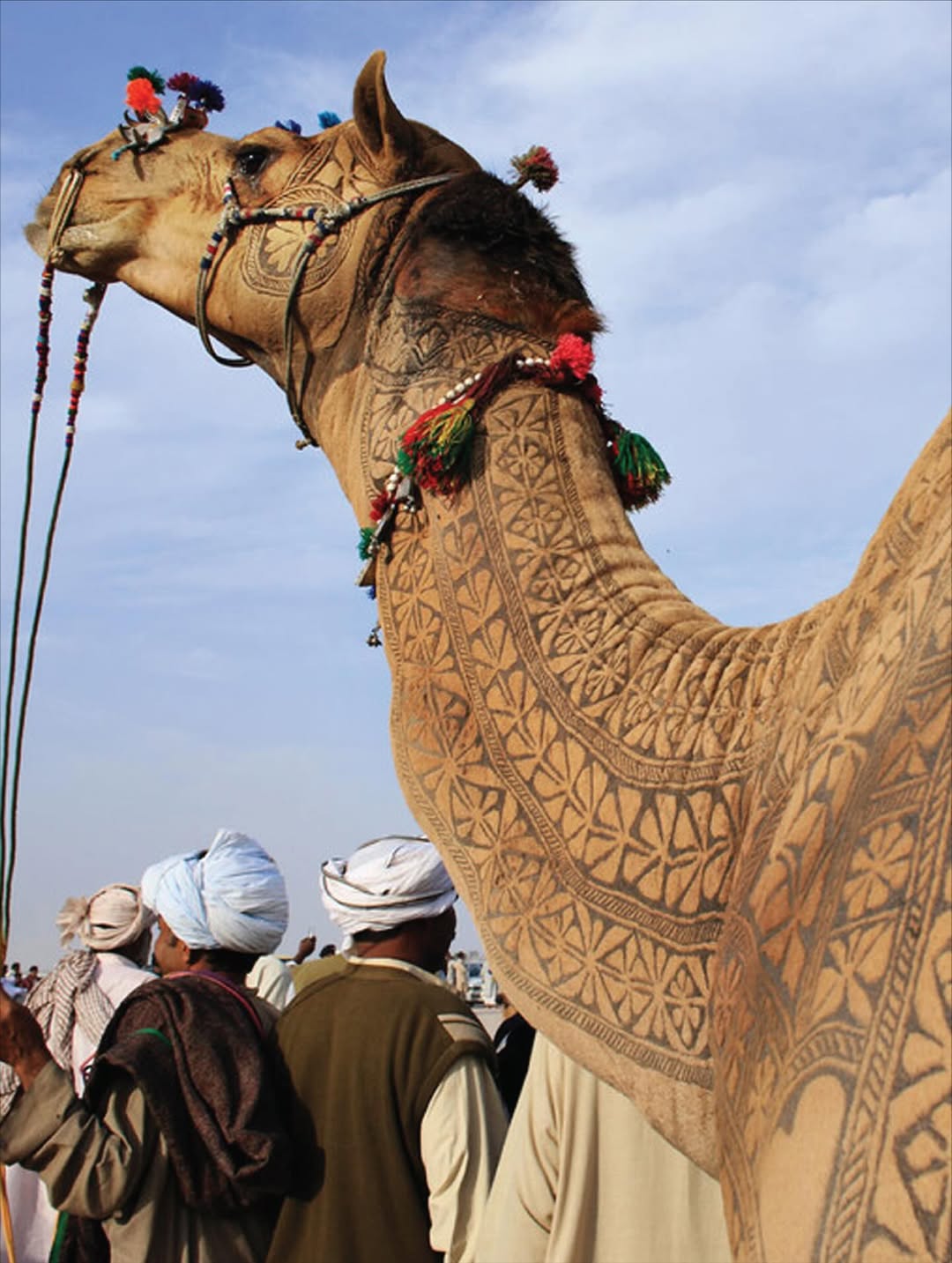
- Camel-Hair Weaving
Tents, shawls, and robes are woven from soft camel underhair, with patterns that act as coded messages — blessings, warnings, and clan symbols. This craft, influenced by weaving traditions in Mauritania and Niger, carries deep meaning through every motif.
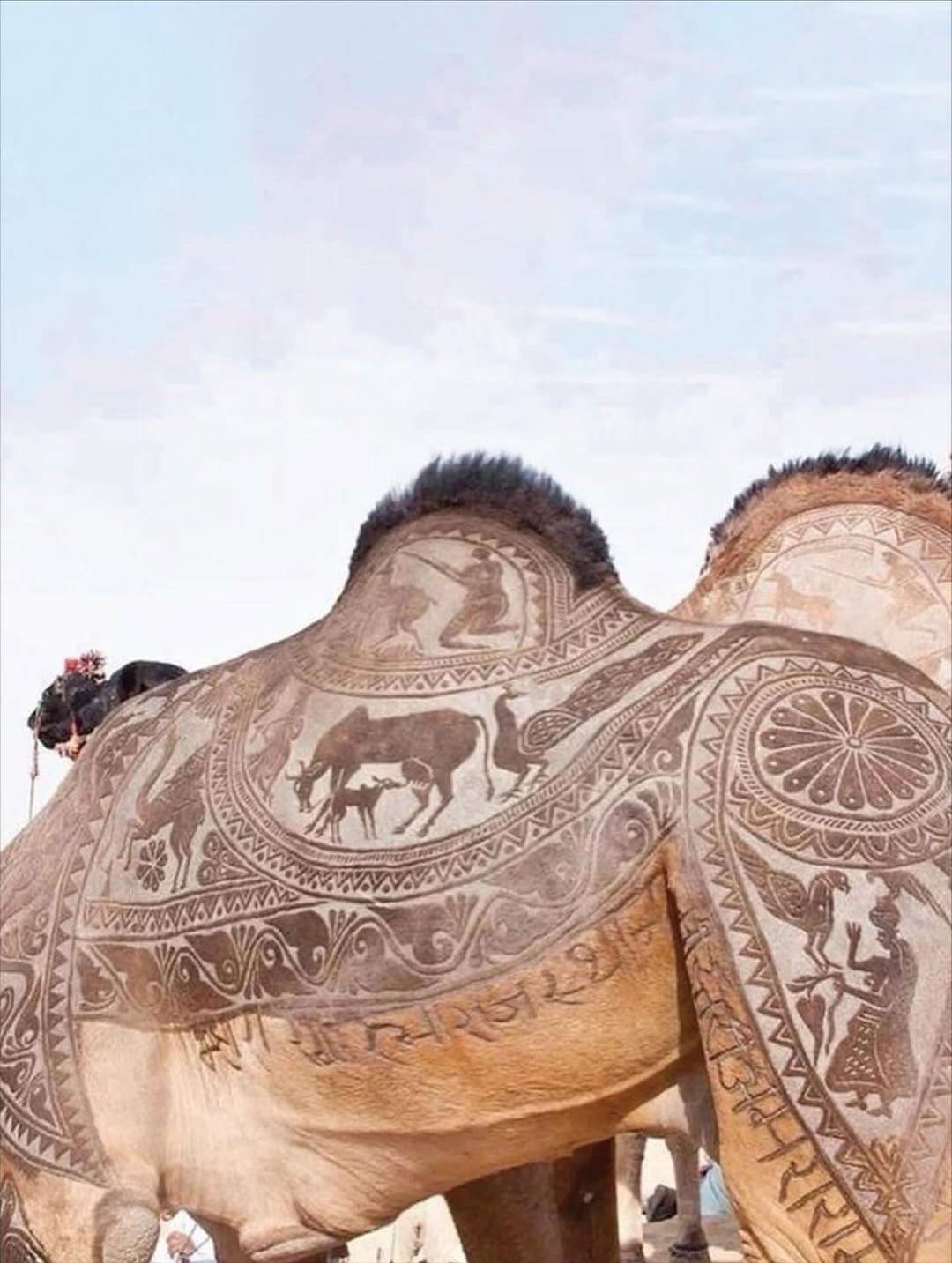
- Fired-Skin Lanterns (Hide Art)
Camel hide is stretched, dried, and painted. When lit, the lanterns cast shadows of dunes and spirits, used during festivals and night journeys.
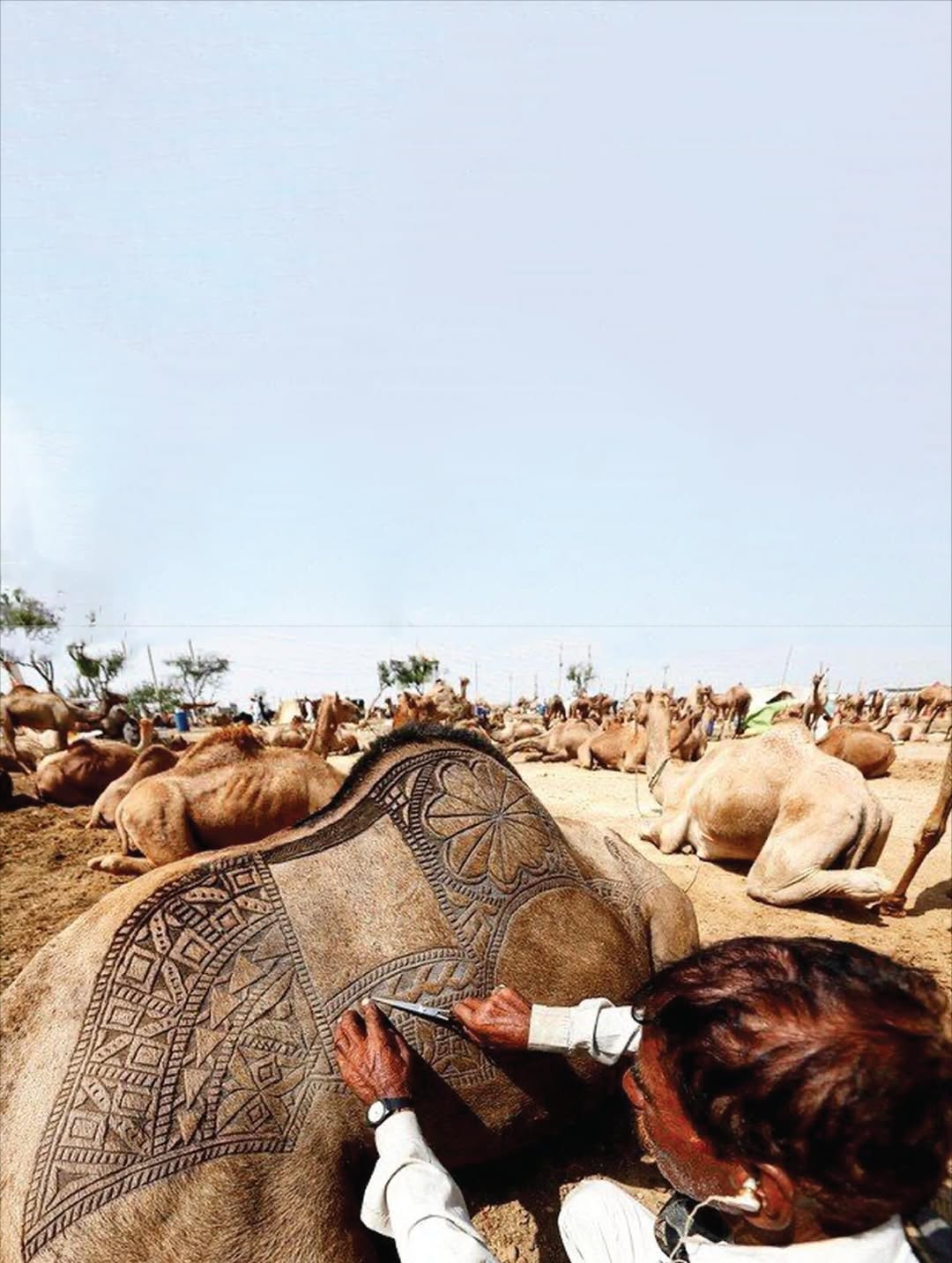
- Mane Dyeing
During rites of passage, camel manes are dyed with natural pigments seen across East African nomadic cultures:
- Yellow — bravery
- Black — wisdom
- Rose — joy
VALUES AND SOCIAL MEANING
- Respect for the Camel: Considered a spiritual companion, never a mere animal.
- Skill Equals Honor: Master groomers (Maheeri) hold high status.
- Community Creation: Most artworks are made collectively.
- The Desert as Teacher: Natural forms inspire all designs.
MAJOR FESTIVALS
- Talam-Sa (Festival of First Shear)
Held annually during the dry season across Khal’rin camps in Sudan and Chad.
Events include:
- Camel-hair design contests
- Clan bonding rituals
- Lantern parades at dusk
Winners of the fur-carving competition are given desert jade beads — worn only by master Maheeri.
- Weaving of Promises
A marriage tradition practiced in Mauritania and Niger regions: both families weave a camel-hair tapestry symbolizing the joining of households.
- Rite of the Mane Flames
Across communities in Somalia and Northern Sudan, youths dye a section of their camel’s mane to mark adulthood and identity.
MODERN PRESSURES
As younger Khal’rin migrate to cities like Nouakchott, Niamey, Khartoum, and Hargeisa, camel herds shrink and ancient practices risk fading.
Still, the culture adapts; blending old patterns with new symbols while preserving its essence.
Elders say:
“As long as the camel walks, the art breathes.”
WHY IT MATTERS
For the Khal’rin, camel-hair art is a living language — a thread connecting ancestors, land, identity, and community. It shows how desert societies across Niger, Chad, Sudan, Somalia, and Mauritania transform survival into beauty and tradition into art. It is proof that culture doesn’t just survive the desert, it grows from it.


.png)

