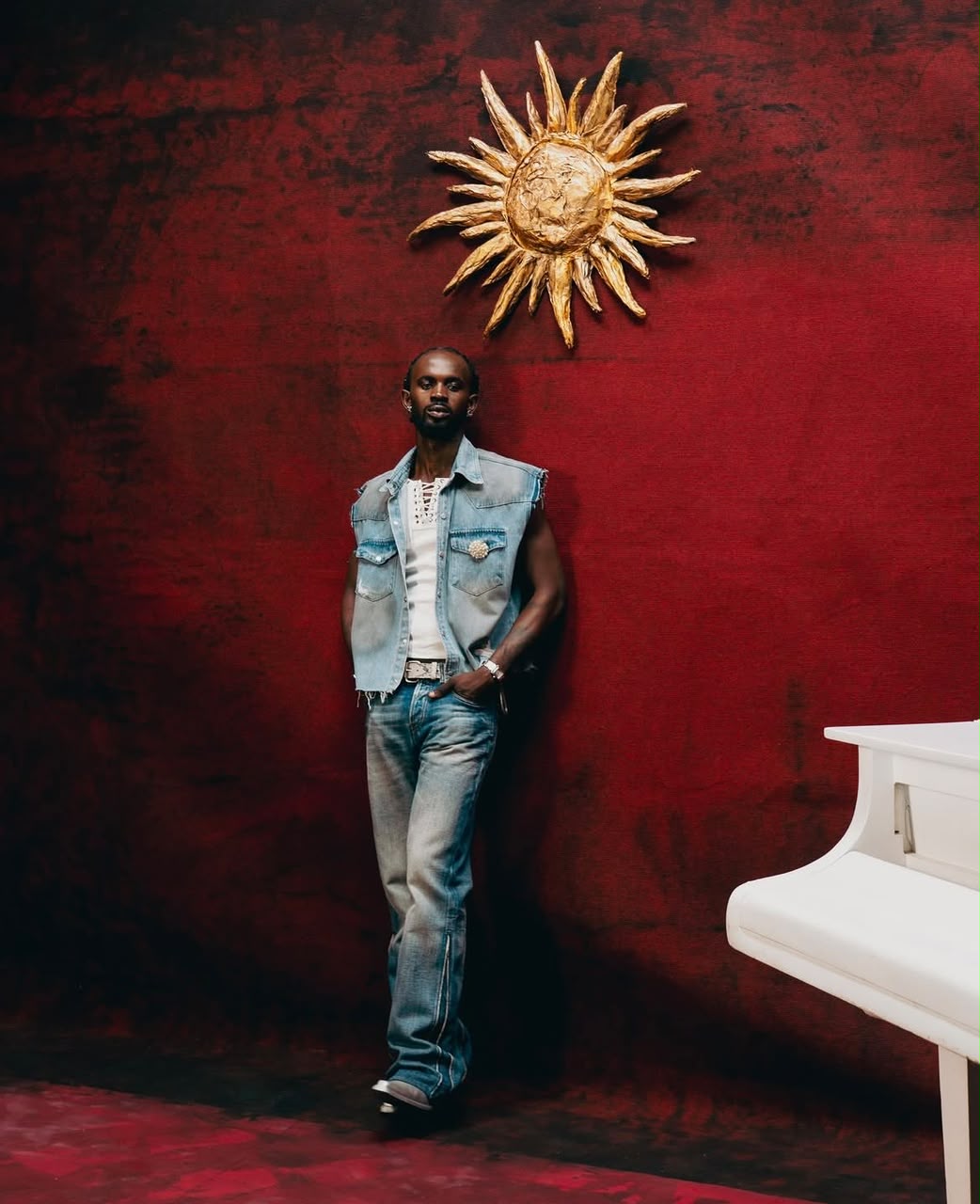
The Sunny Truths of Black Sherif

Authored by

When Black Sherif joined the virtual call, his earpiece was already plugged in. By the time we spoke, he had released Sun Sherif Vol. 1, a six-track project accompanied by sunflowers and a handwritten note. When I told him the note felt personal, he agreed. “Yeah, it was very personal. I did the writing myself.”

Born Ismail Sherif and raised in Konongo Zongo, somewhere within Ghana’s Ashanti Region, Black Sherif started making music in his final year of high school in 2019. Since then, he has used music to document his life, dreams and fantasies, describing his approach in terms of melodies, rhythms and frequency.

Music and fashion have always been closely connected for Black Sherif. He spoke about dressing with the familiarity of someone describing an interest he had long before music became his career, tracing it back to childhood, when he was old enough to choose his own clothes without his mother’s help. His appearances at London Fashion Week with Labrum and his Paris Fashion Week debut with Off-White reflect an interest that has been there from the beginning. “It's been with me,” he said. “With some unconscious intentionalities and consistencies.”

Even if he had never made music, he explained, dressing would still have been a hobby he paid close attention to. His interest in clothes was tied to his relationship with music, from listening to records to following the artists whose work he admired, long before he became an artist himself.
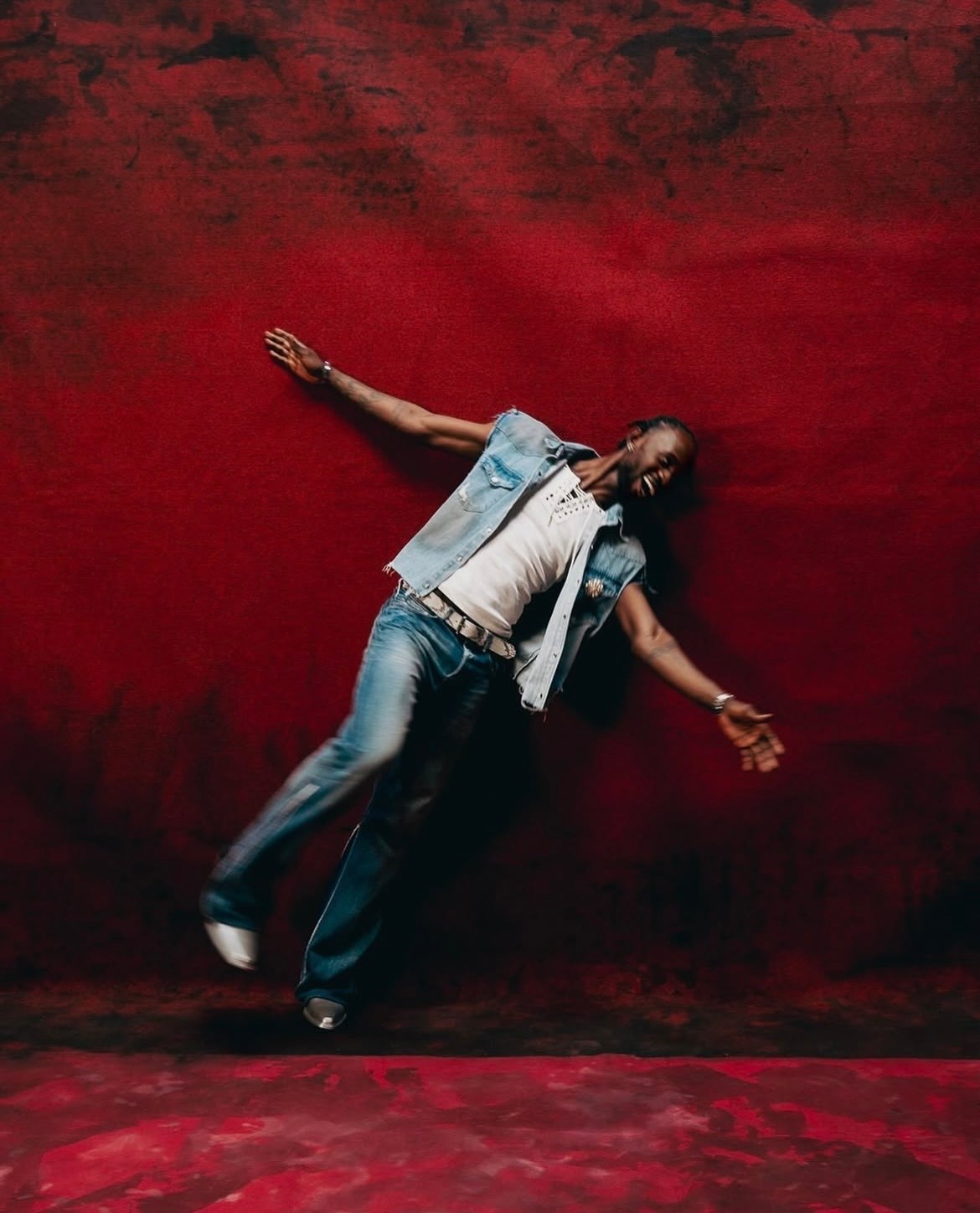
Credit: Black Sherif

‍Sun Sherif Vol. 1 follows Iron Boy, an earlier project marked by a darker, more deliberate intensity. When I asked what had changed between the two, Black Sherif described the new EP in a way that stayed with me. “I won't say Sun Sherif is less deeper. I think it's the same as deep, but it's softly deep.” He spoke about approaching life with aggression as an experiment, a response to what he had experienced, and then wondering what it would mean to try the opposite. Sun Sherif Vol. 1 came out of that curiosity, allowing him to explore softness without abandoning the depth that has characterised his music.

The six-track release was also a deliberate choice of format. Black Sherif was clear that he considered it an EP, not an album, and the idea had been on his mind for years. “Somewhere 2020, I tweeted that I wanted to make one of the best R&B projects I'd heard,” he said. “And for some reason, unintentionally, I just did it this year.” His albums have typically run to thirteen to fifteen tracks, but this time he wanted a shorter project that could hold a particular experience without extending beyond it. The result is a more concentrated expression of what he had been exploring, delivered across six songs.

Jolie is the EP’s most devoted song, and the one Black Sherif chose as his personal favourite. When I asked how he writes with such vulnerability without revealing too much, he said, “I just write every single piece of mind. It's really just unfiltered. It's really just raw. Sometimes I'm not even intentional about being deep or vulnerable. That's just what comes out of me.” The feeling begins without much filtering, but the finished song still has to be shaped. Through ad libs, harmonies and the arrangement itself, he gives those thoughts a form that other people can sit with.

As Black Sherif’s music has connected with young people in Ghana and across the diaspora, the expectations around what he makes have grown. I asked how he manages that pressure without letting it dictate his work. He spoke about continuing to pursue the things he dreams of and envisions, even when the pressure affects him personally. “For some reason, the vision remains untouched,” he said. “And I can't explain that.” His answer suggested a distinction between the pressure he feels and the direction he wants to take. He returned to this idea of holding on to his own convictions while remaining open to other perspectives. “I do not believe there is one truth,” he said. “There are many truths. And even though I believe in mine and I stand firm in mine, I still make room for other truths.”

Sun Sherif Vol. 1 is the beginning of a larger project. Its sequel is coming, followed by an album, he notes, and he has more visuals planned, including two additional videos before the year ends. He also spoke about returning to the UK, a possible Zama Disco appearance and a trip to Lagos in the first quarter of next year. He has been spending time in the city writing, making music and taking care of himself, with the studio remaining a constant through it all.

Before we ended, I told him that Love Again was my favourite song on the EP, although I kept returning to Sacrifice from Iron Boy, particularly the way he sings the chorus. I couldn't quite explain what it was about the delivery that stayed with me. “The delivery,” he said. Then, warmly, “Thank you. I appreciate that.”

Cover Credit: Black Sherif 

‍

The Sunny Truths of Black Sherif

Authored by
This is some text inside of a div block.

When Black Sherif joined the virtual call, his earpiece was already plugged in. By the time we spoke, he had released Sun Sherif Vol. 1, a six-track project accompanied by sunflowers and a handwritten note. When I told him the note felt personal, he agreed. “Yeah, it was very personal. I did the writing myself.”

Born Ismail Sherif and raised in Konongo Zongo, somewhere within Ghana’s Ashanti Region, Black Sherif started making music in his final year of high school in 2019. Since then, he has used music to document his life, dreams and fantasies, describing his approach in terms of melodies, rhythms and frequency.

Music and fashion have always been closely connected for Black Sherif. He spoke about dressing with the familiarity of someone describing an interest he had long before music became his career, tracing it back to childhood, when he was old enough to choose his own clothes without his mother’s help. His appearances at London Fashion Week with Labrum and his Paris Fashion Week debut with Off-White reflect an interest that has been there from the beginning. “It's been with me,” he said. “With some unconscious intentionalities and consistencies.”

Even if he had never made music, he explained, dressing would still have been a hobby he paid close attention to. His interest in clothes was tied to his relationship with music, from listening to records to following the artists whose work he admired, long before he became an artist himself.

Credit: Black Sherif

‍Sun Sherif Vol. 1 follows Iron Boy, an earlier project marked by a darker, more deliberate intensity. When I asked what had changed between the two, Black Sherif described the new EP in a way that stayed with me. “I won't say Sun Sherif is less deeper. I think it's the same as deep, but it's softly deep.” He spoke about approaching life with aggression as an experiment, a response to what he had experienced, and then wondering what it would mean to try the opposite. Sun Sherif Vol. 1 came out of that curiosity, allowing him to explore softness without abandoning the depth that has characterised his music.

The six-track release was also a deliberate choice of format. Black Sherif was clear that he considered it an EP, not an album, and the idea had been on his mind for years. “Somewhere 2020, I tweeted that I wanted to make one of the best R&B projects I'd heard,” he said. “And for some reason, unintentionally, I just did it this year.” His albums have typically run to thirteen to fifteen tracks, but this time he wanted a shorter project that could hold a particular experience without extending beyond it. The result is a more concentrated expression of what he had been exploring, delivered across six songs.

Jolie is the EP’s most devoted song, and the one Black Sherif chose as his personal favourite. When I asked how he writes with such vulnerability without revealing too much, he said, “I just write every single piece of mind. It's really just unfiltered. It's really just raw. Sometimes I'm not even intentional about being deep or vulnerable. That's just what comes out of me.” The feeling begins without much filtering, but the finished song still has to be shaped. Through ad libs, harmonies and the arrangement itself, he gives those thoughts a form that other people can sit with.

As Black Sherif’s music has connected with young people in Ghana and across the diaspora, the expectations around what he makes have grown. I asked how he manages that pressure without letting it dictate his work. He spoke about continuing to pursue the things he dreams of and envisions, even when the pressure affects him personally. “For some reason, the vision remains untouched,” he said. “And I can't explain that.” His answer suggested a distinction between the pressure he feels and the direction he wants to take. He returned to this idea of holding on to his own convictions while remaining open to other perspectives. “I do not believe there is one truth,” he said. “There are many truths. And even though I believe in mine and I stand firm in mine, I still make room for other truths.”

Sun Sherif Vol. 1 is the beginning of a larger project. Its sequel is coming, followed by an album, he notes, and he has more visuals planned, including two additional videos before the year ends. He also spoke about returning to the UK, a possible Zama Disco appearance and a trip to Lagos in the first quarter of next year. He has been spending time in the city writing, making music and taking care of himself, with the studio remaining a constant through it all.

Before we ended, I told him that Love Again was my favourite song on the EP, although I kept returning to Sacrifice from Iron Boy, particularly the way he sings the chorus. I couldn't quite explain what it was about the delivery that stayed with me. “The delivery,” he said. Then, warmly, “Thank you. I appreciate that.”

Cover Credit: Black Sherif 
‍

This is some text inside of a div block.

The Sunny Truths of Black Sherif

Authored by

When Black Sherif joined the virtual call, his earpiece was already plugged in. By the time we spoke, he had released Sun Sherif Vol. 1, a six-track project accompanied by sunflowers and a handwritten note. When I told him the note felt personal, he agreed. “Yeah, it was very personal. I did the writing myself.”

Born Ismail Sherif and raised in Konongo Zongo, somewhere within Ghana’s Ashanti Region, Black Sherif started making music in his final year of high school in 2019. Since then, he has used music to document his life, dreams and fantasies, describing his approach in terms of melodies, rhythms and frequency.

Music and fashion have always been closely connected for Black Sherif. He spoke about dressing with the familiarity of someone describing an interest he had long before music became his career, tracing it back to childhood, when he was old enough to choose his own clothes without his mother’s help. His appearances at London Fashion Week with Labrum and his Paris Fashion Week debut with Off-White reflect an interest that has been there from the beginning. “It's been with me,” he said. “With some unconscious intentionalities and consistencies.”

Even if he had never made music, he explained, dressing would still have been a hobby he paid close attention to. His interest in clothes was tied to his relationship with music, from listening to records to following the artists whose work he admired, long before he became an artist himself.

Credit: Black Sherif

‍Sun Sherif Vol. 1 follows Iron Boy, an earlier project marked by a darker, more deliberate intensity. When I asked what had changed between the two, Black Sherif described the new EP in a way that stayed with me. “I won't say Sun Sherif is less deeper. I think it's the same as deep, but it's softly deep.” He spoke about approaching life with aggression as an experiment, a response to what he had experienced, and then wondering what it would mean to try the opposite. Sun Sherif Vol. 1 came out of that curiosity, allowing him to explore softness without abandoning the depth that has characterised his music.

The six-track release was also a deliberate choice of format. Black Sherif was clear that he considered it an EP, not an album, and the idea had been on his mind for years. “Somewhere 2020, I tweeted that I wanted to make one of the best R&B projects I'd heard,” he said. “And for some reason, unintentionally, I just did it this year.” His albums have typically run to thirteen to fifteen tracks, but this time he wanted a shorter project that could hold a particular experience without extending beyond it. The result is a more concentrated expression of what he had been exploring, delivered across six songs.

Jolie is the EP’s most devoted song, and the one Black Sherif chose as his personal favourite. When I asked how he writes with such vulnerability without revealing too much, he said, “I just write every single piece of mind. It's really just unfiltered. It's really just raw. Sometimes I'm not even intentional about being deep or vulnerable. That's just what comes out of me.” The feeling begins without much filtering, but the finished song still has to be shaped. Through ad libs, harmonies and the arrangement itself, he gives those thoughts a form that other people can sit with.

As Black Sherif’s music has connected with young people in Ghana and across the diaspora, the expectations around what he makes have grown. I asked how he manages that pressure without letting it dictate his work. He spoke about continuing to pursue the things he dreams of and envisions, even when the pressure affects him personally. “For some reason, the vision remains untouched,” he said. “And I can't explain that.” His answer suggested a distinction between the pressure he feels and the direction he wants to take. He returned to this idea of holding on to his own convictions while remaining open to other perspectives. “I do not believe there is one truth,” he said. “There are many truths. And even though I believe in mine and I stand firm in mine, I still make room for other truths.”

Sun Sherif Vol. 1 is the beginning of a larger project. Its sequel is coming, followed by an album, he notes, and he has more visuals planned, including two additional videos before the year ends. He also spoke about returning to the UK, a possible Zama Disco appearance and a trip to Lagos in the first quarter of next year. He has been spending time in the city writing, making music and taking care of himself, with the studio remaining a constant through it all.

Before we ended, I told him that Love Again was my favourite song on the EP, although I kept returning to Sacrifice from Iron Boy, particularly the way he sings the chorus. I couldn't quite explain what it was about the delivery that stayed with me. “The delivery,” he said. Then, warmly, “Thank you. I appreciate that.”

Cover Credit: Black Sherif 
‍

Other Stories
London
London
Lagos
London
Newyork
London
Shop
Join the community.
You are now subscribed to receive updates.
Oops! Something went wrong while submitting the form.
Subscribe