.svg)

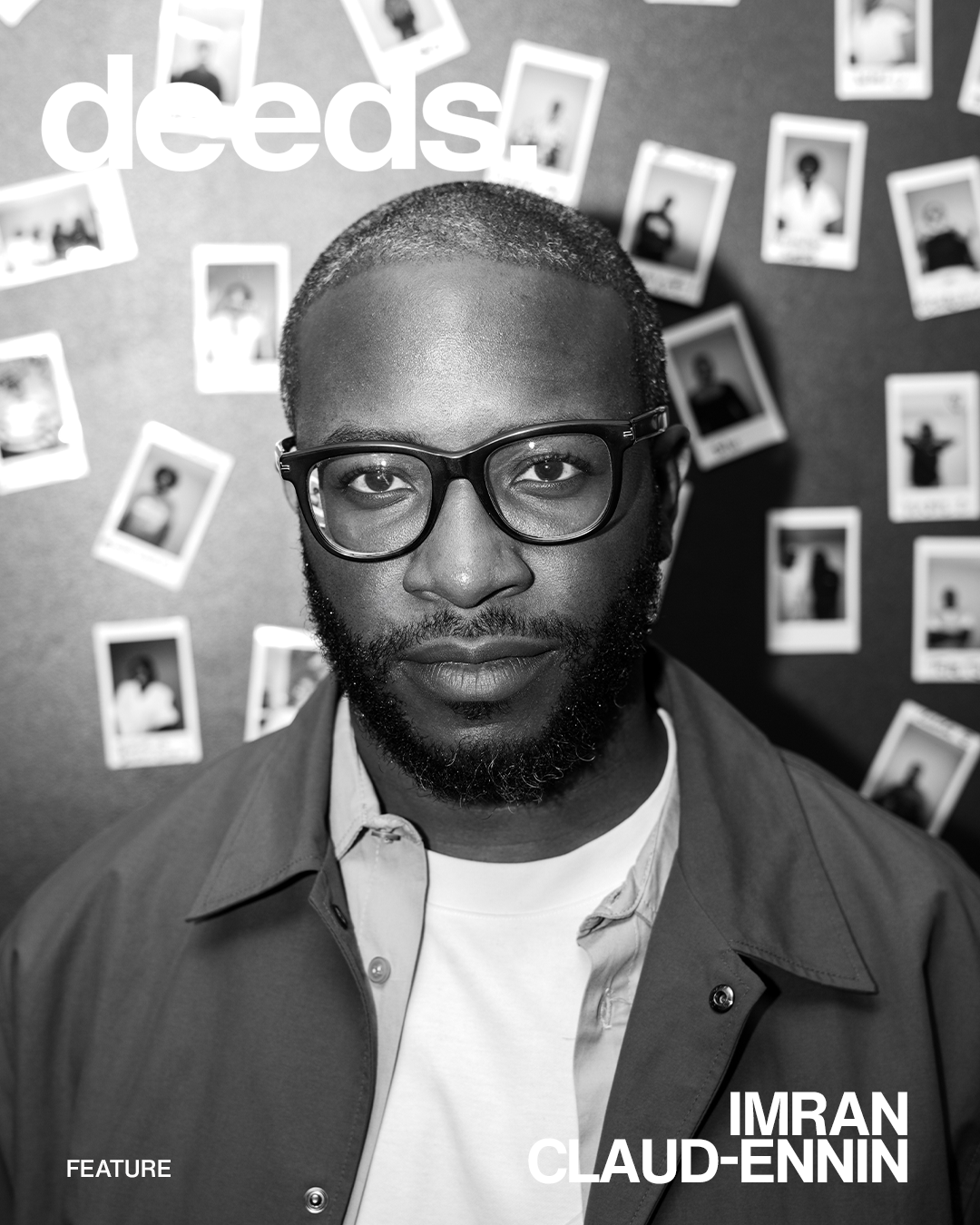
Imran Claud-Ennin has built one of Nigeria's most important cultural archives by staying behind the lens. Since 2017, Days & Nites has been quietly documenting the people, moments, and movements shaping African creative culture, not from a distance, but from the floor, in the rooms where it's actually happening. While most platforms chase the spotlight, Days & Nites chases the story. Through projects like Creative CTRL and the critically acclaimed Mai Atafo SS24 documentary, Imran and his team have made it their mission to celebrate the unsung: the art directors, the producers, the stylists, the people whose names you might not know but whose work you definitely recognize.
It's a philosophy that extends to Imran himself. Despite running a media house that sets the standard for premium cultural documentation, he maintains a deliberately modest personal profile. "The work is more important than the person," he tells me early in our conversation, and it's a principle that guides everything Days & Nites does. We sat down to talk about evolution, intentionality, and what it really takes to tell honest stories in Nigeria's creative economy.
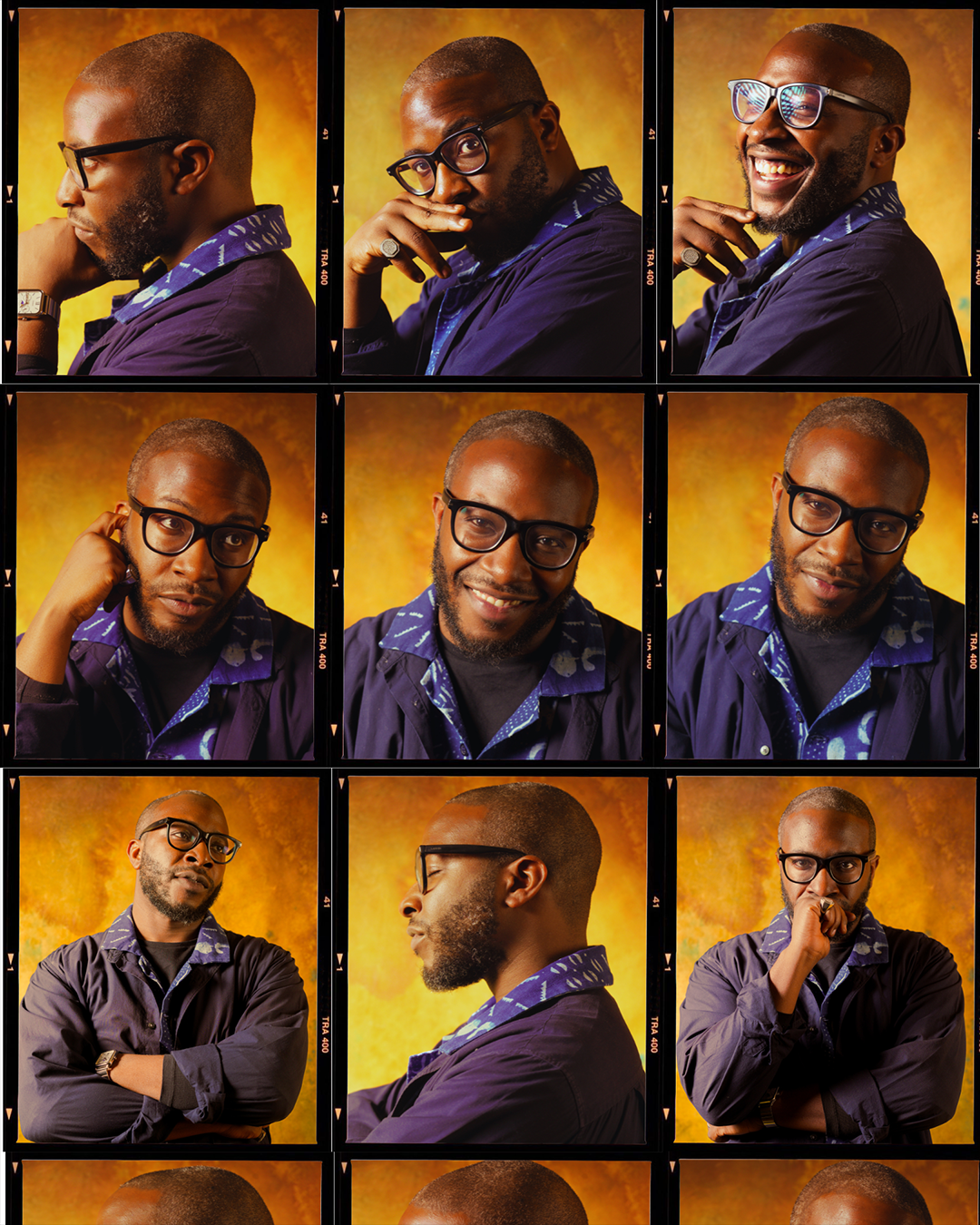
Days & Nites has been documenting African creative culture since 2017. What was the specific moment or gap you saw that made you think, 'This needs to exist'?
I was away at school and then I just came back. I started going out and seeing all these incredible things happening, but I felt like people who weren't in town wouldn't see it. There wasn't much of a record, so nobody would know. So I took it upon myself to actually go to these events, document them, highlight them, and celebrate them all at the same time.
How has Days & Nites evolved from 2017 to now? What can you do today that you couldn't do three years ago?
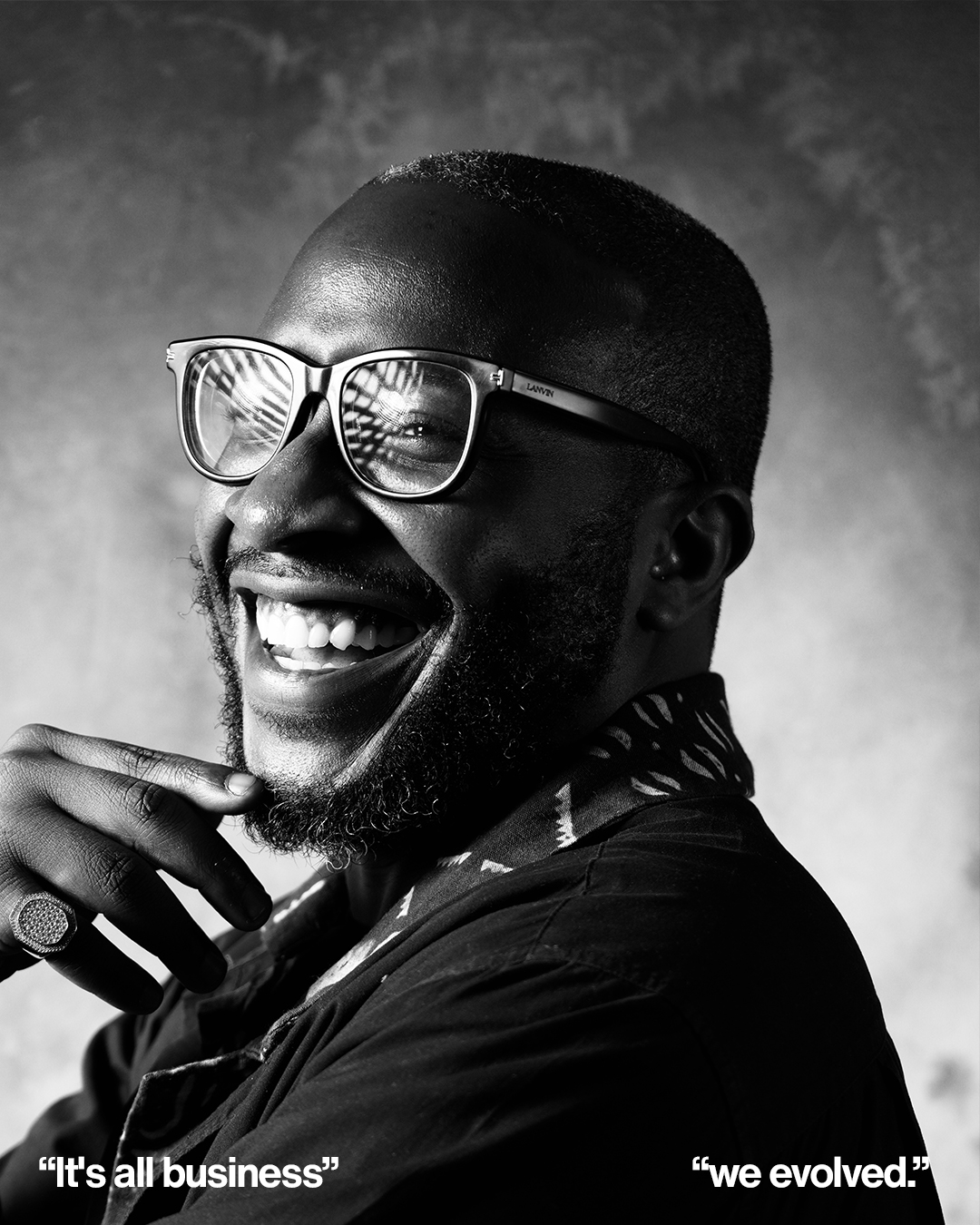
You've pretty much just said it, we evolved. What we were doing when we started, was just documenting things as we went. We weren't really producing content ourselves. Now we're actually learning how to produce these things, delivering a better final product; better shows, formats, and campaigns. That's where we are now. We started from just being where it's happening, documenting that, and then deploying it. What we essentially want to do is be able to tell better stories and create better shows, content, products, and experiences.
There's a difference between documenting culture and shaping it. Where does Days & Nites sit on that spectrum?
To be very honest, I think we're in the middle of that because you want to be able to document and also be on the floor telling stories from that perspective. With one of the shows you mentioned, Creative CTRL, we're taking the brands that you actually know and then featuring the people behind them who aren't really known. That, in itself, helps tell a different story to people who are up and coming, who want to be in possibly similar roles, or people who want to find out a bit more about how someone went about getting to where they are right now.
How do you decide what stories deserve to be told?
I wish it was so straightforward, but it's actually about looking at these different brands and figuring out: "Okay, who are these people behind these things, and how do we actually bring them to light and celebrate them?" Because as you know, in the creative world, even in music, the only people that people tend to see are the frontrunners, which are the artists, but they don't know that there's a whole team behind them. The same thing goes for music videos, whether it's the director, stylist, creative director, producer, or photographer. All these people have been featured on Creative CTRL just to help point that out. So it's really just trying to find that balance. And yeah, I wish it was so straightforward, but it's not, it's actually work.
For example, many people know Mainland Block Party, but fewer knew Tobi Mohamed runs the show and assists with OurHomeComing, until recently. Those are the kinds of stories we seek out. And it's funny because at the end of the day, these people aren't normally front and center. So it also takes a bit of alignment to get them on the show. Some of them are shy of the limelight, but it's about celebrating these people.
Should creatives step out more? Should we encourage them to build more social presence?
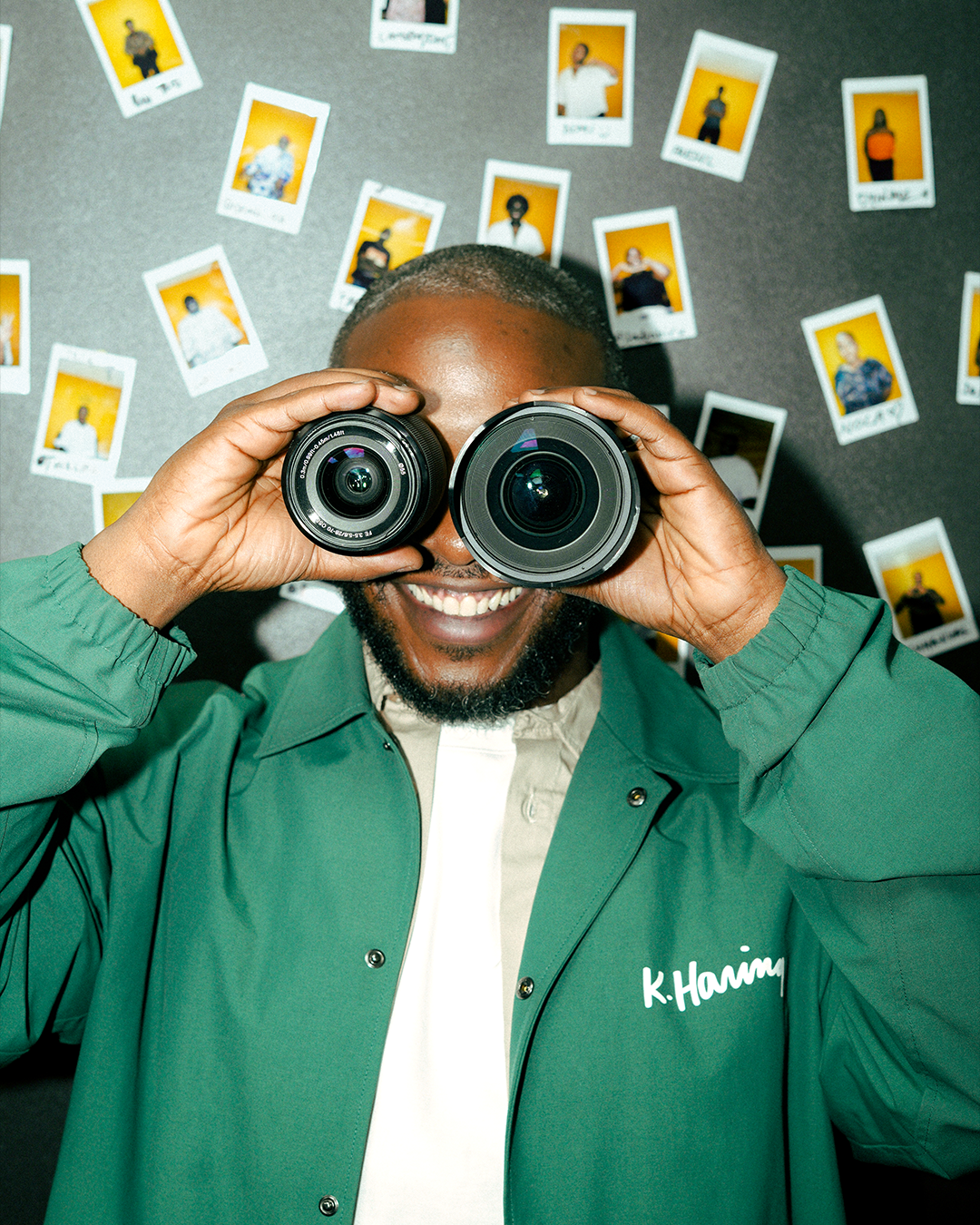
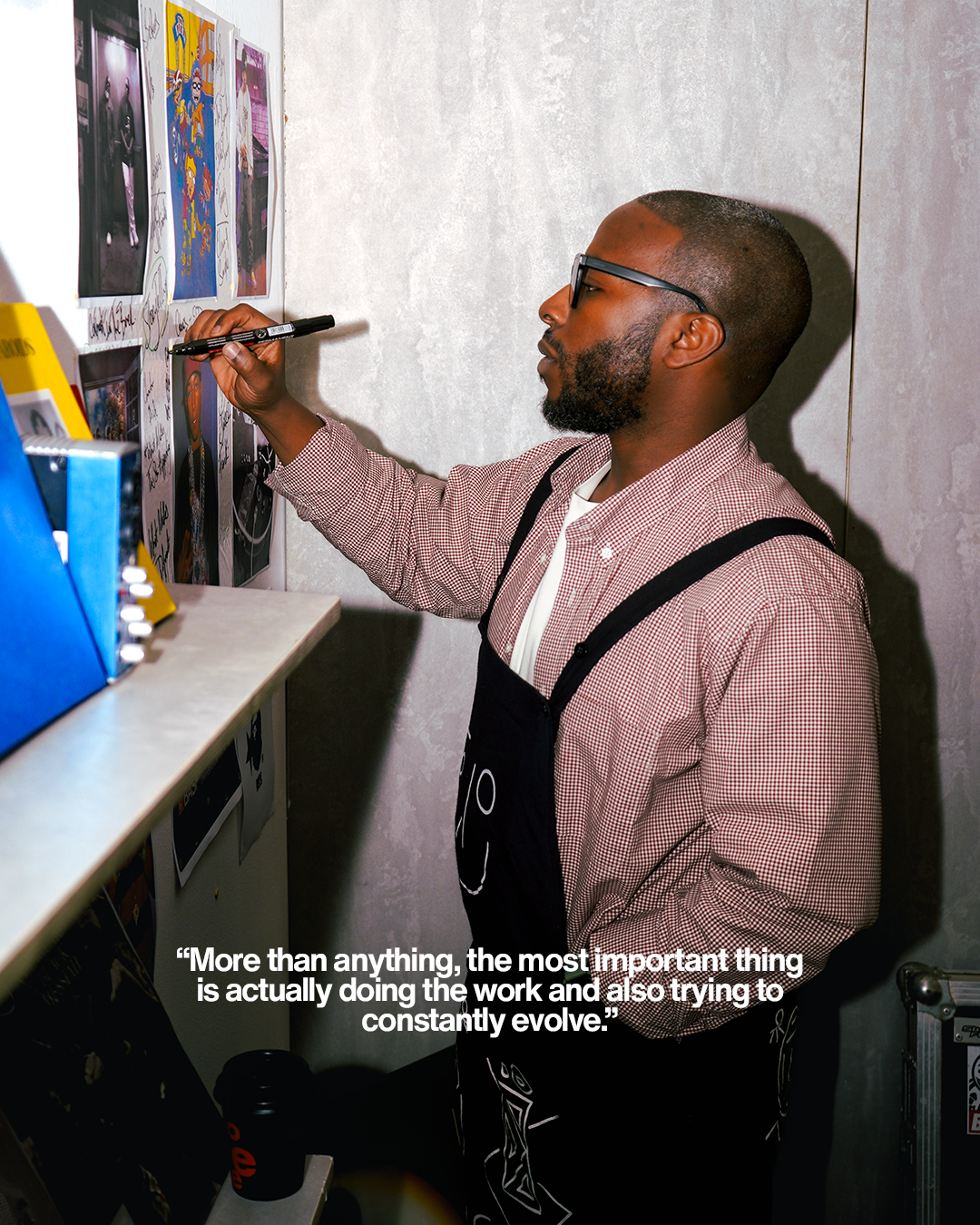
It's a bit of both, in the sense that I think as long as you're actually doing the work and you don't need to be seen. If you want to self-document, you can do that. But it's more important to do the work than to be seen for the work, I believe. Do you know who created the street lamp? Do you know who created the first plane? The first car? Those things, exactly. You might be able to answer, but a lot of people won't know. The idea is that you do it so well that, way down the line, you're actually acknowledged for it. But as you're doing the work, there's no problem in documenting and stepping forward, it's fine. Everyone is different. But more than anything, the most important thing is actually doing the work and also trying to constantly evolve. You have to get better and better, continuously improving.
You studied Business & Management at Sussex. How much does that background influence how you run a creative media house?
It's definitely helped quite a bit because at the end of the day, whatever we call it, creative work still needs funding to function. It's not something that people tend to run toward, but it's something you have to deal with. If you're not even good at it, it's at least something you should invest in. Try to upgrade that part of yourself so that you're able to enjoy the work that you actually want to do. It goes hand in hand. There's the creative economy, there's the music business, there's the movie business. It's all business, and that part, the business, should come first.
For someone producing culture at this level, you maintain a relatively low personal profile online. Is that intentional?
Yes. It goes back to the philosophy that the work matters more. I recently met someone whose platform I like; I didn’t realize it was her until we talked on WhatsApp and I saw her display picture.That way, I'm able to enjoy and appreciate the work for what it is.That said, in today’s world you sometimes do need to step out a bit. I’m intentional about keeping my personal profile modest. I just want to do the work.
How do you balance being visible enough to build the brand while keeping the focus on the work and the artists?
That’s the constant challenge. It comes down to positioning and relationships, being in the right rooms at the right time and nurturing the right relationships.
Let's talk about the Mai Atafo SS24 fashion show documentation, which was historic. What made that project particularly significant, and what was your creative approach as Executive Producer?
With Mai Atafo, there isn’t a mountain of press on him personally, which gave us an open canvas. He had the show; we set out to document the journey to execution. You know where it ends, but you can’t predict the journey. So we stayed flexible and open, planned around key moments, and captured honest, meaningful scenes. Patience and consistency were key to telling a story true to him.
Who or what has shaped your eye as a creative director? Are there filmmakers, documentarians, or movements you return to?
To be honest, I would say the first person who shaped my eye was my brother. He is an artist by the name of Yasser Claud-Ennin. I would also say different things I grew up with and enjoyed. From cartoons to different series, all those kind of things I liked. Stuff like Hey Arnold!, Recess, Toy Story. Then HBO shows like The Sopranos and The Wire. All those things helped. And then the music, also friends, and my dad. I'm from Taraba, Kogi State, and Ghana. I just see myself as somebody who's able to bring out what the canvas already holds. That's the truth.
Outside of your own work at Days & Nites, what recent African creative projects have excited you?
WAF's work with the skate community, especially the WAF Skatepark at Freedom Park, Lagos is fantastic; it proves anything is possible.
Films: My Father's Shadow, and Eyimofe (This Is My Desire) by the Esiri brothers. In art: Kemi Balogun, Ogunsanya. I also like how Slawn is pushing the boundaries, Nifemi Bello, and Oriki. For music: I think Boj is about to drop something at the end of the year. Tems is always good. Wande Coal, most definitely. Listening to Show Dem Camp as well.
There's also a book by Alayo Akinkugbe, Reframing Blackness: What's Black about 'History of Art'?
Days & Nites has become a reference point for a certain kind of premium cultural documentation. Do you feel a responsibility that comes with that?
Do I feel it? Yes. But at the same time, it's on the same principle of trying to continuously improve. Doing that, being truthful in storytelling, and maintaining a high standard of work. We can only try and raise the bar. As it should be, I think it's embedded in our ethos.
Ten years from now, when someone looks at Days & Nites' archive, what do you hope that they see?
I hope they feel that anything is possible. It helps spark the idea that you can, it is possible. There is no limit. There is no shackle that is holding you back from being able to achieve greatness and impact. And that it’s possible from Nigeria, to our own standards.
What would you say makes a good collaboration?
Alignment. And clear values on both sides.
What are you building toward in the next 12 months? Any projects or collaborations you can tease?
We’re deploying the rest of this Creative CTRL season. There’s a mini-series, Backstage, following a DJ, an artist and a nightlife operator. We have two documentaries in development: one from Palm Wine and one from Mainland Block Fest. And we’re exploring a Creative CTRL Academy for quarterly mentorship cohorts, not to speak of the series and short films coming up. But as I said, depending on how things go, we'll see what we can keep.
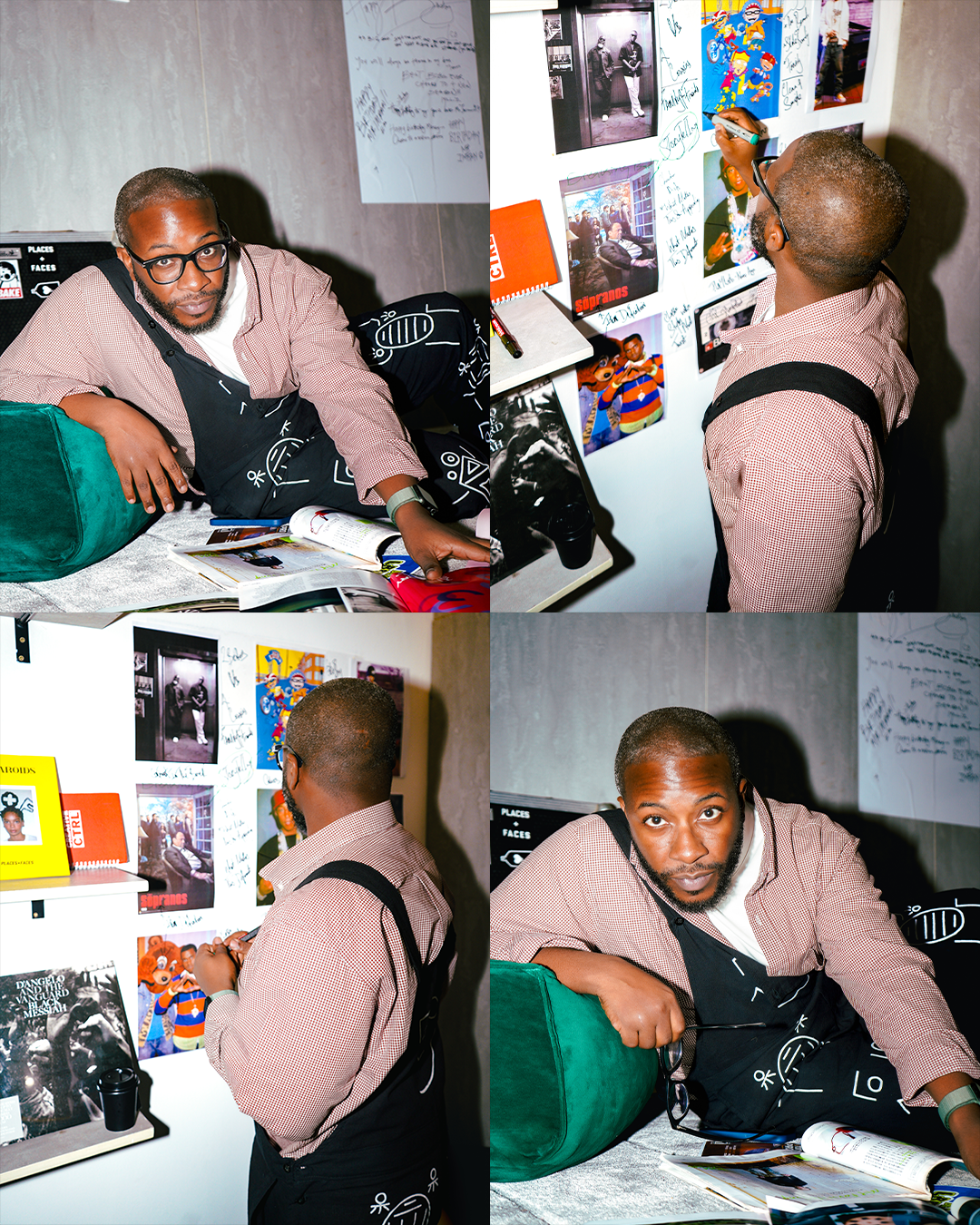
Eight years in and Days & Nites has become more than a documentation platform, it's become proof of concept. Proof that you can build something meaningful by focusing on the work. Proof that our stories deserve to be told with patience, intention, and care. Proof that anything is possible when you're willing to do the actual work.
As our conversation winds down, I'm reminded of something Imran said earlier about the people behind the work, the ones who aren't normally front and center. In a way, he's talking about himself too. But like the creatives he celebrates, the work speaks for itself. And what it's saying is worth listening to.
Before we wrapped, I asked Imran a few rapid fire questions, the kind that don't require too much thinking, just honest answers. Here's what came up.
Rapid Fire
Three creatives everyone should be watching right now.
Yinka Ilori, Dennis Osadebe, and Deborah Segun.
Best piece of advice you've ever received.
One step at a time. Keep moving forward.
What's something on your mind lately that has nothing to do with work?
Butterflies, literally. I saw a black and white one yesterday. Beautiful, it had a hint of green on it. Before that, I had seen a brown one.
If you could snap your fingers and change one thing about Nigeria’s film/media industry?
Push the boundaries of storytelling. Our stories are already elaborate; the opportunity is in how we tell them. Mainstream projects often chase quick turnover; artsier work doesn’t always make more money. We should still try regardless.
Something you believed about this industry in 2017 that you don't believe anymore?
That it's all Kumbaya, pure teamwork. It was supposed to be.
If you weren't running Days & Nites, what would you be doing
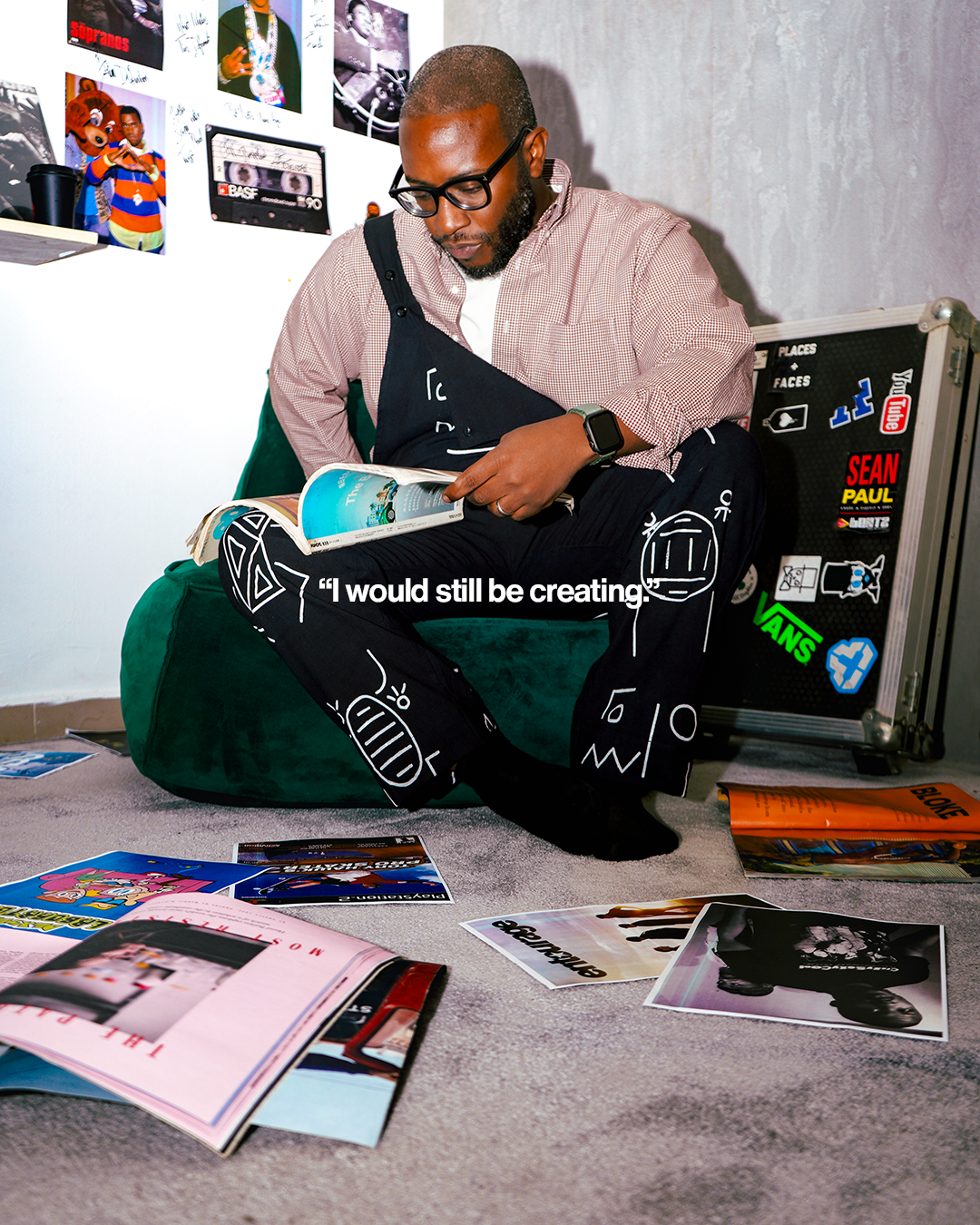
I would still be creating. Doesn't matter what, I'd be doing something that involves creating an idea and allowing it to come to fruition.
.JPG)


.png)

