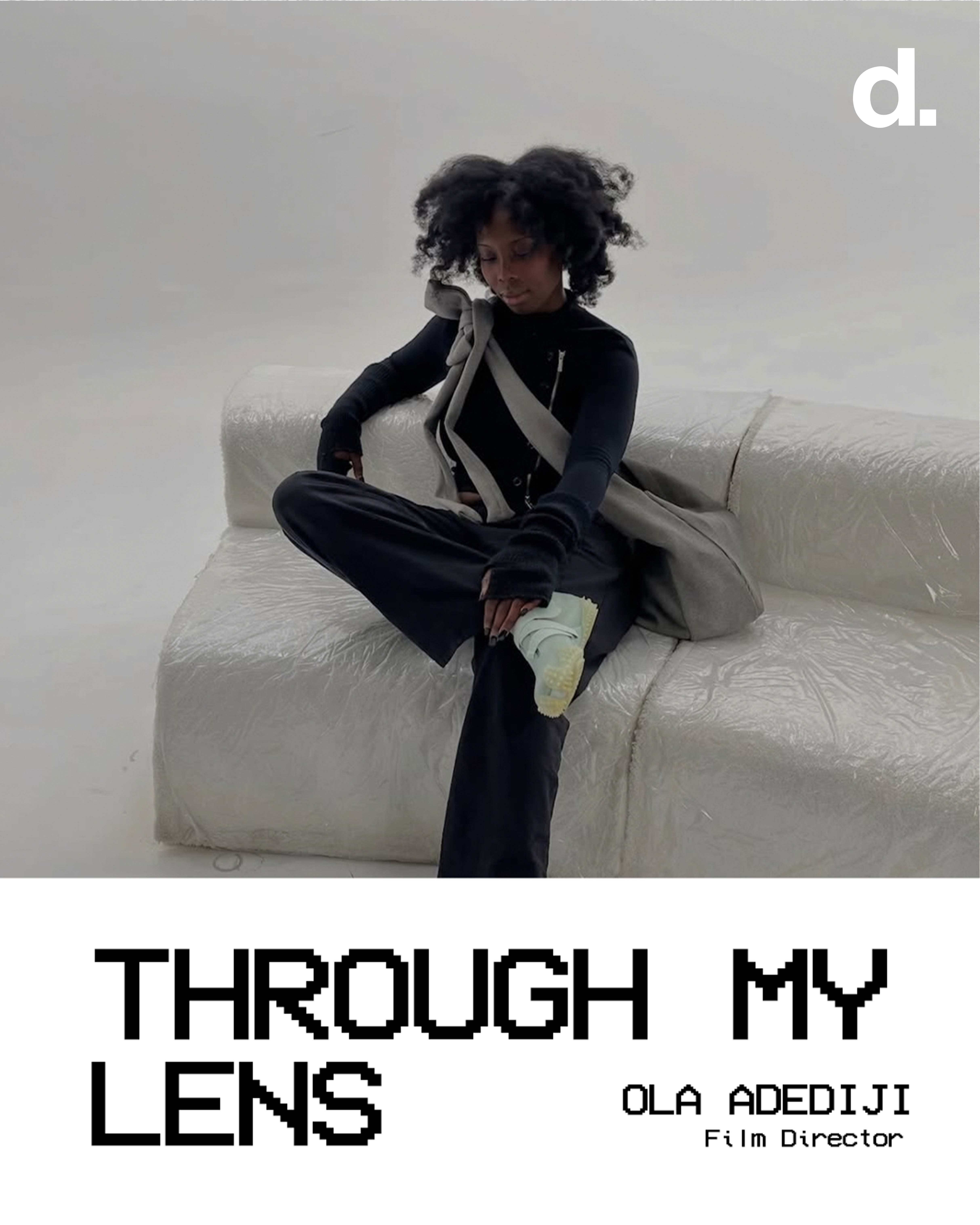
Through My Lens: Sci-Fi Film Director Ola Adediji Dissects Afro-futurism, Black Surveillance, and the concept of Representation in film ‘Emi’

“I just knew there were stories I wanted to tell.”

Octavia E. Butler

“It really is about proposing a new reality. My desire as a director is to always propose an idea. I try not to make too many grand statements. The ideal Black future is multidimensional.”

Ola Adediji

The magic of Afrofuturist storytelling revels in building worlds that have yet to be fully realized. Across the literary, music, and art spheres, pioneers such as N.K. Jemisin, Octavia E. Butler, Sun Ra, Jean-Michel Basquiat, and more expanded the movement. And within that, contemplate the concept of time, space, human behavior, and the unknown. 

“[Afrofuturism] is really a practice of thought,” states Ola Adediji, Nigerian filmmaker, director, and creative, based in London.

“What can happen? 

What is this reality? 

Is the current reality that you’re met with what could possibly be in the future?”

As a film director, Ola Adediji’s work explores science fiction, Afrofuturism, surrealism, and the complex relationship between our human and digital experiences. Deeds Magazine sat down with Ola to talk more about her new film ‘Emi’, the existentialism of Afrofuturism, and the juxtaposition between Black surveillance and Black representation.
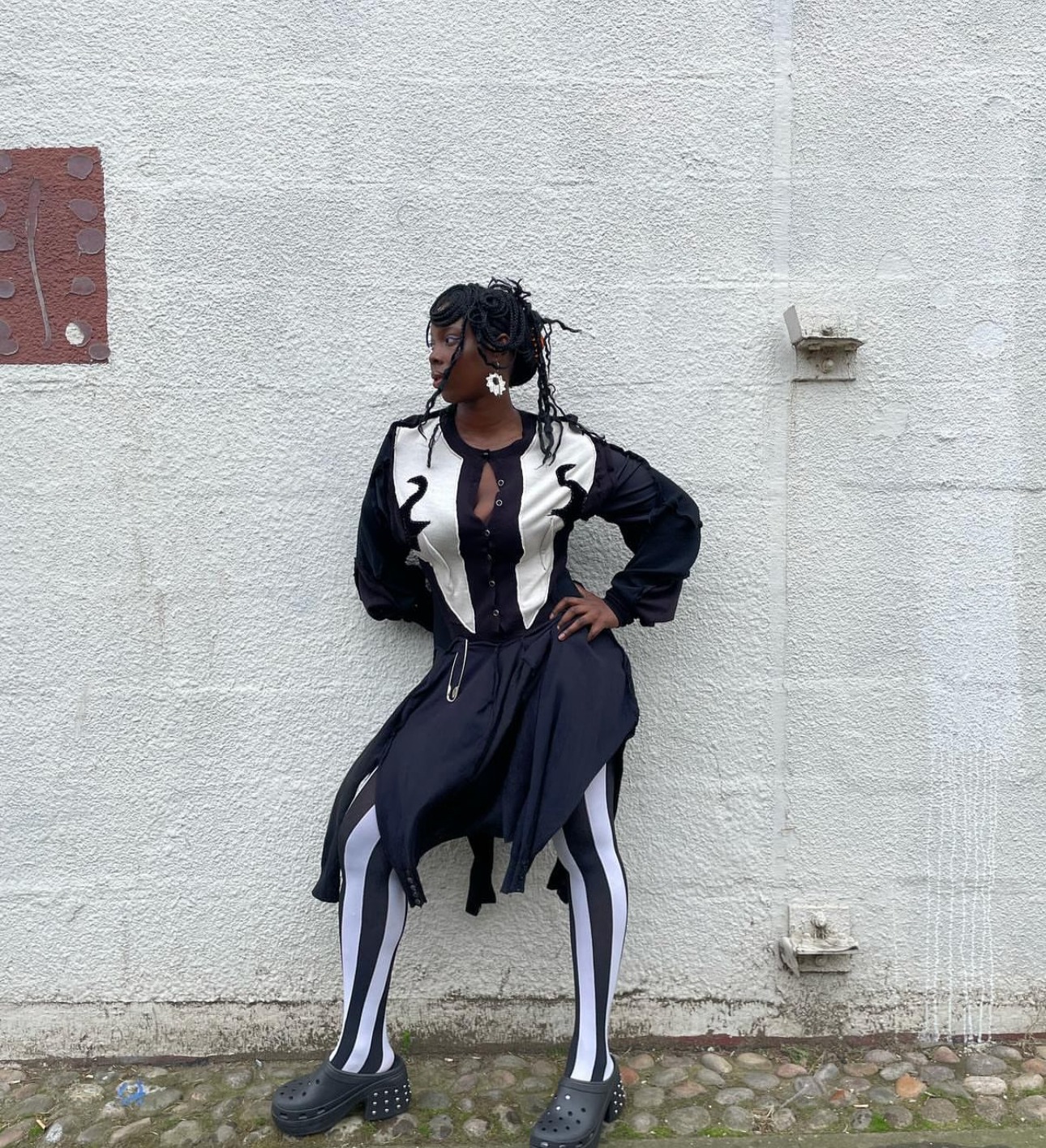
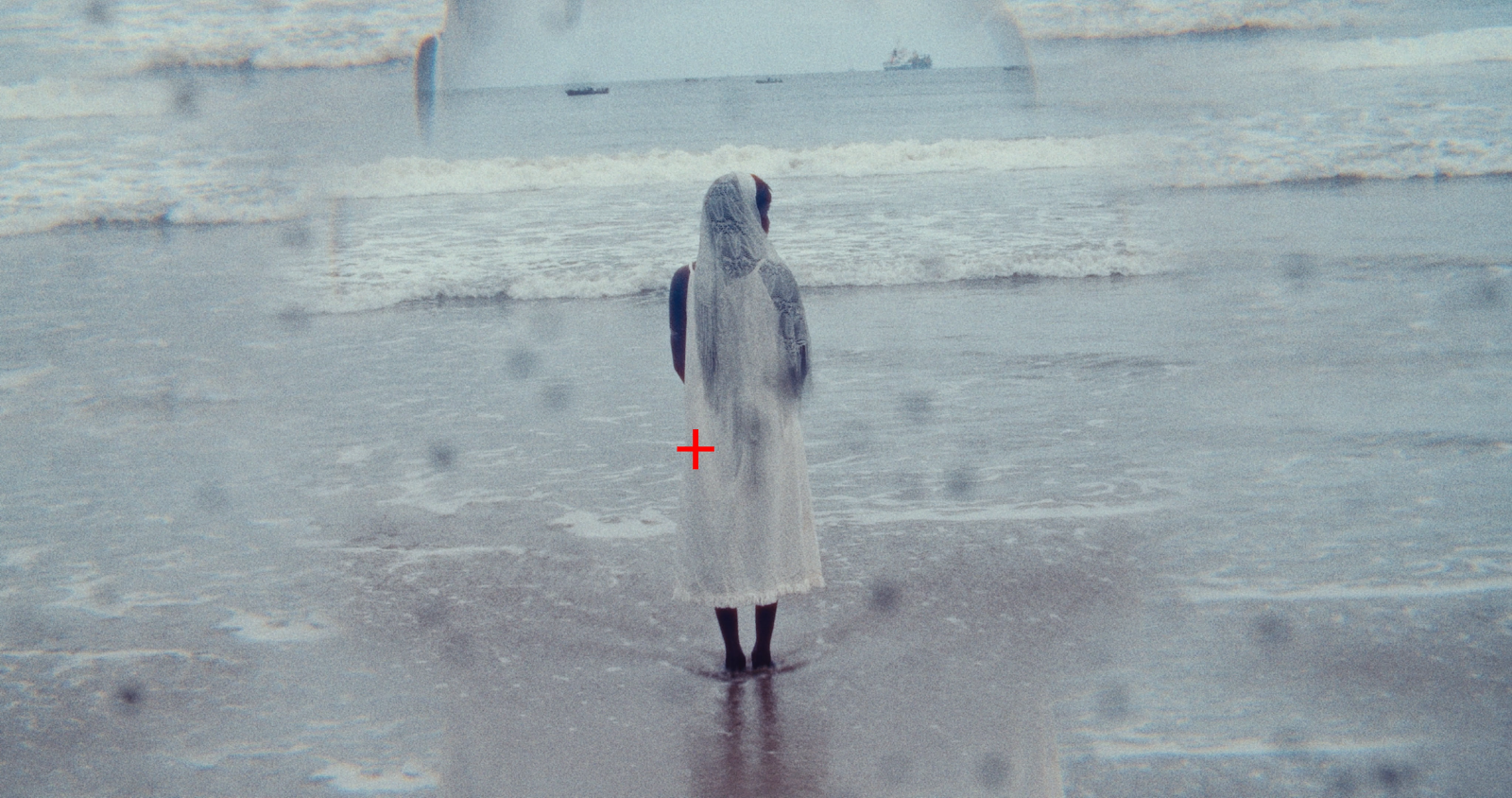
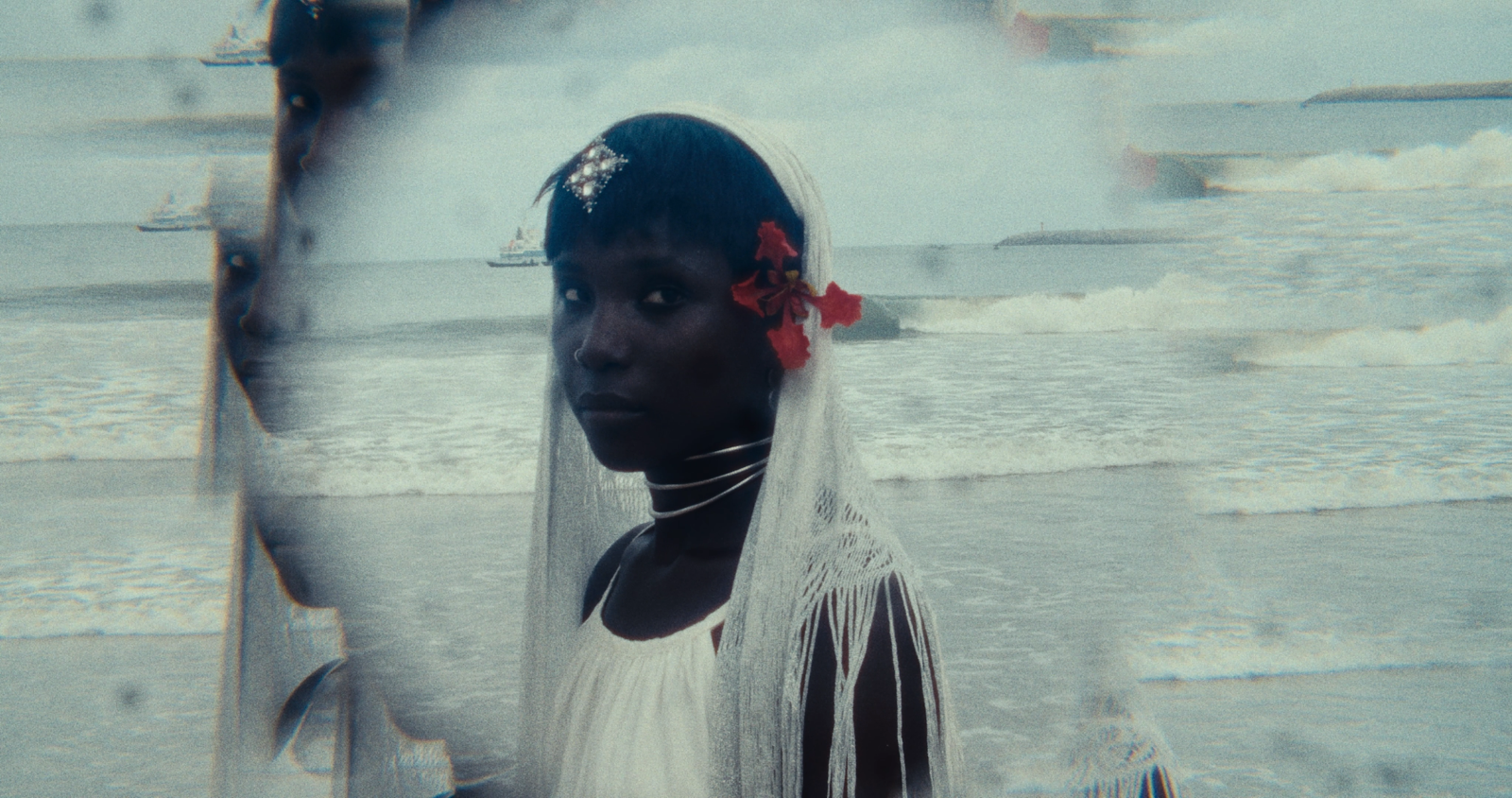
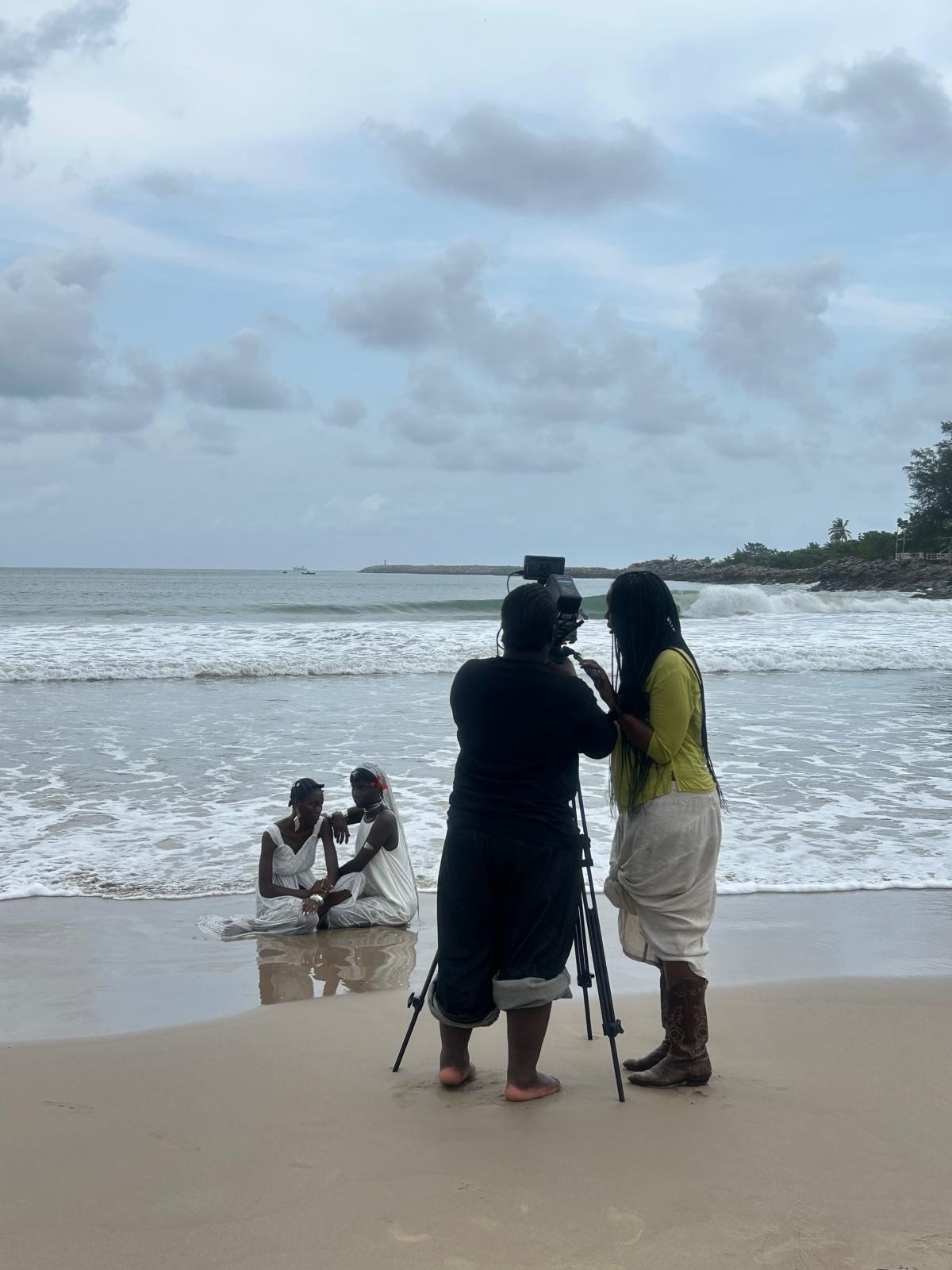
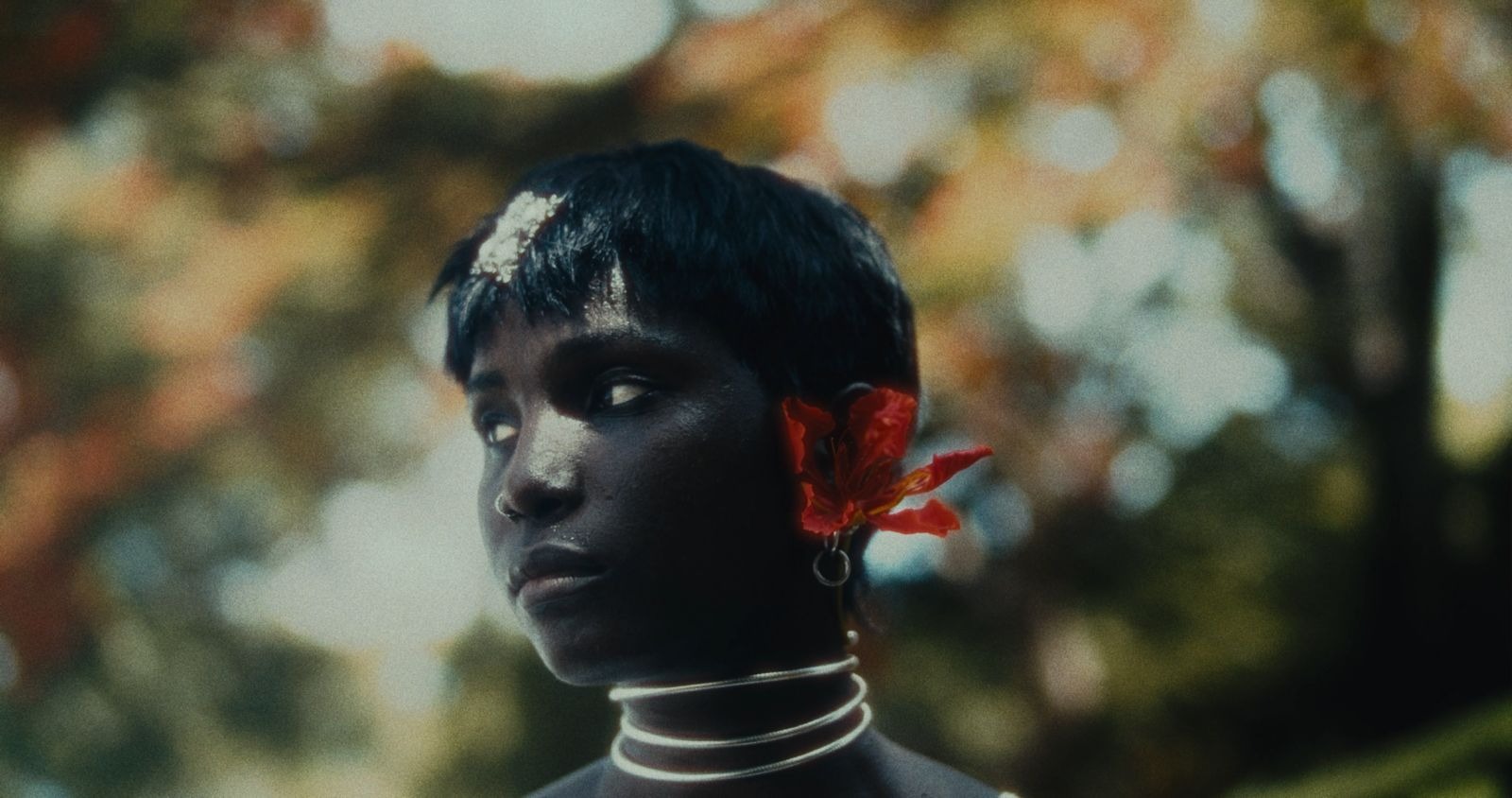
“Artist Ola Adediji journeys to the shore of Tarkwa Bay, Nigeria, to create an Afrofuturist vision of a scifi homecoming in 'Emi'. In the experimental short film, Ola reflects on the contradiction of Lagos as both a military base and a beach, where the sound of the ocean meets a metallic human-made hum, finding home at a junction of dissonance. “My research began with Afrofuturism, but what I found was time folding in on itself. I found Simone Browne's Dark Matters: On the Surveillance of Blackness, a text that breathes through wires, through wounds. Surveillance sickness: the body under the gaze, the gaze under the body. To be watched is to mutate.” - Ola Adediji, for NOWNESS
Tell me about your filmmaking journey. 
I’ve always loved film growing up. I grew up in Ireland. I experienced a lot of racism where I was, so I spent a lot of time just watching the science fiction channel. They had like, these reruns, and I would watch old science fiction films all the time. I watched 'alien’ for the first time at my grandma’s house. It’s about this alien who looks like a woman. She’s from a lab, and she escapes. I watched this when I was like, 8. It was crazy just watching her completely devour a man. It inspired some of my films.      

I started to become really interested in film–I used to do photography and stuff like that. I always knew I wanted to be an artist – I thought to myself, I can’t paint, not as strong at drawing, so what else can I do? My mom actually brought it up to me. She said, 

“Why don’t you do filmmaking? You should make a documentary about me. Do Nollywood.”

My mom was completely convinced that I was going to go to Nigeria and make a documentary on her. I mean, I could do… I could! 

It’s so awesome that your mom was the one who suggested filmmaking, especially as a Nigerian mother.
My mom’s a hairdresser, and that in and of itself is creative. I'm realizing, growing up now, my mom has massive stacks of photos that she took of us. Like, whole bags printed out. She had a camera, so she was developing film. I think she was interested in that. Maybe at a different time, somebody had told her that she should go into documentary photography. There is gonna be a time where I am gonna go through an archive of all the images that my mom took of us. She did them mostly on film – some are on a digital camera, but she still printed them out. So most of it is all physical. 

Your practice as an Afrofuturist. What drew you to this, from a cultural, creative, and historical standpoint? 
I went to college– I knew I wanted to do genre film, I wanted to do Sci-Fi. I wrote my final major project on representation within science fiction within a genre. Through researching, I came across the idea of Afrofuturism. I was thinking about:

What are the actual depictions of the future?

Why is that actually important?

What does that mean to have no representation of Black people in a futuristic context? 

What does that look like within the industry – people behind the camera, people working below the line, and how does that affect the narratives and the stories that we tell?
So this was my first conceptualization of how I actually felt and what I would want to explore as a director. I went to UAL (University of the Arts London) during the pandemic–it was quite hard. I was freelancing and working at a library at the time, so I had loads of access to archives. The university I was working at had one of the biggest archives of Black and Asian art pamphlets and displays in the U.K. It’s literally so amazing. Literally, when anyone comes to London, I’m like, you should go to this university. It’s genuinely such a great arts library. Tons and tons of Vogue editions, they have research artifacts and objects upstairs, so you can request items as well. If you go to the library every single day, you will realize its true worth.

Working at a library changed the course of my life. 

I did my dissertation at UAL about Afro-Futurism and the need for Black dystopia. When we think of the pioneers of the movement, like Sun Ra, how music ushered in Afro-futurism as both an art form and practice, and how themes have been extrapolated through other filmmakers and artists, you really start to think about how the whole thing is really a practice of thought. What can happen? What is this reality? Is the current reality that you’re met with what could possibly be in the future? 

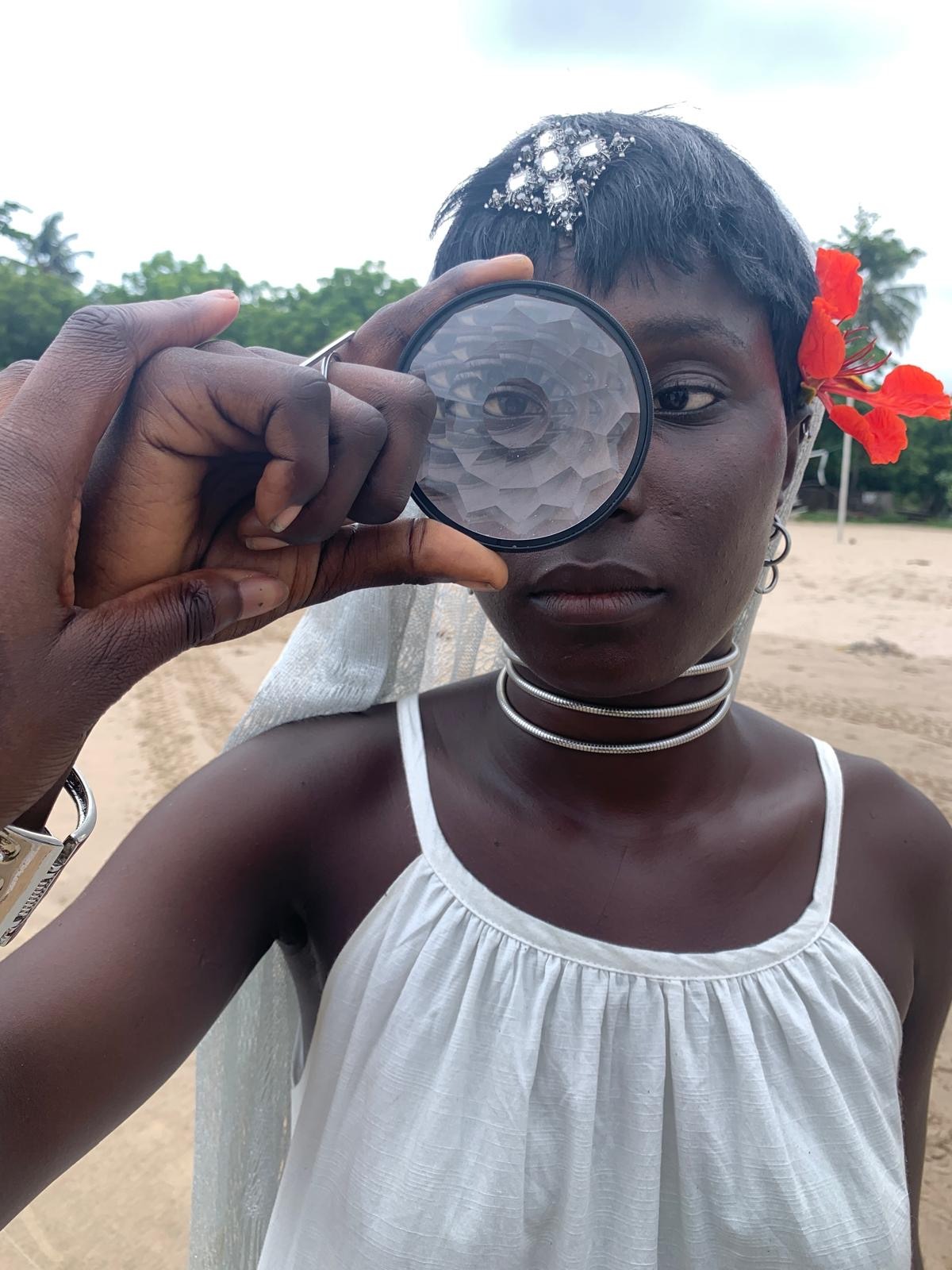
It really is about proposing a new reality. As a person who leans more dystopian, I don’t think that proposing a new reality must automatically mean it has to be happy. Black people don’t need to be smiling in a field and living in a Utopia. Even when we’re in a dystopia, there are still Black and Brown people. Our culture still exists in whatever context it is situated within. There's this cultural mutation – this development of our culture over time. I think it’s good to hold true to your culture, like our innate cultural practices. That’s why people season their baked beans with Maggi, you know what I mean? And with the cultural mutation, there is this kaleidoscope of these two things because you have another context that has come into frame. In my personal work, that’s what I was deciding about, what I really wanted to say. The intersection of the future doesn't have to be good. But it exists, and it’s not replicating the culture. It will be different – in fifty years it will be different. My desire as a director is to always propose an idea. I try not to make too many grand statements. The ideal Black future is multidimensional. 
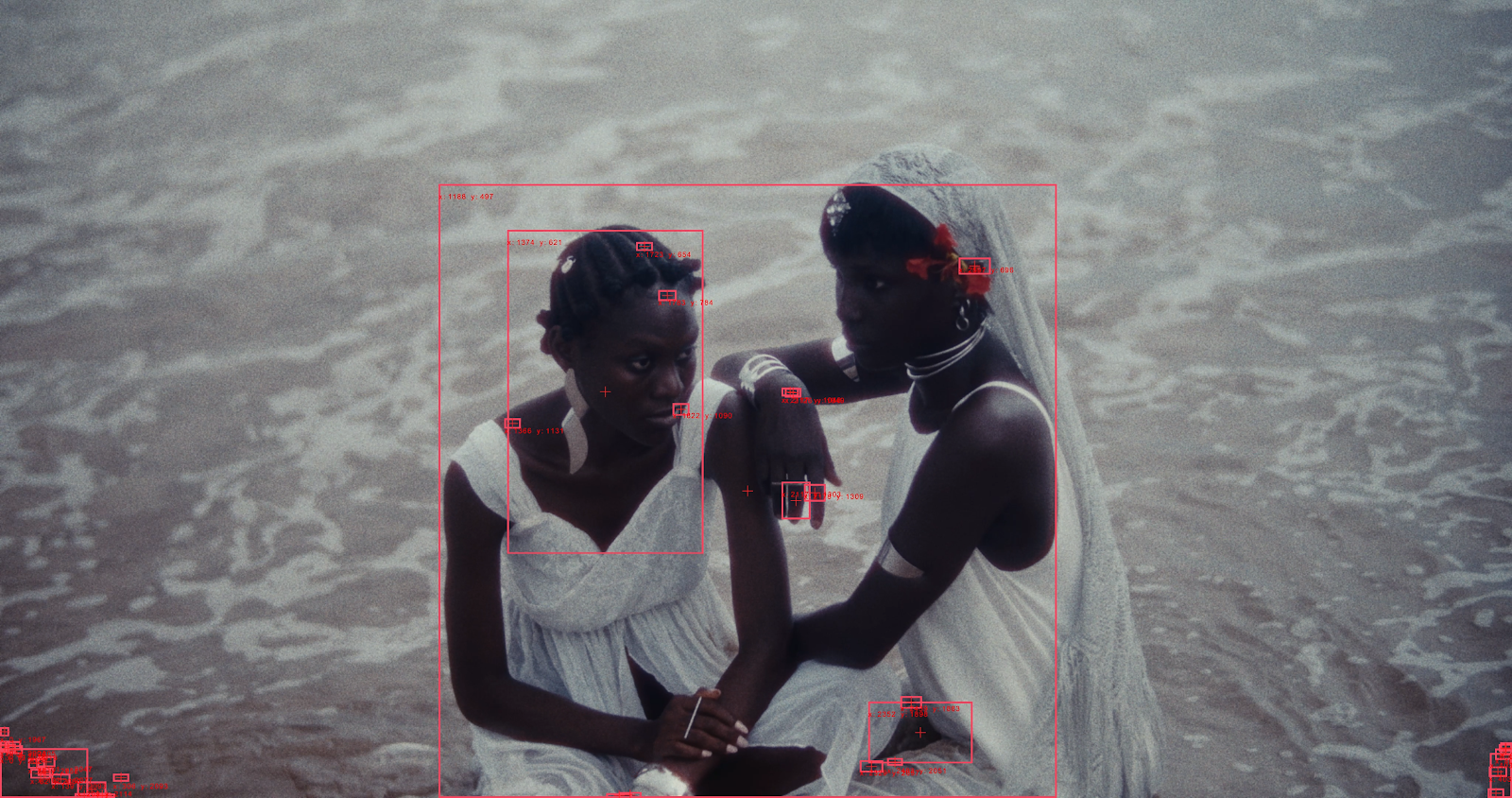
In the film ‘Emi,’ each character is being detected by this red image detector as they move. Can you talk more about this element, the concept of surveillance, the idea of being seen?
A throughline in my work is the idea of being perceived. When I thought about what I wanted the narrative to be within the film, I really wanted to explore the idea of being seen from varying perspectives. 

When you’re in a romantic situation, or you like somebody, you’re being perceived, you’re being watched, you’re being observed. At the same time, within this surveillance state that we live in, we are being perceived constantly, Black people in particular. We are watching ourselves, we are self-surveilling ourselves – we are engaging in psychological warfare on ourselves, in some ways. There is this book called Dark Matters by Simone Browne, which is one of my favorite books. It talks about surveillance sickness. It’s this idea that when one knows that you’re being recorded, you start to actually act out. So, instead of conforming to being well-behaved, because you know that you’re being watched, when you start acting out, it causes a disconnect within the mind. It’s similar on the romantic relationship side, where you feel as if, because you’re with someone and you’re being perceived and you want them to like you, there’s an infinite capacity to act out – you’re thinking about another person thinking about you. It’s this vicious feedback loop. It’s this idea that other people have this effect on you constantly. I also finished reading No Exit by Jean-Paul Sartre, where three dead people are in hell, locked in a single room, burdened by the psychological torture of judgment of each other. It really points to this constant theme that how we feel about each other, in conjunction with how we feel about ourselves, all kind of flatten into our own subjective experience. So you can be an individual, but you’re also absorbing everybody else’s energy– it’s part of you, it’s part of other people. 

I like to put ideas next to each other– and I don’t need them to necessarily touch, if that makes sense. It doesn’t have to be like, it’s about this, and it’s also about this, because it’s about this. Though my ideas are distinct relative to each other, they feel similar in the feelings that theyevoke, without needing to meld into each other. They’re just concepts sat right next to each other, but they don't necessarily need to be in direct communication. I’m not prescribing a specific outcome or feeling for the audience to take. 

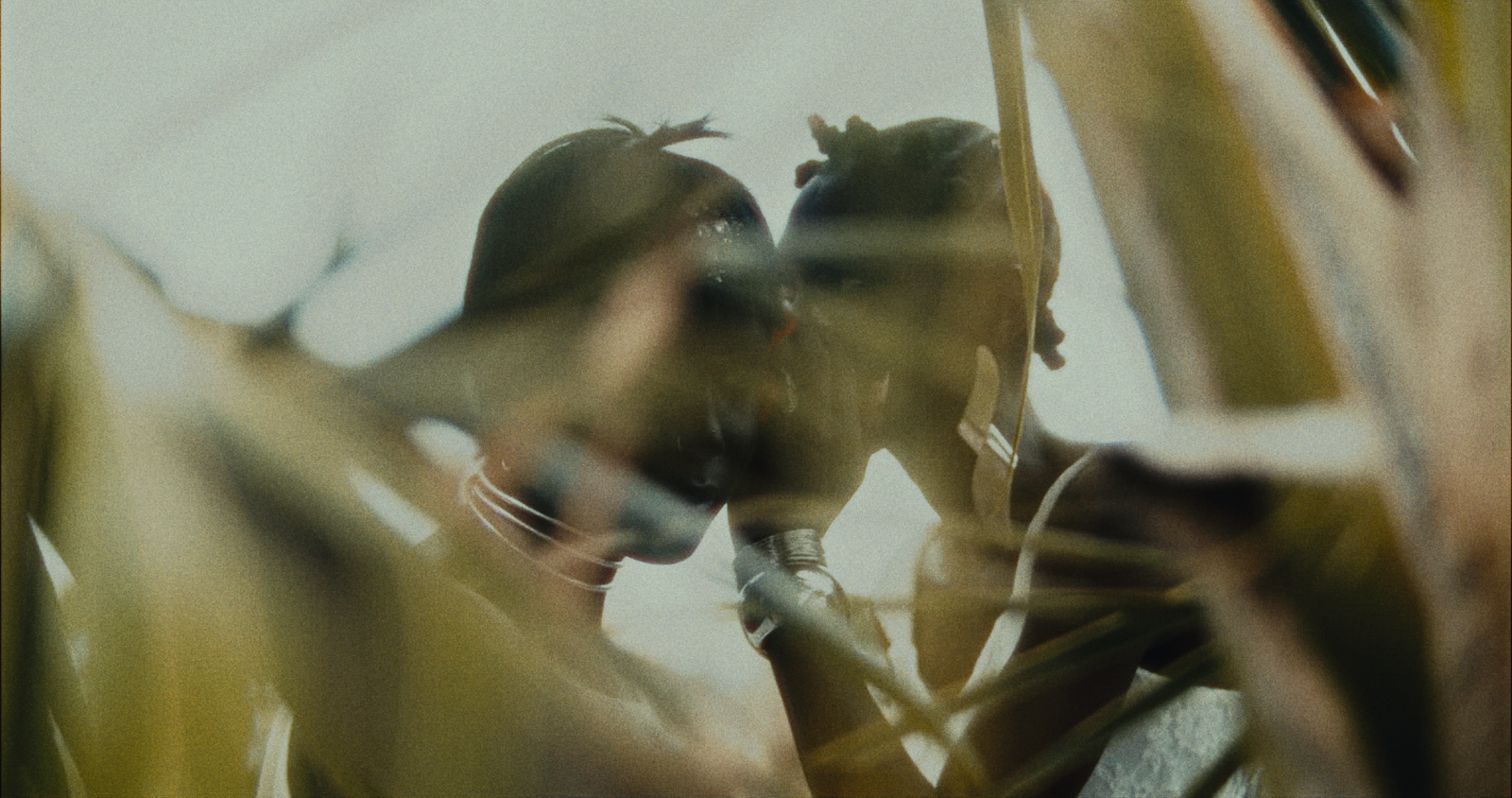
In the film ‘Emi,’ there are two women on the beach, kind of having this moment that potentially feels romantic. But…is it romantic? Is it not romantic? Are they watching each other? It’s this longing for one another, but also, you have these red image detection sensors following both of the women, surveilling them in real time. There are these cyclical elements that are happening. 

All of these ideas are sat next to each other. I never try to force things. I put ideas together for the audience and ask, “how do you feel about that?” I think that's my approach. 

Giving the audience agency in their own experience of a film is honestly nice. I feel like a lot of times now, in film, it's so prescriptive that there is no room for the audience to really think about it critically. It seems we are in an era now where people need to be heavily spoon-fed on what things mean, which does a disservice, as it removes the art away from the film. 
You’re right. Like in the film, they’re watching each other, they’re wanting each other. I never want to explain anything. Like, just in general. I like talking about art and my work, but I am always led with the feeling, which I think is the fundamental point. I am a feeling person. As a director, I ask questions like,

“How long does this shot take? How long should it take?” 

From that, then I adjust: 

“This shot is long because it made me feel this, and it feels like this needed some breath and some pacing, and it feels good. It feels like it's right.”

People interpret my work differently all the time, and I think that's okay. 

Sometimes people view my work from a very specific context that’s not necessarily me. 

I think sometimes, people experience me not as a person, but in a politicized way. I am a Black, dark-skinned woman with natural hair, and I present this way. And I’m queer. And this classification of me is not through the context of me actually being human, and wanting to tell human stories. I am my identity; that is the truth. I like being Black, I like being dark-skinned. And for my character, I made her dark-skinned because I think she looks good! You know what I mean? She looks good, and she's a person with feelings. 

Is the statement that we are people? With feelings? With thoughts? 

I get that representation in these stories is so important. But I think sometimes people think Art is representation. Art is not representation. It took me a long time to see this. When I was in college, I talked a lot about representation, like how I mentioned before, pondering on questions such as ‘What does that mean to have no representation of Black people in a futuristic context?’ As an Afro-futurist, Black futures are integral. Moreover, on the other hand, in some ways, I think it’s unfair when art is expected to always represent. I think it’s really important that people are actually creating art for the sake of creation, bringing something new and fun and their own perspectives into the world. I do think that seeing more proportional stories with Black people are really important, while at the same time, representation is not only about seeing–its about being, and the truth that being carries.

It’s not that I don’t want to make political statements, but the political statement in and of itself is that I am actually a human being. The statement is that Black people are multi-dimensional, not this one fixed, political idea. We’re also normal. And real. We’re 3D and not flattened. My first film was ‘Last Night in IRL’, it took me two years to actually finish it, which is kind of crazy. The film is about augmented reality filters. This film got into Aesthetica, BFI, Future Film Festival, and British Urban Film Festival. In that film, the character has an augmented reality filter on her face. When people have interpreted this, I’ve had people talk about how, because she’s dark, it’s interesting how she was insecure about her looks. To that end, I think people can be uncomfortable about their looks, and it doesn’t have to be about their Blackness. I wanted to convey in the story that she was insecure with who she was, and what that meant for her sense of identity and who she was in the context of society. 

A question I tend to ask is: “Are you interacting with me as a human being, or are you interacting with me as a caricature or stand-in?” 

You do a great job at showcasing the contrasting, conflicting realities of living in a surveillance state as a Black woman. This idea that you can be experiencing love and life, while also always being watched and policed by the state. Having the film set in Nigeria at a military base expands this juxtaposition as well. What was the experience like being at the shore of Tarkwa Bay, Nigeria?
It was quite interesting. We rented a private boat and we went to Lekki. We drove over to the ferry area, and it was beautiful. You get to go past different things – you get to see this very metropolitan area, going past different bank buildings, etc. As we drove further, we got to this place where people are living in sheds and cabins near the waterside. It was very communal. When we got to the shore, there were not too many boats on the water, but people are on the coastal areas. When we get there, we have to get off the boat, but there is no actual official dock – there are rafts. We had to tip over onto it, and it was floating and wobbly – we had all the equipment… It was quite stressful. We also had to be quiet as we came to the shore because it’s a military base. There’s a sign that says NO DRINKING, NO SMOKING, NO VAPING, ETC. So there were these rules for the beach. There were soldiers. 

In peak summer in Nigeria, people come here. Right behind the beach, there’s a whole village/town with small shops, shacks, a market, and people who live within the area. Some people live further out on the coast. So as we were getting ready and starting to shoot, these little surfer boys came up to us. Some of them are body surfing, some of them have surfboards, some of them are surfing on pieces of driftwood– just like doing crazy, really, really cool stuff. I literally want to go back and do a documentary about them. They're so cute. There was a younger boy who had a proper surfboard that was way bigger than him, and he was surfing. They were like beach kids, which was nice – I used to be a beach kid as well. In Ireland, it was a coastal place as well, where I grew up. I used to go to the beach all the time. The beach kids lived nearby and they were curious about what we were doing with all the cameras, etc. We ordered fried fish, and people were asking us if we needed anything which was nice. People were selling eggs, coconut water, and people were cracking coconuts. It felt like a holiday experience. It was a great vibe, but of course, you need to be aware of where you are technically. You can’t just do anything. There’s a bit of tension on the beach happening simultaneously, as it's also a military base and there are these rules on what you can/cannot do. 

It’s so interesting in ‘Emi’ when they are drawing in the sand, being really present with each other on the beach. At the same time, there is this military base they are on, and also under constant surveillance, as we talked about before. The setting of ‘Emi’ holds this contradictory element – Lagos as both a military base and a beach. To quote from NOWNESS— “Where the sound of the ocean meets a metallic human-made hum.” I love this phrasing.  Do you think this element of filming on a military base added to the film’s contextual storyline? 
Yes. Even though some things are quite messed up, and there is this tension, what you have in nature on this beach is quite precious and beautiful. The Earth is great. I wanted to convey this beauty while also framing the complexities and dissonant tensions happening at the same time– romance, surveillance, peace, visibility, and nature. The film is like a poem. It really is about the feelings. 

Eyes upon me,
like a bird above the sky
yet your love steadies me.

Come to me.

Shadows of the night,
watching, circling behind me
yet your hands call me to laughter.

Come to me.

Silent journeys,
whispers, hidden pathways—
yet your heart remains my home.

Come to me.

Emem-Esther U. Ikpot 

@ememIK46
(Instagram
/Substack/ememikpot.com)

Through My Lens: Sci-Fi Film Director Ola Adediji Dissects Afro-futurism, Black Surveillance, and the concept of Representation in film ‘Emi’

This is some text inside of a div block.

“I just knew there were stories I wanted to tell.”

Octavia E. Butler

“It really is about proposing a new reality. My desire as a director is to always propose an idea. I try not to make too many grand statements. The ideal Black future is multidimensional.”

Ola Adediji

The magic of Afrofuturist storytelling revels in building worlds that have yet to be fully realized. Across the literary, music, and art spheres, pioneers such as N.K. Jemisin, Octavia E. Butler, Sun Ra, Jean-Michel Basquiat, and more expanded the movement. And within that, contemplate the concept of time, space, human behavior, and the unknown. 

“[Afrofuturism] is really a practice of thought,” states Ola Adediji, Nigerian filmmaker, director, and creative, based in London.

“What can happen? 

What is this reality? 

Is the current reality that you’re met with what could possibly be in the future?”

As a film director, Ola Adediji’s work explores science fiction, Afrofuturism, surrealism, and the complex relationship between our human and digital experiences. Deeds Magazine sat down with Ola to talk more about her new film ‘Emi’, the existentialism of Afrofuturism, and the juxtaposition between Black surveillance and Black representation.

“Artist Ola Adediji journeys to the shore of Tarkwa Bay, Nigeria, to create an Afrofuturist vision of a scifi homecoming in 'Emi'. In the experimental short film, Ola reflects on the contradiction of Lagos as both a military base and a beach, where the sound of the ocean meets a metallic human-made hum, finding home at a junction of dissonance. “My research began with Afrofuturism, but what I found was time folding in on itself. I found Simone Browne's Dark Matters: On the Surveillance of Blackness, a text that breathes through wires, through wounds. Surveillance sickness: the body under the gaze, the gaze under the body. To be watched is to mutate.” - Ola Adediji, for NOWNESS

Tell me about your filmmaking journey. 
I’ve always loved film growing up. I grew up in Ireland. I experienced a lot of racism where I was, so I spent a lot of time just watching the science fiction channel. They had like, these reruns, and I would watch old science fiction films all the time. I watched 'alien’ for the first time at my grandma’s house. It’s about this alien who looks like a woman. She’s from a lab, and she escapes. I watched this when I was like, 8. It was crazy just watching her completely devour a man. It inspired some of my films.      

I started to become really interested in film–I used to do photography and stuff like that. I always knew I wanted to be an artist – I thought to myself, I can’t paint, not as strong at drawing, so what else can I do? My mom actually brought it up to me. She said, 

“Why don’t you do filmmaking? You should make a documentary about me. Do Nollywood.”

My mom was completely convinced that I was going to go to Nigeria and make a documentary on her. I mean, I could do… I could! 

It’s so awesome that your mom was the one who suggested filmmaking, especially as a Nigerian mother.
My mom’s a hairdresser, and that in and of itself is creative. I'm realizing, growing up now, my mom has massive stacks of photos that she took of us. Like, whole bags printed out. She had a camera, so she was developing film. I think she was interested in that. Maybe at a different time, somebody had told her that she should go into documentary photography. There is gonna be a time where I am gonna go through an archive of all the images that my mom took of us. She did them mostly on film – some are on a digital camera, but she still printed them out. So most of it is all physical. 

Your practice as an Afrofuturist. What drew you to this, from a cultural, creative, and historical standpoint? 
I went to college– I knew I wanted to do genre film, I wanted to do Sci-Fi. I wrote my final major project on representation within science fiction within a genre. Through researching, I came across the idea of Afrofuturism. I was thinking about:

What are the actual depictions of the future?

Why is that actually important?

What does that mean to have no representation of Black people in a futuristic context? 

What does that look like within the industry – people behind the camera, people working below the line, and how does that affect the narratives and the stories that we tell?
So this was my first conceptualization of how I actually felt and what I would want to explore as a director. I went to UAL (University of the Arts London) during the pandemic–it was quite hard. I was freelancing and working at a library at the time, so I had loads of access to archives. The university I was working at had one of the biggest archives of Black and Asian art pamphlets and displays in the U.K. It’s literally so amazing. Literally, when anyone comes to London, I’m like, you should go to this university. It’s genuinely such a great arts library. Tons and tons of Vogue editions, they have research artifacts and objects upstairs, so you can request items as well. If you go to the library every single day, you will realize its true worth.

Working at a library changed the course of my life. 

I did my dissertation at UAL about Afro-Futurism and the need for Black dystopia. When we think of the pioneers of the movement, like Sun Ra, how music ushered in Afro-futurism as both an art form and practice, and how themes have been extrapolated through other filmmakers and artists, you really start to think about how the whole thing is really a practice of thought. What can happen? What is this reality? Is the current reality that you’re met with what could possibly be in the future? 

It really is about proposing a new reality. As a person who leans more dystopian, I don’t think that proposing a new reality must automatically mean it has to be happy. Black people don’t need to be smiling in a field and living in a Utopia. Even when we’re in a dystopia, there are still Black and Brown people. Our culture still exists in whatever context it is situated within. There's this cultural mutation – this development of our culture over time. I think it’s good to hold true to your culture, like our innate cultural practices. That’s why people season their baked beans with Maggi, you know what I mean? And with the cultural mutation, there is this kaleidoscope of these two things because you have another context that has come into frame. In my personal work, that’s what I was deciding about, what I really wanted to say. The intersection of the future doesn't have to be good. But it exists, and it’s not replicating the culture. It will be different – in fifty years it will be different. My desire as a director is to always propose an idea. I try not to make too many grand statements. The ideal Black future is multidimensional. 
In the film ‘Emi,’ each character is being detected by this red image detector as they move. Can you talk more about this element, the concept of surveillance, the idea of being seen?
A throughline in my work is the idea of being perceived. When I thought about what I wanted the narrative to be within the film, I really wanted to explore the idea of being seen from varying perspectives. 

When you’re in a romantic situation, or you like somebody, you’re being perceived, you’re being watched, you’re being observed. At the same time, within this surveillance state that we live in, we are being perceived constantly, Black people in particular. We are watching ourselves, we are self-surveilling ourselves – we are engaging in psychological warfare on ourselves, in some ways. There is this book called Dark Matters by Simone Browne, which is one of my favorite books. It talks about surveillance sickness. It’s this idea that when one knows that you’re being recorded, you start to actually act out. So, instead of conforming to being well-behaved, because you know that you’re being watched, when you start acting out, it causes a disconnect within the mind. It’s similar on the romantic relationship side, where you feel as if, because you’re with someone and you’re being perceived and you want them to like you, there’s an infinite capacity to act out – you’re thinking about another person thinking about you. It’s this vicious feedback loop. It’s this idea that other people have this effect on you constantly. I also finished reading No Exit by Jean-Paul Sartre, where three dead people are in hell, locked in a single room, burdened by the psychological torture of judgment of each other. It really points to this constant theme that how we feel about each other, in conjunction with how we feel about ourselves, all kind of flatten into our own subjective experience. So you can be an individual, but you’re also absorbing everybody else’s energy– it’s part of you, it’s part of other people. 

I like to put ideas next to each other– and I don’t need them to necessarily touch, if that makes sense. It doesn’t have to be like, it’s about this, and it’s also about this, because it’s about this. Though my ideas are distinct relative to each other, they feel similar in the feelings that theyevoke, without needing to meld into each other. They’re just concepts sat right next to each other, but they don't necessarily need to be in direct communication. I’m not prescribing a specific outcome or feeling for the audience to take. 

In the film ‘Emi,’ there are two women on the beach, kind of having this moment that potentially feels romantic. But…is it romantic? Is it not romantic? Are they watching each other? It’s this longing for one another, but also, you have these red image detection sensors following both of the women, surveilling them in real time. There are these cyclical elements that are happening. 

All of these ideas are sat next to each other. I never try to force things. I put ideas together for the audience and ask, “how do you feel about that?” I think that's my approach. 

Giving the audience agency in their own experience of a film is honestly nice. I feel like a lot of times now, in film, it's so prescriptive that there is no room for the audience to really think about it critically. It seems we are in an era now where people need to be heavily spoon-fed on what things mean, which does a disservice, as it removes the art away from the film. 
You’re right. Like in the film, they’re watching each other, they’re wanting each other. I never want to explain anything. Like, just in general. I like talking about art and my work, but I am always led with the feeling, which I think is the fundamental point. I am a feeling person. As a director, I ask questions like,

“How long does this shot take? How long should it take?” 

From that, then I adjust: 

“This shot is long because it made me feel this, and it feels like this needed some breath and some pacing, and it feels good. It feels like it's right.”

People interpret my work differently all the time, and I think that's okay. 

Sometimes people view my work from a very specific context that’s not necessarily me. 

I think sometimes, people experience me not as a person, but in a politicized way. I am a Black, dark-skinned woman with natural hair, and I present this way. And I’m queer. And this classification of me is not through the context of me actually being human, and wanting to tell human stories. I am my identity; that is the truth. I like being Black, I like being dark-skinned. And for my character, I made her dark-skinned because I think she looks good! You know what I mean? She looks good, and she's a person with feelings. 

Is the statement that we are people? With feelings? With thoughts? 

I get that representation in these stories is so important. But I think sometimes people think Art is representation. Art is not representation. It took me a long time to see this. When I was in college, I talked a lot about representation, like how I mentioned before, pondering on questions such as ‘What does that mean to have no representation of Black people in a futuristic context?’ As an Afro-futurist, Black futures are integral. Moreover, on the other hand, in some ways, I think it’s unfair when art is expected to always represent. I think it’s really important that people are actually creating art for the sake of creation, bringing something new and fun and their own perspectives into the world. I do think that seeing more proportional stories with Black people are really important, while at the same time, representation is not only about seeing–its about being, and the truth that being carries.

It’s not that I don’t want to make political statements, but the political statement in and of itself is that I am actually a human being. The statement is that Black people are multi-dimensional, not this one fixed, political idea. We’re also normal. And real. We’re 3D and not flattened. My first film was ‘Last Night in IRL’, it took me two years to actually finish it, which is kind of crazy. The film is about augmented reality filters. This film got into Aesthetica, BFI, Future Film Festival, and British Urban Film Festival. In that film, the character has an augmented reality filter on her face. When people have interpreted this, I’ve had people talk about how, because she’s dark, it’s interesting how she was insecure about her looks. To that end, I think people can be uncomfortable about their looks, and it doesn’t have to be about their Blackness. I wanted to convey in the story that she was insecure with who she was, and what that meant for her sense of identity and who she was in the context of society. 

A question I tend to ask is: “Are you interacting with me as a human being, or are you interacting with me as a caricature or stand-in?” 

You do a great job at showcasing the contrasting, conflicting realities of living in a surveillance state as a Black woman. This idea that you can be experiencing love and life, while also always being watched and policed by the state. Having the film set in Nigeria at a military base expands this juxtaposition as well. What was the experience like being at the shore of Tarkwa Bay, Nigeria?
It was quite interesting. We rented a private boat and we went to Lekki. We drove over to the ferry area, and it was beautiful. You get to go past different things – you get to see this very metropolitan area, going past different bank buildings, etc. As we drove further, we got to this place where people are living in sheds and cabins near the waterside. It was very communal. When we got to the shore, there were not too many boats on the water, but people are on the coastal areas. When we get there, we have to get off the boat, but there is no actual official dock – there are rafts. We had to tip over onto it, and it was floating and wobbly – we had all the equipment… It was quite stressful. We also had to be quiet as we came to the shore because it’s a military base. There’s a sign that says NO DRINKING, NO SMOKING, NO VAPING, ETC. So there were these rules for the beach. There were soldiers. 

In peak summer in Nigeria, people come here. Right behind the beach, there’s a whole village/town with small shops, shacks, a market, and people who live within the area. Some people live further out on the coast. So as we were getting ready and starting to shoot, these little surfer boys came up to us. Some of them are body surfing, some of them have surfboards, some of them are surfing on pieces of driftwood– just like doing crazy, really, really cool stuff. I literally want to go back and do a documentary about them. They're so cute. There was a younger boy who had a proper surfboard that was way bigger than him, and he was surfing. They were like beach kids, which was nice – I used to be a beach kid as well. In Ireland, it was a coastal place as well, where I grew up. I used to go to the beach all the time. The beach kids lived nearby and they were curious about what we were doing with all the cameras, etc. We ordered fried fish, and people were asking us if we needed anything which was nice. People were selling eggs, coconut water, and people were cracking coconuts. It felt like a holiday experience. It was a great vibe, but of course, you need to be aware of where you are technically. You can’t just do anything. There’s a bit of tension on the beach happening simultaneously, as it's also a military base and there are these rules on what you can/cannot do. 

It’s so interesting in ‘Emi’ when they are drawing in the sand, being really present with each other on the beach. At the same time, there is this military base they are on, and also under constant surveillance, as we talked about before. The setting of ‘Emi’ holds this contradictory element – Lagos as both a military base and a beach. To quote from NOWNESS— “Where the sound of the ocean meets a metallic human-made hum.” I love this phrasing.  Do you think this element of filming on a military base added to the film’s contextual storyline? 
Yes. Even though some things are quite messed up, and there is this tension, what you have in nature on this beach is quite precious and beautiful. The Earth is great. I wanted to convey this beauty while also framing the complexities and dissonant tensions happening at the same time– romance, surveillance, peace, visibility, and nature. The film is like a poem. It really is about the feelings. 

Eyes upon me,
like a bird above the sky
yet your love steadies me.

Come to me.

Shadows of the night,
watching, circling behind me
yet your hands call me to laughter.

Come to me.

Silent journeys,
whispers, hidden pathways—
yet your heart remains my home.

Come to me.

Emem-Esther U. Ikpot 

@ememIK46
(Instagram
/Substack/ememikpot.com)

This is some text inside of a div block.

Through My Lens: Sci-Fi Film Director Ola Adediji Dissects Afro-futurism, Black Surveillance, and the concept of Representation in film ‘Emi’

“I just knew there were stories I wanted to tell.”

Octavia E. Butler

“It really is about proposing a new reality. My desire as a director is to always propose an idea. I try not to make too many grand statements. The ideal Black future is multidimensional.”

Ola Adediji

The magic of Afrofuturist storytelling revels in building worlds that have yet to be fully realized. Across the literary, music, and art spheres, pioneers such as N.K. Jemisin, Octavia E. Butler, Sun Ra, Jean-Michel Basquiat, and more expanded the movement. And within that, contemplate the concept of time, space, human behavior, and the unknown. 

“[Afrofuturism] is really a practice of thought,” states Ola Adediji, Nigerian filmmaker, director, and creative, based in London.

“What can happen? 

What is this reality? 

Is the current reality that you’re met with what could possibly be in the future?”

As a film director, Ola Adediji’s work explores science fiction, Afrofuturism, surrealism, and the complex relationship between our human and digital experiences. Deeds Magazine sat down with Ola to talk more about her new film ‘Emi’, the existentialism of Afrofuturism, and the juxtaposition between Black surveillance and Black representation.

“Artist Ola Adediji journeys to the shore of Tarkwa Bay, Nigeria, to create an Afrofuturist vision of a scifi homecoming in 'Emi'. In the experimental short film, Ola reflects on the contradiction of Lagos as both a military base and a beach, where the sound of the ocean meets a metallic human-made hum, finding home at a junction of dissonance. “My research began with Afrofuturism, but what I found was time folding in on itself. I found Simone Browne's Dark Matters: On the Surveillance of Blackness, a text that breathes through wires, through wounds. Surveillance sickness: the body under the gaze, the gaze under the body. To be watched is to mutate.” - Ola Adediji, for NOWNESS

Tell me about your filmmaking journey. 
I’ve always loved film growing up. I grew up in Ireland. I experienced a lot of racism where I was, so I spent a lot of time just watching the science fiction channel. They had like, these reruns, and I would watch old science fiction films all the time. I watched 'alien’ for the first time at my grandma’s house. It’s about this alien who looks like a woman. She’s from a lab, and she escapes. I watched this when I was like, 8. It was crazy just watching her completely devour a man. It inspired some of my films.      

I started to become really interested in film–I used to do photography and stuff like that. I always knew I wanted to be an artist – I thought to myself, I can’t paint, not as strong at drawing, so what else can I do? My mom actually brought it up to me. She said, 

“Why don’t you do filmmaking? You should make a documentary about me. Do Nollywood.”

My mom was completely convinced that I was going to go to Nigeria and make a documentary on her. I mean, I could do… I could! 

It’s so awesome that your mom was the one who suggested filmmaking, especially as a Nigerian mother.
My mom’s a hairdresser, and that in and of itself is creative. I'm realizing, growing up now, my mom has massive stacks of photos that she took of us. Like, whole bags printed out. She had a camera, so she was developing film. I think she was interested in that. Maybe at a different time, somebody had told her that she should go into documentary photography. There is gonna be a time where I am gonna go through an archive of all the images that my mom took of us. She did them mostly on film – some are on a digital camera, but she still printed them out. So most of it is all physical. 

Your practice as an Afrofuturist. What drew you to this, from a cultural, creative, and historical standpoint? 
I went to college– I knew I wanted to do genre film, I wanted to do Sci-Fi. I wrote my final major project on representation within science fiction within a genre. Through researching, I came across the idea of Afrofuturism. I was thinking about:

What are the actual depictions of the future?

Why is that actually important?

What does that mean to have no representation of Black people in a futuristic context? 

What does that look like within the industry – people behind the camera, people working below the line, and how does that affect the narratives and the stories that we tell?
So this was my first conceptualization of how I actually felt and what I would want to explore as a director. I went to UAL (University of the Arts London) during the pandemic–it was quite hard. I was freelancing and working at a library at the time, so I had loads of access to archives. The university I was working at had one of the biggest archives of Black and Asian art pamphlets and displays in the U.K. It’s literally so amazing. Literally, when anyone comes to London, I’m like, you should go to this university. It’s genuinely such a great arts library. Tons and tons of Vogue editions, they have research artifacts and objects upstairs, so you can request items as well. If you go to the library every single day, you will realize its true worth.

Working at a library changed the course of my life. 

I did my dissertation at UAL about Afro-Futurism and the need for Black dystopia. When we think of the pioneers of the movement, like Sun Ra, how music ushered in Afro-futurism as both an art form and practice, and how themes have been extrapolated through other filmmakers and artists, you really start to think about how the whole thing is really a practice of thought. What can happen? What is this reality? Is the current reality that you’re met with what could possibly be in the future? 

It really is about proposing a new reality. As a person who leans more dystopian, I don’t think that proposing a new reality must automatically mean it has to be happy. Black people don’t need to be smiling in a field and living in a Utopia. Even when we’re in a dystopia, there are still Black and Brown people. Our culture still exists in whatever context it is situated within. There's this cultural mutation – this development of our culture over time. I think it’s good to hold true to your culture, like our innate cultural practices. That’s why people season their baked beans with Maggi, you know what I mean? And with the cultural mutation, there is this kaleidoscope of these two things because you have another context that has come into frame. In my personal work, that’s what I was deciding about, what I really wanted to say. The intersection of the future doesn't have to be good. But it exists, and it’s not replicating the culture. It will be different – in fifty years it will be different. My desire as a director is to always propose an idea. I try not to make too many grand statements. The ideal Black future is multidimensional. 
In the film ‘Emi,’ each character is being detected by this red image detector as they move. Can you talk more about this element, the concept of surveillance, the idea of being seen?
A throughline in my work is the idea of being perceived. When I thought about what I wanted the narrative to be within the film, I really wanted to explore the idea of being seen from varying perspectives. 

When you’re in a romantic situation, or you like somebody, you’re being perceived, you’re being watched, you’re being observed. At the same time, within this surveillance state that we live in, we are being perceived constantly, Black people in particular. We are watching ourselves, we are self-surveilling ourselves – we are engaging in psychological warfare on ourselves, in some ways. There is this book called Dark Matters by Simone Browne, which is one of my favorite books. It talks about surveillance sickness. It’s this idea that when one knows that you’re being recorded, you start to actually act out. So, instead of conforming to being well-behaved, because you know that you’re being watched, when you start acting out, it causes a disconnect within the mind. It’s similar on the romantic relationship side, where you feel as if, because you’re with someone and you’re being perceived and you want them to like you, there’s an infinite capacity to act out – you’re thinking about another person thinking about you. It’s this vicious feedback loop. It’s this idea that other people have this effect on you constantly. I also finished reading No Exit by Jean-Paul Sartre, where three dead people are in hell, locked in a single room, burdened by the psychological torture of judgment of each other. It really points to this constant theme that how we feel about each other, in conjunction with how we feel about ourselves, all kind of flatten into our own subjective experience. So you can be an individual, but you’re also absorbing everybody else’s energy– it’s part of you, it’s part of other people. 

I like to put ideas next to each other– and I don’t need them to necessarily touch, if that makes sense. It doesn’t have to be like, it’s about this, and it’s also about this, because it’s about this. Though my ideas are distinct relative to each other, they feel similar in the feelings that theyevoke, without needing to meld into each other. They’re just concepts sat right next to each other, but they don't necessarily need to be in direct communication. I’m not prescribing a specific outcome or feeling for the audience to take. 

In the film ‘Emi,’ there are two women on the beach, kind of having this moment that potentially feels romantic. But…is it romantic? Is it not romantic? Are they watching each other? It’s this longing for one another, but also, you have these red image detection sensors following both of the women, surveilling them in real time. There are these cyclical elements that are happening. 

All of these ideas are sat next to each other. I never try to force things. I put ideas together for the audience and ask, “how do you feel about that?” I think that's my approach. 
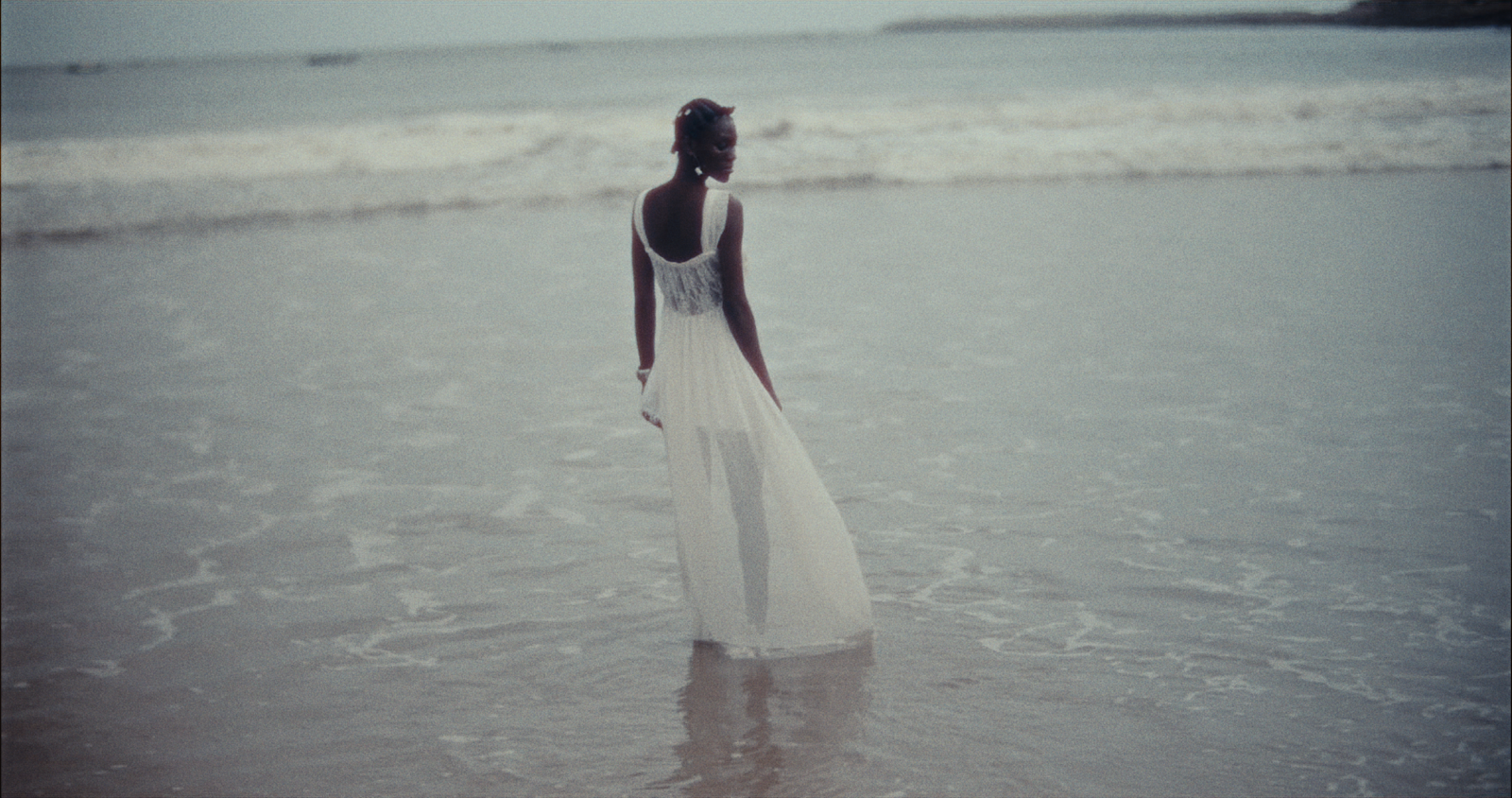
Giving the audience agency in their own experience of a film is honestly nice. I feel like a lot of times now, in film, it's so prescriptive that there is no room for the audience to really think about it critically. It seems we are in an era now where people need to be heavily spoon-fed on what things mean, which does a disservice, as it removes the art away from the film. 
You’re right. Like in the film, they’re watching each other, they’re wanting each other. I never want to explain anything. Like, just in general. I like talking about art and my work, but I am always led with the feeling, which I think is the fundamental point. I am a feeling person. As a director, I ask questions like,

“How long does this shot take? How long should it take?” 

From that, then I adjust: 

“This shot is long because it made me feel this, and it feels like this needed some breath and some pacing, and it feels good. It feels like it's right.”

People interpret my work differently all the time, and I think that's okay. 

Sometimes people view my work from a very specific context that’s not necessarily me. 

I think sometimes, people experience me not as a person, but in a politicized way. I am a Black, dark-skinned woman with natural hair, and I present this way. And I’m queer. And this classification of me is not through the context of me actually being human, and wanting to tell human stories. I am my identity; that is the truth. I like being Black, I like being dark-skinned. And for my character, I made her dark-skinned because I think she looks good! You know what I mean? She looks good, and she's a person with feelings. 

Is the statement that we are people? With feelings? With thoughts? 

I get that representation in these stories is so important. But I think sometimes people think Art is representation. Art is not representation. It took me a long time to see this. When I was in college, I talked a lot about representation, like how I mentioned before, pondering on questions such as ‘What does that mean to have no representation of Black people in a futuristic context?’ As an Afro-futurist, Black futures are integral. Moreover, on the other hand, in some ways, I think it’s unfair when art is expected to always represent. I think it’s really important that people are actually creating art for the sake of creation, bringing something new and fun and their own perspectives into the world. I do think that seeing more proportional stories with Black people are really important, while at the same time, representation is not only about seeing–its about being, and the truth that being carries.

It’s not that I don’t want to make political statements, but the political statement in and of itself is that I am actually a human being. The statement is that Black people are multi-dimensional, not this one fixed, political idea. We’re also normal. And real. We’re 3D and not flattened. My first film was ‘Last Night in IRL’, it took me two years to actually finish it, which is kind of crazy. The film is about augmented reality filters. This film got into Aesthetica, BFI, Future Film Festival, and British Urban Film Festival. In that film, the character has an augmented reality filter on her face. When people have interpreted this, I’ve had people talk about how, because she’s dark, it’s interesting how she was insecure about her looks. To that end, I think people can be uncomfortable about their looks, and it doesn’t have to be about their Blackness. I wanted to convey in the story that she was insecure with who she was, and what that meant for her sense of identity and who she was in the context of society. 

A question I tend to ask is: “Are you interacting with me as a human being, or are you interacting with me as a caricature or stand-in?” 
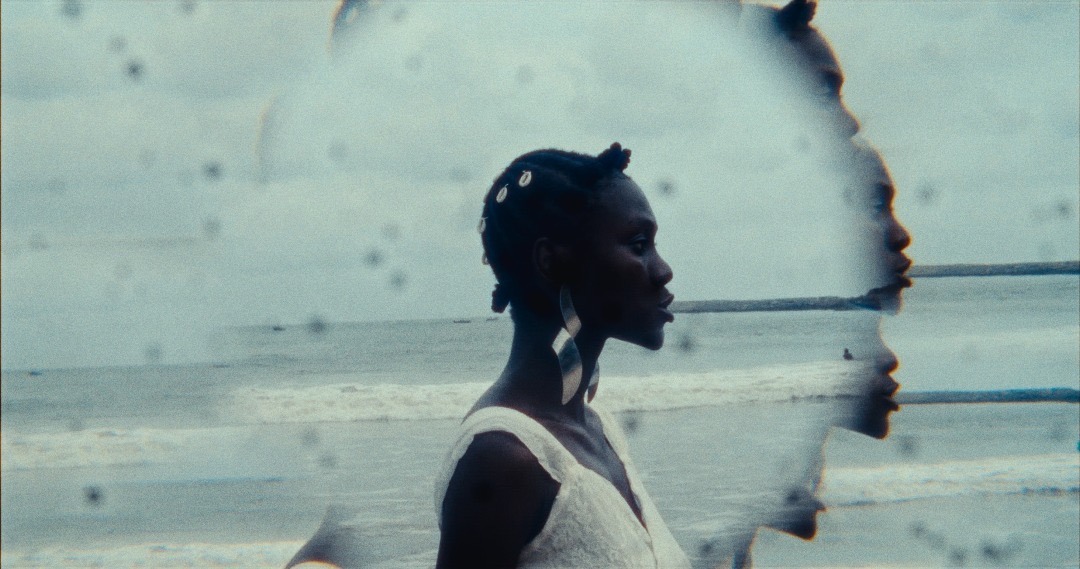
You do a great job at showcasing the contrasting, conflicting realities of living in a surveillance state as a Black woman. This idea that you can be experiencing love and life, while also always being watched and policed by the state. Having the film set in Nigeria at a military base expands this juxtaposition as well. What was the experience like being at the shore of Tarkwa Bay, Nigeria?
It was quite interesting. We rented a private boat and we went to Lekki. We drove over to the ferry area, and it was beautiful. You get to go past different things – you get to see this very metropolitan area, going past different bank buildings, etc. As we drove further, we got to this place where people are living in sheds and cabins near the waterside. It was very communal. When we got to the shore, there were not too many boats on the water, but people are on the coastal areas. When we get there, we have to get off the boat, but there is no actual official dock – there are rafts. We had to tip over onto it, and it was floating and wobbly – we had all the equipment… It was quite stressful. We also had to be quiet as we came to the shore because it’s a military base. There’s a sign that says NO DRINKING, NO SMOKING, NO VAPING, ETC. So there were these rules for the beach. There were soldiers. 

In peak summer in Nigeria, people come here. Right behind the beach, there’s a whole village/town with small shops, shacks, a market, and people who live within the area. Some people live further out on the coast. So as we were getting ready and starting to shoot, these little surfer boys came up to us. Some of them are body surfing, some of them have surfboards, some of them are surfing on pieces of driftwood– just like doing crazy, really, really cool stuff. I literally want to go back and do a documentary about them. They're so cute. There was a younger boy who had a proper surfboard that was way bigger than him, and he was surfing. They were like beach kids, which was nice – I used to be a beach kid as well. In Ireland, it was a coastal place as well, where I grew up. I used to go to the beach all the time. The beach kids lived nearby and they were curious about what we were doing with all the cameras, etc. We ordered fried fish, and people were asking us if we needed anything which was nice. People were selling eggs, coconut water, and people were cracking coconuts. It felt like a holiday experience. It was a great vibe, but of course, you need to be aware of where you are technically. You can’t just do anything. There’s a bit of tension on the beach happening simultaneously, as it's also a military base and there are these rules on what you can/cannot do. 
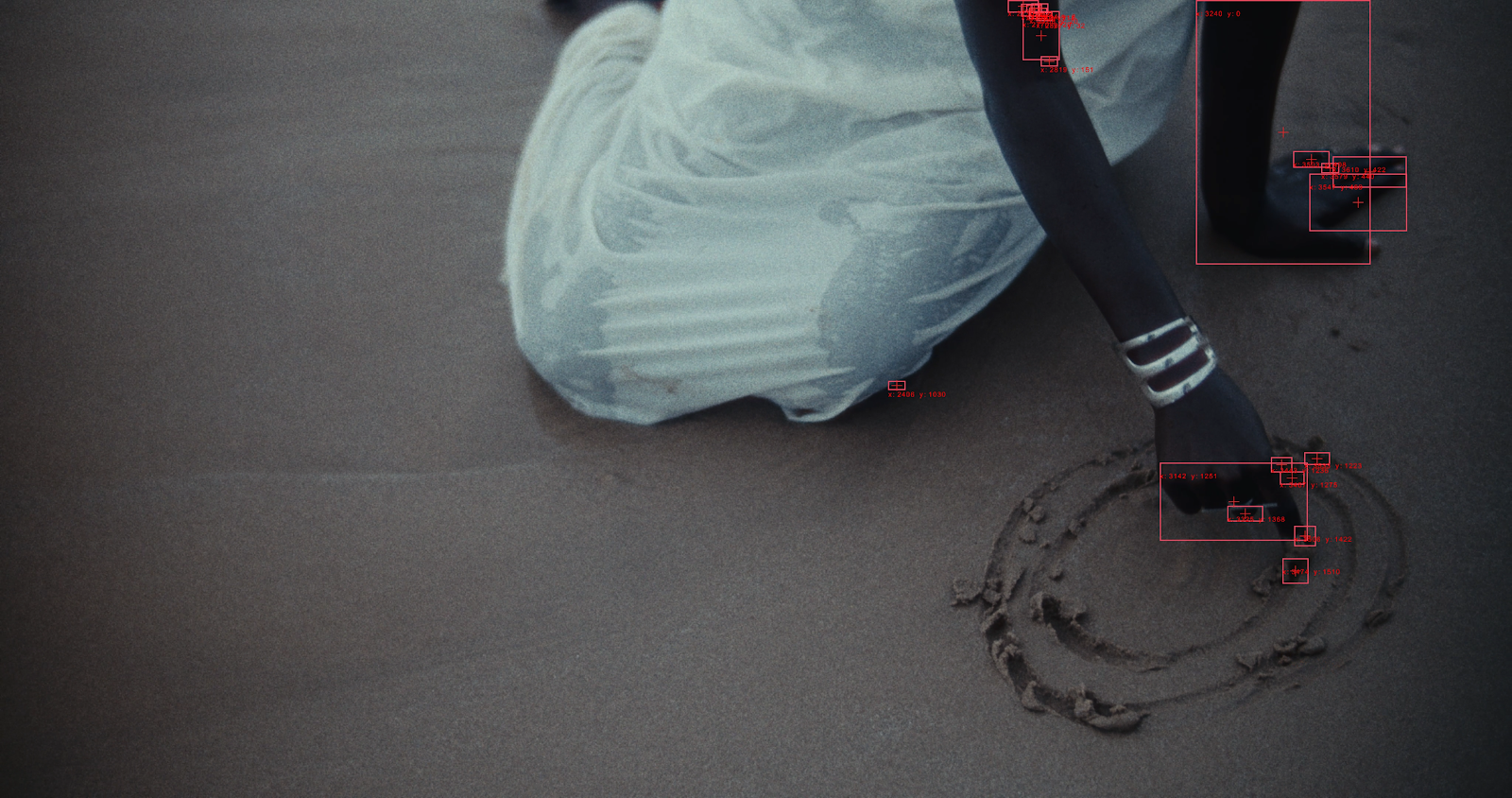
It’s so interesting in ‘Emi’ when they are drawing in the sand, being really present with each other on the beach. At the same time, there is this military base they are on, and also under constant surveillance, as we talked about before. The setting of ‘Emi’ holds this contradictory element – Lagos as both a military base and a beach. To quote from NOWNESS— “Where the sound of the ocean meets a metallic human-made hum.” I love this phrasing.  Do you think this element of filming on a military base added to the film’s contextual storyline? 
Yes. Even though some things are quite messed up, and there is this tension, what you have in nature on this beach is quite precious and beautiful. The Earth is great. I wanted to convey this beauty while also framing the complexities and dissonant tensions happening at the same time– romance, surveillance, peace, visibility, and nature. The film is like a poem. It really is about the feelings. 
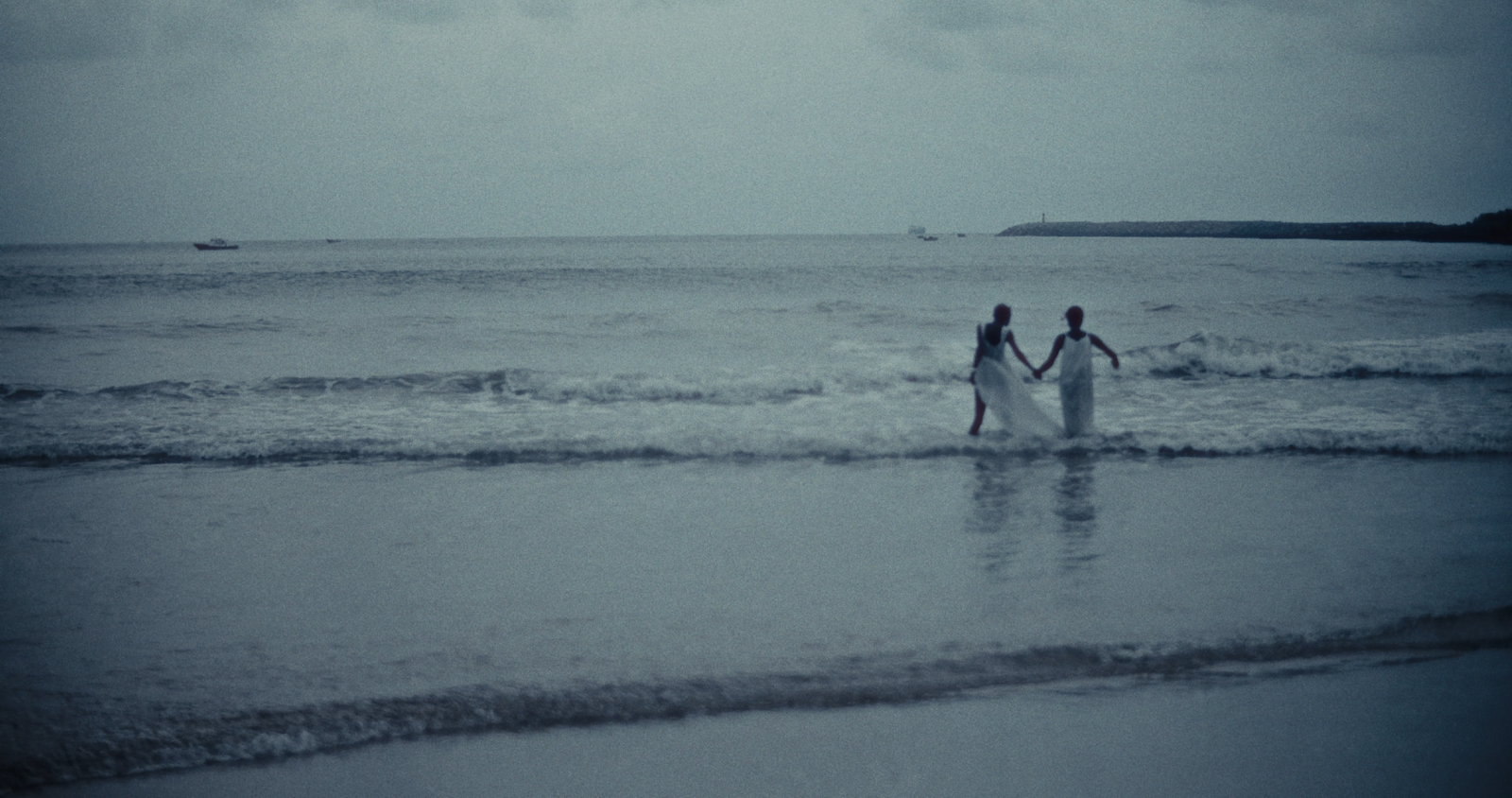
Eyes upon me,
like a bird above the sky
yet your love steadies me.

Come to me.

Shadows of the night,
watching, circling behind me
yet your hands call me to laughter.

Come to me.

Silent journeys,
whispers, hidden pathways—
yet your heart remains my home.

Come to me.

Emem-Esther U. Ikpot 
@ememIK46
(Instagram
/Substack/ememikpot.com)

Other Stories
London
London
Lagos
London
Newyork
London
Shop
Join the community.
You are now subscribed to receive updates.
Oops! Something went wrong while submitting the form.