.svg)


Picture the scene. A filmmaker stands in a festival lobby, still electric from watching their work projected on a screen to an audience for the first time. The film and all seven minutes of it have just received a standing ovation. Within the audience are echoes of discussions of a certain shot, the film’s score, and its theme’s refusal to collapse in on itself. Suddenly, an industry expert approaches, shakes their hand warmly, and asks the familiar question: “So, what are you working on next?” in a way that indicates that the thing they’d just seen didn’t count.
This is the quiet indignity at the heart of short film culture.
It’s not hostility or even irrelevance, but something more insidious than that. It’s a kind of institutional impatience that is rooted in the general historical appreciation of the short film. Due to how they are created, short films are typically funded by film grants or NGOs, and are now increasingly funded by filmmakers. As a result, short films are seen, appreciated, and applauded, only to be immediately treated as evidence of potential rather than proof of achievement. A demo reel dressed in festival laurels.
What the short film demands is no less than a feature film. In many ways, it demands even more. For a form characterized by its brevity, there is nowhere to hide. There is no second act to develop character, and no third to resolve the first. Every frame is a heavily weighted decision with consequences. The opening shot cannot afford to be throat-clearing, and neither can the ending afford to be explanatory. Every element visualized is there because it has to be, and nothing is there because the filmmaker ran out of discipline to cut it, nor because it simply could be.
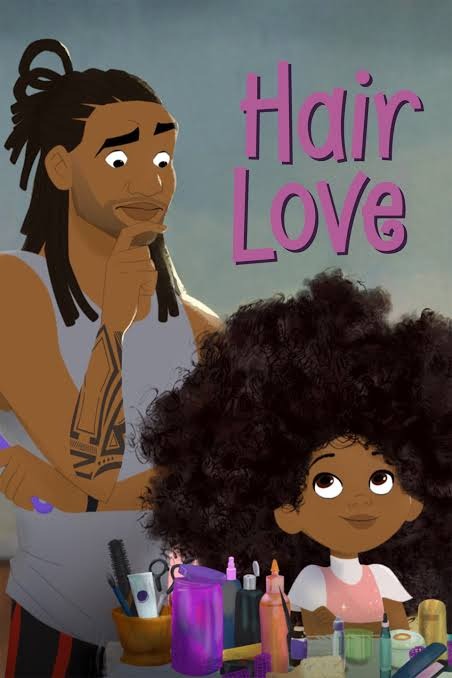
Matthew A. Cherry understood this when he made “Hair Love” in 2019. The animated short — seven minutes, Kickstarter-funded, built on a creative vision that studios hadn’t asked for — told the story of a Black father learning to style his daughter’s natural hair. In seven minutes, it told a precise, warm, and structurally immaculate story. It said everything it needed to say and stopped. The film went on to win the Academy Award for Best Animated Short Film in 2020. More importantly, it sparked a mainstream conversation about representation in animation that longer, more expensive films had spent years failing to ignite. The brevity was not a limitation. That was the point. Matthew Cherry didn’t need ninety minutes to make you feel something permanent. He needed only seven.

Natalie Musteata and Alexandre Singh’s Academy Award-winning 2024 short, Two People Exchanging Saliva, also consolidates on this essence of the economy of intention. Not in seven minutes, but in thirty-six, constructing an entire dystopian world from the ground up. The film presented a meticulously woven story and a layered world rooted in reality, drawing inspiration from the real-life occurrence of an Iranian couple jailed for dancing in public in 2023. Beyond its acclaim, it proved, rather decisively, that the short film can carry complexity as well as it can carry economy. That the field is a container capacious enough for any kind of expression, and not just a platform for more reach.
Still, the economic argument against short films is real and shouldn’t be romanticized away. The truth is, the infrastructure for making a living from short films alone remains thin. Festival prizes rarely pay rent. Streaming platforms that commission short content are still the exception. Fortunately and unfortunately, for many filmmakers, the short form is genuinely a financial stepping stone, whether they want it to be or not. The reason being that the industry worldwide has not yet built the mechanisms to reward the form on its own terms adequately, and that is a structural failure worth naming.
However, the solution to that failure is not for independent/amateur filmmakers to lower their ambition. It is for the culture around film, that is, critics, programmers, audiences, and publications, to begin insisting on a different standard. To review short films with the same seriousness and dedication as features. To platform them with the same editorial commitment. To ask, after watching something extraordinary in seven minutes, not “what are you working on next” but “ what brought about that decision, right there, in that shot?” The sort of conversation that the question starts is the one that actually builds a short-film culture worth having.
Back in that festival lobby, the filmmaker smiles at the industry expert’s question. They mention something about a feature they’re developing. The conversation moves on, and the crowd disperses. Later, alone, they think about the film they just showed. The specific problem it solved, the specific thing it proved they could do. They know what it is. They made something complete, and whether the room recognizes that yet is a separate question, and finally, a less important one.
To put a pin in it, the short film doesn’t need permission to matter. It simply needs more people willing to pay attention on its own terms. Because, as it turns out, seven minutes is more than enough time to change the way you see.




.png)

