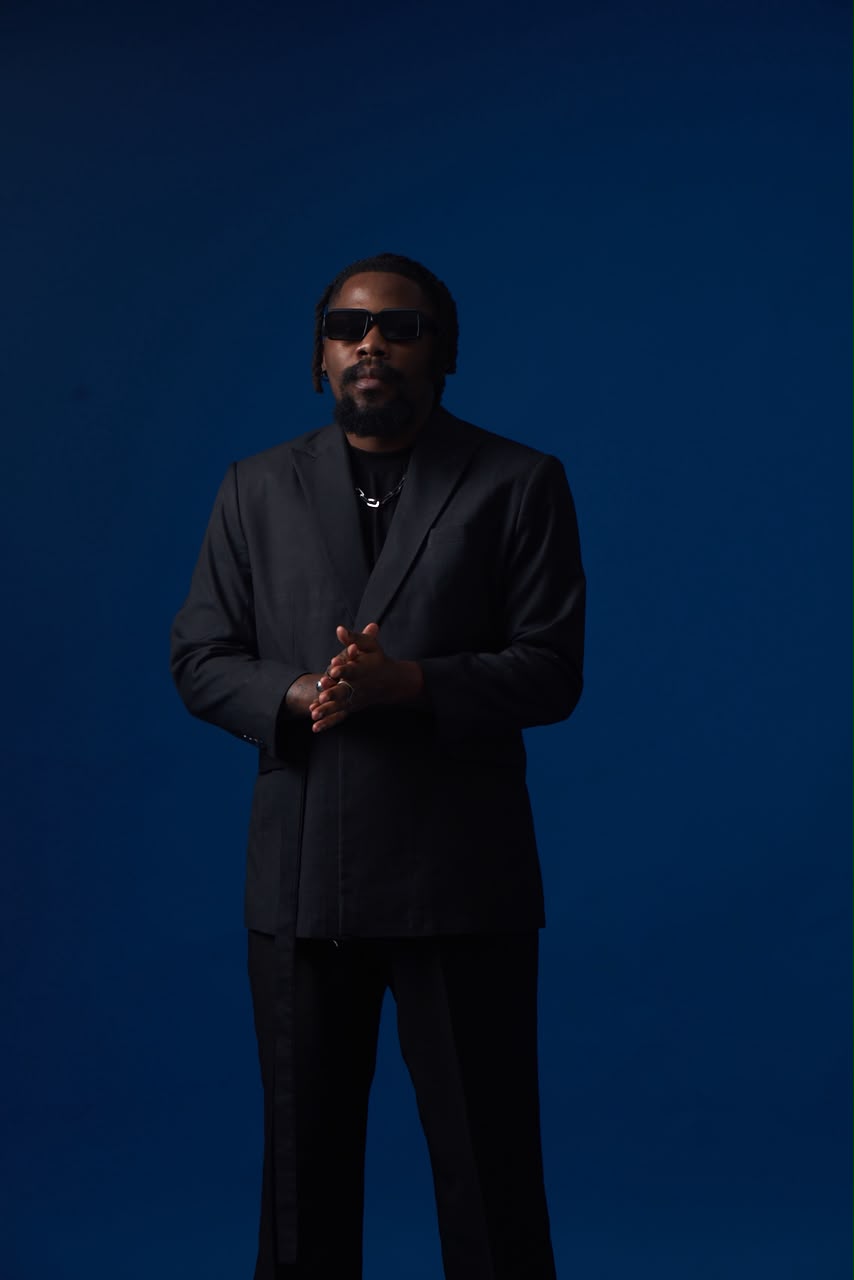
YCee: The Chef’s Special

Authored by

…on reinventing himself, mental health recovery, olodo uprising 

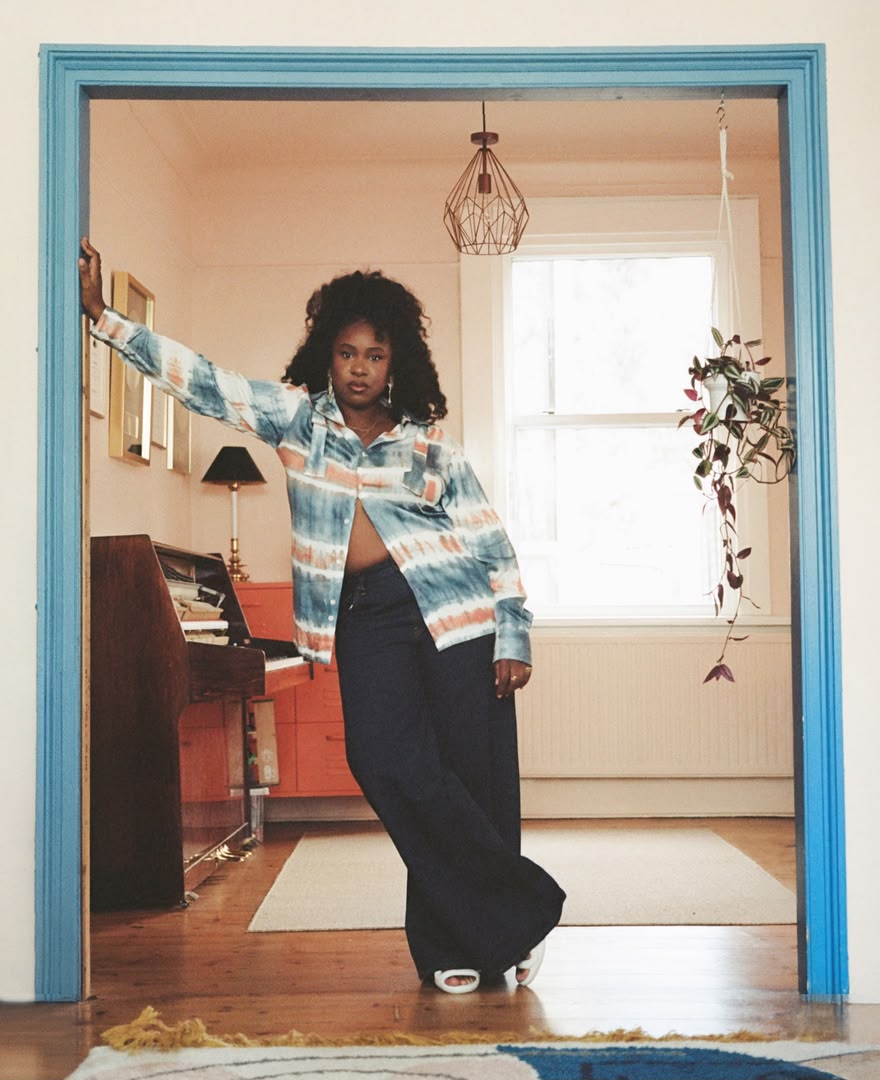
YCee dropped his breakout song Jagaban, in 2016, and Nigerian pop culture did not recover for a long time. Within the next two years, another smash hit, Omo Alhaji, followed, then Late Night Vibrations, an EP that showed a different side of the same artist, one willing to sit inside heartbreak and make something honest out of it. By 2019, his debut album, YCee vs Zaheer had surfaced, cementing his status as a prolific rapper. After another extended play, Love Drunk, in 2021, and it went a bit quiet on YCee’s end. The years after were shaped by a bipolar disorder diagnosis that he has only recently begun speaking about publicly. Out of Sight, Out of Mind, his debut album, was built across that period. 

In this conversation with Deeds, the 33-year-old artiste, born Oludemilade Alejo, speaks about mental health recovery, artistic integrity and what the ‘Olodo Uprising’ revealed about modern Nigerian youth culture.

Sophia From Deeds: For anyone reading this and discovering you for the first time, how would you introduce yourself and your music?

My name is Ycee Omo Alhaji.  I'm a rap musician from Lagos, Nigeria. I love music. I love creating music, I love consuming music. I like to think of myself as a fun guy.

Who is YCee when there is no music, no industry, no public version of you to maintain? What does a regular day actually look like?

I mean, it depends on the day of the week, actually. If it’s a Monday—because I literally have a tattoo that says “Weekend Forever”—I think I structure my weeks like weekends. It’s like one long weekend.

Very flexible Mondays. I try not to do anything, you know, just probably chill, unless I have obligations like work or an interview or any other thing. But outside of work, I’m usually just home, either on my laptop, watching a movie or series or anime, or playing a video game.

When you think about what success, money, family and happiness meant to the person who made Jagaban and Juice, how different does that person feel from who you are now?

I’d definitely say my view on success has changed a lot over the course of not just my career, but my life in general. I think at different stages, it’s usually a thing where you have dreams or goals that you’ve envisioned for yourself, and there are people who are lucky enough to get to a point where you meet those goals and you live those dreams.

I think one thing that I learned very early on in my life is that there’s always a higher level than the top. So it’s always been a thing for me where, whatever venture I’m embarking on, when you achieve that, you then realise there’s always that question of, “What next?” There’s always a next step.

I think for me, success right now, as opposed to back then—back then, success meant making music that would travel the world, I guess. It was never necessarily a thing about, “I want a million dollars.” It wasn’t. I think my concept of success has always been detached from monetary value and more about just breaking boundaries, breaking ceilings.

There was a conversation I was having with a younger friend of mine, and he was just talking about how he needs to make money. He wants to make money, money, money. Bro, you’re better off setting goals for yourself that, when you achieve those goals, there’s possibly no way you would be in that position and money wouldn’t be there.

I feel like there are a lot of people we see in society today who have money or have made money, but there’s still a certain longing, there’s a certain itch that needs to be scratched. For me, I’ve always been detached from that. I’m not saying that I don’t like money. I like money because money makes things happen. Money is a necessary tool. Whatever it is you want to do in life, even if you want to live a low-key life, that in itself comes at its own cost.

You know, as opposed to back then, where it was just about trying to get my music to a bigger stage than I was at the time, getting a larger fan base, being able to travel and just take my music as far as I could take it, I think right now success for me is more about my well-being, my state of mind, my state of physical being, and the state of my relationships with my friends and my family.

I feel like if I’m able to maintain a good level of that, then I would think I’d be successful in whatever other metric people would want to grade my life or career by.

So I feel like I’ve grown older. I’ve become more in touch with who I am as a person. I think, for me, it’s just about trying to make that reflect in the music. That’s the most important thing to me. I’ve come to realise that, in doing so, it elevates the quality of the music itself.

I’m a yapper, by the way. I tend to just talk.

Credit: _teeshots

The years when things went quiet publicly - what was actually happening? Not the narrative, not what people assumed. What were you doing, who were you spending time with, what was shaping you?

Oh my God! You know, it’s so crazy. I feel like every time I was getting ready to release music again, people were always asking, “What’s been going on? What have you been getting into?” I think a lot of people were expecting deep responses like, “Oh, I went on a journey of self-discovery. I was, you know, with the monks in the mountains. I was meditating.” And I was like, bro, I literally was just out here trying to live as much as I could.

I think from when I was diagnosed with bipolar disorder, it just put a lot of things on the back seat because I wasn’t able to necessarily function as I used to before the diagnosis and before all the medication and everything that I was going through. So I think when I was able to get some level of stability back in my life, I was like, there’s no reason why I will not make the most of every single minute of every single day for the rest of the life that I have.

Because one thing that I notice about the entertainment industry in Nigeria, especially within the music space, because that’s where I operate, so that’s where a lot of my knowledge comes from, is that we work so hard to become so big, just to seclude ourselves from the world. And that has never made sense to me because I think one of my favourite things about being popular and being a celebrity is the perks that come with it.

There are pros and there are cons, but I’m not going to sit here and act like a lot of times the pros don’t outweigh the cons because you’re in a position where your presence is appreciated anywhere you go. You get access to the crème de la crème, premium spaces and everything. It’s just a great experience. It’s a great thing to be popular.

And you find that people just become so secluded from everything that’s going on because you don’t want to become too accessible. You don’t want your value to be overly saturated because it’s like, “Oh, we see this guy here, we see him there.” But I still want to do the things that I used to do before I became popular. I still want to go to the cinema. I mean, private cinemas are cool, but there’s nothing better than the experience of watching a movie and seeing the reactions of other people as well, in real time, and just being part of a community.

Just going to the beach, going out to eat in a restaurant. I tell people all the time, I feel like the number one thing about living on this earth is how we interact with other human beings. That’s one of the best experiences in life because there are times that I will literally just be in a crowded place and I’m looking at, maybe, give or take, hundreds of thousands of people, and it’s like every single person in this crowd, every individual, is a different story, with different experiences. You know, even within a household, children don’t necessarily experience the same parents, even if they are born of the same parents.

So our experiences as human beings come down to how we interact with other human beings. And it’s like, why would you want to keep yourself away from the pinnacle of human experience, existence? I love to go out. I love to just do things.

So it was a question of, “Where’s Ycee?” and it’s like, Ycee is in W Bar. Ycee is here. Ycee is there. I pretty much was very active, just not necessarily present within the music industry.

And I felt like the time away that I took just really helped my outlook on life in general and informed my decisions on what it was that I wanted to do with my re-emergence back into the industry. I think it’s always a thing where you tell artists all the time that, as long as you’re within your younger years, because you can’t be active for as long as you would want to be, you should make the most use of it.

And that, in turn, tends to—not all the time—but tends to translate into: you can’t take breaks. You have to always be at the top of your game. You have to be active. You have to be releasing music. And it just gets very exhausting because you can go to the cinema and count the number of times you watch certain actors in movies, and it’s not because they’re not good actors. It’s not because they’re not making movies. But there’s a season for everything. There’s a time for everything.

And breaks are very important because one thing that I’ve learned about the body is that if you don’t take a break for yourself, it’s going to be worse when your body decides to take that break for you.

I think the whole time away and just being low-key was a very trying time, obviously, with my mental health issues and dealing with that. I think one of the saddest parts about it was not just what I went through personally, but pretty much what the weight of my condition was putting on the people around me. It affected a lot of my friendships. It affected a lot of my relationships as well.

But I think one of the key parts of my recovery was also the people who stuck it out with me and were able to meet me in my time of need. And I’m more than grateful to the circle around me that just helped me get back to—not who I was—but back to a version of myself that was able to come back into the industry and just get back to making music and the things that I love.

I think, as much as there were certain experiences that were dark, I feel like it was a necessary time that I needed for myself. And I’m glad that I was able to deal with everything that I dealt with and just come out on the other side and get back to doing what I want to do.

About bipolar disorder. How are you?

Yeah, I’m good. I’m fine. I haven’t had an episode, if I’ll call it that, since 2024, and everything has been very good, I would say. Aside from the things that we deal with on a day-to-day basis, I’m just thankful for a good state of mental well-being and, to a certain extent, some peace of mind as well.

I think ever since I became public with my mental state and my mental health issues, I’ve encountered a lot more people, more Nigerians, coming up to me and saying, “I also suffer from bipolar disorder,” or some form of mental health issue. So I think it’s a conversation that a lot more people need to be having because, as much as there’s been positive feedback on it, there’s also been a lot of pushback, even from people that I know personally, just talking about why I’m speaking about bipolar disorder so casually.

And I think it just comes down to how I was able to deal with it. I’m still—I don’t think there’s a cure for it—you just need to learn how to live with it.

I feel like the more people share their lived experiences, the more it helps other people who are dealing with the same struggles know how they can navigate their lives as well. It’s something that I would always like to push for. I would always want to speak about it, just let people know that, as much as the healthcare system in Nigeria is the way it is, there are still means to navigate mental health issues through the strength of community and the strength of just being within safe spaces where you’re in touch with your emotions and you’re able to speak freely about your feelings without the pushback of other people’s opinions, stigma and all that stuff.
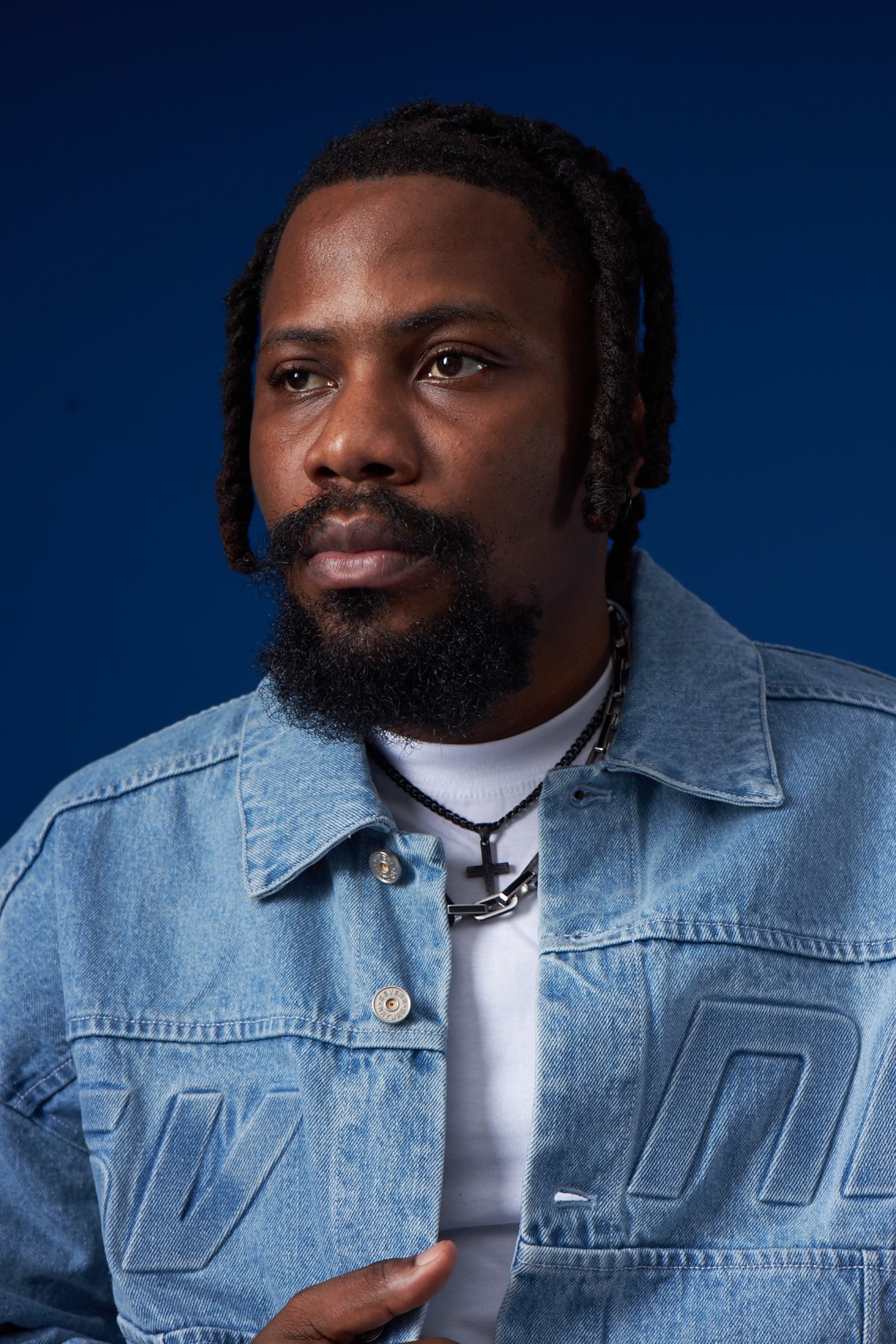
Credit: _teeshots

Late Night Vibrations is the clearest example of your personal life finding its way into the music. Is that something you do deliberately, or does it just happen?

It started to come about the older I got because I think, in the earlier stages of my career, I was just more content with making music that people would listen to and just be amazed by my rapping ability, or people would listen to it and it’s just like, “Oh, it makes them dance.” I started gravitating towards wanting to make music that would make people feel something because I realised that, with the music I enjoy from my favourite artists, they’re pretty much giving a piece of themselves. It’s always a crazy thing to listen to a song and be able to relate to the experiences of whoever is creating the music.

I think that’s one thing that has helped my music connect with my core audience: the level of relatability. I think with Late Night Vibrations, that was pretty much the first time that I was open enough to be as vulnerable as I was with what I was going through at the time. So I made that EP during the time when I was going through my very first major breakup, from a relationship that I was in for almost over two years.

And I think, for me, it’s just been a situation where, regardless of whatever I’m going through, my number one coping mechanism is just going into the studio and expressing my emotions on a song or into a song. And it’s not necessarily about whether the song is going to come out or whether I’m going to release it. It’s more as a means of therapeutic release than as a means of self-expression.

I would liken it to someone who journals. It’s like just being able to put your thoughts down and then go back to it, read it again, listen to it again. In this case, I think it was a thing of joy for me to see people gravitate towards certain songs and connect with certain lyrics. It just strengthened my thoughts on music being a universal language. Ever since then, I’ve been more comfortable with just expressing my views on love and life and everything else in between.

I think within the Nigerian space, it wasn’t up until more recently that you had artists singing more about the dark side of relationships. I think, for the longest time, you had love songs where it was always beautiful stuff. You know, you talk about the girl, you talk about meeting the girl, guy meets girl, they fall in love—all the fairy-tale stuff. Don’t get me wrong, that is equally essential to tell that story. But there are also other sides that we encounter every day. We experience it every day.

I have a lot of my friends who complain about the fact that I’m always listening to, quote-unquote, sad music. But I find it a lot more sincere when people are singing about heartbreak because it’s very easy to sing about love even when you’re not in love. It’s the easiest thing to say: “I’ve got sunshine on a cloudy day,” all that.

There’s a certain level of sincerity and just a certain level of vulnerability that goes into making music that touches on the discomforting side of love.

Out of Sight, Out of Mind was made across several years, which means different versions of you are in it. When you listen back now, do you like them? 

I like them a lot. I think most of what makes me like them is the fact that, inasmuch as these individual songs were made across different periods of time, there’s still some level of cohesion across the body of work.

And I think, for me, I listen to it and I just see growth and maturity because, like I said, over different periods, this was created and that was created, and we brought that together to make this. It doesn’t feel out of place. It doesn’t feel like these songs shouldn’t be put together. It’s a thing of beauty for me, and I just feel like it’s even helped me with the next step that I want to take creatively, just going off people’s reactions and everything, and then listening back.

That’s the thing about music. You could listen as a consumer, and there are certain songs that, when you listen to them, take you back to the first time you heard the song or the memories attached to the song. Like, “Oh, I remember this song. I heard it at this wedding.” Every time I hear the song, I remember the wedding party and all that stuff.

Yeah, I think for me, anytime I listen to the album, from the intro, I can remember when I got the voice note that I used for the intro. With the songs, I remember how I felt when I first heard the production and the beat: “I like this beat. I want to work on this beat.” It’s like a time capsule of sorts.

You are a rapper, a singer and a songwriter, and Nigerian music has always wanted you to pick one. Has that pressure gone away?

I think during the earlier years of my career, it was always a thing where I was—I wouldn’t say forced—but I was pushed to work on my singing because, at the time, it was considered that if you wanted to make money, there wasn’t really that much money within the rap industry.

So I had to get a vocal coach. I was doing vocal training, and I got better at singing. It then started to lean to a point where I was doing more singing than rapping. My earlier fans, or the people who fell in love with me because of my rap ability, were now on the side where they were like, “Oh, so you’re no longer a rapper? Are you going to leave what we all fell in love with you for?”

It wasn’t until I became more confident in my ability that I realised getting better at singing had also helped me become a better rapper, in the sense that I was able to infuse melodies into the rap I was doing at the time. And with singing, because of my ability as a rapper and being able to write raps as a songwriter, it also helps you make better songs that are more fleshed out, with deeper meaning and deeper lyrics. It’s a no-brainer.

So it got to a point where I was able to blend both seamlessly, and that just gave rise to a merger of both fans: people who love the singing and people who love the rap side. It was always a conversation where you either do one or the other, but I feel like, as a creative, there’s always going to be that desire to evolve, that desire to better yourself, that desire to make all kinds of music and touch on as many genres as you can.

Because I feel like being an artist and just being comfortable enough in one sound gets very monotonous. It gets very boring. And you could extend that conversation to collaborations. For example, before Asake did “Chanel” with Blaqbonez, I don’t think anyone would have envisioned Asake on that type of bounce. Seeing how he was able to just come into the song and make it his own, it’s one of those things that shows it’s even better for artists themselves to step outside of the box as much as they possibly can. It’s in those experiences that you’re able to evolve as an artist and as a creative.
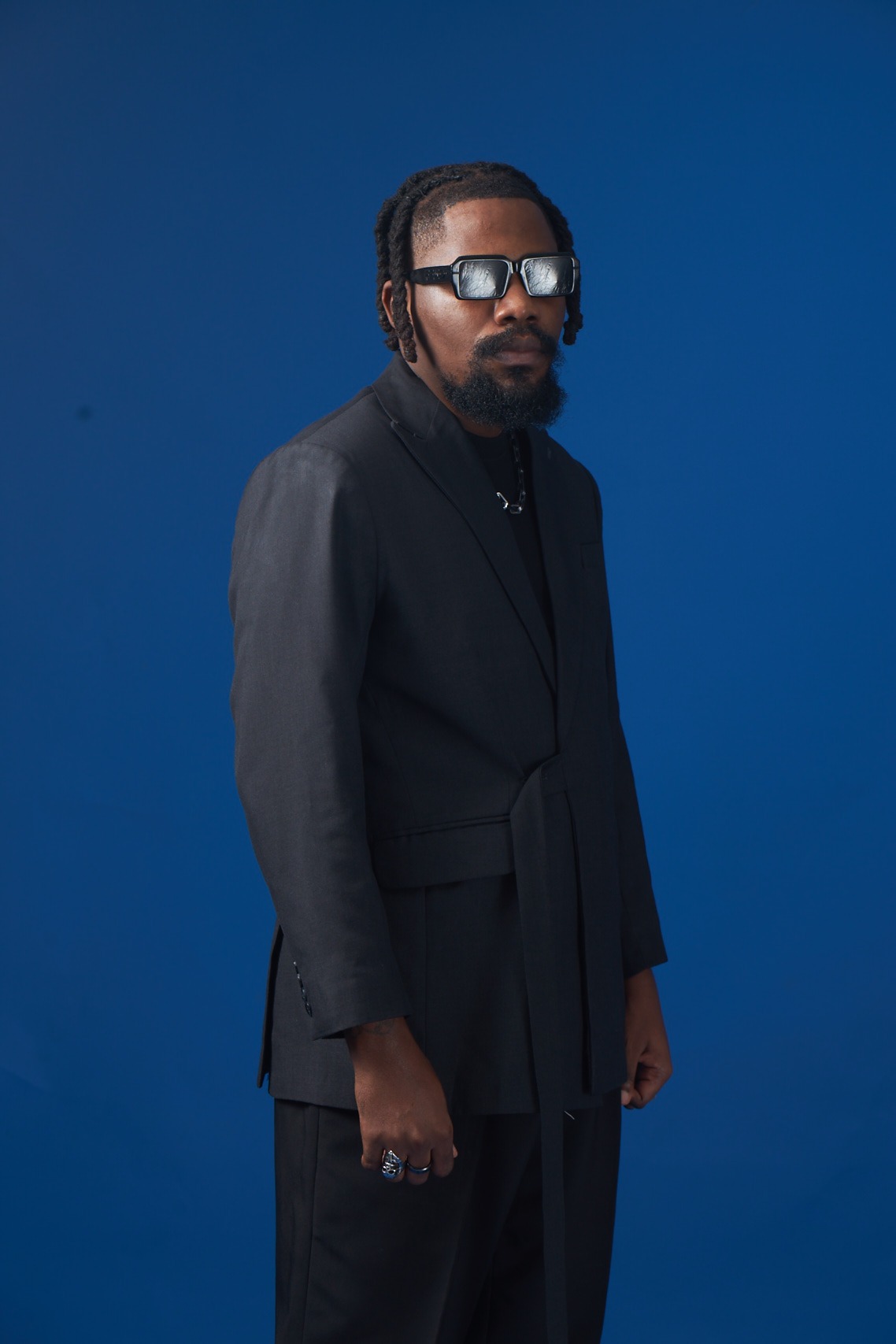
Credit: _teeshots

How do you make your records? Take us through your creative process.  

For me, it's always a thing where I believe the creative should decide what the fan base consumes and not the other way around. My reason for this is I would use my journey personally. It's like before I made Condo, it wasn't like anyone asked me to make it that way. It was because of what I made and how good it was that they liked it.

So it's always a thing where I always liken this situation to someone going to eat in a restaurant, for example, you go to a Michelin star restaurant, look through the menu and find out there's no jollof rice. You're not going to ask them to tell the chef to make you jollof rice; you know where to get Jollof rice. So it's like regardless of whatever it is that you want to eat, it all comes down to what's on the menu, what they're offering. So you have to pick from what is available.

So it's not the restaurant's job to make what the fans want. It's the restaurant's job to make the best meal possible. As soon as you taste it, your taste buds start telling you that this tastes amazing. As a creative, it's just my own job to make music that I feel like making, to just put my best foot forward and work to the best of my ability. As a music consumer myself, I want to believe I know what good music is.

So, the beauty of making music is that you've made something that you think is great and you can share with the world. I feel like a lot of people want to always question an artist when they say they made an album for themselves. You see, that is the beauty about art; it is like you've made something beautiful, but you can't possibly be the only one that would enjoy the beauty of what you've created. And that therein lies why people share the music that they make for themselves with other people. Because it's like the beauty of art is consumption. It's people resonating with what you've created for yourself and they also like relating that to their own experiences. So, for me, it's always going to be me first, then you guys can come in and I share that with you. That's just the beauty of creation in total.
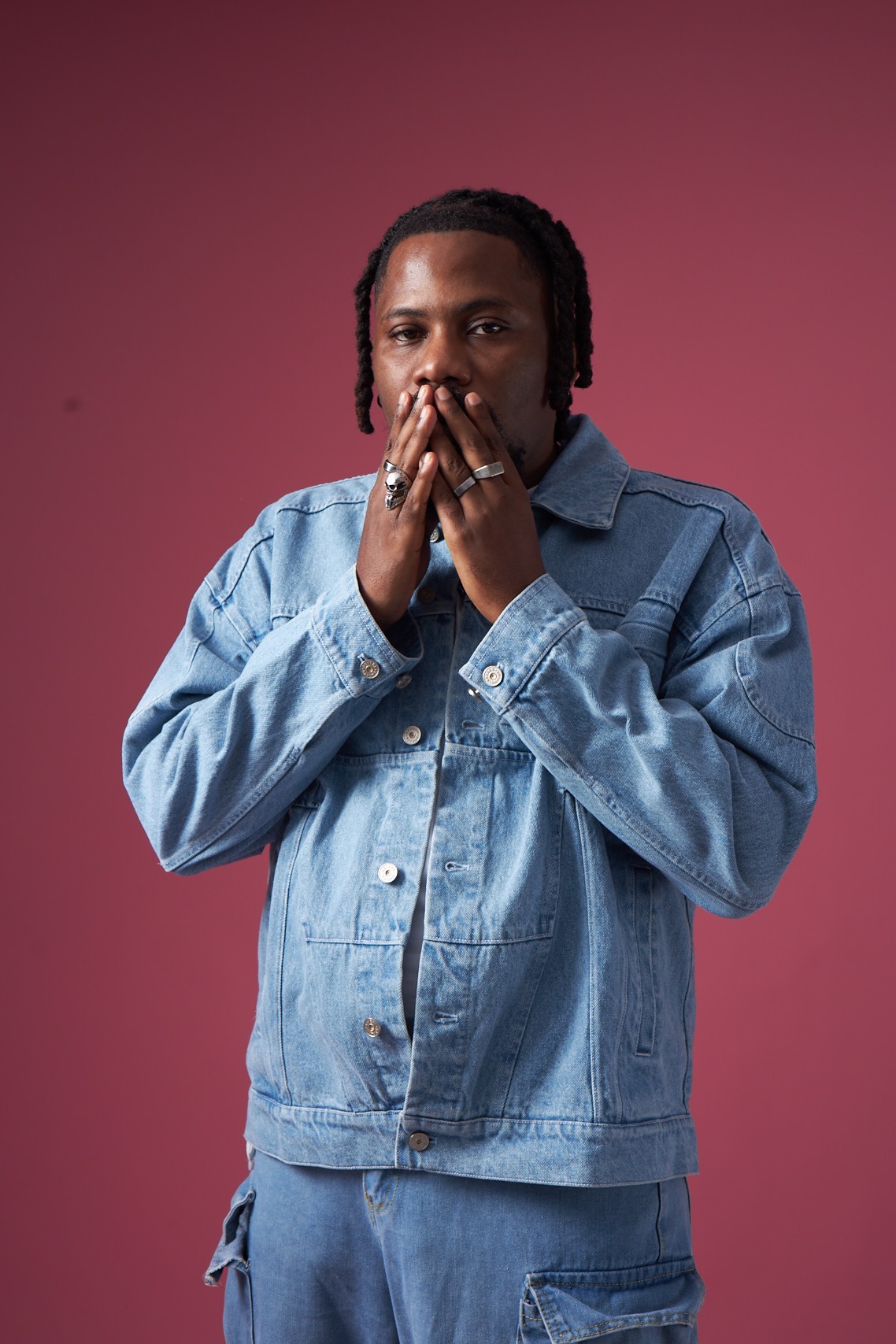
Credit: _teeshots

The Olodo Uprising and the Peller conversation - beyond that specific moment, what is your bigger concern about what Nigerian popular culture is rewarding right now?

As much as I'm trying, I feel like it's a necessary conversation that needs to be had. I feel like in this day and age, especially with the advent of social media and social media now being a platform that is giving people, it pays now, there's financial benefits from being on social media. There's always going to be another trending topic, another trending conversation. But I think with the strength of how long we've had this little olodo uprising conversation, it just shows that it's a necessary conversation that we need to constantly keep having so that we continue to increase the bar of excellence within our society. I feel like a lot of people look at the clippings from the video that went viral as opposed to going to watch the full interview. So a lot of people were considering that I had something personal against Peller. Yeah, I feel like it goes beyond just the content creation industry or just the entertainment industry as a whole. You can akin certain different areas of our lives and point out an olodo uprising moments within them, whether it's politics, dealing with other people within your neighborhood, within the systems you operate in, within education, within the movie industry, the work, the office, the 9 to 5 industry. There's a hint of Olodo uprising within every facet of our Nigerian society today. 

People can beg the question to say, it's not just a Nigerian thing. But at the end of the day, I can only speak to the society that I am a part of, and that's the Nigerian society.  I think a lot of people felt like it was a personal attack on people that don't necessarily have formal educational backgrounds and stuff. I think for me, it was just like a degradation of just education in general. People are no longer curious anymore. People don't ask questions. They only rely on AI summaries. It used to be a thing where one would research publications, factual accounts on history, scientific theories and so on. Now, people are okay with outsourcing their own intelligence.   That's why we are dealing with the repercussions already.  People consider this mentality of, “as long as he's making money,” and that's why we have a lot of people that are okay with doing questionable things. If you are in a working society, you wouldn't be doing those things unless you really wanted to. There's no reason why you would want to be a clown when you're not part of a circus. So I just look at certain things and I think, “oh, God, I wish we had better leaders. I wish we had a better, administrative arm.”

If you look at it, it's like people have just outsourced, not just intelligence now, but even their justice system. People don't have faith in the judiciary anymore. They're more comfortable with going to social media personalities that will bring them justice because of their following. It just is quite telling that people are more comfortable with putting their trust in somebody that's just within the same sets of limitations as themselves.  

That in itself lies the lesson where it's like we can see that this person is able to pull this much public appeal or public opinion. So why can't we, as the public, pull our own public opinion ourselves and engineer the change that we so desperately want?  So, yeah, it's a lot.

Cover Credit: _teeshots
YCee: The Chef’s Special

Authored by
This is some text inside of a div block.

…on reinventing himself, mental health recovery, olodo uprising 

YCee dropped his breakout song Jagaban, in 2016, and Nigerian pop culture did not recover for a long time. Within the next two years, another smash hit, Omo Alhaji, followed, then Late Night Vibrations, an EP that showed a different side of the same artist, one willing to sit inside heartbreak and make something honest out of it. By 2019, his debut album, YCee vs Zaheer had surfaced, cementing his status as a prolific rapper. After another extended play, Love Drunk, in 2021, and it went a bit quiet on YCee’s end. The years after were shaped by a bipolar disorder diagnosis that he has only recently begun speaking about publicly. Out of Sight, Out of Mind, his debut album, was built across that period. 

In this conversation with Deeds, the 33-year-old artiste, born Oludemilade Alejo, speaks about mental health recovery, artistic integrity and what the ‘Olodo Uprising’ revealed about modern Nigerian youth culture.

Sophia From Deeds: For anyone reading this and discovering you for the first time, how would you introduce yourself and your music?

My name is Ycee Omo Alhaji.  I'm a rap musician from Lagos, Nigeria. I love music. I love creating music, I love consuming music. I like to think of myself as a fun guy.

Who is YCee when there is no music, no industry, no public version of you to maintain? What does a regular day actually look like?

I mean, it depends on the day of the week, actually. If it’s a Monday—because I literally have a tattoo that says “Weekend Forever”—I think I structure my weeks like weekends. It’s like one long weekend.

Very flexible Mondays. I try not to do anything, you know, just probably chill, unless I have obligations like work or an interview or any other thing. But outside of work, I’m usually just home, either on my laptop, watching a movie or series or anime, or playing a video game.

When you think about what success, money, family and happiness meant to the person who made Jagaban and Juice, how different does that person feel from who you are now?

I’d definitely say my view on success has changed a lot over the course of not just my career, but my life in general. I think at different stages, it’s usually a thing where you have dreams or goals that you’ve envisioned for yourself, and there are people who are lucky enough to get to a point where you meet those goals and you live those dreams.

I think one thing that I learned very early on in my life is that there’s always a higher level than the top. So it’s always been a thing for me where, whatever venture I’m embarking on, when you achieve that, you then realise there’s always that question of, “What next?” There’s always a next step.

I think for me, success right now, as opposed to back then—back then, success meant making music that would travel the world, I guess. It was never necessarily a thing about, “I want a million dollars.” It wasn’t. I think my concept of success has always been detached from monetary value and more about just breaking boundaries, breaking ceilings.

There was a conversation I was having with a younger friend of mine, and he was just talking about how he needs to make money. He wants to make money, money, money. Bro, you’re better off setting goals for yourself that, when you achieve those goals, there’s possibly no way you would be in that position and money wouldn’t be there.

I feel like there are a lot of people we see in society today who have money or have made money, but there’s still a certain longing, there’s a certain itch that needs to be scratched. For me, I’ve always been detached from that. I’m not saying that I don’t like money. I like money because money makes things happen. Money is a necessary tool. Whatever it is you want to do in life, even if you want to live a low-key life, that in itself comes at its own cost.

You know, as opposed to back then, where it was just about trying to get my music to a bigger stage than I was at the time, getting a larger fan base, being able to travel and just take my music as far as I could take it, I think right now success for me is more about my well-being, my state of mind, my state of physical being, and the state of my relationships with my friends and my family.

I feel like if I’m able to maintain a good level of that, then I would think I’d be successful in whatever other metric people would want to grade my life or career by.

So I feel like I’ve grown older. I’ve become more in touch with who I am as a person. I think, for me, it’s just about trying to make that reflect in the music. That’s the most important thing to me. I’ve come to realise that, in doing so, it elevates the quality of the music itself.

I’m a yapper, by the way. I tend to just talk.

Credit: _teeshots

The years when things went quiet publicly - what was actually happening? Not the narrative, not what people assumed. What were you doing, who were you spending time with, what was shaping you?

Oh my God! You know, it’s so crazy. I feel like every time I was getting ready to release music again, people were always asking, “What’s been going on? What have you been getting into?” I think a lot of people were expecting deep responses like, “Oh, I went on a journey of self-discovery. I was, you know, with the monks in the mountains. I was meditating.” And I was like, bro, I literally was just out here trying to live as much as I could.

I think from when I was diagnosed with bipolar disorder, it just put a lot of things on the back seat because I wasn’t able to necessarily function as I used to before the diagnosis and before all the medication and everything that I was going through. So I think when I was able to get some level of stability back in my life, I was like, there’s no reason why I will not make the most of every single minute of every single day for the rest of the life that I have.

Because one thing that I notice about the entertainment industry in Nigeria, especially within the music space, because that’s where I operate, so that’s where a lot of my knowledge comes from, is that we work so hard to become so big, just to seclude ourselves from the world. And that has never made sense to me because I think one of my favourite things about being popular and being a celebrity is the perks that come with it.

There are pros and there are cons, but I’m not going to sit here and act like a lot of times the pros don’t outweigh the cons because you’re in a position where your presence is appreciated anywhere you go. You get access to the crème de la crème, premium spaces and everything. It’s just a great experience. It’s a great thing to be popular.

And you find that people just become so secluded from everything that’s going on because you don’t want to become too accessible. You don’t want your value to be overly saturated because it’s like, “Oh, we see this guy here, we see him there.” But I still want to do the things that I used to do before I became popular. I still want to go to the cinema. I mean, private cinemas are cool, but there’s nothing better than the experience of watching a movie and seeing the reactions of other people as well, in real time, and just being part of a community.

Just going to the beach, going out to eat in a restaurant. I tell people all the time, I feel like the number one thing about living on this earth is how we interact with other human beings. That’s one of the best experiences in life because there are times that I will literally just be in a crowded place and I’m looking at, maybe, give or take, hundreds of thousands of people, and it’s like every single person in this crowd, every individual, is a different story, with different experiences. You know, even within a household, children don’t necessarily experience the same parents, even if they are born of the same parents.

So our experiences as human beings come down to how we interact with other human beings. And it’s like, why would you want to keep yourself away from the pinnacle of human experience, existence? I love to go out. I love to just do things.

So it was a question of, “Where’s Ycee?” and it’s like, Ycee is in W Bar. Ycee is here. Ycee is there. I pretty much was very active, just not necessarily present within the music industry.

And I felt like the time away that I took just really helped my outlook on life in general and informed my decisions on what it was that I wanted to do with my re-emergence back into the industry. I think it’s always a thing where you tell artists all the time that, as long as you’re within your younger years, because you can’t be active for as long as you would want to be, you should make the most use of it.

And that, in turn, tends to—not all the time—but tends to translate into: you can’t take breaks. You have to always be at the top of your game. You have to be active. You have to be releasing music. And it just gets very exhausting because you can go to the cinema and count the number of times you watch certain actors in movies, and it’s not because they’re not good actors. It’s not because they’re not making movies. But there’s a season for everything. There’s a time for everything.

And breaks are very important because one thing that I’ve learned about the body is that if you don’t take a break for yourself, it’s going to be worse when your body decides to take that break for you.

I think the whole time away and just being low-key was a very trying time, obviously, with my mental health issues and dealing with that. I think one of the saddest parts about it was not just what I went through personally, but pretty much what the weight of my condition was putting on the people around me. It affected a lot of my friendships. It affected a lot of my relationships as well.

But I think one of the key parts of my recovery was also the people who stuck it out with me and were able to meet me in my time of need. And I’m more than grateful to the circle around me that just helped me get back to—not who I was—but back to a version of myself that was able to come back into the industry and just get back to making music and the things that I love.

I think, as much as there were certain experiences that were dark, I feel like it was a necessary time that I needed for myself. And I’m glad that I was able to deal with everything that I dealt with and just come out on the other side and get back to doing what I want to do.

About bipolar disorder. How are you?

Yeah, I’m good. I’m fine. I haven’t had an episode, if I’ll call it that, since 2024, and everything has been very good, I would say. Aside from the things that we deal with on a day-to-day basis, I’m just thankful for a good state of mental well-being and, to a certain extent, some peace of mind as well.

I think ever since I became public with my mental state and my mental health issues, I’ve encountered a lot more people, more Nigerians, coming up to me and saying, “I also suffer from bipolar disorder,” or some form of mental health issue. So I think it’s a conversation that a lot more people need to be having because, as much as there’s been positive feedback on it, there’s also been a lot of pushback, even from people that I know personally, just talking about why I’m speaking about bipolar disorder so casually.

And I think it just comes down to how I was able to deal with it. I’m still—I don’t think there’s a cure for it—you just need to learn how to live with it.

I feel like the more people share their lived experiences, the more it helps other people who are dealing with the same struggles know how they can navigate their lives as well. It’s something that I would always like to push for. I would always want to speak about it, just let people know that, as much as the healthcare system in Nigeria is the way it is, there are still means to navigate mental health issues through the strength of community and the strength of just being within safe spaces where you’re in touch with your emotions and you’re able to speak freely about your feelings without the pushback of other people’s opinions, stigma and all that stuff.

Credit: _teeshots

Late Night Vibrations is the clearest example of your personal life finding its way into the music. Is that something you do deliberately, or does it just happen?

It started to come about the older I got because I think, in the earlier stages of my career, I was just more content with making music that people would listen to and just be amazed by my rapping ability, or people would listen to it and it’s just like, “Oh, it makes them dance.” I started gravitating towards wanting to make music that would make people feel something because I realised that, with the music I enjoy from my favourite artists, they’re pretty much giving a piece of themselves. It’s always a crazy thing to listen to a song and be able to relate to the experiences of whoever is creating the music.

I think that’s one thing that has helped my music connect with my core audience: the level of relatability. I think with Late Night Vibrations, that was pretty much the first time that I was open enough to be as vulnerable as I was with what I was going through at the time. So I made that EP during the time when I was going through my very first major breakup, from a relationship that I was in for almost over two years.

And I think, for me, it’s just been a situation where, regardless of whatever I’m going through, my number one coping mechanism is just going into the studio and expressing my emotions on a song or into a song. And it’s not necessarily about whether the song is going to come out or whether I’m going to release it. It’s more as a means of therapeutic release than as a means of self-expression.

I would liken it to someone who journals. It’s like just being able to put your thoughts down and then go back to it, read it again, listen to it again. In this case, I think it was a thing of joy for me to see people gravitate towards certain songs and connect with certain lyrics. It just strengthened my thoughts on music being a universal language. Ever since then, I’ve been more comfortable with just expressing my views on love and life and everything else in between.

I think within the Nigerian space, it wasn’t up until more recently that you had artists singing more about the dark side of relationships. I think, for the longest time, you had love songs where it was always beautiful stuff. You know, you talk about the girl, you talk about meeting the girl, guy meets girl, they fall in love—all the fairy-tale stuff. Don’t get me wrong, that is equally essential to tell that story. But there are also other sides that we encounter every day. We experience it every day.

I have a lot of my friends who complain about the fact that I’m always listening to, quote-unquote, sad music. But I find it a lot more sincere when people are singing about heartbreak because it’s very easy to sing about love even when you’re not in love. It’s the easiest thing to say: “I’ve got sunshine on a cloudy day,” all that.

There’s a certain level of sincerity and just a certain level of vulnerability that goes into making music that touches on the discomforting side of love.

Out of Sight, Out of Mind was made across several years, which means different versions of you are in it. When you listen back now, do you like them? 

I like them a lot. I think most of what makes me like them is the fact that, inasmuch as these individual songs were made across different periods of time, there’s still some level of cohesion across the body of work.

And I think, for me, I listen to it and I just see growth and maturity because, like I said, over different periods, this was created and that was created, and we brought that together to make this. It doesn’t feel out of place. It doesn’t feel like these songs shouldn’t be put together. It’s a thing of beauty for me, and I just feel like it’s even helped me with the next step that I want to take creatively, just going off people’s reactions and everything, and then listening back.

That’s the thing about music. You could listen as a consumer, and there are certain songs that, when you listen to them, take you back to the first time you heard the song or the memories attached to the song. Like, “Oh, I remember this song. I heard it at this wedding.” Every time I hear the song, I remember the wedding party and all that stuff.

Yeah, I think for me, anytime I listen to the album, from the intro, I can remember when I got the voice note that I used for the intro. With the songs, I remember how I felt when I first heard the production and the beat: “I like this beat. I want to work on this beat.” It’s like a time capsule of sorts.

You are a rapper, a singer and a songwriter, and Nigerian music has always wanted you to pick one. Has that pressure gone away?

I think during the earlier years of my career, it was always a thing where I was—I wouldn’t say forced—but I was pushed to work on my singing because, at the time, it was considered that if you wanted to make money, there wasn’t really that much money within the rap industry.

So I had to get a vocal coach. I was doing vocal training, and I got better at singing. It then started to lean to a point where I was doing more singing than rapping. My earlier fans, or the people who fell in love with me because of my rap ability, were now on the side where they were like, “Oh, so you’re no longer a rapper? Are you going to leave what we all fell in love with you for?”

It wasn’t until I became more confident in my ability that I realised getting better at singing had also helped me become a better rapper, in the sense that I was able to infuse melodies into the rap I was doing at the time. And with singing, because of my ability as a rapper and being able to write raps as a songwriter, it also helps you make better songs that are more fleshed out, with deeper meaning and deeper lyrics. It’s a no-brainer.

So it got to a point where I was able to blend both seamlessly, and that just gave rise to a merger of both fans: people who love the singing and people who love the rap side. It was always a conversation where you either do one or the other, but I feel like, as a creative, there’s always going to be that desire to evolve, that desire to better yourself, that desire to make all kinds of music and touch on as many genres as you can.

Because I feel like being an artist and just being comfortable enough in one sound gets very monotonous. It gets very boring. And you could extend that conversation to collaborations. For example, before Asake did “Chanel” with Blaqbonez, I don’t think anyone would have envisioned Asake on that type of bounce. Seeing how he was able to just come into the song and make it his own, it’s one of those things that shows it’s even better for artists themselves to step outside of the box as much as they possibly can. It’s in those experiences that you’re able to evolve as an artist and as a creative.

Credit: _teeshots

How do you make your records? Take us through your creative process.  

For me, it's always a thing where I believe the creative should decide what the fan base consumes and not the other way around. My reason for this is I would use my journey personally. It's like before I made Condo, it wasn't like anyone asked me to make it that way. It was because of what I made and how good it was that they liked it.

So it's always a thing where I always liken this situation to someone going to eat in a restaurant, for example, you go to a Michelin star restaurant, look through the menu and find out there's no jollof rice. You're not going to ask them to tell the chef to make you jollof rice; you know where to get Jollof rice. So it's like regardless of whatever it is that you want to eat, it all comes down to what's on the menu, what they're offering. So you have to pick from what is available.

So it's not the restaurant's job to make what the fans want. It's the restaurant's job to make the best meal possible. As soon as you taste it, your taste buds start telling you that this tastes amazing. As a creative, it's just my own job to make music that I feel like making, to just put my best foot forward and work to the best of my ability. As a music consumer myself, I want to believe I know what good music is.

So, the beauty of making music is that you've made something that you think is great and you can share with the world. I feel like a lot of people want to always question an artist when they say they made an album for themselves. You see, that is the beauty about art; it is like you've made something beautiful, but you can't possibly be the only one that would enjoy the beauty of what you've created. And that therein lies why people share the music that they make for themselves with other people. Because it's like the beauty of art is consumption. It's people resonating with what you've created for yourself and they also like relating that to their own experiences. So, for me, it's always going to be me first, then you guys can come in and I share that with you. That's just the beauty of creation in total.

Credit: _teeshots

The Olodo Uprising and the Peller conversation - beyond that specific moment, what is your bigger concern about what Nigerian popular culture is rewarding right now?

As much as I'm trying, I feel like it's a necessary conversation that needs to be had. I feel like in this day and age, especially with the advent of social media and social media now being a platform that is giving people, it pays now, there's financial benefits from being on social media. There's always going to be another trending topic, another trending conversation. But I think with the strength of how long we've had this little olodo uprising conversation, it just shows that it's a necessary conversation that we need to constantly keep having so that we continue to increase the bar of excellence within our society. I feel like a lot of people look at the clippings from the video that went viral as opposed to going to watch the full interview. So a lot of people were considering that I had something personal against Peller. Yeah, I feel like it goes beyond just the content creation industry or just the entertainment industry as a whole. You can akin certain different areas of our lives and point out an olodo uprising moments within them, whether it's politics, dealing with other people within your neighborhood, within the systems you operate in, within education, within the movie industry, the work, the office, the 9 to 5 industry. There's a hint of Olodo uprising within every facet of our Nigerian society today. 

People can beg the question to say, it's not just a Nigerian thing. But at the end of the day, I can only speak to the society that I am a part of, and that's the Nigerian society.  I think a lot of people felt like it was a personal attack on people that don't necessarily have formal educational backgrounds and stuff. I think for me, it was just like a degradation of just education in general. People are no longer curious anymore. People don't ask questions. They only rely on AI summaries. It used to be a thing where one would research publications, factual accounts on history, scientific theories and so on. Now, people are okay with outsourcing their own intelligence.   That's why we are dealing with the repercussions already.  People consider this mentality of, “as long as he's making money,” and that's why we have a lot of people that are okay with doing questionable things. If you are in a working society, you wouldn't be doing those things unless you really wanted to. There's no reason why you would want to be a clown when you're not part of a circus. So I just look at certain things and I think, “oh, God, I wish we had better leaders. I wish we had a better, administrative arm.”

If you look at it, it's like people have just outsourced, not just intelligence now, but even their justice system. People don't have faith in the judiciary anymore. They're more comfortable with going to social media personalities that will bring them justice because of their following. It just is quite telling that people are more comfortable with putting their trust in somebody that's just within the same sets of limitations as themselves.  

That in itself lies the lesson where it's like we can see that this person is able to pull this much public appeal or public opinion. So why can't we, as the public, pull our own public opinion ourselves and engineer the change that we so desperately want?  So, yeah, it's a lot.

Cover Credit: _teeshots
This is some text inside of a div block.

YCee: The Chef’s Special

Authored by

…on reinventing himself, mental health recovery, olodo uprising 

YCee dropped his breakout song Jagaban, in 2016, and Nigerian pop culture did not recover for a long time. Within the next two years, another smash hit, Omo Alhaji, followed, then Late Night Vibrations, an EP that showed a different side of the same artist, one willing to sit inside heartbreak and make something honest out of it. By 2019, his debut album, YCee vs Zaheer had surfaced, cementing his status as a prolific rapper. After another extended play, Love Drunk, in 2021, and it went a bit quiet on YCee’s end. The years after were shaped by a bipolar disorder diagnosis that he has only recently begun speaking about publicly. Out of Sight, Out of Mind, his debut album, was built across that period. 

In this conversation with Deeds, the 33-year-old artiste, born Oludemilade Alejo, speaks about mental health recovery, artistic integrity and what the ‘Olodo Uprising’ revealed about modern Nigerian youth culture.

Sophia From Deeds: For anyone reading this and discovering you for the first time, how would you introduce yourself and your music?

My name is Ycee Omo Alhaji.  I'm a rap musician from Lagos, Nigeria. I love music. I love creating music, I love consuming music. I like to think of myself as a fun guy.

Who is YCee when there is no music, no industry, no public version of you to maintain? What does a regular day actually look like?

I mean, it depends on the day of the week, actually. If it’s a Monday—because I literally have a tattoo that says “Weekend Forever”—I think I structure my weeks like weekends. It’s like one long weekend.

Very flexible Mondays. I try not to do anything, you know, just probably chill, unless I have obligations like work or an interview or any other thing. But outside of work, I’m usually just home, either on my laptop, watching a movie or series or anime, or playing a video game.

When you think about what success, money, family and happiness meant to the person who made Jagaban and Juice, how different does that person feel from who you are now?

I’d definitely say my view on success has changed a lot over the course of not just my career, but my life in general. I think at different stages, it’s usually a thing where you have dreams or goals that you’ve envisioned for yourself, and there are people who are lucky enough to get to a point where you meet those goals and you live those dreams.

I think one thing that I learned very early on in my life is that there’s always a higher level than the top. So it’s always been a thing for me where, whatever venture I’m embarking on, when you achieve that, you then realise there’s always that question of, “What next?” There’s always a next step.

I think for me, success right now, as opposed to back then—back then, success meant making music that would travel the world, I guess. It was never necessarily a thing about, “I want a million dollars.” It wasn’t. I think my concept of success has always been detached from monetary value and more about just breaking boundaries, breaking ceilings.

There was a conversation I was having with a younger friend of mine, and he was just talking about how he needs to make money. He wants to make money, money, money. Bro, you’re better off setting goals for yourself that, when you achieve those goals, there’s possibly no way you would be in that position and money wouldn’t be there.

I feel like there are a lot of people we see in society today who have money or have made money, but there’s still a certain longing, there’s a certain itch that needs to be scratched. For me, I’ve always been detached from that. I’m not saying that I don’t like money. I like money because money makes things happen. Money is a necessary tool. Whatever it is you want to do in life, even if you want to live a low-key life, that in itself comes at its own cost.

You know, as opposed to back then, where it was just about trying to get my music to a bigger stage than I was at the time, getting a larger fan base, being able to travel and just take my music as far as I could take it, I think right now success for me is more about my well-being, my state of mind, my state of physical being, and the state of my relationships with my friends and my family.

I feel like if I’m able to maintain a good level of that, then I would think I’d be successful in whatever other metric people would want to grade my life or career by.

So I feel like I’ve grown older. I’ve become more in touch with who I am as a person. I think, for me, it’s just about trying to make that reflect in the music. That’s the most important thing to me. I’ve come to realise that, in doing so, it elevates the quality of the music itself.

I’m a yapper, by the way. I tend to just talk.

Credit: _teeshots

The years when things went quiet publicly - what was actually happening? Not the narrative, not what people assumed. What were you doing, who were you spending time with, what was shaping you?

Oh my God! You know, it’s so crazy. I feel like every time I was getting ready to release music again, people were always asking, “What’s been going on? What have you been getting into?” I think a lot of people were expecting deep responses like, “Oh, I went on a journey of self-discovery. I was, you know, with the monks in the mountains. I was meditating.” And I was like, bro, I literally was just out here trying to live as much as I could.

I think from when I was diagnosed with bipolar disorder, it just put a lot of things on the back seat because I wasn’t able to necessarily function as I used to before the diagnosis and before all the medication and everything that I was going through. So I think when I was able to get some level of stability back in my life, I was like, there’s no reason why I will not make the most of every single minute of every single day for the rest of the life that I have.

Because one thing that I notice about the entertainment industry in Nigeria, especially within the music space, because that’s where I operate, so that’s where a lot of my knowledge comes from, is that we work so hard to become so big, just to seclude ourselves from the world. And that has never made sense to me because I think one of my favourite things about being popular and being a celebrity is the perks that come with it.

There are pros and there are cons, but I’m not going to sit here and act like a lot of times the pros don’t outweigh the cons because you’re in a position where your presence is appreciated anywhere you go. You get access to the crème de la crème, premium spaces and everything. It’s just a great experience. It’s a great thing to be popular.

And you find that people just become so secluded from everything that’s going on because you don’t want to become too accessible. You don’t want your value to be overly saturated because it’s like, “Oh, we see this guy here, we see him there.” But I still want to do the things that I used to do before I became popular. I still want to go to the cinema. I mean, private cinemas are cool, but there’s nothing better than the experience of watching a movie and seeing the reactions of other people as well, in real time, and just being part of a community.

Just going to the beach, going out to eat in a restaurant. I tell people all the time, I feel like the number one thing about living on this earth is how we interact with other human beings. That’s one of the best experiences in life because there are times that I will literally just be in a crowded place and I’m looking at, maybe, give or take, hundreds of thousands of people, and it’s like every single person in this crowd, every individual, is a different story, with different experiences. You know, even within a household, children don’t necessarily experience the same parents, even if they are born of the same parents.

So our experiences as human beings come down to how we interact with other human beings. And it’s like, why would you want to keep yourself away from the pinnacle of human experience, existence? I love to go out. I love to just do things.

So it was a question of, “Where’s Ycee?” and it’s like, Ycee is in W Bar. Ycee is here. Ycee is there. I pretty much was very active, just not necessarily present within the music industry.

And I felt like the time away that I took just really helped my outlook on life in general and informed my decisions on what it was that I wanted to do with my re-emergence back into the industry. I think it’s always a thing where you tell artists all the time that, as long as you’re within your younger years, because you can’t be active for as long as you would want to be, you should make the most use of it.

And that, in turn, tends to—not all the time—but tends to translate into: you can’t take breaks. You have to always be at the top of your game. You have to be active. You have to be releasing music. And it just gets very exhausting because you can go to the cinema and count the number of times you watch certain actors in movies, and it’s not because they’re not good actors. It’s not because they’re not making movies. But there’s a season for everything. There’s a time for everything.

And breaks are very important because one thing that I’ve learned about the body is that if you don’t take a break for yourself, it’s going to be worse when your body decides to take that break for you.

I think the whole time away and just being low-key was a very trying time, obviously, with my mental health issues and dealing with that. I think one of the saddest parts about it was not just what I went through personally, but pretty much what the weight of my condition was putting on the people around me. It affected a lot of my friendships. It affected a lot of my relationships as well.

But I think one of the key parts of my recovery was also the people who stuck it out with me and were able to meet me in my time of need. And I’m more than grateful to the circle around me that just helped me get back to—not who I was—but back to a version of myself that was able to come back into the industry and just get back to making music and the things that I love.

I think, as much as there were certain experiences that were dark, I feel like it was a necessary time that I needed for myself. And I’m glad that I was able to deal with everything that I dealt with and just come out on the other side and get back to doing what I want to do.

About bipolar disorder. How are you?

Yeah, I’m good. I’m fine. I haven’t had an episode, if I’ll call it that, since 2024, and everything has been very good, I would say. Aside from the things that we deal with on a day-to-day basis, I’m just thankful for a good state of mental well-being and, to a certain extent, some peace of mind as well.

I think ever since I became public with my mental state and my mental health issues, I’ve encountered a lot more people, more Nigerians, coming up to me and saying, “I also suffer from bipolar disorder,” or some form of mental health issue. So I think it’s a conversation that a lot more people need to be having because, as much as there’s been positive feedback on it, there’s also been a lot of pushback, even from people that I know personally, just talking about why I’m speaking about bipolar disorder so casually.

And I think it just comes down to how I was able to deal with it. I’m still—I don’t think there’s a cure for it—you just need to learn how to live with it.

I feel like the more people share their lived experiences, the more it helps other people who are dealing with the same struggles know how they can navigate their lives as well. It’s something that I would always like to push for. I would always want to speak about it, just let people know that, as much as the healthcare system in Nigeria is the way it is, there are still means to navigate mental health issues through the strength of community and the strength of just being within safe spaces where you’re in touch with your emotions and you’re able to speak freely about your feelings without the pushback of other people’s opinions, stigma and all that stuff.

Credit: _teeshots

Late Night Vibrations is the clearest example of your personal life finding its way into the music. Is that something you do deliberately, or does it just happen?

It started to come about the older I got because I think, in the earlier stages of my career, I was just more content with making music that people would listen to and just be amazed by my rapping ability, or people would listen to it and it’s just like, “Oh, it makes them dance.” I started gravitating towards wanting to make music that would make people feel something because I realised that, with the music I enjoy from my favourite artists, they’re pretty much giving a piece of themselves. It’s always a crazy thing to listen to a song and be able to relate to the experiences of whoever is creating the music.

I think that’s one thing that has helped my music connect with my core audience: the level of relatability. I think with Late Night Vibrations, that was pretty much the first time that I was open enough to be as vulnerable as I was with what I was going through at the time. So I made that EP during the time when I was going through my very first major breakup, from a relationship that I was in for almost over two years.

And I think, for me, it’s just been a situation where, regardless of whatever I’m going through, my number one coping mechanism is just going into the studio and expressing my emotions on a song or into a song. And it’s not necessarily about whether the song is going to come out or whether I’m going to release it. It’s more as a means of therapeutic release than as a means of self-expression.

I would liken it to someone who journals. It’s like just being able to put your thoughts down and then go back to it, read it again, listen to it again. In this case, I think it was a thing of joy for me to see people gravitate towards certain songs and connect with certain lyrics. It just strengthened my thoughts on music being a universal language. Ever since then, I’ve been more comfortable with just expressing my views on love and life and everything else in between.

I think within the Nigerian space, it wasn’t up until more recently that you had artists singing more about the dark side of relationships. I think, for the longest time, you had love songs where it was always beautiful stuff. You know, you talk about the girl, you talk about meeting the girl, guy meets girl, they fall in love—all the fairy-tale stuff. Don’t get me wrong, that is equally essential to tell that story. But there are also other sides that we encounter every day. We experience it every day.

I have a lot of my friends who complain about the fact that I’m always listening to, quote-unquote, sad music. But I find it a lot more sincere when people are singing about heartbreak because it’s very easy to sing about love even when you’re not in love. It’s the easiest thing to say: “I’ve got sunshine on a cloudy day,” all that.

There’s a certain level of sincerity and just a certain level of vulnerability that goes into making music that touches on the discomforting side of love.

Out of Sight, Out of Mind was made across several years, which means different versions of you are in it. When you listen back now, do you like them? 

I like them a lot. I think most of what makes me like them is the fact that, inasmuch as these individual songs were made across different periods of time, there’s still some level of cohesion across the body of work.

And I think, for me, I listen to it and I just see growth and maturity because, like I said, over different periods, this was created and that was created, and we brought that together to make this. It doesn’t feel out of place. It doesn’t feel like these songs shouldn’t be put together. It’s a thing of beauty for me, and I just feel like it’s even helped me with the next step that I want to take creatively, just going off people’s reactions and everything, and then listening back.

That’s the thing about music. You could listen as a consumer, and there are certain songs that, when you listen to them, take you back to the first time you heard the song or the memories attached to the song. Like, “Oh, I remember this song. I heard it at this wedding.” Every time I hear the song, I remember the wedding party and all that stuff.

Yeah, I think for me, anytime I listen to the album, from the intro, I can remember when I got the voice note that I used for the intro. With the songs, I remember how I felt when I first heard the production and the beat: “I like this beat. I want to work on this beat.” It’s like a time capsule of sorts.

You are a rapper, a singer and a songwriter, and Nigerian music has always wanted you to pick one. Has that pressure gone away?

I think during the earlier years of my career, it was always a thing where I was—I wouldn’t say forced—but I was pushed to work on my singing because, at the time, it was considered that if you wanted to make money, there wasn’t really that much money within the rap industry.

So I had to get a vocal coach. I was doing vocal training, and I got better at singing. It then started to lean to a point where I was doing more singing than rapping. My earlier fans, or the people who fell in love with me because of my rap ability, were now on the side where they were like, “Oh, so you’re no longer a rapper? Are you going to leave what we all fell in love with you for?”

It wasn’t until I became more confident in my ability that I realised getting better at singing had also helped me become a better rapper, in the sense that I was able to infuse melodies into the rap I was doing at the time. And with singing, because of my ability as a rapper and being able to write raps as a songwriter, it also helps you make better songs that are more fleshed out, with deeper meaning and deeper lyrics. It’s a no-brainer.

So it got to a point where I was able to blend both seamlessly, and that just gave rise to a merger of both fans: people who love the singing and people who love the rap side. It was always a conversation where you either do one or the other, but I feel like, as a creative, there’s always going to be that desire to evolve, that desire to better yourself, that desire to make all kinds of music and touch on as many genres as you can.

Because I feel like being an artist and just being comfortable enough in one sound gets very monotonous. It gets very boring. And you could extend that conversation to collaborations. For example, before Asake did “Chanel” with Blaqbonez, I don’t think anyone would have envisioned Asake on that type of bounce. Seeing how he was able to just come into the song and make it his own, it’s one of those things that shows it’s even better for artists themselves to step outside of the box as much as they possibly can. It’s in those experiences that you’re able to evolve as an artist and as a creative.

Credit: _teeshots

How do you make your records? Take us through your creative process.  

For me, it's always a thing where I believe the creative should decide what the fan base consumes and not the other way around. My reason for this is I would use my journey personally. It's like before I made Condo, it wasn't like anyone asked me to make it that way. It was because of what I made and how good it was that they liked it.

So it's always a thing where I always liken this situation to someone going to eat in a restaurant, for example, you go to a Michelin star restaurant, look through the menu and find out there's no jollof rice. You're not going to ask them to tell the chef to make you jollof rice; you know where to get Jollof rice. So it's like regardless of whatever it is that you want to eat, it all comes down to what's on the menu, what they're offering. So you have to pick from what is available.

So it's not the restaurant's job to make what the fans want. It's the restaurant's job to make the best meal possible. As soon as you taste it, your taste buds start telling you that this tastes amazing. As a creative, it's just my own job to make music that I feel like making, to just put my best foot forward and work to the best of my ability. As a music consumer myself, I want to believe I know what good music is.

So, the beauty of making music is that you've made something that you think is great and you can share with the world. I feel like a lot of people want to always question an artist when they say they made an album for themselves. You see, that is the beauty about art; it is like you've made something beautiful, but you can't possibly be the only one that would enjoy the beauty of what you've created. And that therein lies why people share the music that they make for themselves with other people. Because it's like the beauty of art is consumption. It's people resonating with what you've created for yourself and they also like relating that to their own experiences. So, for me, it's always going to be me first, then you guys can come in and I share that with you. That's just the beauty of creation in total.

Credit: _teeshots

The Olodo Uprising and the Peller conversation - beyond that specific moment, what is your bigger concern about what Nigerian popular culture is rewarding right now?

As much as I'm trying, I feel like it's a necessary conversation that needs to be had. I feel like in this day and age, especially with the advent of social media and social media now being a platform that is giving people, it pays now, there's financial benefits from being on social media. There's always going to be another trending topic, another trending conversation. But I think with the strength of how long we've had this little olodo uprising conversation, it just shows that it's a necessary conversation that we need to constantly keep having so that we continue to increase the bar of excellence within our society. I feel like a lot of people look at the clippings from the video that went viral as opposed to going to watch the full interview. So a lot of people were considering that I had something personal against Peller. Yeah, I feel like it goes beyond just the content creation industry or just the entertainment industry as a whole. You can akin certain different areas of our lives and point out an olodo uprising moments within them, whether it's politics, dealing with other people within your neighborhood, within the systems you operate in, within education, within the movie industry, the work, the office, the 9 to 5 industry. There's a hint of Olodo uprising within every facet of our Nigerian society today. 

People can beg the question to say, it's not just a Nigerian thing. But at the end of the day, I can only speak to the society that I am a part of, and that's the Nigerian society.  I think a lot of people felt like it was a personal attack on people that don't necessarily have formal educational backgrounds and stuff. I think for me, it was just like a degradation of just education in general. People are no longer curious anymore. People don't ask questions. They only rely on AI summaries. It used to be a thing where one would research publications, factual accounts on history, scientific theories and so on. Now, people are okay with outsourcing their own intelligence.   That's why we are dealing with the repercussions already.  People consider this mentality of, “as long as he's making money,” and that's why we have a lot of people that are okay with doing questionable things. If you are in a working society, you wouldn't be doing those things unless you really wanted to. There's no reason why you would want to be a clown when you're not part of a circus. So I just look at certain things and I think, “oh, God, I wish we had better leaders. I wish we had a better, administrative arm.”

If you look at it, it's like people have just outsourced, not just intelligence now, but even their justice system. People don't have faith in the judiciary anymore. They're more comfortable with going to social media personalities that will bring them justice because of their following. It just is quite telling that people are more comfortable with putting their trust in somebody that's just within the same sets of limitations as themselves.  

That in itself lies the lesson where it's like we can see that this person is able to pull this much public appeal or public opinion. So why can't we, as the public, pull our own public opinion ourselves and engineer the change that we so desperately want?  So, yeah, it's a lot.

Cover Credit: _teeshots
Other Stories
London
London
Lagos
London
Newyork
London
Shop
Join the community.
You are now subscribed to receive updates.
Oops! Something went wrong while submitting the form.
Subscribe