.svg)


As we settle into 2026, Nollywood’s commercial story from the previous year is clearer and more consequential than ever. The Nigerian film industry marked a significant milestone in audience engagement and box office performance, culminating in a film that surpassed all others in domestic cinema revenue and cultural impact. That film is Behind The Scenes, co-directed and produced by Funke Akindele with Tunde Olaoye, which opened nationwide on December 12, 2025, and rewrote expectations for Nigerian theatrical cinema.

Behind The Scenes achieved a box office gross that rose to approximately ₦1.77 billion by early January 2026, a total that positioned it as the highest-grossing Nollywood film of 2025 and one of the most commercially successful Nigerian films in recent memory. The distributor, FilmOne Entertainment, described the achievement as “historic” and credited the public’s sustained turnout across cinemas nationwide.
The film quickly set records during its theatrical run. During its opening weekend, it crossed ₦200 million, breaking multiple opening-record benchmarks for the year. It later became the fastest Nollywood title in West Africa to surpass ₦500 million, accomplishing that feat within its first week in cinemas. It also posted the highest single-day box office figure on Boxing Day with ₦129.5 million, a remarkable performance in one of the year’s most competitive exhibition periods.
The success of Behind The Scenes followed a pattern that had been emerging for several years, with audiences increasingly turning out for locally produced films that offered relatability, star power, and narratives reflective of shared social rhythms. The cast of the 2025 film included a mix of established talent and rising names such as Scarlet Gomez, Tobi Bakre, Uzor Arukwe, Iyabo Ojo, and Destiny Etiko, a line-up that helped broaden its appeal.
The commercial performance of Behind The Scenes also belongs to a broader context of increasing box office figures across the Nigerian cinema landscape. As of May 2025, total Nigerian box office revenues stood in the billions of naira for the first quarter alone, reflecting a stronger overall cinema economy compared with previous years. Local titles such as Gingerrr, an action-comedy that premiered in late September 2025, amassed approximately ₦378 million over its five-week run, affirming sustained audience interest across genres.
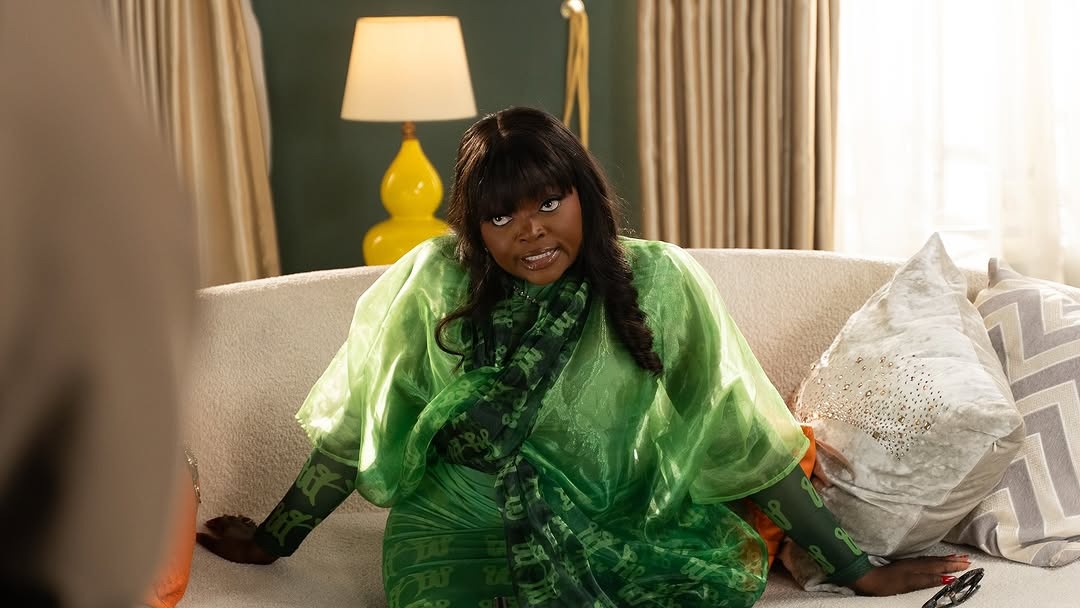
For Funke Akindele, the success of Behind The Scenes extends her consistent presence at the top of the domestic box office. She became the first filmmaker in Nollywood to deliver three consecutive ₦1 billion-plus films within a single calendar year, a feat unmatched in the region. Distributors noted that she is the only producer to cross the significant billion-naira threshold three times, cementing her reputation as Nollywood’s most commercially reliable filmmaker. These records mattered less as isolated achievements than as evidence of a recalibrated audience relationship with Nigerian cinema, one grounded in trust rather than curiosity.
That trust did not exist in isolation. The success of Behind The Scenes unfolded within a wider theatrical landscape that showed growing depth rather than reliance on a single breakout title. Films such as Labake Olododo, which premiered earlier in 2025, demonstrated that historical and culturally rooted narratives could still draw steady cinema audiences when paired with strong performances and clear positioning. Romantic dramas like Reel Love also recorded respectable theatrical runs, reinforcing the idea that genre diversity had become commercially viable rather than risky.
Nollywood’s box office expansion in 2025 also reflected audience readiness for films that engage both entertainment and relatable storytelling. Multiple productions enjoyed strong ticket sales through sustained cinema runs, with distributors observing robust attendance across weekdays as well as weekends. Cinema operators reported that local films were increasingly driving foot traffic, reducing the dominance that foreign Hollywood titles had traditionally held in Nigerian theatres.
The record figures and milestones from 2025 are meaningful beyond raw revenue totals. They represent a recalibration of what success looks like in Nigerian cinema. Where once crossing ₦1 billion was sporadic and treated as a breakthrough, it became a repeatable achievement for the right films with engaged audiences, subtly altering the competitive landscape Nollywood now operates within. What follows that normalisation is a more demanding phase for the industry, one where commercial success can no longer rely on scale or star power alone, and where filmmakers are likely to be judged more sharply on originality, execution, and the ability to sustain audience interest beyond opening weekends. As benchmarks rise, the pressure shifts toward innovation rather than expansion, forcing producers to decide whether the billion-naira mark becomes a comfortable ceiling or a foundation for bolder creative risks that test new genres, narrative structures, and production ambition within the local cinema space. Filmmakers and distributors alike adjusted their strategies accordingly, planning release windows, marketing campaigns, and cinema partnerships with a view to maximising theatrical engagement before moving to streaming or other distribution channels.
As we look ahead from early 2026, the box office results from the previous year stand as a benchmark for filmmakers, producers and industry stakeholders. Audience behaviour suggests a deeper embrace of local cinema experiences that go beyond novelty and into sustained patronage. The year 2025 reshaped conversations about commercial viability, audience agency, and the cultural reach of Nollywood stories.
As cinema operators and creative teams refine their approach, the challenge will be translating the momentum of 2025 into consistent performance across the industry. Box office achievements like those of Behind The Scenes show that the Nigerian market has the capacity to support cinema in ways that blend cultural relevance with commercial success, affirming Nollywood’s place in the global film ecosystem





.png)

