.svg)

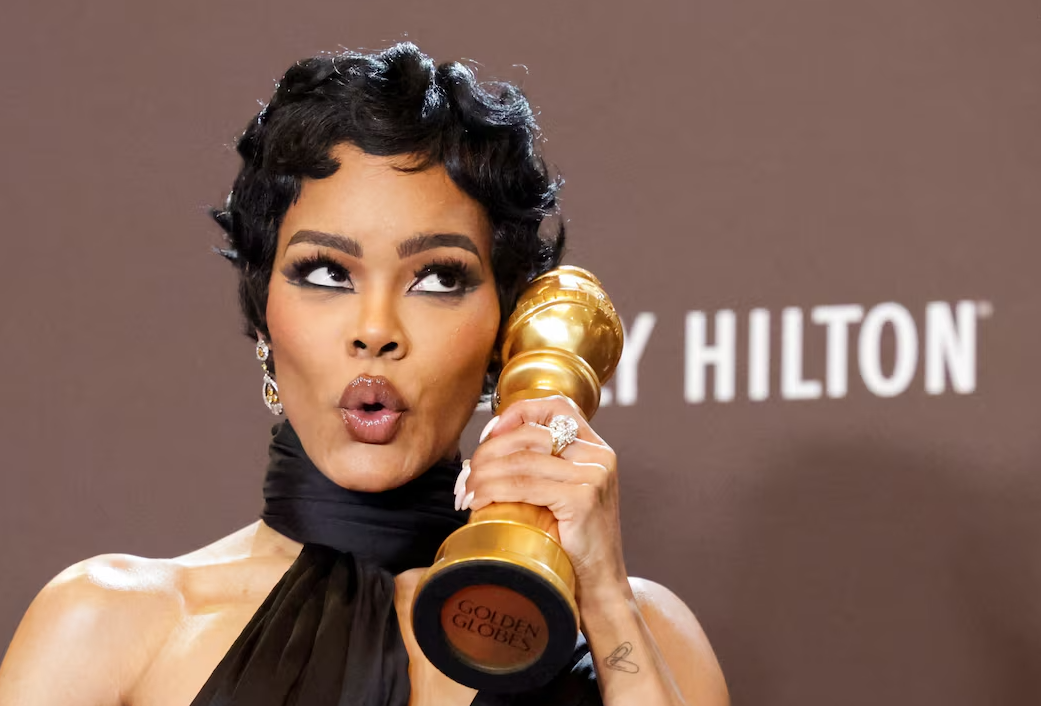
Awards season officially opened Sunday night with the 83rd Golden Globe Awards at the Beverly Hilton in Beverly Hills, and the ceremony delivered a compelling mix of expected victories and genuine surprises that set the stage for the coming months of recognition and celebration.
Paul Thomas Anderson's One Battle After Another dominated the evening, sweeping four major categories and cementing its position as the film to beat this awards season. The revolutionary saga starring Leonardo DiCaprio claimed Best Motion Picture in the Musical or Comedy category, Best Director for Anderson, Best Screenplay, and a surprise win for Teyana Taylor in Best Supporting Actress. With nine nominations heading into the night, the film lived up to its frontrunner status while still managing to deliver unexpected moments.
The drama categories told a different story, with Hamnet taking the top prize for Best Motion Picture. The Shakespeare adaptation proved that literary prestige still carries weight with Golden Globe voters, even in a year packed with high-profile contenders. Jessie Buckley's win for Best Actress in a Drama for her portrayal in Hamnet felt thoroughly deserved, showcasing an actress at the peak of her powers delivering a searing, emotionally complex performance that elevated already strong source material.
Wagner Moura continued his remarkable journey from Brazilian television to international recognition by winning Best Actor in a Drama for The Secret Agent. The win represents not just personal achievement but a broader acknowledgment of Latin American talent breaking through in Hollywood's most prestigious spaces. Moura's performance brought depth and nuance to a challenging role, and voters clearly responded to his commitment to the character.
In the comedy categories, Rose Byrne claimed Best Actress for If I Had Legs I'd Kick You, a win that highlighted her remarkable versatility across both dramatic and comedic roles. Byrne has spent years delivering consistently excellent performances, and this recognition felt like the industry finally catching up to what audiences have known for a while. Timothée Chalamet secured Best Actor in a Musical or Comedy for Marty Supreme, adding another trophy to his growing collection and reinforcing his position as one of his generation's most celebrated performers.
The most surprising win of the night came in the Best Supporting Actress category, where Teyana Taylor topped favored nominee Ariana Grande, who had been widely expected to win for Wicked: For Good. Taylor's performance in One Battle After Another clearly resonated with voters, and her victory signals a successful transition from music to serious acting. It's the kind of upset that makes awards shows worth watching, a genuine surprise that rewards talent over expectations.
Television awards followed patterns that honored both prestige storytelling and solid craftsmanship. Adolescence swept all four limited series categories it was nominated for, continuing its dominant run from last year's Emmy Awards. The series claimed Best Limited Series alongside acting wins for Owen Cooper, Erin Doherty, and Stephen Graham. The clean sweep suggests voters recognized not just individual excellence but a cohesive, well-executed vision across the entire production.
The Pitt, HBO's hospital procedural, matched its September Emmy success by winning Best Drama Series and Best Drama Series Actor for Noah Wyle. Michelle Williams won Best Actress in a Limited Series for Dying for Sex, though she couldn't attend the ceremony as she was performing in Anna Christie at St. Ann's Warehouse in Brooklyn.
In animation, KPop Demon Hunters claimed Best Animated Film and Best Original Song for Golden, performed by the group Huntrix. The ceremony introduced a new category this year: Best Podcast. Amy Poehler's Good Hang with Amy Poehler won the inaugural award. The addition of podcasts to the Golden Globes reflects the medium's massive cultural impact and its evolution from niche format to mainstream entertainment. Whether this category becomes a permanent fixture or feels like a dated decision in hindsight remains to be seen, but for now it represents the Globes' attempt to stay relevant as media consumption patterns shift.
However, the ceremony made one puzzling decision that drew immediate criticism: the award for Best Original Score was cut from the broadcast due to time constraints and announced online instead. Film composers and music fans rightfully questioned why a new podcast category earned airtime while one of cinema's essential crafts was relegated to a press release. The decision undermined the Globes' claims of honoring artistic achievement and suggested that novelty and relevance-chasing sometimes take precedence over respecting established art forms.
The two Lifetime Achievement Awards, the Cecil B. DeMille Award for Helen Mirren and the Carol Burnett Award for Sarah Jessica Parker were presented during a separate hour-long primetime special called ‘Golden Eve’ that aired two days before the main ceremony on January 8. While both honorees absolutely deserve recognition for their extraordinary careers, the separate ceremony felt like a missed opportunity to integrate these moments of reflection and celebration into the main show, where they might have provided emotional depth and historical context to balance the evening's more commercial elements.
For the second consecutive year, comedian Nikki Glaser hosted the ceremony with the perfect balance of sharp wit and genuine warmth. Her opening monologue set the tone immediately, joking that she'd been ‘pieced together by an unlicensed European surgeon’ like Frankenstein before launching into expertly crafted roasts of everyone from George Clooney to Leonardo DiCaprio.
The Golden Globes favored films and performances that combined artistic ambition with accessibility. Paul Thomas Anderson's One Battle After Another is challenging cinema, but it's also entertaining and visually stunning. Hamnet is a literary adaptation, but it's emotionally engaging rather than stuffily academic. The wins suggest voters can distinguish between work that's merely prestigious and work that's genuinely excellent.
In television, the awards recognized both innovation and execution. Adolescence pushed boundaries in how limited series can explore complex themes and character development. The Pitt didn't reinvent anything but demonstrated that traditional formats still work when done with care and intelligence. The variety of winning shows suggests a healthy television landscape where different approaches to storytelling can all find audiences and critical recognition.
The 83rd Golden Globes succeeded as awards shows should: by celebrating excellent work, delivering some surprises, and providing a few hours of entertaining television. Paul Thomas Anderson's dominance with One Battle After Another establishes clear frontrunners heading into the rest of awards season. Hamnet's drama win suggests literary adaptations can still compete in a landscape dominated by franchises and IP. The television awards acknowledged both prestigious limited series and solid ongoing dramas, showing range in what voters consider worthy of recognition.
As awards season continues toward the Oscars, the Golden Globes have done their job establishing narratives, creating momentum for certain films and performances, and giving audiences a first look at who might be taking home the industry's most prestigious prizes in a few months. Whether the Globes' choices will align with other ceremonies remains to be seen, but for one night in Beverly Hills, the 83rd Golden Globe Awards celebrated cinema and television with style, humor, and genuine appreciation for the craft of storytelling





.png)

