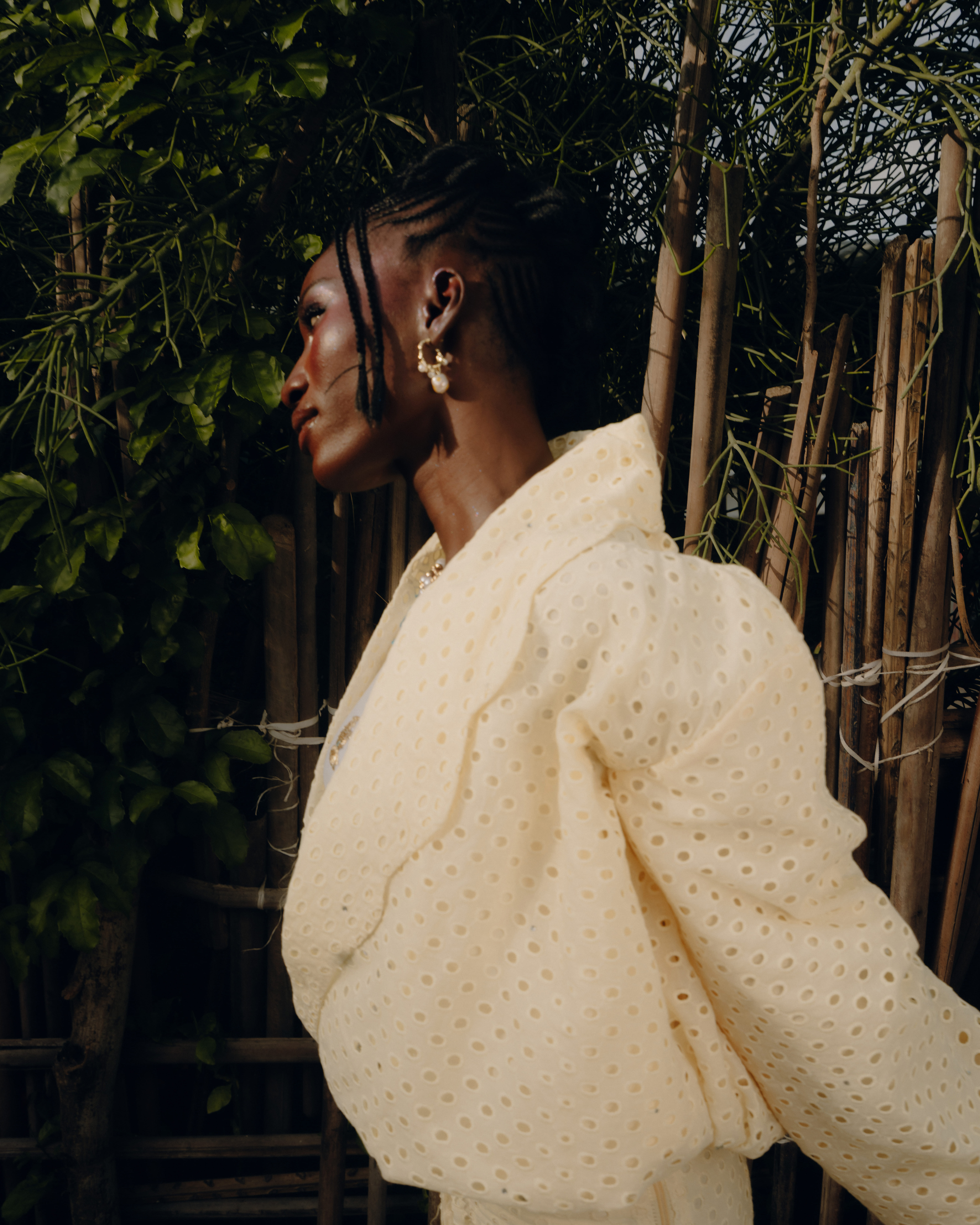
“The Real Test of African Fashion Isn’t the Runway,” Nyosi’s Vanessa Iloenyosi on Building a Lagos-Rooted Brand

Authored by

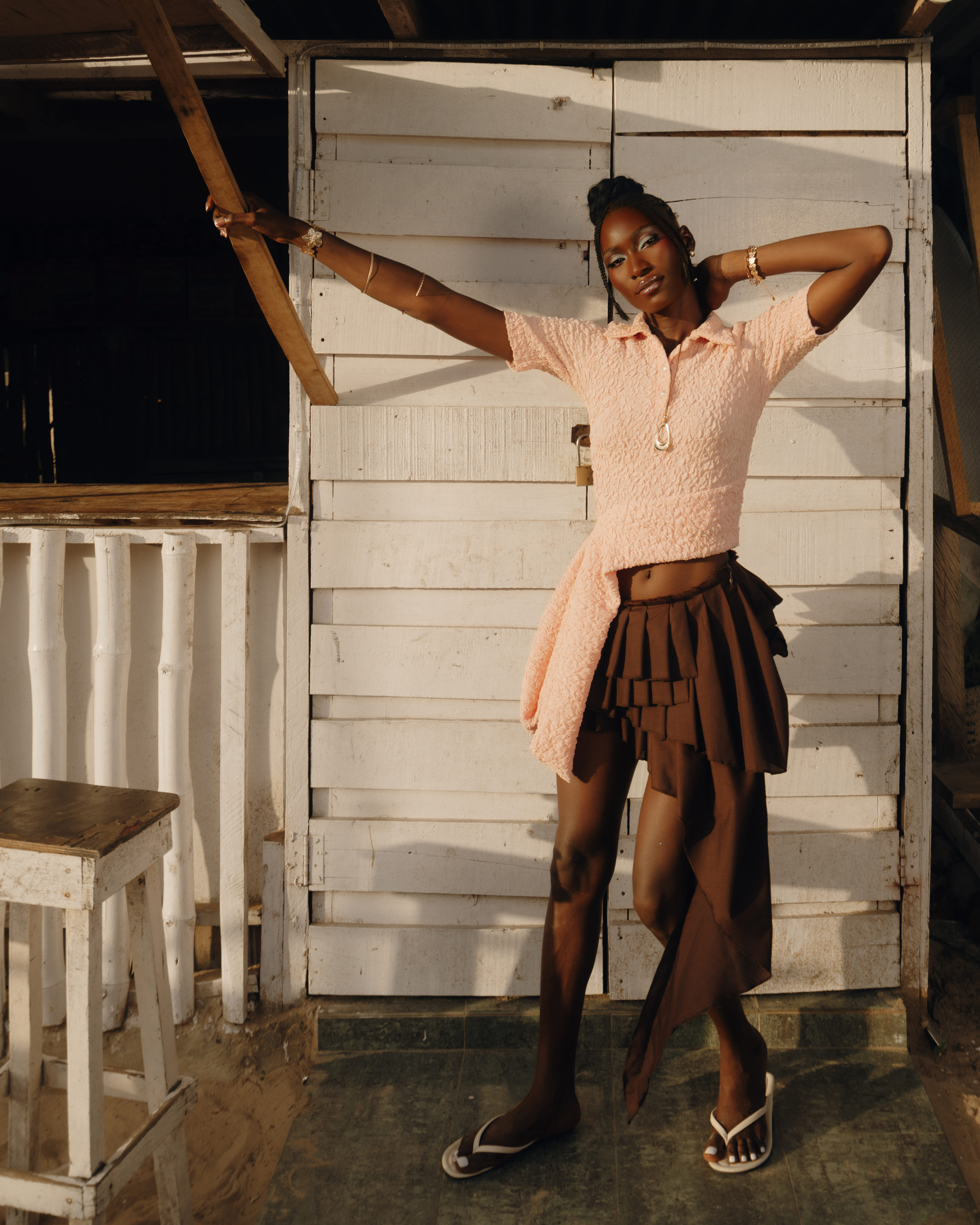
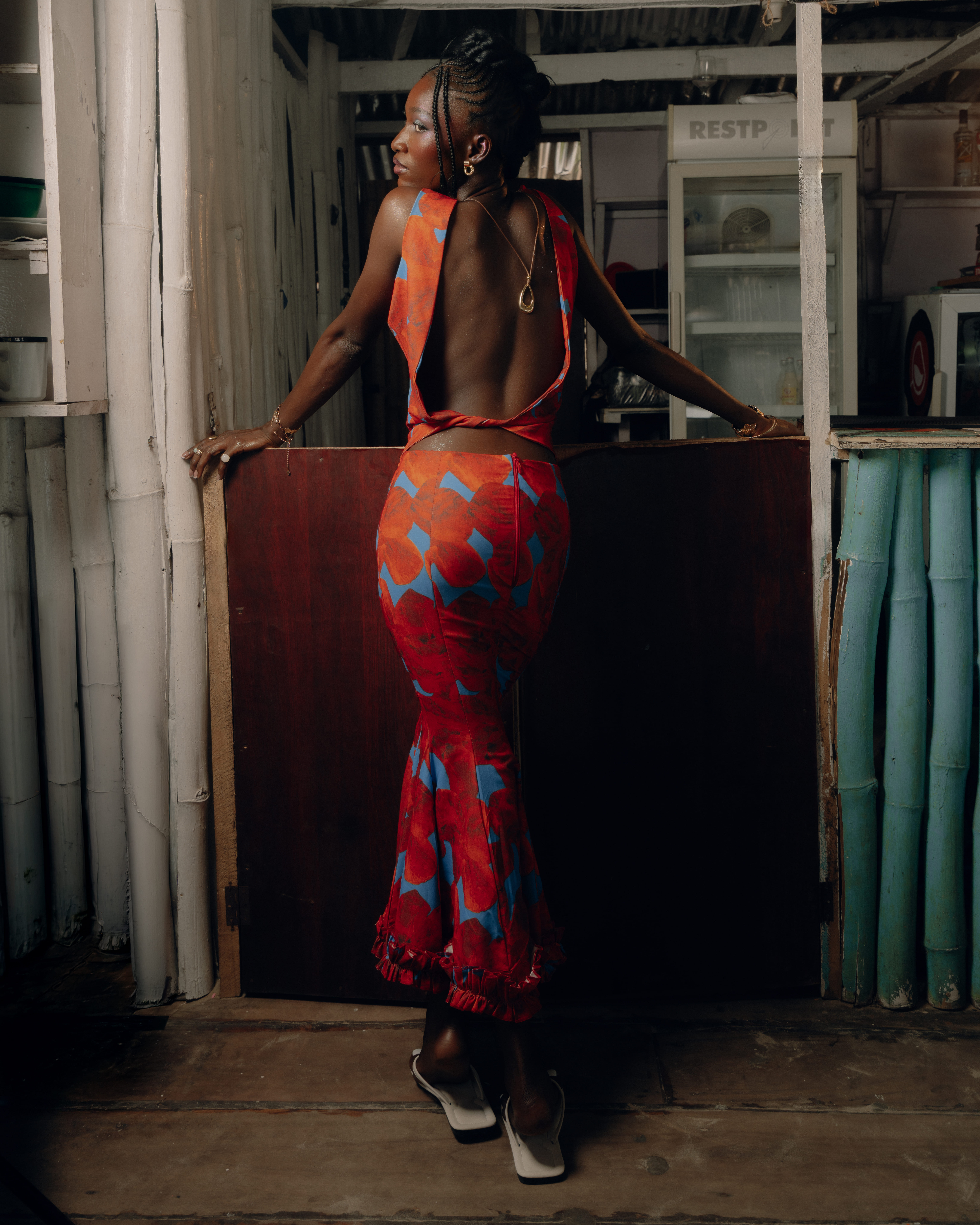
Vanessa Iloenyosi, the Lagos-born founder of women’s wear label, Nyosi, builds her collections from feeling first and finds the setting later. For her latest summer collection, the primary feeling is conjured up from a wish for "the best summer of our lives". The resulting campaign showcases women in waist-cut linen and easy, sun-kissed silhouettes looking like they have nowhere else to be beyond the grasp of the breezy beach bar nestled in Tarkwa Bay, Lagos. Since 2017, Iloenyosi’s path has been guided by this unwavering instinct. 
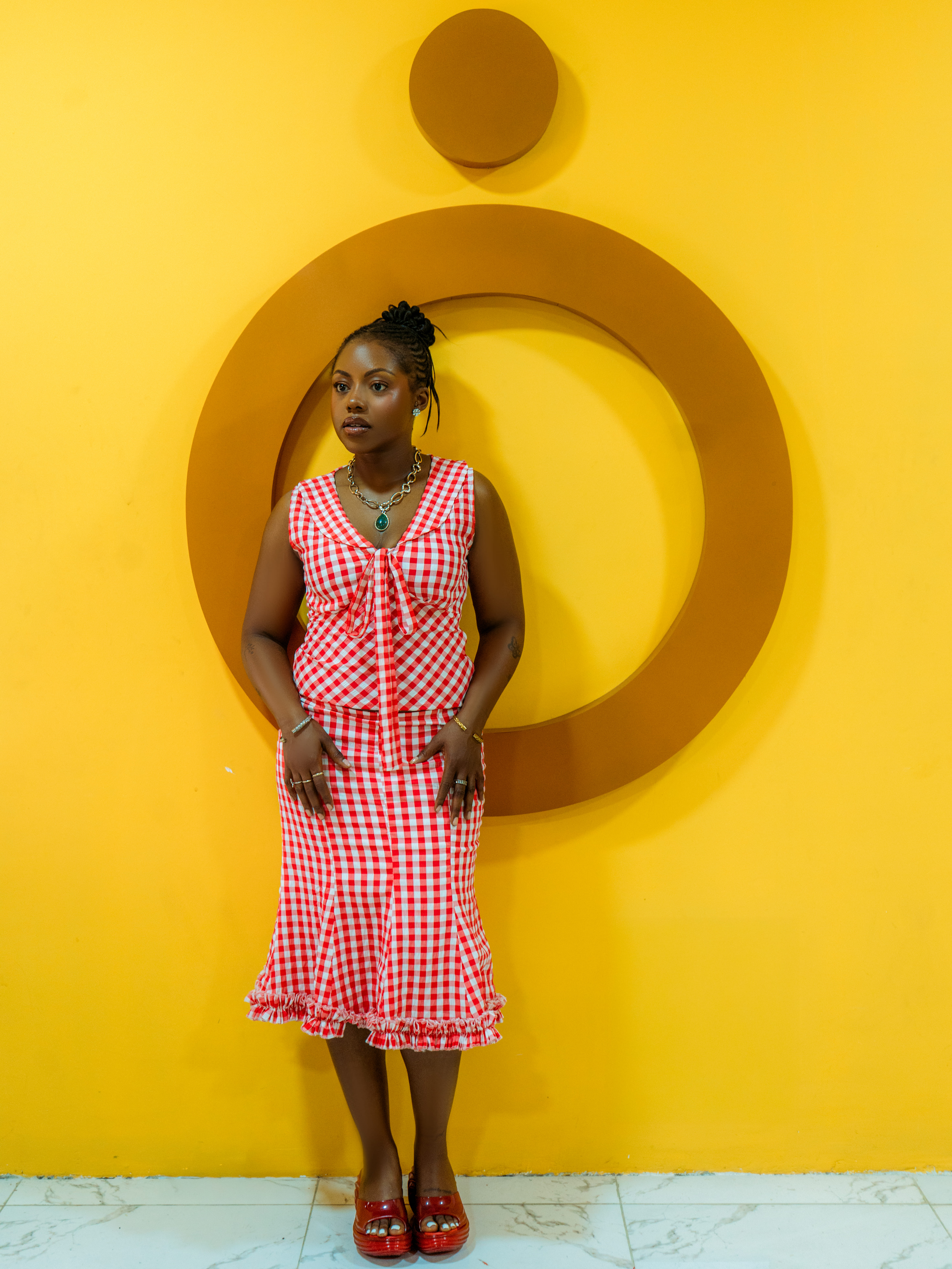
Iloenyosi studied Advertising before obtaining a master's degree in Design Management for Fashion Industries at the London College of Fashion, and it was this time of moving between Lagos and London that Nyosi found its artistic sensibilities. It draws on the vibrancy of Lagos life meshed with European tailoring to produce a sexy-but-minimal interpretation of contemporary women’s wear

In conversation with Deeds Magazine, she discusses learning to run a business as instinctively as she designs for one, why her idea of femininity refuses to sit still, and why the real measure of African fashion's progress isn't  visibility, but its supply chains.

Can you tell us the story of how Nyosi came to be, from the first idea to the moment it became real?

When I think about it, I've always wanted to do this. I've always wanted to be a designer, I mean, I did get my Masters in Fashion Business. However, I think the moment I really decided to commit was when I was working in advertising. At the time, I wanted to start a children's wear brand. In fact, I had gone as far as designing a logo with some of my friends who worked at the advertising agency. I can't remember the name now, but I had already started putting the idea together.

I still plan to launch my children's wear line at some point. However, I felt it was important not to take the easy way out because, deep down, I think the reason I wanted to start with children's wear instead of women’s wear was because I was scared. I felt that breaking into the children's wear market would be easier. I don't know where I got that idea from, and I don't even know if it was correct, but that was my thinking at the time.

Basically, I was scared, and that fear irritated me so much that it became the catalyst for me to take the leap and prove to myself that I could actually do it. I think this was around 2016 or 2017, and it was really the turning point that pushed me to fully commit to building a fashion brand.
Before Nyosi became a brand, what was your relationship with clothing and personal style?

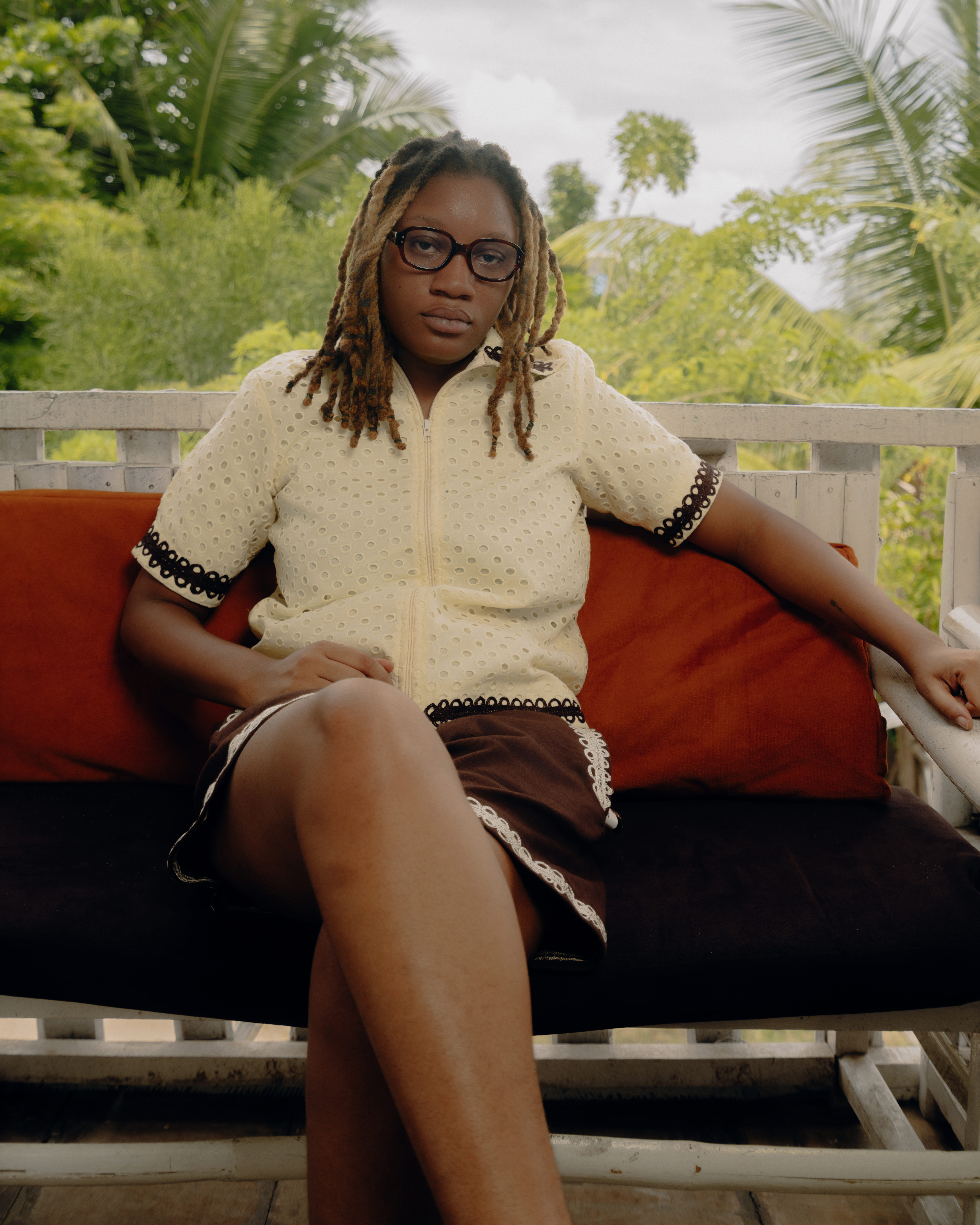
I think my relationship with clothes has always been what I would describe as adventurous. I say that because I've always been willing to try new things. I'm not really afraid to wear something and potentially look ridiculous, as long as it makes me happy. Even when I was younger, in my twenties, I had one side of my head shaved. For me, that was part of self-expression. I've always been comfortable experimenting and doing things differently.

I'm also very passionate about fabrics and textiles. I don't know if people notice it in my designs, but whenever I can, I like to explore different fabrics, feel their textures, and really understand their quality. Great fabrics make a huge difference, not only in how a garment looks and feels but also in its longevity. Long before I started designing, I was already fascinated by textiles. I've always enjoyed trying different things and exploring new ideas. In many ways, fashion has been a journey of discovering and refining my personal style while continuing to express myself creatively.

Building a fashion brand asks founders to become many things at once; designer, creative director, strategist, storyteller. Which role has come most naturally to you, and which one have you had to grow into?

The one part of owning this brand that I really had to grow into was being a strategist and a businesswoman. It's one thing to be creative and have ideas. It's another thing to turn those ideas into a successful business. When you have customers, you can't always design only what you personally like. You also have to listen to what your customers want, and for me, that was probably the most difficult part; learning to balance my creative vision with the needs of the people who shop from Nyosi.

There are so many ideas I'd love to bring to life, but I've learned that timing and practicality matter. Sometimes a design may be beautiful, but when you factor in the cost of sourcing quality fabrics, shipping, and production, it may not be affordable for your customer base.

So I think the biggest challenge has been finding that middle ground, staying true to my creativity while building a brand that serves and resonates with the people who support Nyosi.

For readers discovering Nyosi for the first time through this collection, how would you describe the world you’re building with the brand?

The world I'm building is one of fun, confidence, and self-expression. I genuinely love seeing women enjoy themselves, feel safe, and feel confident in who they are and the decisions they make. I think that comes from my own life. Anyone who knows me knows how important the women around me are; my best friends, my sisters, and my mother, with whom I share a very close relationship. I've always been very women-focused because what actually is better than seeing women thrive.

As a Nigerian woman, I've seen how differently women can be perceived. For example, a man who is assertive in the workplace is often praised, while a woman displaying the same qualities is literally called an aggressive bitch. Things are changing; albeit slowly, which is great, but those experiences have shaped my perspective. So through Nyosi, I want to build a world where women feel free to be themselves, express themselves confidently, and have fun without constantly worrying about societal expectations. That doesn't mean disregarding every rule, but it does mean creating space for women to live authentically and confidently.

Nyosi has cultivated a very distinct visual language over the years. Looking back, what are some of the ideas that have remained constant, and what has evolved?

I think, for now, the one thing that has remained constant across all our shoots and collections is bringing Lagos, and in many ways Nigeria, to the world. All our shoots are done in Lagos, and that's very intentional. I love being a Nigerian designer, and I love that our work reflects where we come from. While many brands choose to shoot in different countries or reposition themselves for new markets; which I do not think is wrong at all and will definitely do at some point, I've always wanted Nyosi's identity to be rooted in who I am.  I'm a Black woman, and I love seeing that reflected in our campaigns. I love that our clothes are photographed on Black women, in an African city, and in the place where the brand was created. In a way, we're not just exporting clothing, we're exporting culture, creativity, and a perspective on life in Lagos.

As the brand grows and reaches new markets, I'd love to keep elements of that identity. I'm not opposed to shooting in other countries or working with different types of models in the future, but I love that there's a clear thread running through everything we've done so far. It's a brand created by a Black woman, inspired by her environment, and proudly rooted in Nigeria. That's something I want people around the world to see and connect with.

There’s always this ease in the way Nyosi pieces sit on the body. How much of that is intention vs instinct?

I think the way my clothes fit is actually more instinctive than intentional. As I've said before, I've always had a great relationship with clothes and I've never been afraid to experiment, regardless of how something might look years later.

For me, clothing is all about how it makes you feel. I like clothes to sit a certain way, move a certain way, and create a certain feeling. So when I design, I'm not necessarily thinking, 'I'm going to make it fit this way.' It's simply my natural preference coming through in the design.

I'm the first ambassador of my brand, so I create pieces that I would genuinely love to wear. I like ease, comfort, and clothes that make you feel confident without feeling restricted. I don't like garments that feel awkward, overly complicated, or poorly fitted.

I make a lot of skirts; they're probably my favorite thing to design, and I love that sense of movement and flow. I also love pieces that feel feminine and confident. I've always been a fan of subtle details, like a low waistline or an unexpected cut, because they add just a little bit of attitude and personality without being overwhelming.

I'm not a maximalist. I prefer simplicity, but with small details that make you look twice. I like that little touch of confidence, that little bit of edge, that subtle element that makes a piece feel special.
Nyosi has always spoken to confidence and femininity. How is that evolving in this current phase of the brand?

Vanessa: At this phase of the brand, I feel much more sure of myself than I did a year ago. That's true creatively, but it's especially true when it comes to running the business.

I've become more confident in making decisions and trusting my judgment. In business, every decision has consequences, and sometimes it can cost you money if you get it wrong. So a big part of my growth has been learning to stand firmly behind my choices.

For example, I recently flew from London to Lagos for a shoot. That's not something I would have done if I had any doubts about the collection or the direction of the brand. It was a reminder to myself that we're building something worth investing in.

We're also getting more international attention, and while my customers back home will always be my foundation, it's encouraging to see more people connect with what we're creating.

The biggest change, though, is that I'm becoming more visible. I've always been quite hidden, but with this collection, you're hearing more of my voice and seeing more of my face. It's scary, but I'm actually enjoying it. I feel more confident than ever, and because of that, I'm stepping out from behind the scenes and becoming a bigger part of the brand.

Has your idea of femininity changed since Nyosi started?

Vanessa: My idea of femininity has never really been one specific thing because I don't believe there's only one way to be a woman. What's feminine to me may not be feminine to someone else, and that's completely fine.

You'll see a lot of conversations online about things like divine femininity and what women should or shouldn't be, but I've never subscribed to one particular definition. I think every woman should be free to express her womanhood in whatever way feels authentic to her.

So, to answer the question, no, I don't have one fixed idea of femininity. What works for you works for you, and what works for me works for me.

Nyosi is leaning more explicitly into its identity as a tropical brand. What does “tropical” mean to you beyond geography or aesthetics?

For now, it's both. As I mentioned earlier, I'm a woman who grew up in Lagos, and my brand is rooted in that environment.
At the moment, my work naturally reflects warm-weather aesthetics because that's where I've been building from. However, as the brand grows, I definitely want to explore more, different silhouettes, heavier pieces like jackets and coats, and a wider range of seasonal designs.

I don't want to limit myself creatively. As we expand into other markets and climates, the aesthetic will naturally evolve. But for now, I'm focused on building from where I am, and I believe time will shape the rest.

The collection was shot at a beach bar in Tarkwa. How did that location influence the mood, styling, or energy of the pieces?

I don't actually think the location influenced the styling. In fact, the location came last. When I was designing, I already had a clear mood in mind, I was thinking about holidays, summer, and just having fun. I kept saying, 'This summer is going to be the best summer of our lives,' so the collection naturally came from that energy of being outside and enjoying yourself.

Ironically, I don't even like the beach. People don't believe me, but I find it too hot, I don't like the sand, and in Lagos especially, it can be chaotic. If you've been to places like Ilashe, you know the situation, everyone's trying to leave at different times, and you're stuck waiting for boats and people who are never ready when you are. Unfortunately, I'm usually the one ready to go home early. My friends ABSOLUTELY hate this by the way, but I’m sorry we should literally all sleep more, at HOME, in our BEDS. 2-3 hours at the function should be more popular if you ask me (laughs).

So anyway, the collection wasn't inspired by the location. It was the other way around. Once I finished designing, I asked myself where I would want to see these pieces come to life. And I kept picturing the South of France, somewhere by the beach, relaxed, fun, almost like you're holding two cocktails and just enjoying the moment.

That vision is what led the shoot. So yes, it's actually a reverse process, and I'm really happy we shot it that way because it captures exactly the feeling I had when designing it.
What conversations do you hope this collection opens up about contemporary African fashion and how it is perceived?

The conversations I hope this collection; and every collection my peers put out, opens up are honest discussions about the state of the fashion economy in Nigeria and, more broadly, across Africa. On the surface, people often focus on design, aesthetics, and access; things like fashion shows, travel, and visibility. But beyond that, there are deeper structural issues that affect how sustainable this industry really is. Many contemporary African designers are dealing with challenges around funding, distribution, and logistics. For example, in some cases, it's cheaper to ship from Nigeria to the UK than within parts of Africa. These are real barriers that impact how the industry grows.

I think we need to move beyond surface-level conversations about “vibes” and visibility. It's not just about showcasing one or two designers as representatives of an entire continent. In other markets, you see multiple successful designers operating across countries and building scalable businesses. That level of ecosystem support is what we need to aim for as well. This isn't just about my collection, it's about the wider creative economy. How do designers access funding? How do we improve distribution? How do we build purchasing power and stronger retail systems that actually support local creativity? These are uncomfortable but necessary conversations. Because ultimately, if we want African fashion to grow sustainably, it can't just be about how things look. It has to be about building systems that allow designers to thrive, scale, and create long-term value.

As Nyosi continues to grow, what parts of the brand feel most important to you?

The part of the brand that feels most important to me is my customers. I never want to lose that connection. It really means a lot when someone comes up to me and says, 'Oh my God, you're the one that owns Nyosi. I love your brand.' The more you hear it, the easier it can be to take it for granted, but I never want that to happen. I always want to feel the same excitement I felt when I first started, when not as many people knew the brand. There's something very special about creating something, putting it out into the world, and seeing people genuinely love it enough to approach you in public just to say so. Especially in Lagos, where people can be reserved, it always feels meaningful when someone makes that effort.

Even when people don't always remember my name and just know the brand, it still feels very personal to me. Every time it happens, it genuinely makes my day.I never want to feel bigger than the brand or disconnected from the people who support it, because that's when you start to lose perspective. Staying close to that feeling is really important to me.

Looking ahead, what excites you most about the next chapter of the brand?

What excites me most about the next chapter is that I've taken time to reflect on a lot of things, mistakes I've made and lessons I've learned in running the business. In correcting those things, I'm really excited to see the results of me fully locking in. It can be scary investing heavily into a brand, because if it doesn't work, you do feel the loss directly. But I also think we're at a stage where we're growing, and people are paying more attention, which makes me excited for what's ahead. I'm looking forward to seeing what the next year looks like, the next two years, and even the next few months. More than anything, I'm grateful for the journey so far and for conversations like this. I hope anyone reading this connects with the collection and enjoys it as much as I enjoyed creating it.

“The Real Test of African Fashion Isn’t the Runway,” Nyosi’s Vanessa Iloenyosi on Building a Lagos-Rooted Brand

Authored by
This is some text inside of a div block.

Vanessa Iloenyosi, the Lagos-born founder of women’s wear label, Nyosi, builds her collections from feeling first and finds the setting later. For her latest summer collection, the primary feeling is conjured up from a wish for "the best summer of our lives". The resulting campaign showcases women in waist-cut linen and easy, sun-kissed silhouettes looking like they have nowhere else to be beyond the grasp of the breezy beach bar nestled in Tarkwa Bay, Lagos. Since 2017, Iloenyosi’s path has been guided by this unwavering instinct. 

Iloenyosi studied Advertising before obtaining a master's degree in Design Management for Fashion Industries at the London College of Fashion, and it was this time of moving between Lagos and London that Nyosi found its artistic sensibilities. It draws on the vibrancy of Lagos life meshed with European tailoring to produce a sexy-but-minimal interpretation of contemporary women’s wear

In conversation with Deeds Magazine, she discusses learning to run a business as instinctively as she designs for one, why her idea of femininity refuses to sit still, and why the real measure of African fashion's progress isn't  visibility, but its supply chains.

Can you tell us the story of how Nyosi came to be, from the first idea to the moment it became real?

When I think about it, I've always wanted to do this. I've always wanted to be a designer, I mean, I did get my Masters in Fashion Business. However, I think the moment I really decided to commit was when I was working in advertising. At the time, I wanted to start a children's wear brand. In fact, I had gone as far as designing a logo with some of my friends who worked at the advertising agency. I can't remember the name now, but I had already started putting the idea together.

I still plan to launch my children's wear line at some point. However, I felt it was important not to take the easy way out because, deep down, I think the reason I wanted to start with children's wear instead of women’s wear was because I was scared. I felt that breaking into the children's wear market would be easier. I don't know where I got that idea from, and I don't even know if it was correct, but that was my thinking at the time.

Basically, I was scared, and that fear irritated me so much that it became the catalyst for me to take the leap and prove to myself that I could actually do it. I think this was around 2016 or 2017, and it was really the turning point that pushed me to fully commit to building a fashion brand.

Before Nyosi became a brand, what was your relationship with clothing and personal style?

I think my relationship with clothes has always been what I would describe as adventurous. I say that because I've always been willing to try new things. I'm not really afraid to wear something and potentially look ridiculous, as long as it makes me happy. Even when I was younger, in my twenties, I had one side of my head shaved. For me, that was part of self-expression. I've always been comfortable experimenting and doing things differently.

I'm also very passionate about fabrics and textiles. I don't know if people notice it in my designs, but whenever I can, I like to explore different fabrics, feel their textures, and really understand their quality. Great fabrics make a huge difference, not only in how a garment looks and feels but also in its longevity. Long before I started designing, I was already fascinated by textiles. I've always enjoyed trying different things and exploring new ideas. In many ways, fashion has been a journey of discovering and refining my personal style while continuing to express myself creatively.

Building a fashion brand asks founders to become many things at once; designer, creative director, strategist, storyteller. Which role has come most naturally to you, and which one have you had to grow into?

The one part of owning this brand that I really had to grow into was being a strategist and a businesswoman. It's one thing to be creative and have ideas. It's another thing to turn those ideas into a successful business. When you have customers, you can't always design only what you personally like. You also have to listen to what your customers want, and for me, that was probably the most difficult part; learning to balance my creative vision with the needs of the people who shop from Nyosi.

There are so many ideas I'd love to bring to life, but I've learned that timing and practicality matter. Sometimes a design may be beautiful, but when you factor in the cost of sourcing quality fabrics, shipping, and production, it may not be affordable for your customer base.

So I think the biggest challenge has been finding that middle ground, staying true to my creativity while building a brand that serves and resonates with the people who support Nyosi.

For readers discovering Nyosi for the first time through this collection, how would you describe the world you’re building with the brand?

The world I'm building is one of fun, confidence, and self-expression. I genuinely love seeing women enjoy themselves, feel safe, and feel confident in who they are and the decisions they make. I think that comes from my own life. Anyone who knows me knows how important the women around me are; my best friends, my sisters, and my mother, with whom I share a very close relationship. I've always been very women-focused because what actually is better than seeing women thrive.

As a Nigerian woman, I've seen how differently women can be perceived. For example, a man who is assertive in the workplace is often praised, while a woman displaying the same qualities is literally called an aggressive bitch. Things are changing; albeit slowly, which is great, but those experiences have shaped my perspective. So through Nyosi, I want to build a world where women feel free to be themselves, express themselves confidently, and have fun without constantly worrying about societal expectations. That doesn't mean disregarding every rule, but it does mean creating space for women to live authentically and confidently.

Nyosi has cultivated a very distinct visual language over the years. Looking back, what are some of the ideas that have remained constant, and what has evolved?

I think, for now, the one thing that has remained constant across all our shoots and collections is bringing Lagos, and in many ways Nigeria, to the world. All our shoots are done in Lagos, and that's very intentional. I love being a Nigerian designer, and I love that our work reflects where we come from. While many brands choose to shoot in different countries or reposition themselves for new markets; which I do not think is wrong at all and will definitely do at some point, I've always wanted Nyosi's identity to be rooted in who I am.  I'm a Black woman, and I love seeing that reflected in our campaigns. I love that our clothes are photographed on Black women, in an African city, and in the place where the brand was created. In a way, we're not just exporting clothing, we're exporting culture, creativity, and a perspective on life in Lagos.

As the brand grows and reaches new markets, I'd love to keep elements of that identity. I'm not opposed to shooting in other countries or working with different types of models in the future, but I love that there's a clear thread running through everything we've done so far. It's a brand created by a Black woman, inspired by her environment, and proudly rooted in Nigeria. That's something I want people around the world to see and connect with.

There’s always this ease in the way Nyosi pieces sit on the body. How much of that is intention vs instinct?

I think the way my clothes fit is actually more instinctive than intentional. As I've said before, I've always had a great relationship with clothes and I've never been afraid to experiment, regardless of how something might look years later.

For me, clothing is all about how it makes you feel. I like clothes to sit a certain way, move a certain way, and create a certain feeling. So when I design, I'm not necessarily thinking, 'I'm going to make it fit this way.' It's simply my natural preference coming through in the design.

I'm the first ambassador of my brand, so I create pieces that I would genuinely love to wear. I like ease, comfort, and clothes that make you feel confident without feeling restricted. I don't like garments that feel awkward, overly complicated, or poorly fitted.

I make a lot of skirts; they're probably my favorite thing to design, and I love that sense of movement and flow. I also love pieces that feel feminine and confident. I've always been a fan of subtle details, like a low waistline or an unexpected cut, because they add just a little bit of attitude and personality without being overwhelming.

I'm not a maximalist. I prefer simplicity, but with small details that make you look twice. I like that little touch of confidence, that little bit of edge, that subtle element that makes a piece feel special.

Nyosi has always spoken to confidence and femininity. How is that evolving in this current phase of the brand?

Vanessa: At this phase of the brand, I feel much more sure of myself than I did a year ago. That's true creatively, but it's especially true when it comes to running the business.

I've become more confident in making decisions and trusting my judgment. In business, every decision has consequences, and sometimes it can cost you money if you get it wrong. So a big part of my growth has been learning to stand firmly behind my choices.

For example, I recently flew from London to Lagos for a shoot. That's not something I would have done if I had any doubts about the collection or the direction of the brand. It was a reminder to myself that we're building something worth investing in.

We're also getting more international attention, and while my customers back home will always be my foundation, it's encouraging to see more people connect with what we're creating.

The biggest change, though, is that I'm becoming more visible. I've always been quite hidden, but with this collection, you're hearing more of my voice and seeing more of my face. It's scary, but I'm actually enjoying it. I feel more confident than ever, and because of that, I'm stepping out from behind the scenes and becoming a bigger part of the brand.

Has your idea of femininity changed since Nyosi started?

Vanessa: My idea of femininity has never really been one specific thing because I don't believe there's only one way to be a woman. What's feminine to me may not be feminine to someone else, and that's completely fine.

You'll see a lot of conversations online about things like divine femininity and what women should or shouldn't be, but I've never subscribed to one particular definition. I think every woman should be free to express her womanhood in whatever way feels authentic to her.

So, to answer the question, no, I don't have one fixed idea of femininity. What works for you works for you, and what works for me works for me.

Nyosi is leaning more explicitly into its identity as a tropical brand. What does “tropical” mean to you beyond geography or aesthetics?

For now, it's both. As I mentioned earlier, I'm a woman who grew up in Lagos, and my brand is rooted in that environment.
At the moment, my work naturally reflects warm-weather aesthetics because that's where I've been building from. However, as the brand grows, I definitely want to explore more, different silhouettes, heavier pieces like jackets and coats, and a wider range of seasonal designs.

I don't want to limit myself creatively. As we expand into other markets and climates, the aesthetic will naturally evolve. But for now, I'm focused on building from where I am, and I believe time will shape the rest.

The collection was shot at a beach bar in Tarkwa. How did that location influence the mood, styling, or energy of the pieces?

I don't actually think the location influenced the styling. In fact, the location came last. When I was designing, I already had a clear mood in mind, I was thinking about holidays, summer, and just having fun. I kept saying, 'This summer is going to be the best summer of our lives,' so the collection naturally came from that energy of being outside and enjoying yourself.

Ironically, I don't even like the beach. People don't believe me, but I find it too hot, I don't like the sand, and in Lagos especially, it can be chaotic. If you've been to places like Ilashe, you know the situation, everyone's trying to leave at different times, and you're stuck waiting for boats and people who are never ready when you are. Unfortunately, I'm usually the one ready to go home early. My friends ABSOLUTELY hate this by the way, but I’m sorry we should literally all sleep more, at HOME, in our BEDS. 2-3 hours at the function should be more popular if you ask me (laughs).

So anyway, the collection wasn't inspired by the location. It was the other way around. Once I finished designing, I asked myself where I would want to see these pieces come to life. And I kept picturing the South of France, somewhere by the beach, relaxed, fun, almost like you're holding two cocktails and just enjoying the moment.

That vision is what led the shoot. So yes, it's actually a reverse process, and I'm really happy we shot it that way because it captures exactly the feeling I had when designing it.

What conversations do you hope this collection opens up about contemporary African fashion and how it is perceived?

The conversations I hope this collection; and every collection my peers put out, opens up are honest discussions about the state of the fashion economy in Nigeria and, more broadly, across Africa. On the surface, people often focus on design, aesthetics, and access; things like fashion shows, travel, and visibility. But beyond that, there are deeper structural issues that affect how sustainable this industry really is. Many contemporary African designers are dealing with challenges around funding, distribution, and logistics. For example, in some cases, it's cheaper to ship from Nigeria to the UK than within parts of Africa. These are real barriers that impact how the industry grows.

I think we need to move beyond surface-level conversations about “vibes” and visibility. It's not just about showcasing one or two designers as representatives of an entire continent. In other markets, you see multiple successful designers operating across countries and building scalable businesses. That level of ecosystem support is what we need to aim for as well. This isn't just about my collection, it's about the wider creative economy. How do designers access funding? How do we improve distribution? How do we build purchasing power and stronger retail systems that actually support local creativity? These are uncomfortable but necessary conversations. Because ultimately, if we want African fashion to grow sustainably, it can't just be about how things look. It has to be about building systems that allow designers to thrive, scale, and create long-term value.

As Nyosi continues to grow, what parts of the brand feel most important to you?

The part of the brand that feels most important to me is my customers. I never want to lose that connection. It really means a lot when someone comes up to me and says, 'Oh my God, you're the one that owns Nyosi. I love your brand.' The more you hear it, the easier it can be to take it for granted, but I never want that to happen. I always want to feel the same excitement I felt when I first started, when not as many people knew the brand. There's something very special about creating something, putting it out into the world, and seeing people genuinely love it enough to approach you in public just to say so. Especially in Lagos, where people can be reserved, it always feels meaningful when someone makes that effort.

Even when people don't always remember my name and just know the brand, it still feels very personal to me. Every time it happens, it genuinely makes my day.I never want to feel bigger than the brand or disconnected from the people who support it, because that's when you start to lose perspective. Staying close to that feeling is really important to me.

Looking ahead, what excites you most about the next chapter of the brand?

What excites me most about the next chapter is that I've taken time to reflect on a lot of things, mistakes I've made and lessons I've learned in running the business. In correcting those things, I'm really excited to see the results of me fully locking in. It can be scary investing heavily into a brand, because if it doesn't work, you do feel the loss directly. But I also think we're at a stage where we're growing, and people are paying more attention, which makes me excited for what's ahead. I'm looking forward to seeing what the next year looks like, the next two years, and even the next few months. More than anything, I'm grateful for the journey so far and for conversations like this. I hope anyone reading this connects with the collection and enjoys it as much as I enjoyed creating it.
This is some text inside of a div block.

“The Real Test of African Fashion Isn’t the Runway,” Nyosi’s Vanessa Iloenyosi on Building a Lagos-Rooted Brand

Authored by

Vanessa Iloenyosi, the Lagos-born founder of women’s wear label, Nyosi, builds her collections from feeling first and finds the setting later. For her latest summer collection, the primary feeling is conjured up from a wish for "the best summer of our lives". The resulting campaign showcases women in waist-cut linen and easy, sun-kissed silhouettes looking like they have nowhere else to be beyond the grasp of the breezy beach bar nestled in Tarkwa Bay, Lagos. Since 2017, Iloenyosi’s path has been guided by this unwavering instinct. 

Iloenyosi studied Advertising before obtaining a master's degree in Design Management for Fashion Industries at the London College of Fashion, and it was this time of moving between Lagos and London that Nyosi found its artistic sensibilities. It draws on the vibrancy of Lagos life meshed with European tailoring to produce a sexy-but-minimal interpretation of contemporary women’s wear

In conversation with Deeds Magazine, she discusses learning to run a business as instinctively as she designs for one, why her idea of femininity refuses to sit still, and why the real measure of African fashion's progress isn't  visibility, but its supply chains.

Can you tell us the story of how Nyosi came to be, from the first idea to the moment it became real?

When I think about it, I've always wanted to do this. I've always wanted to be a designer, I mean, I did get my Masters in Fashion Business. However, I think the moment I really decided to commit was when I was working in advertising. At the time, I wanted to start a children's wear brand. In fact, I had gone as far as designing a logo with some of my friends who worked at the advertising agency. I can't remember the name now, but I had already started putting the idea together.

I still plan to launch my children's wear line at some point. However, I felt it was important not to take the easy way out because, deep down, I think the reason I wanted to start with children's wear instead of women’s wear was because I was scared. I felt that breaking into the children's wear market would be easier. I don't know where I got that idea from, and I don't even know if it was correct, but that was my thinking at the time.

Basically, I was scared, and that fear irritated me so much that it became the catalyst for me to take the leap and prove to myself that I could actually do it. I think this was around 2016 or 2017, and it was really the turning point that pushed me to fully commit to building a fashion brand.

Before Nyosi became a brand, what was your relationship with clothing and personal style?

I think my relationship with clothes has always been what I would describe as adventurous. I say that because I've always been willing to try new things. I'm not really afraid to wear something and potentially look ridiculous, as long as it makes me happy. Even when I was younger, in my twenties, I had one side of my head shaved. For me, that was part of self-expression. I've always been comfortable experimenting and doing things differently.

I'm also very passionate about fabrics and textiles. I don't know if people notice it in my designs, but whenever I can, I like to explore different fabrics, feel their textures, and really understand their quality. Great fabrics make a huge difference, not only in how a garment looks and feels but also in its longevity. Long before I started designing, I was already fascinated by textiles. I've always enjoyed trying different things and exploring new ideas. In many ways, fashion has been a journey of discovering and refining my personal style while continuing to express myself creatively.

Building a fashion brand asks founders to become many things at once; designer, creative director, strategist, storyteller. Which role has come most naturally to you, and which one have you had to grow into?

The one part of owning this brand that I really had to grow into was being a strategist and a businesswoman. It's one thing to be creative and have ideas. It's another thing to turn those ideas into a successful business. When you have customers, you can't always design only what you personally like. You also have to listen to what your customers want, and for me, that was probably the most difficult part; learning to balance my creative vision with the needs of the people who shop from Nyosi.

There are so many ideas I'd love to bring to life, but I've learned that timing and practicality matter. Sometimes a design may be beautiful, but when you factor in the cost of sourcing quality fabrics, shipping, and production, it may not be affordable for your customer base.

So I think the biggest challenge has been finding that middle ground, staying true to my creativity while building a brand that serves and resonates with the people who support Nyosi.

For readers discovering Nyosi for the first time through this collection, how would you describe the world you’re building with the brand?

The world I'm building is one of fun, confidence, and self-expression. I genuinely love seeing women enjoy themselves, feel safe, and feel confident in who they are and the decisions they make. I think that comes from my own life. Anyone who knows me knows how important the women around me are; my best friends, my sisters, and my mother, with whom I share a very close relationship. I've always been very women-focused because what actually is better than seeing women thrive.

As a Nigerian woman, I've seen how differently women can be perceived. For example, a man who is assertive in the workplace is often praised, while a woman displaying the same qualities is literally called an aggressive bitch. Things are changing; albeit slowly, which is great, but those experiences have shaped my perspective. So through Nyosi, I want to build a world where women feel free to be themselves, express themselves confidently, and have fun without constantly worrying about societal expectations. That doesn't mean disregarding every rule, but it does mean creating space for women to live authentically and confidently.

Nyosi has cultivated a very distinct visual language over the years. Looking back, what are some of the ideas that have remained constant, and what has evolved?

I think, for now, the one thing that has remained constant across all our shoots and collections is bringing Lagos, and in many ways Nigeria, to the world. All our shoots are done in Lagos, and that's very intentional. I love being a Nigerian designer, and I love that our work reflects where we come from. While many brands choose to shoot in different countries or reposition themselves for new markets; which I do not think is wrong at all and will definitely do at some point, I've always wanted Nyosi's identity to be rooted in who I am.  I'm a Black woman, and I love seeing that reflected in our campaigns. I love that our clothes are photographed on Black women, in an African city, and in the place where the brand was created. In a way, we're not just exporting clothing, we're exporting culture, creativity, and a perspective on life in Lagos.

As the brand grows and reaches new markets, I'd love to keep elements of that identity. I'm not opposed to shooting in other countries or working with different types of models in the future, but I love that there's a clear thread running through everything we've done so far. It's a brand created by a Black woman, inspired by her environment, and proudly rooted in Nigeria. That's something I want people around the world to see and connect with.

There’s always this ease in the way Nyosi pieces sit on the body. How much of that is intention vs instinct?

I think the way my clothes fit is actually more instinctive than intentional. As I've said before, I've always had a great relationship with clothes and I've never been afraid to experiment, regardless of how something might look years later.

For me, clothing is all about how it makes you feel. I like clothes to sit a certain way, move a certain way, and create a certain feeling. So when I design, I'm not necessarily thinking, 'I'm going to make it fit this way.' It's simply my natural preference coming through in the design.

I'm the first ambassador of my brand, so I create pieces that I would genuinely love to wear. I like ease, comfort, and clothes that make you feel confident without feeling restricted. I don't like garments that feel awkward, overly complicated, or poorly fitted.

I make a lot of skirts; they're probably my favorite thing to design, and I love that sense of movement and flow. I also love pieces that feel feminine and confident. I've always been a fan of subtle details, like a low waistline or an unexpected cut, because they add just a little bit of attitude and personality without being overwhelming.

I'm not a maximalist. I prefer simplicity, but with small details that make you look twice. I like that little touch of confidence, that little bit of edge, that subtle element that makes a piece feel special.

Nyosi has always spoken to confidence and femininity. How is that evolving in this current phase of the brand?

Vanessa: At this phase of the brand, I feel much more sure of myself than I did a year ago. That's true creatively, but it's especially true when it comes to running the business.

I've become more confident in making decisions and trusting my judgment. In business, every decision has consequences, and sometimes it can cost you money if you get it wrong. So a big part of my growth has been learning to stand firmly behind my choices.

For example, I recently flew from London to Lagos for a shoot. That's not something I would have done if I had any doubts about the collection or the direction of the brand. It was a reminder to myself that we're building something worth investing in.

We're also getting more international attention, and while my customers back home will always be my foundation, it's encouraging to see more people connect with what we're creating.

The biggest change, though, is that I'm becoming more visible. I've always been quite hidden, but with this collection, you're hearing more of my voice and seeing more of my face. It's scary, but I'm actually enjoying it. I feel more confident than ever, and because of that, I'm stepping out from behind the scenes and becoming a bigger part of the brand.

Has your idea of femininity changed since Nyosi started?

Vanessa: My idea of femininity has never really been one specific thing because I don't believe there's only one way to be a woman. What's feminine to me may not be feminine to someone else, and that's completely fine.

You'll see a lot of conversations online about things like divine femininity and what women should or shouldn't be, but I've never subscribed to one particular definition. I think every woman should be free to express her womanhood in whatever way feels authentic to her.

So, to answer the question, no, I don't have one fixed idea of femininity. What works for you works for you, and what works for me works for me.

Nyosi is leaning more explicitly into its identity as a tropical brand. What does “tropical” mean to you beyond geography or aesthetics?

For now, it's both. As I mentioned earlier, I'm a woman who grew up in Lagos, and my brand is rooted in that environment.
At the moment, my work naturally reflects warm-weather aesthetics because that's where I've been building from. However, as the brand grows, I definitely want to explore more, different silhouettes, heavier pieces like jackets and coats, and a wider range of seasonal designs.

I don't want to limit myself creatively. As we expand into other markets and climates, the aesthetic will naturally evolve. But for now, I'm focused on building from where I am, and I believe time will shape the rest.

The collection was shot at a beach bar in Tarkwa. How did that location influence the mood, styling, or energy of the pieces?

I don't actually think the location influenced the styling. In fact, the location came last. When I was designing, I already had a clear mood in mind, I was thinking about holidays, summer, and just having fun. I kept saying, 'This summer is going to be the best summer of our lives,' so the collection naturally came from that energy of being outside and enjoying yourself.

Ironically, I don't even like the beach. People don't believe me, but I find it too hot, I don't like the sand, and in Lagos especially, it can be chaotic. If you've been to places like Ilashe, you know the situation, everyone's trying to leave at different times, and you're stuck waiting for boats and people who are never ready when you are. Unfortunately, I'm usually the one ready to go home early. My friends ABSOLUTELY hate this by the way, but I’m sorry we should literally all sleep more, at HOME, in our BEDS. 2-3 hours at the function should be more popular if you ask me (laughs).

So anyway, the collection wasn't inspired by the location. It was the other way around. Once I finished designing, I asked myself where I would want to see these pieces come to life. And I kept picturing the South of France, somewhere by the beach, relaxed, fun, almost like you're holding two cocktails and just enjoying the moment.

That vision is what led the shoot. So yes, it's actually a reverse process, and I'm really happy we shot it that way because it captures exactly the feeling I had when designing it.

What conversations do you hope this collection opens up about contemporary African fashion and how it is perceived?

The conversations I hope this collection; and every collection my peers put out, opens up are honest discussions about the state of the fashion economy in Nigeria and, more broadly, across Africa. On the surface, people often focus on design, aesthetics, and access; things like fashion shows, travel, and visibility. But beyond that, there are deeper structural issues that affect how sustainable this industry really is. Many contemporary African designers are dealing with challenges around funding, distribution, and logistics. For example, in some cases, it's cheaper to ship from Nigeria to the UK than within parts of Africa. These are real barriers that impact how the industry grows.

I think we need to move beyond surface-level conversations about “vibes” and visibility. It's not just about showcasing one or two designers as representatives of an entire continent. In other markets, you see multiple successful designers operating across countries and building scalable businesses. That level of ecosystem support is what we need to aim for as well. This isn't just about my collection, it's about the wider creative economy. How do designers access funding? How do we improve distribution? How do we build purchasing power and stronger retail systems that actually support local creativity? These are uncomfortable but necessary conversations. Because ultimately, if we want African fashion to grow sustainably, it can't just be about how things look. It has to be about building systems that allow designers to thrive, scale, and create long-term value.

As Nyosi continues to grow, what parts of the brand feel most important to you?

The part of the brand that feels most important to me is my customers. I never want to lose that connection. It really means a lot when someone comes up to me and says, 'Oh my God, you're the one that owns Nyosi. I love your brand.' The more you hear it, the easier it can be to take it for granted, but I never want that to happen. I always want to feel the same excitement I felt when I first started, when not as many people knew the brand. There's something very special about creating something, putting it out into the world, and seeing people genuinely love it enough to approach you in public just to say so. Especially in Lagos, where people can be reserved, it always feels meaningful when someone makes that effort.

Even when people don't always remember my name and just know the brand, it still feels very personal to me. Every time it happens, it genuinely makes my day.I never want to feel bigger than the brand or disconnected from the people who support it, because that's when you start to lose perspective. Staying close to that feeling is really important to me.

Looking ahead, what excites you most about the next chapter of the brand?

What excites me most about the next chapter is that I've taken time to reflect on a lot of things, mistakes I've made and lessons I've learned in running the business. In correcting those things, I'm really excited to see the results of me fully locking in. It can be scary investing heavily into a brand, because if it doesn't work, you do feel the loss directly. But I also think we're at a stage where we're growing, and people are paying more attention, which makes me excited for what's ahead. I'm looking forward to seeing what the next year looks like, the next two years, and even the next few months. More than anything, I'm grateful for the journey so far and for conversations like this. I hope anyone reading this connects with the collection and enjoys it as much as I enjoyed creating it.

Other Stories
London
London
Lagos
London
Newyork
London
Shop
Join the community.
You are now subscribed to receive updates.
Oops! Something went wrong while submitting the form.